
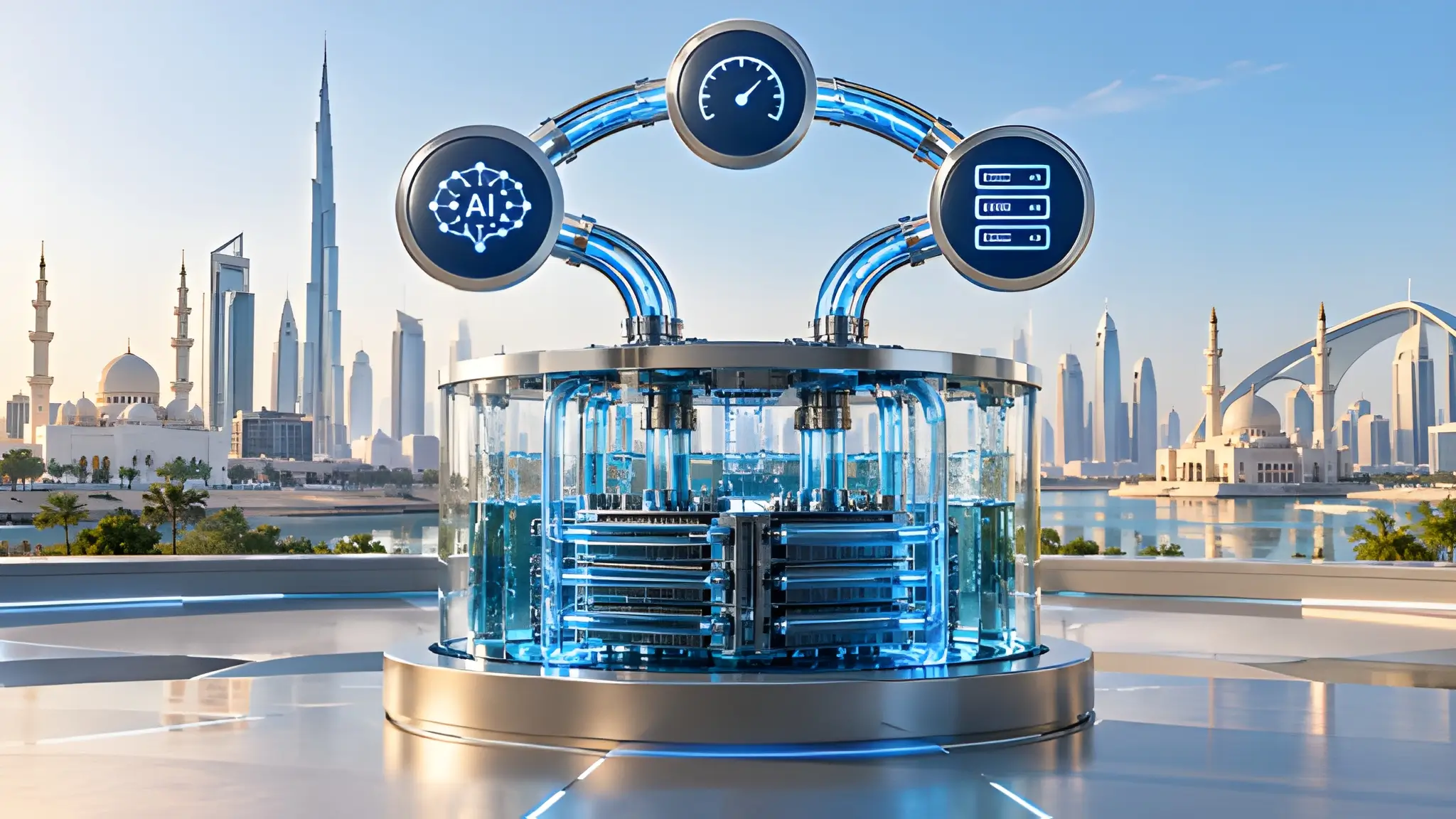
Submer and Intel have signed a collaboration agreement to deliver artificial intelligence and high-performance computing infrastructure across the Middle East, Africa and Turkey. The partnership brings Intel’s compute platforms, validated reference architectures and technology roadmap together with Submer’s engineering capabilities across advisory, design, construction, power, thermal management and IT integration. The companies are positioning the agreement around a regional market where AI deployments increasingly require infrastructure decisions to move in lockstep across compute, electricity and cooling. That shift gives infrastructure design a larger role in determining how quickly organizations can move AI workloads from planning into production.

The collaboration will focus on developing and validating reference architectures for AI and other high-density deployments. Those architectures will combine Intel platforms with Submer’s liquid-cooled infrastructure designs, creating a framework that customers can use when planning demanding compute environments. The approach addresses a growing challenge for operators as higher compute density pushes power and thermal requirements beyond assumptions embedded in many conventional facilities. However, the partnership goes beyond individual technology components by linking compute selection with the physical infrastructure required to operate it.
Liquid Cooling Moves Closer to the Compute Layer
“Customers in this region are not short of ambition on AI and HPC. What they need is a route from design intent to operating infrastructure that holds together technically,” said Khalid Aljamed, general manager (Middle East, Africa and Turkey) at Submer. Aljamed added that working alongside Intel allows Submer to pair proven compute platforms with regional engineering and delivery capabilities, offering customers a single coherent architecture rather than disconnected implementation decisions. That model reflects a broader industry shift toward integrated infrastructure planning as operators confront higher rack densities and increasingly complex thermal requirements. Submer’s regional capabilities span feasibility, engineering and delivery, allowing the company to address both new facilities and existing infrastructure.
The companies will jointly pursue opportunities across sovereign, enterprise, hyperscale, telecommunications and public-sector customers. Submer will support feasibility assessments for new-build facilities as well as retrofits, giving operators a pathway to increase capacity without relying exclusively on greenfield development. The retrofit component matters as existing data center infrastructure faces pressure to accommodate higher-density AI workloads without fundamentally rebuilding every layer of a facility. Meanwhile, the partnership gives Intel another route to connect its compute platforms with infrastructure engineering capabilities closer to customers in the region.

Saudi Arabia Becomes a Key AI Infrastructure Market
“Organisations across the region are rapidly transitioning from experimental AI pilots to production-scale deployments faster than traditional data centers were built to handle,” said Ahmad Alabduljabbar, general manager (Saudi Arabia) at Intel. Alabduljabbar noted that combining Intel’s reference architectures with Submer’s advanced immersion cooling expertise delivers a practical pathway to high-density AI environments critical to realising Saudi Arabia’s Vision 2030 digital leadership ambitions. His comments place infrastructure readiness at the center of the region’s transition from AI experimentation toward sustained production workloads. The requirement extends beyond processors because operators must coordinate compute, power availability, thermal capacity and integration before those systems can operate at scale.
The partnership arrives as Submer expands its regional infrastructure presence and develops its full-stack approach to AI and HPC deployment. The company’s regional model covers advisory, design and build, power solutions, thermal solutions and IT integration, while its liquid-cooling capabilities address the thermal demands created by dense compute environments. That combination gives the collaboration a physical infrastructure dimension that extends beyond hardware procurement. For customers, the objective is to reduce the disconnect between selecting compute platforms and determining whether a facility can actually support them.
Proof-of-Concept Deployments Will Lead the Partnership
Initial operations will prioritize reference architecture development and customer proof-of-concept engagements across target markets. The companies will support those activities with technical workshops, executive briefings and infrastructure integration support designed to move prospective deployments from architecture discussions toward practical implementation. Those engagements can give customers an opportunity to test how Intel platforms and Submer’s cooling and infrastructure systems perform together before committing to larger deployments. The partnership therefore starts with validation and customer engineering rather than a broad infrastructure rollout.
The strategic significance of the agreement lies in its attempt to connect several infrastructure layers that traditionally move through separate procurement and engineering processes. AI workloads increasingly place simultaneous pressure on compute density, power utilization and thermal performance, making coordination between those layers more consequential for deployment timelines and operating economics. Submer and Intel are using the partnership to build a common architecture around those requirements while maintaining regional engineering and delivery support. For the Middle East, Africa and Turkey, that could give organizations a more structured path for translating growing AI ambitions into infrastructure capable of supporting production-scale compute.











