 Skip to content
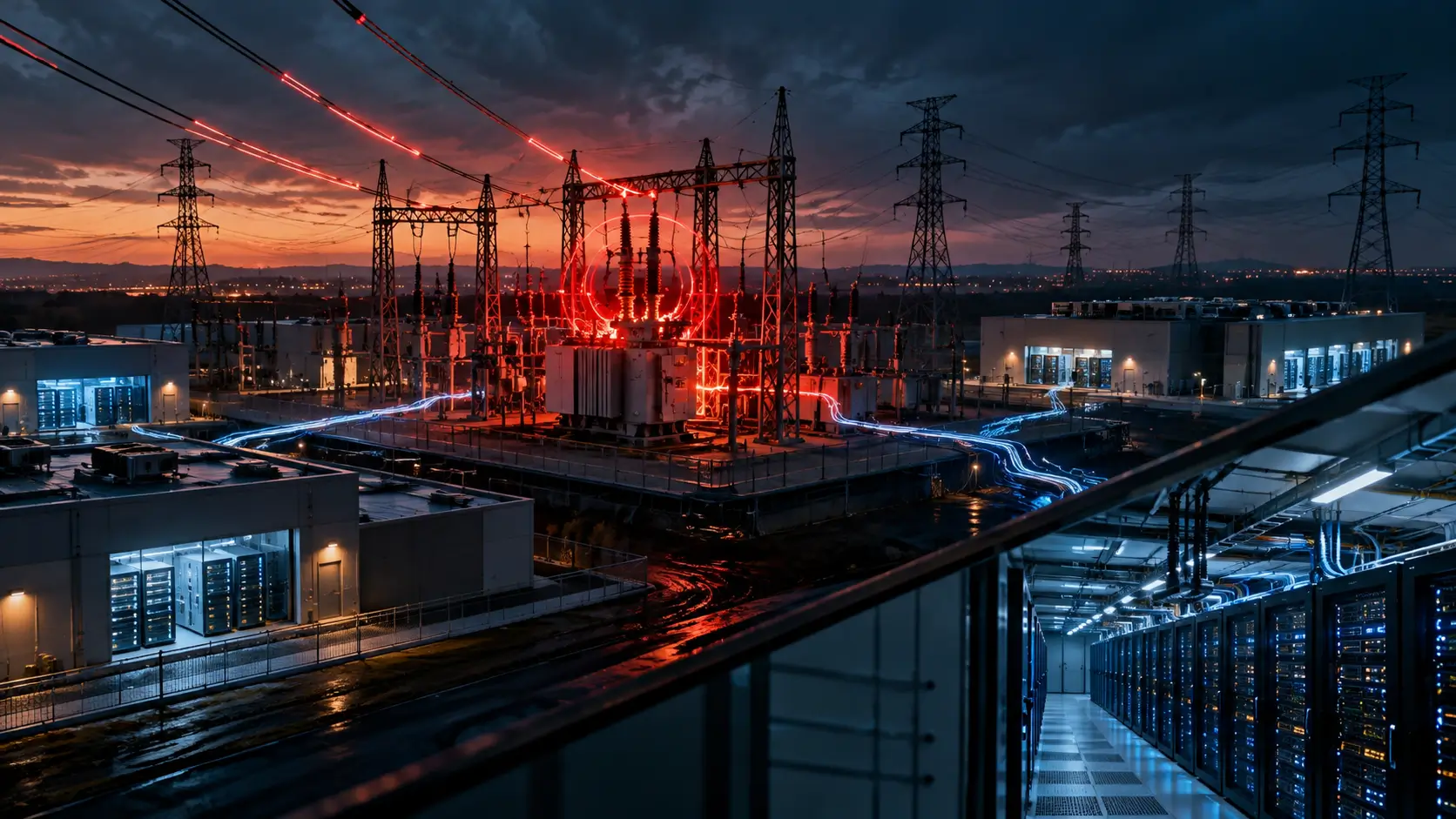
A data center can have backup generators, redundant cooling systems, and multiple power distribution paths, yet still depend on one electrical connection that its operators do not fully control. This dependency often sits beyond the facility boundary, where utility infrastructure serves several customers through interconnected equipment. For organizations investing in artificial intelligence, that arrangement creates operational exposure that conventional facility-level resilience assessments may overlook. A fault affecting an upstream transformer, protection system, or transmission connection can disrupt multiple facilities despite their independent internal designs, although functioning backup systems may maintain computing operations. The challenge becomes more complicated when neighboring customers compete for electrical capacity or require maintenance during overlapping operating periods. Understanding these external dependencies helps executives evaluate whether their computing environments can sustain the availability their applications require.

How Shared Electrical Infrastructure Creates Concentrated Exposure
Electrical independence inside a data center does not necessarily extend to the utility network that supplies its power. Two facilities may operate separate switchgear, transformers, and backup systems while receiving electricity through the same upstream transmission connection. That arrangement introduces common points of failure that can affect both sites during a single electrical disturbance. Utility substations contain breakers, transformers, protection relays, and busbars whose configurations determine how faults propagate across connected circuits. Depending on utility disclosure arrangements, a facility operator may have detailed information about its incoming feeder without complete visibility into the infrastructure supporting that feeder. This potential information gap can make it difficult to establish whether separate facilities provide genuine electrical diversity or simply different connections to a common upstream dependency.
Redundancy protects critical workloads only when the alternative electrical path remains available during the failure affecting the primary path. A second feeder offers limited protection against an incident that disconnects the upstream equipment supplying both circuits. Similarly, backup generators protect against utility interruptions but introduce dependencies involving fuel availability, starting reliability, switching equipment, and maintenance readiness. Operators must examine these relationships as an interconnected system rather than treating each redundant component as an isolated safeguard. Electrical single-line diagrams, utility interconnection agreements, and protection coordination studies can reveal dependencies that equipment inventories alone cannot identify. For enterprise customers, this distinction helps establish whether a provider’s resilience claims reflect independent supply arrangements or redundancy concentrated within the facility boundary.
Why AI Workloads Increase the Consequences of Power Disruptions
Artificial intelligence clusters place demanding electrical loads on infrastructure that must support continuous computing activity and rapid changes in utilization. Graphics processing units, networking equipment, and associated cooling systems create concentrated power requirements within relatively small physical areas. Large training environments may consume substantial electrical capacity while running coordinated workloads across thousands of computing components. These operating characteristics require careful evaluation of transformer loading, voltage stability, harmonic distortion, and the available capacity of upstream distribution equipment. Operators also need to understand how workload scheduling and power management influence demand during changes in cluster activity. Without accurate electrical load forecasts and system models, operators may underestimate infrastructure requirements or make capacity assumptions that do not reflect the expected behavior of their computing environments.

Power interruptions can disrupt distributed training jobs, delay inference services, and interrupt data movement between interconnected computing systems when continuity mechanisms cannot sustain operations. Some workloads recover through checkpointing, while others require extensive restoration activity before productive computing can resume. The operational consequences depend on application architecture, checkpoint frequency, storage durability, and the effectiveness of automated recovery procedures. Organizations running customer-facing inference services must also account for latency degradation, unavailable capacity, and contractual service commitments. For training environments, interrupted execution can increase the amount of computing work required to complete a planned processing cycle. Executives evaluating resilience should measure these consequences through recovery objectives and workload-specific failure scenarios rather than relying exclusively on facility uptime statistics.
Capacity Constraints Can Become a Strategic Business Risk
A data center’s physical space does not establish how much additional computing equipment its electrical connection can support. Available capacity depends on utility infrastructure, contracted service limits, transformer ratings, and the operating conditions of the surrounding network. AI deployment plans can encounter restrictions when proposed loads exceed the capability of existing transmission or distribution assets. Network upgrades may require additional transformers, switching equipment, protection studies, and coordination with other connected customers. Consequently, a completed building may remain unable to accommodate its intended computing configuration until the required electrical infrastructure becomes available. Infrastructure investment decisions should distinguish between installed facility capacity, utility-contracted capacity, and power that the network can reliably deliver.
Multiple customers connected to the same electrical network can influence the timing and complexity of capacity expansion projects. Utilities must assess aggregate demand, system reliability, and the upgrades necessary to accommodate new or increasing electrical loads. A neighboring industrial development or another computing campus can change the assumptions supporting an earlier expansion plan. Utility planning decisions also depend on equipment procurement, regulatory requirements, and the availability of suitable transmission connections. For businesses purchasing long-term computing capacity, uncertainty around these dependencies can affect deployment schedules and commercial commitments. Executives should request evidence of approved service capacity and planned infrastructure upgrades before treating future electrical availability as a confirmed resource.
Protection Systems and Maintenance Introduce Less Visible Dependencies
Substation protection systems detect abnormal electrical conditions and operate breakers to isolate equipment affected by faults. Their effectiveness depends on relay settings, current transformer performance, communication arrangements, and coordination across connected electrical circuits. Incorrect settings or unexpected operating conditions can cause protective devices to disconnect equipment beyond the immediate fault location. This behavior matters when multiple critical facilities depend on electrical paths that share upstream protection arrangements. Operators need to understand which disturbances the utility can isolate locally and which events may interrupt several connected customers. Technical reviews should include fault studies, protection coordination information, and documented restoration arrangements wherever utilities can provide those details.
Maintenance activities may temporarily remove transformers, breakers, bus sections, or transmission circuits from normal service. A data center can continue operating during these activities while facing greater exposure to another electrical failure. The resulting operating condition may reduce available supply paths or change the network’s fault-clearing behavior. Furthermore, maintenance windows can overlap with periods of high computing demand or scheduled infrastructure changes inside the facility. Facility operators need advance notice of utility work and a clear understanding of the temporary electrical configuration. Coordination between utilities, data center operators, and enterprise customers helps prevent maintenance decisions from creating avoidable operational exposure.
What Enterprise Buyers Should Examine Before Committing to Capacity
Enterprise infrastructure assessments commonly address technical considerations such as cooling redundancy, backup generation, physical security, and contractual availability, although the scope varies by buyer and provider. Those assessments should also address the electrical infrastructure connecting the facility to the wider utility network. Buyers can request information about incoming supply arrangements, upstream common points of failure, contracted capacity, and restoration responsibilities. Access to detailed upstream utility diagrams may depend on confidentiality, security, and contractual restrictions, requiring buyers to rely on appropriately scoped engineering assessments. Independent technical reviews can help determine whether proposed diversity arrangements address meaningful electrical failure scenarios. This approach gives procurement and technology leaders stronger evidence when comparing facilities that advertise similar availability characteristics.
Service-level agreements generally define provider obligations, performance measurements, remedies, and exclusions under specified operating conditions. They do not automatically eliminate exposure to electrical failures that originate beyond the provider’s direct control. Customers should examine how contracts address utility interruptions, prolonged capacity restrictions, restoration priorities, and dependencies involving third-party infrastructure. Recovery commitments also need alignment with the architecture of applications running across the contracted computing environment. A financially significant workload may require geographic distribution, alternative computing capacity, or application-level recovery capabilities beyond the protections available at one site. Legal, procurement, engineering, and operations teams should evaluate these requirements together before finalizing long-term infrastructure commitments.
Building Resilience Around the Actual Electrical Dependency
Effective resilience planning starts with identifying the electrical components and network arrangements that could interrupt multiple systems simultaneously. Engineering teams can map upstream dependencies against facility power paths, backup systems, and application recovery requirements. They should validate generator transfer behavior, battery autonomy, protective device coordination, and restoration procedures through appropriate testing. Application teams must establish whether workloads can restart, migrate, or continue operating when a facility loses utility power. Meanwhile, infrastructure architects should consider how data replication and alternative computing locations affect recovery time and service continuity. These measures connect electrical engineering decisions with the business consequences of unavailable computing capacity.
Electrical infrastructure conditions can change as utilities connect new customers, upgrade equipment, and revise operating arrangements. A risk assessment completed during facility commissioning may no longer reflect the surrounding network several years later. Operators should maintain communication with utilities about capacity changes, planned maintenance, significant network modifications, and reliability concerns. Periodic reviews can examine whether electrical demand remains consistent with contracted capacity and established operating assumptions. Senior management should receive reporting that distinguishes infrastructure limitations from application-level availability and recovery performance. Such oversight helps organizations recognize emerging dependencies before they affect expansion decisions, customer commitments, or critical computing operations.
Making Electrical Transparency Part of AI Infrastructure Governance
Infrastructure governance should connect technical electrical assessments with investment decisions, operational accountability, and business continuity requirements. Chief technology officers need visibility into the dependencies that could interrupt essential computing services across multiple facilities. Chief financial officers need credible assumptions about power availability when evaluating capital commitments and the economics of future expansion. Risk leaders should understand how utility equipment failures, maintenance arrangements, and contractual limitations affect enterprise exposure. Additionally, procurement teams need consistent criteria for comparing providers whose facilities depend on different electrical network configurations. A common assessment framework allows these stakeholders to evaluate infrastructure commitments using documented engineering evidence rather than broad assurances about resilience.
The reliability of an AI deployment depends on infrastructure that extends well beyond the servers delivering its computing capacity. Utility connections, protection arrangements, available electrical capacity, and restoration processes all influence whether those servers can operate as intended. Organizations gain a clearer understanding of operational exposure when they examine these dependencies alongside facility design and application architecture. Transparent discussions with utilities and infrastructure providers can reveal limitations that conventional procurement reviews may miss. For executives, the practical objective is to align infrastructure investment with verified electrical capabilities and realistic recovery expectations. A facility becomes a more dependable foundation for critical computing when its upstream constraints are understood, documented, and incorporated into operating decisions.










