 Skip to content

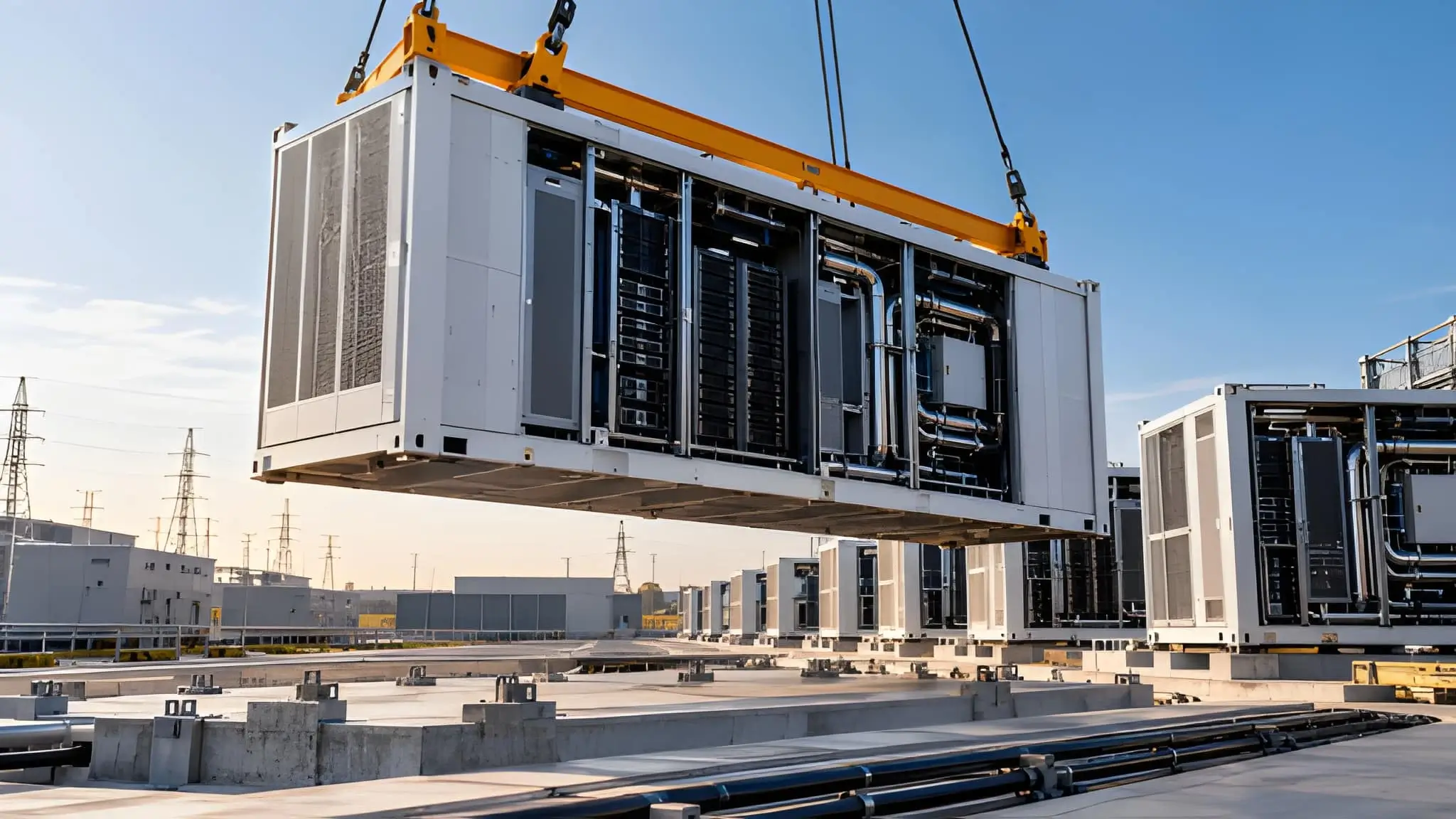
An AI system can be ready to run while the infrastructure required to support it remains unfinished. That gap between computing hardware and productive capacity presents a significant challenge for operators coordinating complex AI infrastructure deployments. Nvidia’s new DSX POD concept raises an important question for the industry: if the essential computing, networking and cooling systems can arrive integrated and tested, why should every deployment follow the same construction-heavy process?

Introduced by Nvidia at GTC Berlin on Oct. 21, 2026, DSX POD offers a reference design for factory-integrated AI infrastructure built around the company’s Vera Rubin platform. Nvidia says the approach can reduce deployment time at a prepared site from approximately six months to as little as 14 days. Partners integrate and validate the equipment before shipment, leaving operators to connect the delivered units to the necessary site infrastructure.
The more significant development lies beyond the shorter installation schedule.Nvidia is advancing a model in which operators can procure factory-integrated AI infrastructure, with partners completing much of the equipment integration and validation before delivery rather than performing all of that work at the deployment site. If this approach scales, the industry could begin treating AI capacity more like a manufactured product and less like a bespoke construction project.
The Biggest Change Is Where the Work Happens
Traditional data center development requires teams to coordinate facility design, electrical systems, cooling infrastructure, equipment installation, network integration and operational testing. Although developers can overlap many of these activities, dependencies among installation, infrastructure readiness and system testing can delay deployment and extend the time before a facility begins supporting production workloads. Containerized data centers offer a different sequence. Instead of completing most equipment integration at the destination, manufacturers assemble the relevant systems in a controlled factory environment. They can install cabling, integrate liquid cooling, configure equipment and perform functional checks before transporting the finished units to the deployment site.

Nvidia’s DSX POD reference design formalizes that approach for Vera Rubin-based AI infrastructure. Its purpose is not simply to put servers inside a container. It brings multiple interconnected systems together in a repeatable configuration, with partners responsible for factory integration and validation before delivery. Moving this work upstream could make deployment schedules more predictable. Factory processes allow manufacturers to standardize installation procedures, coordinate components before shipment and identify certain integration problems before equipment reaches the customer. The potential advantage is consistency as much as speed. Operators could plan around a defined deployment unit, replicate a validated configuration and add capacity through a more repeatable process. That would not eliminate engineering, but it could reduce the amount of engineering that each individual site must repeat.
Fourteen Days Could Change the Economics of Waiting
The financial implications become clearer when deployment time is viewed as an investment variable rather than a construction metric. AI infrastructure requires substantial capital commitments before operators can generate revenue from production workloads. Equipment procurement, facility preparation and systems integration must align before computing resources can serve customers. Every additional delay can extend the period between committing capital and putting that investment to productive use. Nvidia’s proposed reduction from six months to as little as 14 days could narrow that interval substantially at suitably prepared sites. Nvidia says its factory-integrated approach could help customers bring production capacity online sooner, allowing them to begin serving workloads and generating revenue earlier when site infrastructure is ready.
However, the commercial benefit will depend on individual projects. A shorter installation schedule does not automatically guarantee earlier customer demand, full utilization or profitable operations. Operators must still account for financing costs, equipment prices, power expenses, network performance and the time required to commission workloads. Even so, a repeatable deployment model could change how businesses sequence their investments. Instead of committing to a large installation that depends on extensive on-site integration, an operator might plan capacity additions around standardized units and align deliveries more closely with infrastructure readiness and expected demand. That possibility deserves attention because AI infrastructure investment involves more than securing the latest accelerators. It also requires managing the time between buying computing capacity and putting it to work.
Standardized Infrastructure Could Reshape Capacity Planning
If factory-integrated systems prove reliable at scale, their implications could extend into how operators design and expand AI facilities. Standardized deployment units could help teams separate facility preparation from equipment integration. Developers could prepare the necessary infrastructure while manufacturing partners assemble and test computing systems elsewhere. Once both workstreams reach completion, the operator could bring them together through a more predictable installation process. This approach could also support incremental capacity planning. Rather than treating every expansion as a distinct engineering exercise, operators could assess whether additional standardized units fit their power budgets, cooling capabilities, network architecture and demand forecasts.
Yet repeatability should not be confused with universal compatibility. Different workloads, facility designs and operating requirements may demand different configurations. A reference design can establish a common starting point, but it cannot remove the need to evaluate each deployment against its intended purpose. The broader industry question is whether operators will increasingly buy infrastructure in predefined, factory-validated configurations instead of assembling every major component through separate procurement and integration processes. Nvidia’s approach points toward that possibility, although widespread adoption will depend on execution, economics and customer requirements.
The Real Shortcut Is Reducing Deployment Uncertainty
Nvidia’s containerized data center concept does not make AI infrastructure independent of buildings, power grids or cooling systems. It targets a narrower problem: the time and complexity involved in integrating expensive computing equipment at the deployment site. That distinction makes the proposal more consequential than a simple installation-time claim. By moving integration and validation into a factory, Nvidia is testing whether operators can treat a larger share of AI infrastructure as a standardized product with a more predictable path to operation.
The next test will be whether that model delivers measurable benefits across real deployments, including lower integration complexity, dependable commissioning and improved capital utilization. The 14-day figure is Nvidia’s stated deployment target for prepared sites, not a verified result across operating facilities, and it does not include the time required to prepare the supporting infrastructure. If the model succeeds, the industry may begin to reconsider where data center construction ends and equipment manufacturing begins. The biggest shortcut may not be eliminating construction altogether. It may be ensuring that far less of the critical integration work has to happen after the equipment reaches the site.










