 Skip to content

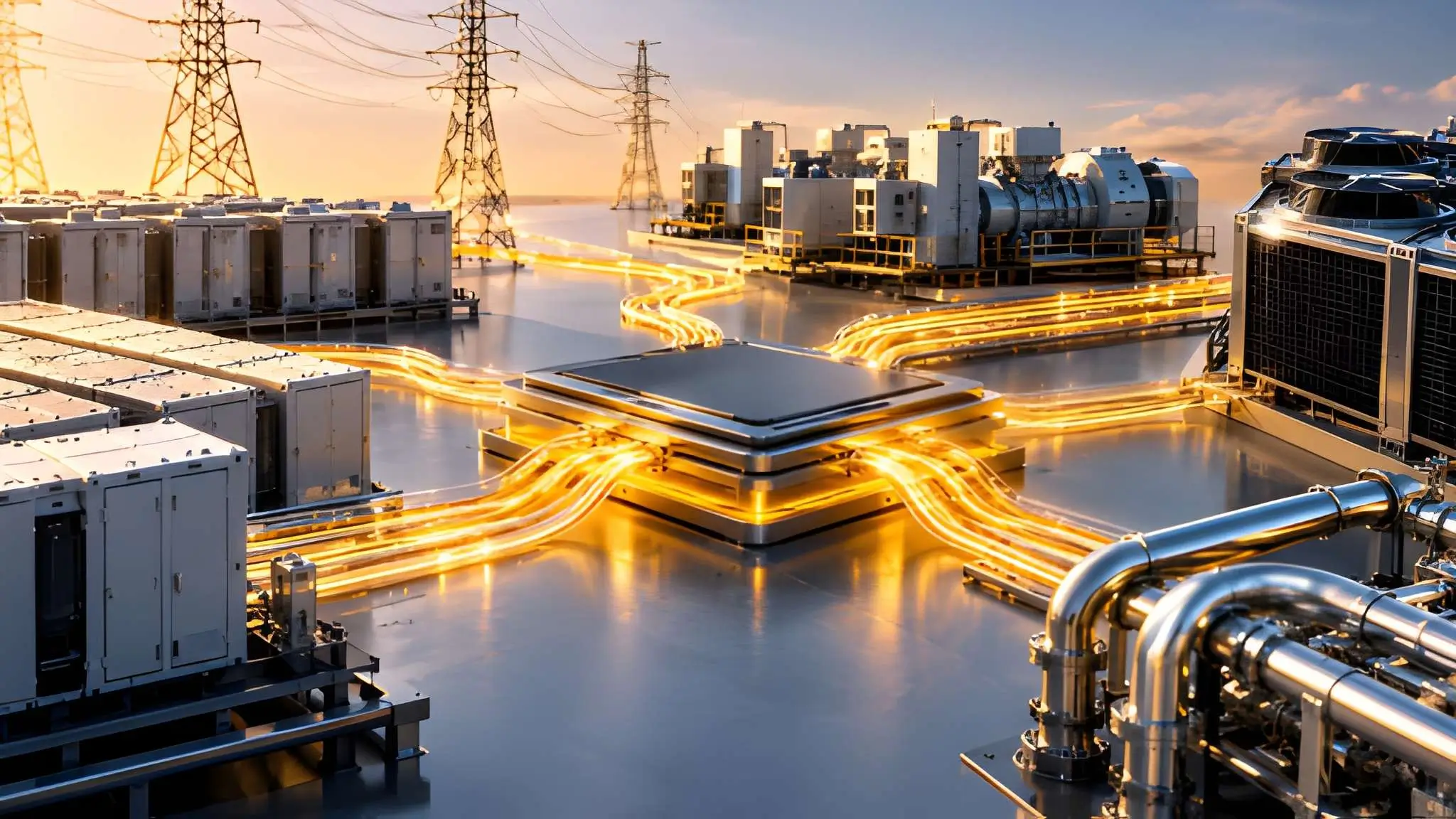
An AI data center can have enough electrical capacity, installed batteries, standby generators and sophisticated cooling equipment without guaranteeing that those systems will respond effectively to the same disturbance. The problem lies in the space between their individual capabilities and their collective behavior. Each component follows its own physical constraints, control settings and response times, while AI workloads can create rapid changes in electrical demand that require explicit consideration in infrastructure planning.

That distinction deserves greater attention as operators expand high-density AI deployments. Securing electricity, installing backup capacity and qualifying cooling equipment remain essential engineering tasks. However, those investments address only part of the reliability equation. The more difficult question concerns how the facility coordinates its assets when electrical demand, thermal conditions and available power change simultaneously.
This is where the industry’s hardware-first approach encounters a potentially expensive blind spot. Developers can commission every major component and still leave the complete facility untested against the interactions that determine how it performs under pressure. The next infrastructure advantage may therefore depend less on adding another layer of equipment than on designing the control architecture that makes existing equipment behave as a coherent system.
Individual readiness does not guarantee system readiness
The physical infrastructure inside an AI facility operates on different timescales. Battery systems can respond rapidly, depending on their configuration and controls. Generators must respect startup requirements, operating conditions and ramp-rate limits. Cooling equipment must manage changing heat loads within the constraints of pumps, compressors, coolant loops and temperature limits. Meanwhile, the computing environment can alter its electrical demand as workloads start, stop, migrate or change intensity.

These differences do not automatically create a reliability problem. They create a coordination problem when the facility’s controls fail to account for how one system’s response affects another. Consider a sudden increase in IT demand. The electrical architecture must supply the additional load without exceeding the limits of its distribution equipment. Storage may help bridge a short-term imbalance, but the controller must understand the battery’s available power, state of charge and operating restrictions. If generators supply part of the demand, their contribution depends on their actual operating state and response characteristics. Cooling systems must also accommodate the additional heat that follows higher computing activity, even if their thermal response does not match the electrical response.
No individual component needs to malfunction for the overall system to perform poorly. The sequence itself can create a problem if the facility’s controls rely on incompatible assumptions, delayed signals or poorly coordinated operating thresholds. That distinction changes how developers should evaluate infrastructure readiness. Equipment commissioning establishes whether individual assets meet their specified requirements. Integrated testing must establish whether those assets work together across the operating conditions that matter to the facility.
The control layer deserves the same scrutiny as the equipment
Data center developers routinely evaluate power availability, electrical topology, redundancy and cooling capacity as distinct engineering requirements. Those categories remain useful, but they can obscure a critical dependency: the facility needs a control layer that understands the operating limits and priorities of every connected system. Where existing building or power management systems lack sufficient cross-system coordination, developers may need an additional supervisory control layer or expanded integration capabilities. It must coordinate electrical distribution, energy storage, generation, cooling and, where appropriate, workload management without assuming that every asset can respond immediately or independently.
The challenge involves more than collecting telemetry. A controller needs accurate operating data, defined response priorities and a reliable method for resolving competing demands. It must also distinguish between actions that improve short-term stability and decisions that create longer-term constraints. Discharging a battery may help manage a brief power imbalance, for example, but repeated use can reduce the reserve available for a later event. Increasing cooling output may address rising temperatures, but it also changes the facility’s electrical demand.
Developers should therefore ask a harder question during design reviews: Does the control architecture understand the consequences of its own interventions? This is not an argument for replacing established protection systems with a single software platform. Protective relays, equipment-level controllers and independent safety mechanisms retain essential roles. Higher-level orchestration must operate within those safeguards, not override them. The objective is to coordinate the facility’s operating decisions while preserving the protections that prevent local problems from becoming larger failures.
The competitive advantage may come from better coordination
The financial implications extend beyond avoiding outages. Better orchestration could help operators use existing power infrastructure more effectively, preserve battery reserves, coordinate cooling responses and reduce unnecessary operational constraints. The actual benefits will depend on facility design, workload characteristics, energy prices and the quality of the control implementation. Software will not eliminate physical limits. No controller can make an undersized electrical connection deliver unlimited power, accelerate a generator beyond its capabilities or remove heat without sufficient thermal capacity. Orchestration works within those constraints by coordinating available resources and making their trade-offs explicit.
That qualification matters because the industry could easily turn orchestration into another marketing label. A platform does not become intelligent merely because it connects multiple systems to a dashboard. Its value depends on whether it improves measurable outcomes under realistic operating conditions and whether operators can verify those improvements without compromising safety. The more meaningful investment question is therefore not whether a developer has purchased an orchestration platform. It is whether the facility’s architecture, control logic and operating procedures can respond to changing conditions as one coordinated system.
AI infrastructure development still requires investment in generation or grid supply, electrical distribution, storage where appropriate and cooling systems. Those assets establish the physical capacity on which computing depends. But capacity alone cannot guarantee that the facility will use that capacity effectively when its operating conditions change. AI infrastructure projects increasingly require investment in generation, storage, electrical distribution and cooling. Its next challenge is to prove that those pieces can work together under pressure. The strongest AI infrastructure may not be the facility with the most equipment, but the one that coordinates its equipment most effectively when the conditions stop following the plan.










