 Skip to content

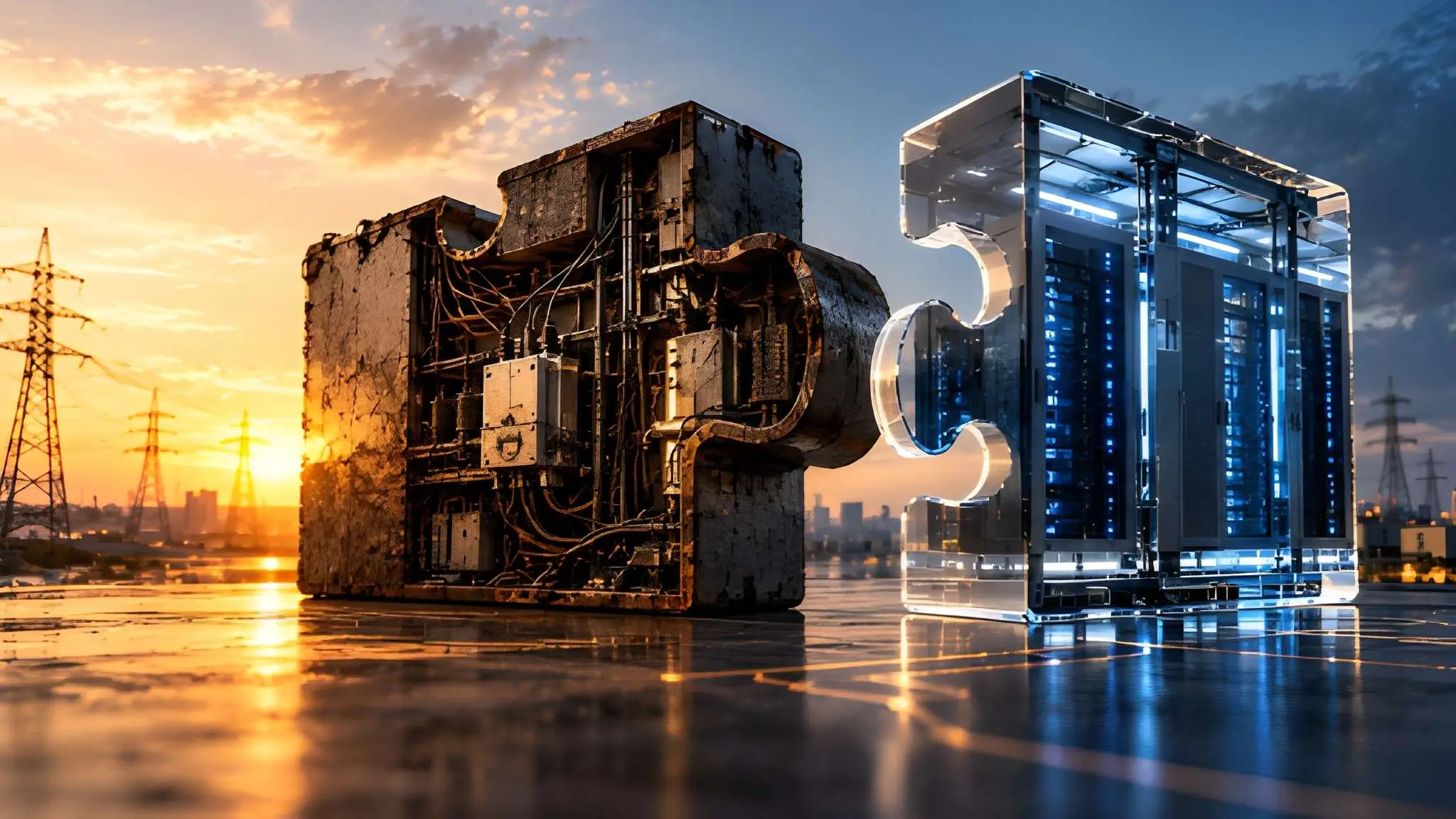
The most revealing question about America’s electricity crisis is not how much power artificial intelligence consumes. It is why an economy with an extensive electricity network increasingly struggles to deliver affordable, reliable power as demand evolves. Data centers have become an obvious target because their electricity requirements are substantial, their expansion can be rapid, and their infrastructure places new demands on local grids. Their arrival also creates a visible connection between the technology industry and the electricity bills that households and businesses must pay. That connection makes them an easy explanation for a much more complicated problem.

Yet rising demand does not automatically explain rising electricity prices. The cost of supplying power depends on how utilities generate electricity, move it across transmission networks, maintain equipment, finance infrastructure and distribute those expenses among customers. When these systems operate inefficiently, additional demand can expose existing weaknesses rather than create them. AI infrastructure deserves scrutiny. Its electricity requirements can create genuine capacity constraints, intensify competition for grid connections and force difficult decisions about infrastructure investment. But treating that demand as the entire explanation for expensive electricity oversimplifies the economics of a network that must serve industrial facilities, commercial buildings and residential customers simultaneously. America’s electricity challenge requires a harder question: Is the country using its existing power infrastructure as effectively as possible before asking customers to finance more of it?
Building More Infrastructure Is Not the Same as Using It Better
Electricity networks require continuous investment. Transmission lines, substations, transformers and distribution equipment must support changing demand while meeting reliability requirements. Utilities cannot eliminate these obligations simply by improving operational efficiency. However, building additional infrastructure and extracting more value from existing assets represent different investment strategies. The first expands physical capacity. The second examines whether the network can deliver more electricity through better planning, monitoring, maintenance and operating practices.
Transmission networks do not operate at their theoretical limits under every condition. Actual capacity depends on factors such as equipment ratings, temperature, voltage stability, power flows and the need to maintain reliability when components fail. Some lines face binding constraints while other parts of a network retain available capacity. The challenge involves identifying where that capacity exists, whether operators can safely access it and what upgrades would make additional transfers possible.

Technologies such as dynamic line ratings, advanced power-flow controls and improved grid monitoring can help operators assess network conditions more precisely. Better coordination between transmission planning and large-load connections can also reveal opportunities to use existing infrastructure more effectively. None of these measures eliminates the need for new construction. Nor can software resolve every physical bottleneck. Their value lies in helping utilities distinguish between capacity that genuinely requires new infrastructure and capacity that existing assets could provide under different operating conditions.
Data Centers Should Pay for the Costs They Actually Create
Rejecting simplistic blame does not mean giving large electricity consumers a free pass. Data centers can create concentrated demand in locations where the grid lacks sufficient capacity. Their requirements may trigger new substations, transmission upgrades or other investments that would not otherwise occur on the same schedule. If utilities distribute those costs indiscriminately, existing customers could face expenses associated with serving new industrial loads. That risk deserves serious attention.
Utilities and regulators need transparent methods for determining which investments serve a specific customer, which support the wider network and how each category should be funded. Large-load agreements can address connection costs, capacity commitments and the consequences of changing project requirements. Long-term planning can also help prevent speculative demand assumptions from driving premature infrastructure spending.
At the same time, utilities should evaluate whether new infrastructure will provide broader benefits beyond the customer that initially triggers its construction. A transmission upgrade may support multiple future connections or improve reliability across a wider area. Cost allocation should reflect those benefits rather than automatically assigning every expense to one party. The objective is accountability, not punishment. Data center operators should face the costs they cause, while electricity customers should not finance avoidable inefficiencies simply because a utility can classify them as infrastructure needs.
America Needs a Better Measure of Grid Performance
The debate over AI electricity demand risks becoming a contest over which industry or institution deserves the most blame. That framing offers an emotionally satisfying explanation for rising bills but does little to improve the network. A more useful test would examine how effectively utilities use existing transmission capacity, how thoroughly they compare operational improvements with new construction, how accurately they forecast demand and how transparently they allocate infrastructure costs.
Those questions require attention to engineering as well as economics. Grid operators must maintain safety margins, preserve reliability and account for changing conditions. Not every unused segment of transmission capacity represents an opportunity, and not every proposed upgrade signals poor planning. But those technical constraints should encourage more rigorous investment decisions, not end the discussion. AI will continue to test the electricity system’s ability to accommodate concentrated, power-intensive demand. That pressure makes grid modernization more urgent, but it also creates an opportunity to reconsider how utilities plan, operate and finance the infrastructure already in place.
America does not need to choose between supporting AI infrastructure and protecting electricity customers. It needs an electricity system that can distinguish necessary expansion from avoidable expenditure, assign costs fairly and extract as much practical value as possible from existing assets. Data centers may be accelerating the problem. They are not, by themselves, a complete explanation for it. The real test is whether the electricity industry can turn rising demand into a reason to operate the grid more intelligently, rather than treating every new challenge as another argument for building more.










