It is no secret that computing demand is outrunning the energy infrastructure built to support it, and Battery Coin’s AI Utility Token Sale positions itself squarely against that growing imbalance. Rather than competing in the overcrowded GPU narrative, the organization is positioning itself around power availability, backing domestic graphene production and hemp-graphene battery manufacturing as a stabilizing layer for U.S. data-center growth.
The company claims access to up to $38 billion in annual graphene and graphene oxide production capacity through futures contracts, supplying raw materials for cobalt-free, lithium-free hemp-graphene battery systems designed specifically for AI workloads. The rationale is clear. With AI projected to consume as much as 10% of U.S. electricity by 2030, the bottleneck is shifting from processors to power economics. Battery Coin’s pitch is that next-generation batteries can reduce operating costs, mitigate grid strain, and remove dependence on lithium supply chains, positioning energy storage, not compute hardware, as the real choke point for AI scalability.
The token sale itself is structured under the Battery Association (UFOP), a nonprofit aligned with ethical AI and clean-energy initiatives, and operates under Regulation D Rule 506(c) and Regulation S, limiting access to association members. The organization emphasizes that the tokens offer platform utility only, no securities features, financial rights, or public solicitation, underscoring a compliance-first approach amid mounting regulatory scrutiny of crypto-funded infrastructure plays.
Battery Coin’s technology narrative centers on the performance profile of graphene. Its hemp-graphene batteries are described as cobalt-free, lithium-free, capable of charging up to 50 times faster than lithium-ion systems, non-explosive, 92% recyclable, and deployable in modular 1 MW configurations. The positioning is pragmatic: if energy cost determines AI viability, storage efficiency dictates competitiveness.
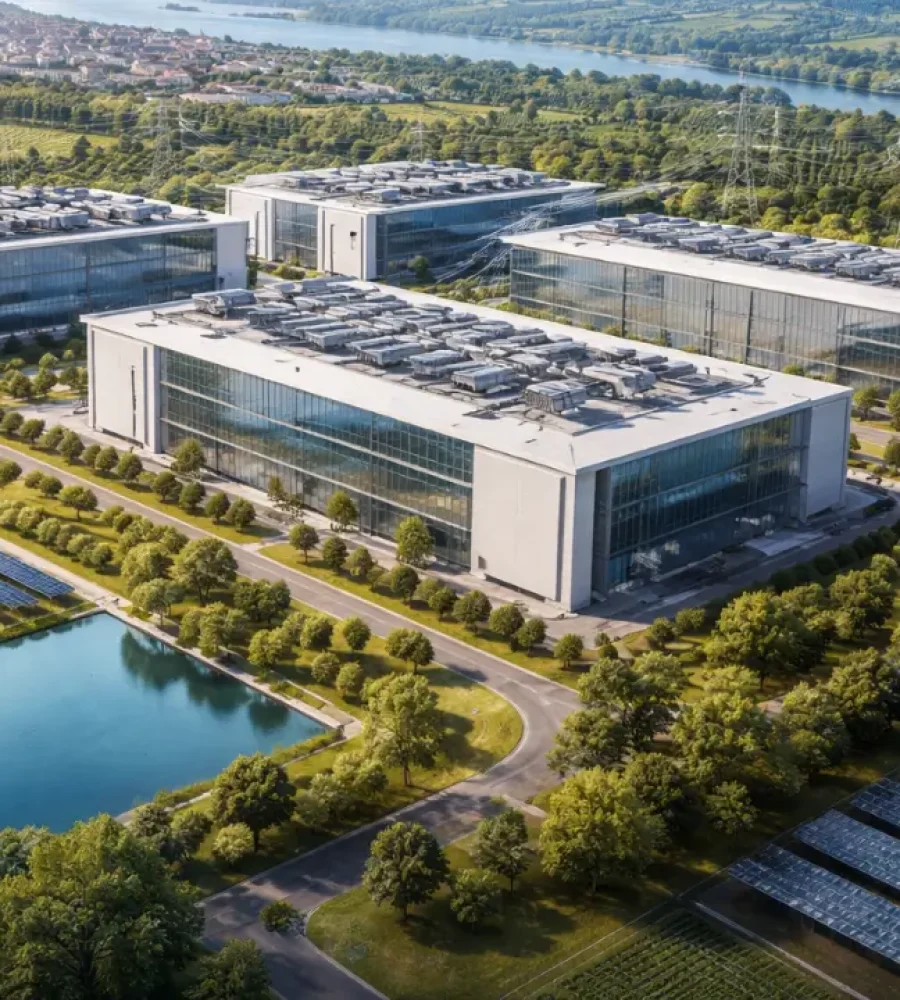
That strategic logic is grounded in physical investment. The group is backing an $800 million, 300 MW battery manufacturing facility near Las Vegas, meant to operate as a domestic clean-energy hub supplying data centers, distributed compute networks, and renewable-energy integrations. The facility also aligns with broader U.S. objectives to onshore critical technology supply chains while reducing dependence on rare-earth and lithium imports.
But Battery Coin is not limiting its ambitions to energy storage alone. Through its Apollo Project 2.0, the organization plans to roll out 25 decentralized AI Root Servers worldwide, enabling advanced inference workloads, distributed AI processing, and quantum-resistant compute systems. Phase one activation is scheduled for Q4 2026, with full deployment targeted by 2030. These servers are designed to interface with multiple blockchain ecosystems, including Bitcoin, Ethereum, Solana, Avalanche, and others, without native protocol changes, with AI outputs verifiable via on-chain hashing.
Application development is already under way. The infrastructure will support the AI Movies Platform, providing automated content creation and distributed rendering, with its first project, Matrix Decoded: Satoshi Returns, currently in pre-production. A parallel rollout across an AI Gaming Platform is planned, where intelligent NPC behavior and adaptive environments will operate across interconnected blockchain arenas. In keeping with regulatory positioning, all digital assets within the ecosystem function solely as access credentials, not economic instruments.
Viewed collectively, the initiative reveals a sector recalibrating around energy security rather than pure compute expansion. Battery Coin’s strategy implicitly acknowledges that the sustainability debate surrounding AI data centers, resource extraction, grid strain, cooling demands, can no longer sit outside infrastructure planning. Whether its graphene-based battery approach can deliver at industrial scale remains unproven. But the commentary embedded in the launch is unmistakable: AI’s growth curve will be limited less by innovation than by energy systems capable of supporting it.