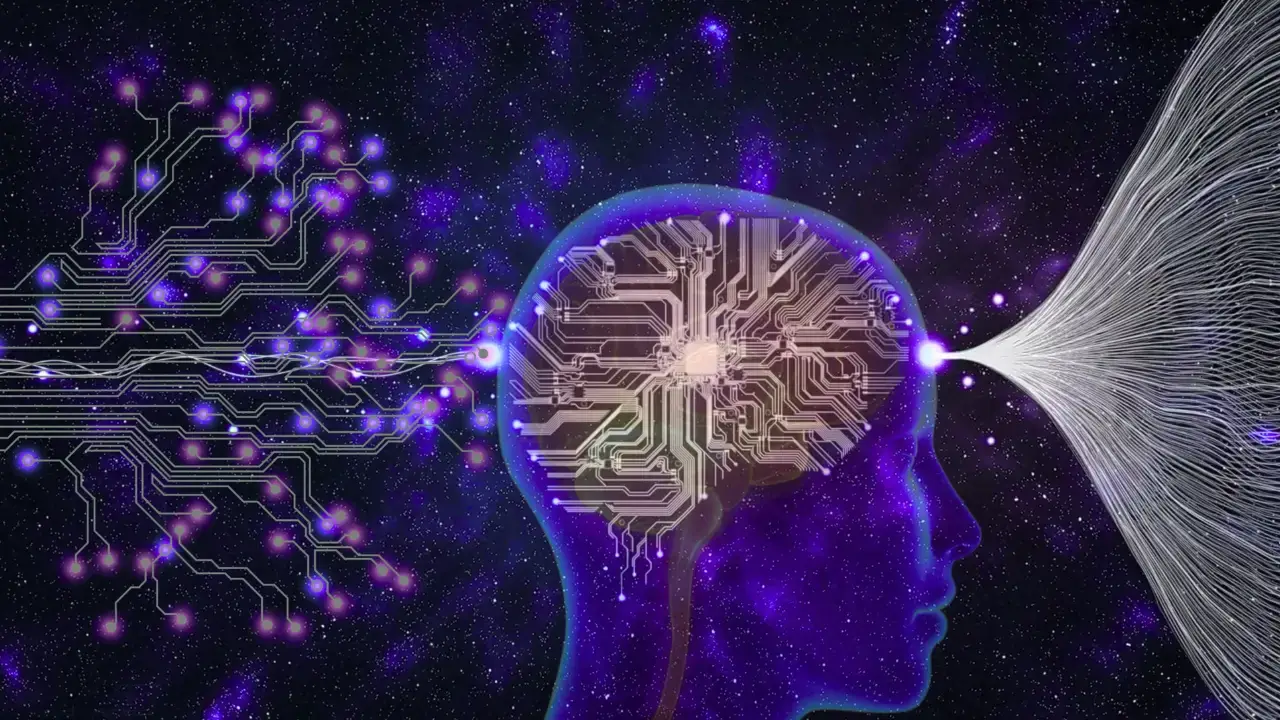
At MIT, PhD student Miranda Schwacke is exploring a provocative idea: what if the next frontier of artificial intelligence does not rely on larger GPUs or massive data centers, but on computers that function more like the human brain?
Conventional computing repeatedly moves data between memory and processing units, creating significant inefficiency. Schwacke focuses on neuromorphic devices that integrate computation and memory in the same location, mimicking neurons and synapses. This design offers the potential for substantial improvements in energy efficiency, a critical consideration as AI continues to demand more power.
Schwacke’s research has practical relevance. The trajectory of AI development shows that incremental hardware improvements alone will fail to sustain growth responsibly. Scaling AI in a way that is both technically feasible and environmentally responsible requires a fundamental rethink of how machines compute. Brain‑like systems based on neuromorphic principles present a path forward.
The Energy Challenge of AI
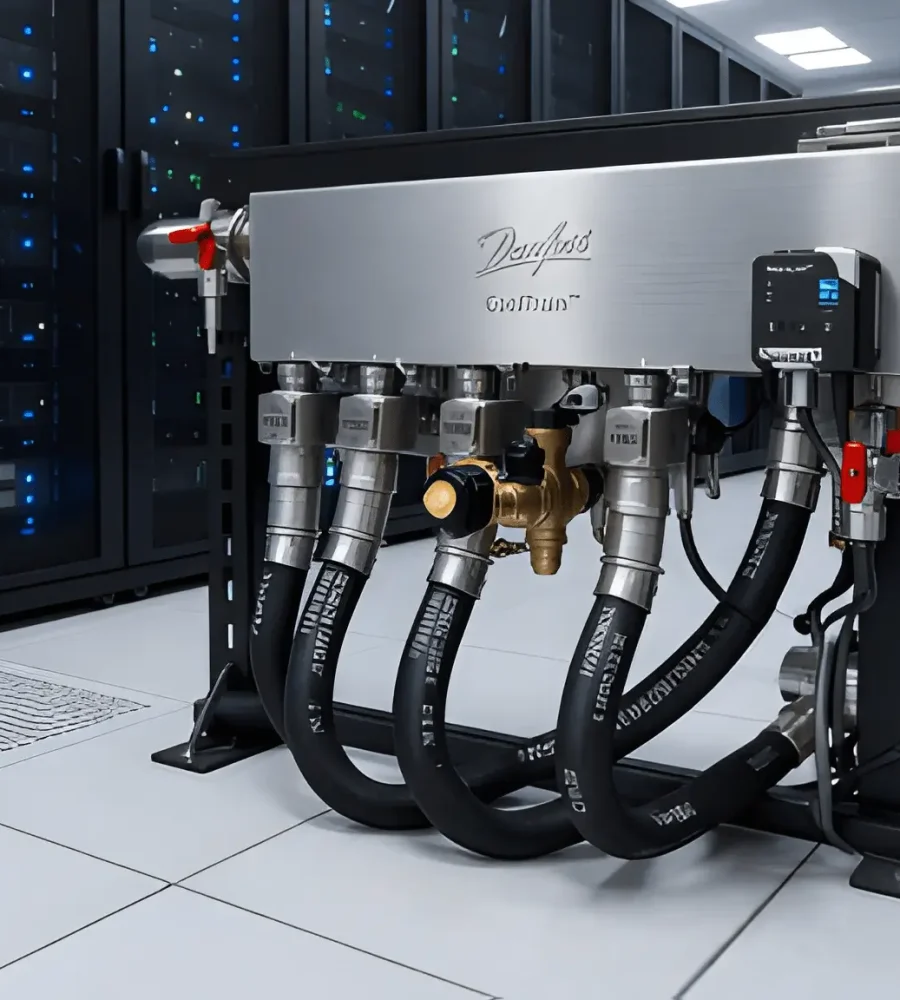
Training and running large AI models consumes enormous amounts of energy. Massive GPU clusters perform computations in data centers that require extensive cooling systems. By contrast, the human brain performs highly complex tasks such as perception, reasoning, and language comprehension while consuming roughly 20 watts, equivalent to a dim light bulb. This comparison reveals a profound inefficiency in current AI architectures.
The source of inefficiency lies in the separation of memory and computation. Every time data moves from memory to processing and back, energy is expended. AI workloads amplify this effect due to their massive data movement. As models reach trillion-parameter scales, the energy and environmental costs of conventional architectures have become unsustainable.
How Brain‑Like Computing Works
Neuromorphic computing offers a fundamentally different approach. Memory and processing coexist, mirroring the human brain, where neurons store and process information simultaneously. This reduces costly data movement and enables event-driven computation, in which energy is consumed only when processing occurs.
Neuromorphic systems often use spiking neural networks, which communicate through discrete spikes rather than continuous signals. Computation occurs selectively, resulting in significantly lower energy consumption.
Some practical examples demonstrate the potential. China’s Darwin Monkey neuromorphic supercomputer operates at approximately 2,000 watts, similar to the energy use of a household appliance, while supporting billions of artificial neurons. Conventional supercomputers performing similar tasks consume multiple megawatts.
Environmental Advantages
The benefits of neuromorphic computing extend beyond energy savings. Lower power consumption produces less heat, which reduces the need for cooling systems that can account for up to 40 percent of energy use in traditional data centers. Reducing energy at the source reshapes the overall energy profile of AI infrastructure.
Lower energy use also leads to lower carbon emissions throughout the lifecycle of AI systems, from model training to deployment. This advantage is particularly important for AI at the edge, where centralized cloud processing would require excessive energy or fail due to connectivity limits.
Neuromorphic processors also enable decentralized AI architectures. Local AI modules can operate efficiently without relying on energy-intensive transfers to centralized data centers, reducing environmental impact further.
Progress and Remaining Challenges
Neuromorphic computing has already demonstrated measurable energy savings. Research prototypes and hardware systems show reductions that, for specific tasks, are orders of magnitude lower than conventional approaches. Chips such as Intel’s Loihi and IBM’s TrueNorth show improvements in temporal and pattern-recognition tasks, often using two to three times less energy. Edge-focused spiking chips promise hundreds of times lower energy use for always-on sensing and real-time decisions.
Challenges remain. Standardized hardware platforms and development tools are limited. Most AI workloads are designed for GPUs and CPUs, which makes adapting them to spiking or event-driven frameworks complex. The lack of a unified ecosystem slows adoption. These challenges require coordinated investment and cross-disciplinary collaboration, but they are solvable.
Implications for the Future of AI
Brain‑like machines deserve serious attention if AI is to scale responsibly. Energy efficiency addresses a central challenge in sustainable AI. As models grow and deployment spreads, energy considerations will increasingly shape what is technically and economically achievable.
Neuromorphic architectures allow AI to scale without overwhelming energy infrastructure. They lower power consumption, reduce heat, and support decentralized operation, which can transform operational and environmental considerations for AI deployment.
The human brain represents a model of efficient and sustainable intelligence. If AI is to evolve responsibly, its design should take inspiration from biological efficiency. Brain-inspired computing may be the most practical and environmentally responsible direction for AI.