Skip to content
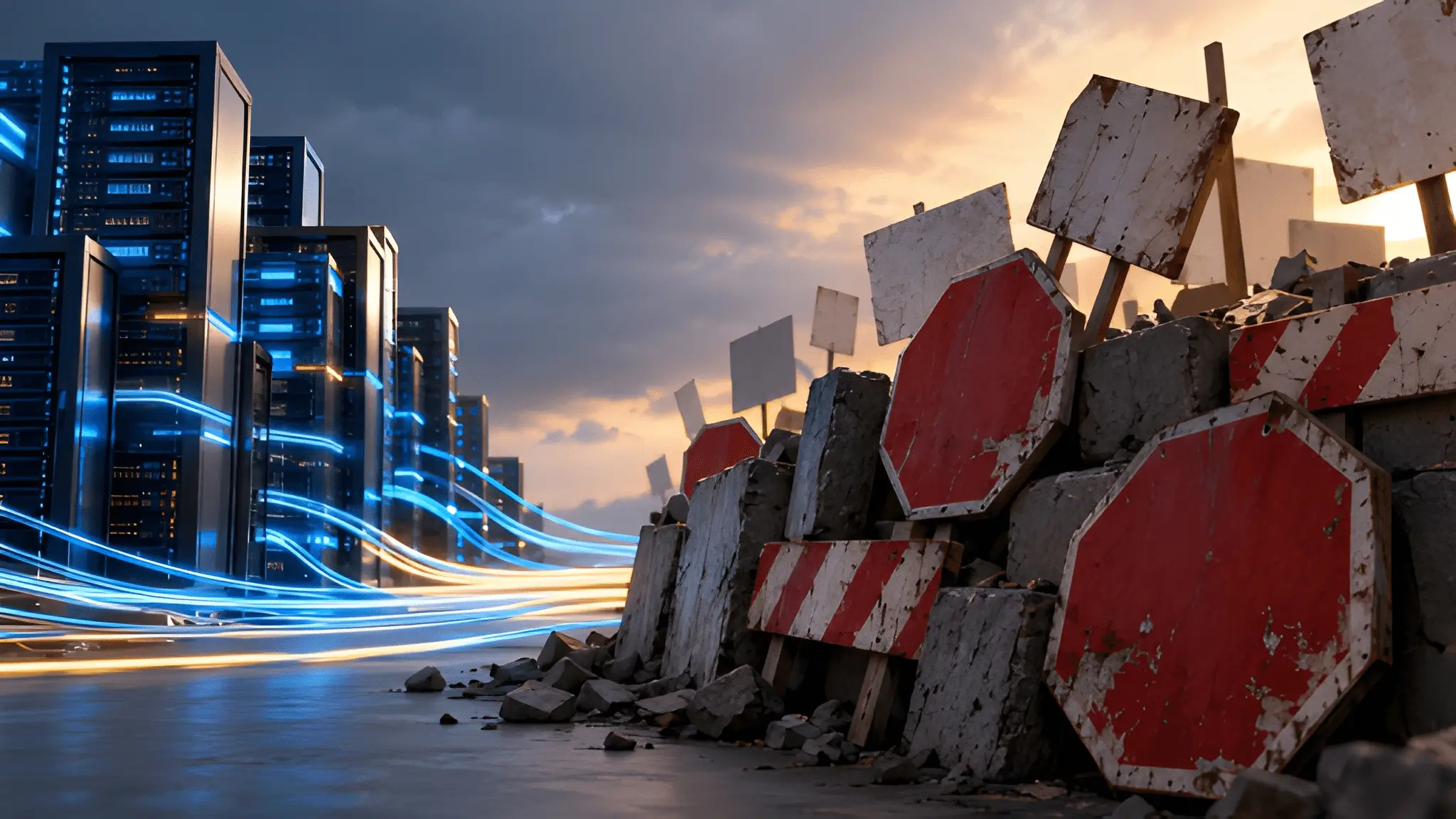
AI infrastructure is often discussed through numbers that make expansion appear almost abstract: accelerator shipments, model sizes, gigawatts of planned capacity and billions of dollars committed to infrastructure. Yet every additional computation eventually encounters something far less abstract. It needs electricity delivered through physical networks, equipment capable of handling that load, cooling infrastructure that can reject the resulting heat and industrial systems capable of building and maintaining the facilities.

That reality gives public resistance to data center projects a significance beyond the individual disputes surrounding them. When residents challenge a proposed facility, question its electricity requirements or object to construction impacts, they can unintentionally expose a constraint that sits underneath the broader AI expansion cycle. The more interesting question, therefore, is not whether communities will accept or reject data centers. It is whether resistance can become an early-warning signal for the AI infrastructure industry itself.
That possibility changes how the backlash should be interpreted. A delayed project can reveal a permitting constraint. A contested power connection can highlight transmission limitations. Difficulty securing adequate cooling resources can expose local environmental or engineering constraints. Even prolonged construction timelines can indicate that the physical supply chain cannot expand as quickly as the demand for compute suggests. The resulting picture is more complicated than the familiar assumption that capital investment can simply translate into additional AI capacity.
Compute Forecasts Can Miss the Bottlenecks Outside the Server Rack
AI infrastructure forecasts frequently concentrate on the amount of computing capacity the market will require. Those projections matter, but they can obscure the dependencies that determine whether theoretical capacity becomes operational capacity. A data center does not become useful because servers arrive at a site. The facility also needs electrical substations, transformers, switchgear, backup systems, cooling equipment, networking infrastructure and reliable connections to the wider grid. Each component introduces its own procurement, engineering, construction and regulatory requirements.

That creates an important vulnerability in the AI buildout. A shortage in any one physical layer can prevent additional compute from becoming available even when financing and hardware are already secured. Public resistance can make those weaknesses unusually visible because communities tend to encounter infrastructure projects at the point where abstract AI demand becomes a tangible industrial development. A proposed facility can translate projected compute growth into questions about power availability, construction activity, water use, noise, backup generation and land requirements. Those questions do not necessarily invalidate the underlying demand for AI compute. They can instead reveal the conditions that the industry must satisfy before that demand can translate into physical capacity.
The Weakest Physical Link Could Set the Pace for Compute
The AI industry has become accustomed to thinking in terms of acceleration. More models create more demand, which drives more investment, which produces more infrastructure and eventually supports still more applications. Physical infrastructure does not necessarily follow that curve. Electrical equipment can require long procurement cycles. Grid connections depend on network capacity and utility planning. Cooling systems introduce engineering constraints that vary according to facility design and local conditions. Construction itself depends on specialized contractors, equipment and materials.
Those dependencies create a system in which one constrained component can determine the pace of an entire project. This matters because AI capacity cannot be delivered independently of those systems. A company can procure processors faster than it can obtain the electrical infrastructure needed to run them. A developer can secure a site faster than it can establish the power connection. An operator can design a high-density computing environment faster than it can resolve the engineering requirements for removing the associated heat. The industry may therefore discover that the next important metric for AI infrastructure is not simply how much compute has been ordered, but how quickly the physical systems surrounding that compute can scale.
Communities Are Revealing What “Cloud” Really Requires
The cloud has always depended on physical infrastructure, but the abstraction is particularly powerful in AI. Users interact with models through an interface that conceals the machinery underneath. The physical footprint becomes visible only when infrastructure reaches a community as a construction project, power demand or industrial installation. That visibility is changing the conversation around AI expansion. A data center proposal can make the infrastructure behind an apparently instantaneous digital service measurable in ways that a cloud interface never does. Electricity becomes a physical requirement rather than an operating expense buried in a technology stack. Cooling becomes an engineering system rather than an invisible background function.
Backup generation becomes part of the site’s physical design. Adequate grid capacity and a viable grid connection become prerequisites for adding computational capacity at scale. Public resistance is consequently forcing parts of the AI economy into the open. That does not mean every objection identifies a genuine industrywide limitation, nor does every delayed development indicate a structural shortage. Local circumstances vary significantly. But the aggregate pattern deserves attention because it provides a source of information that conventional technology forecasts may not capture.
The Next AI Bottleneck May Appear Before the Industry Names It
The most consequential role of resistance may ultimately be predictive. AI infrastructure planners are trying to anticipate demand years ahead, while physical infrastructure often operates on timelines that are harder to compress. That creates a period in which demand can grow faster than the systems required to support it. Resistance can expose that mismatch while projects are still being planned, permitted or connected to the grid If projects repeatedly encounter the same categories of constraints, the pattern could signal where the industry’s expansion assumptions require adjustment. Power availability, grid interconnection and equipment supply are already limiting variables in parts of the data-center buildout, while cooling requirements and construction capacity can add further constraints depending on project design and location.
That would make public opposition an unlikely but useful source of infrastructure intelligence. The AI boom does not need to stop for this signal to matter. In fact, the opposite may be true. The faster compute demand grows, the more valuable it becomes to identify the physical systems that cannot expand at the same speed. The industry’s challenge, then, is not simply building enough data centers. It is recognizing that every additional unit of compute has a physical dependency chain behind it. Public resistance is making that chain easier to see. What looks like friction around individual projects may ultimately reveal where the AI infrastructure economy reaches its limits first.