Vertiv and GreenScale Align on AI-Ready Data Centre Platforms in Europe
We see the collaboration between Vertiv and GreenScale as a strong signal of change across Europe’s digital infrastructure market. AI-ready data centre platforms are becoming central to how hyperscale capacity is planned and delivered. Demand for GPU-intensive compute continues to rise across the region.
Following a competitive pre-qualification questionnaire process, GreenScale selected Vertiv as its preferred provider. The selection covers standardised, prefabricated Vertiv™ OneCore hybrid-built data centres. This move highlights a clear shift toward repeatable and factory-integrated infrastructure models.Factory-Integrated Design for High-Density AI Workloads
Under the collaboration, GreenScale will manage slab-down construction and site-wide infrastructure. Vertiv will deliver AI-ready data centre modules. These modules are engineered for liquid-cooled deployments of NVIDIA Grace Blackwell GB200/300 GPUs, including next-generation Vera Rubin GPUs.
This structure reflects a broader industry trend. Hyperscale developers increasingly separate site development from modular infrastructure delivery. The goal is faster deployment with less on-site complexity.
“AI workloads demand density and speed,” said Vedran Brzic, VP Infrastructure Solutions Business EMEA, Vertiv.
“By integrating the Vertiv OneCore platform into GreenScale’s standard design, we can help to accelerate deployment of scalable infrastructure for AI, high-performance (HPC), and high-density computing. Our scalable prefabricated solution integrates our proven power, thermal, and IT infrastructure into a single factory-assembled system that can help customers deploy high-density capacity more efficiently while increasing reliability and performance.”
From our vantage point, this reinforces why AI-ready data centre platforms must deliver both scale and consistency.
Vertiv OneCore as a Standardised AI-Ready Data Centre Platform
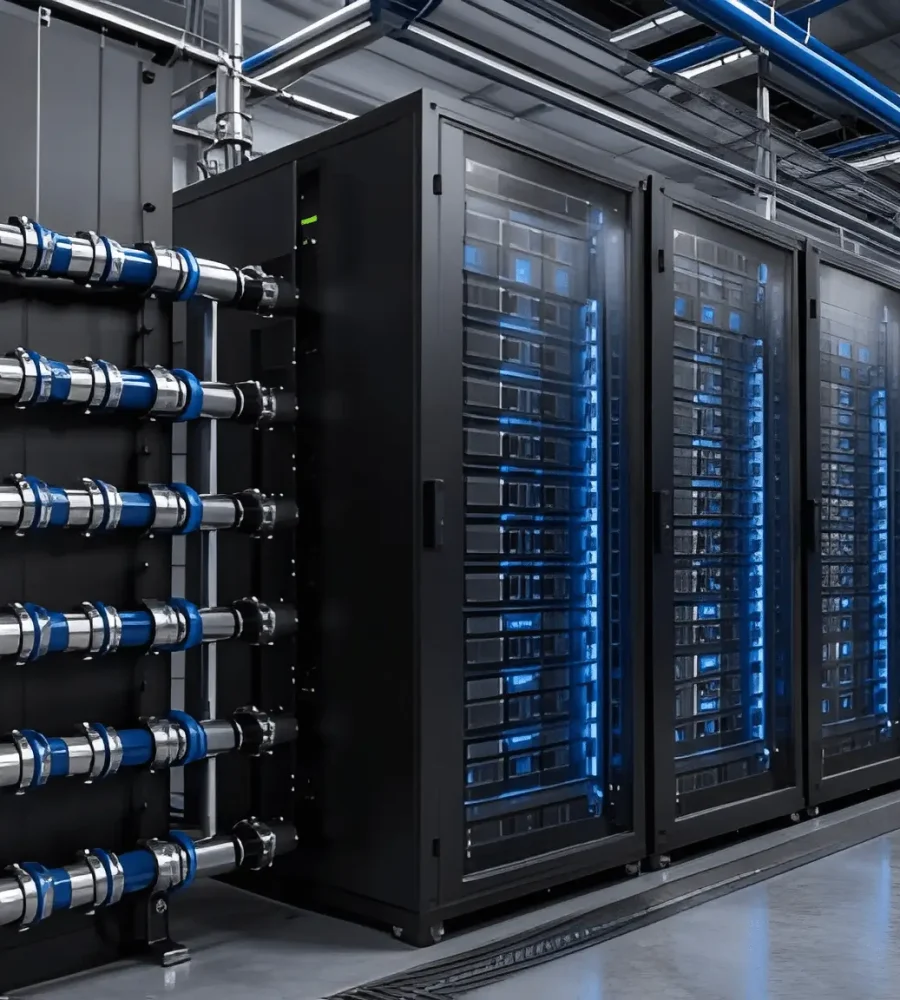
The Vertiv™ OneCore platform supports more than 200 kW per rack. It includes coolant distribution units with a dual-loop liquid cooling system. This design supports high-density GPU architectures.
The platform is paired with Vertiv™ SmartRun overhead prefabricated infrastructure. This includes an integrated secondary fluid network optimised for liquid-cooled environments. Power distribution is also integrated within the system.
Modules arrive factory-built and pre-tested. GreenScale will provide grid integration, permitting, security systems, battery monitoring systems, and slab-down construction. Together, this forms a complete AI-ready data centre platform delivery model.
Expansion Across Northern Ireland and the Nordics
“Our collaboration with Vertiv aligns perfectly with GreenScale’s mission to rapidly deploy high efficiency, AI-ready infrastructure across Europe,” said Dan Thomas, CEO at GreenScale.
“By standardising on Vertiv’s prefabricated platforms, we gain significant advantages in speed-to-market, quality control, and operational efficiency. Their proven experience in high-density cooling solutions and factory-integrated approach helps us minimize on-site complexity while enabling our facilities to be optimized for the most demanding AI workloads. This standardised platform approach will be instrumental in executing our ambitious expansion plans across Northern Ireland and the Nordics.”
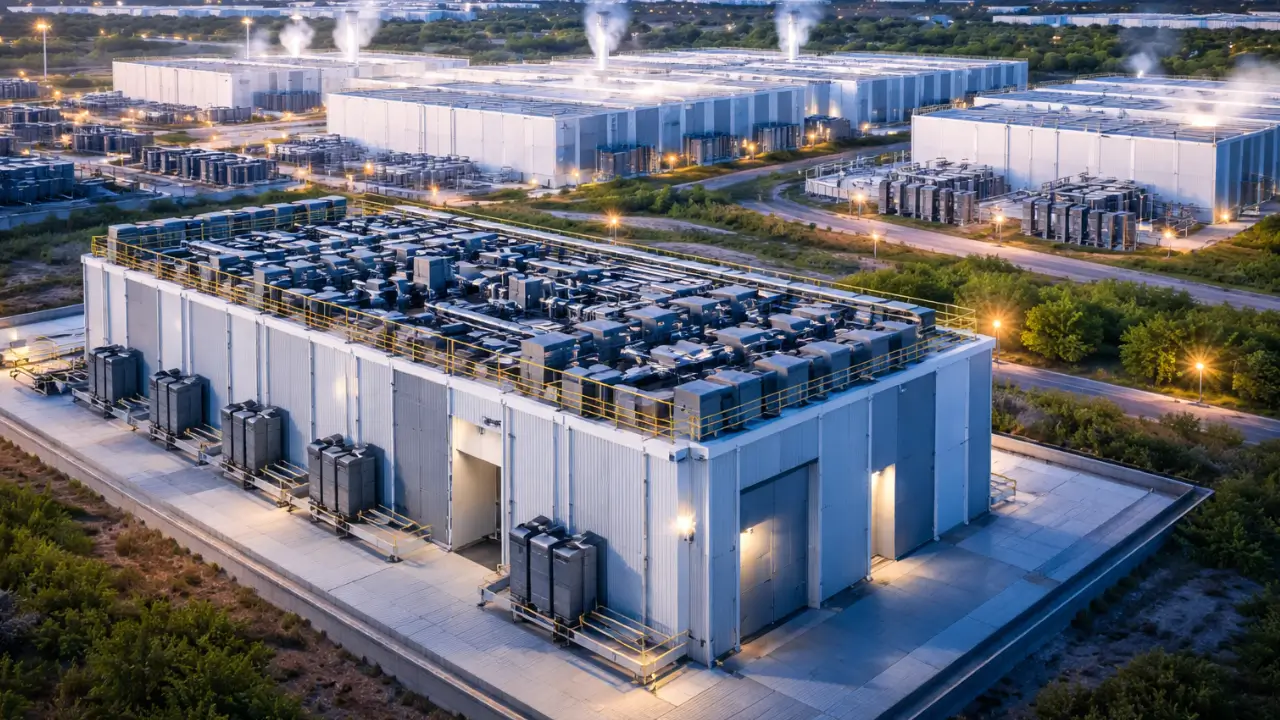
GreenScale plans to deploy around 120 MW in Northern Ireland. It also targets more than 300 MW across the Nordics. Over the long term, the company aims to approach 1 GW across Europe.
What This Signals for Europe’s AI Infrastructure
We view this collaboration as part of a wider market shift. Across Europe, data centre developers are increasingly aligning with partners that can deliver repeatable, high-performance systems at scale. As a result, speed and reliability now matter as much as raw capacity.
Moreover, as AI workloads continue to intensify, AI-ready data centre platforms will increasingly define future infrastructure strategies. In this context, the Vertiv–GreenScale collaboration reflects this reality. Consequently, integrated design and liquid-cooling readiness are no longer optional. Instead, they have become foundational.