Skip to content
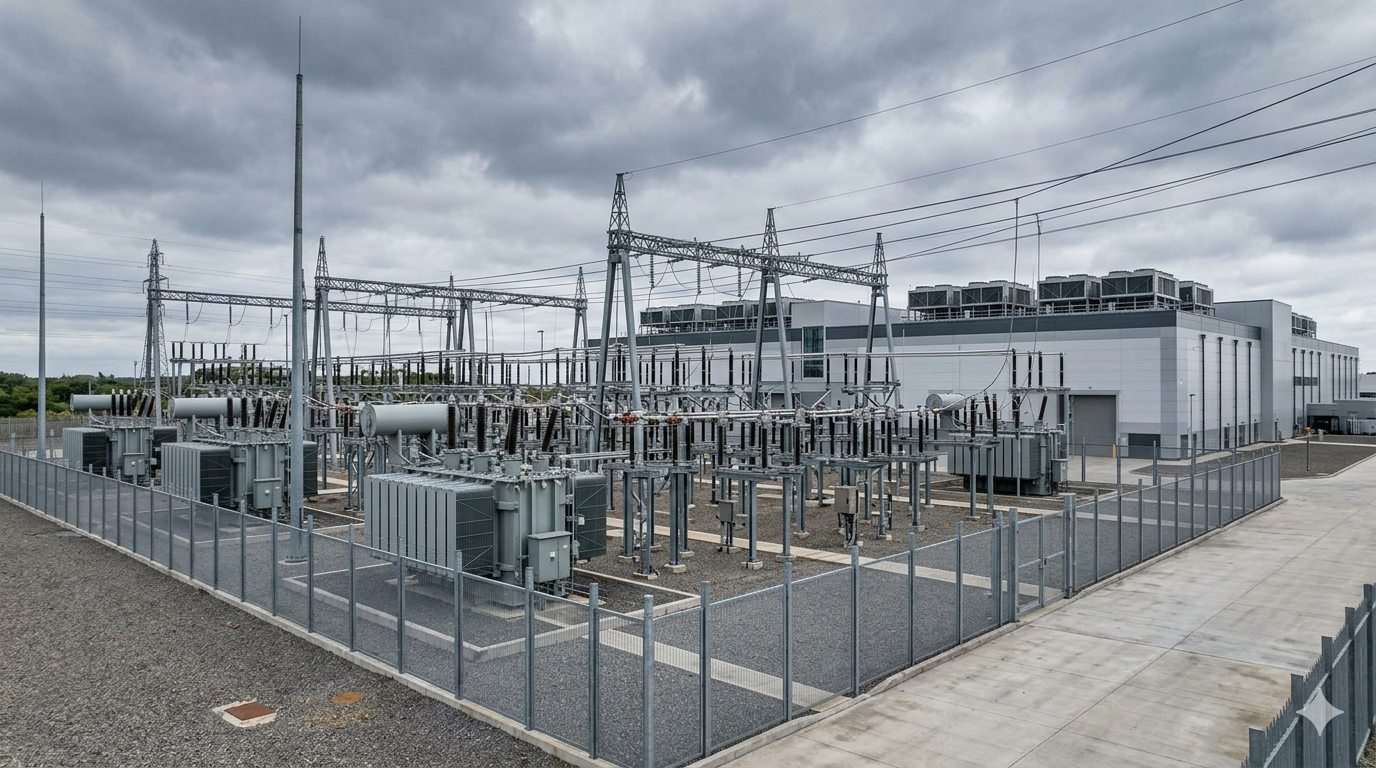
Chinese electrical equipment tariffs are now a direct constraint on the pace of AI infrastructure development in the United States, and the industry has not yet fully reckoned with what that means. The people running America’s AI buildout need transformers, switchgear, busway systems, and medium-voltage electrical equipment in quantities that the domestic manufacturing base cannot supply on the timelines the buildout demands. A significant fraction of that equipment comes from Chinese manufacturers. And the tariffs now applying to those imports are not an abstraction.

Bloomberg reported in April 2026 that US data center expansion relies on Chinese electrical equipment imports to a degree that most operators have not publicly acknowledged. The dependency did not develop by accident. Chinese manufacturers produce electrical equipment at scale, at cost, and on lead times that Western alternatives often cannot match. Operators building at gigawatt scale do not have the luxury of waiting 18 months for a domestically manufactured medium-voltage switchgear cabinet when a Chinese equivalent is available in six. That calculus made perfect sense when the geopolitical environment was stable. It looks considerably more fragile now.
What Chinese Electrical Equipment Tariffs Actually Delay
The equipment categories most exposed to tariff risk are not the glamorous parts of the AI infrastructure stack. Nobody writes headlines about transformer procurement. But the transformer and substation supply chain is already the primary bottleneck constraining AI data center development across the US, and tariffs on Chinese electrical equipment make that bottleneck structurally worse. Lead times on large power transformers from domestic manufacturers already stretch 18 to 24 months. Adding tariff-driven cost increases to Chinese alternatives does not create new domestic supply. It simply raises prices and extends wait times across the board.
Medium-voltage switchgear faces the same dynamic. Busbars, cable assemblies, power distribution units, and the mechanical components of cooling infrastructure all carry Chinese content at varying degrees depending on the supplier and the tier of the supply chain. A data center operator who traces their bill of materials carefully will find Chinese-origin components in places they did not expect. Tariffs apply at the point of import, not the point of final assembly, which means the cost impact runs through the supply chain in ways that are difficult to fully model in advance.

The practical consequence is straightforward. Projects that planned their electrical procurement budgets before the current tariff regime was in place face cost overruns. Projects that are now entering procurement face longer lead times as suppliers work through backlog from operators who rushed orders forward to beat tariff increases. Either way, delivery timelines slip. And in AI infrastructure, a delayed power delivery is a delayed facility, which is delayed revenue against already committed hyperscaler contracts.
Why Chinese Electrical Equipment Tariffs Outlast the Policy Fix
The correct long-term response to this dependency is building domestic electrical equipment manufacturing capacity. That process is underway. Several transformer manufacturers have announced capacity expansions in the US and Canada. The CHIPS and Science Act and related industrial policy have created incentives for domestic production of critical electrical components. The power equipment bottleneck in the global energy transition documents how governments and manufacturers are responding to the structural shortage of power equipment globally.
However, manufacturing capacity does not appear overnight. A new transformer factory takes years to build, equip, certify, and ramp to meaningful production volumes. The operators who need transformers in 2026 and 2027 cannot wait for a facility that opens in 2028. They face the market that exists today, not the market that industrial policy might create three years from now. In the interim, the choice is between paying tariff premiums on Chinese equipment, waiting longer for domestic alternatives, or slowing the buildout. None of those options is cost-free.
The Inconvenient Geography of Clean Energy Infrastructure
There is a deeper irony in the tariff situation that deserves direct acknowledgment. The same administration that is applying tariffs to Chinese electrical equipment is also promoting American AI supremacy as a national priority. Those two objectives are in direct tension. Google has already been exploring Chinese cooling supply chains precisely because the alternatives are more expensive and slower to deliver. Forcing operators away from Chinese suppliers does not automatically create viable domestic alternatives at the scale and speed the buildout requires. It creates a gap that the buildout has to navigate around.
The energy transition compounds this further. Grid modernisation for AI infrastructure requires the same categories of electrical equipment that data center construction demands: transformers, switchgear, cable systems, and medium-voltage distribution equipment. Both buildouts are competing for the same constrained supply. Adding tariff friction to Chinese equipment imports tightens that supply further across both sectors simultaneously. The industrial policy logic of protecting domestic manufacturing is sound in principle over a long enough time horizon. Over the time horizon that matters for the current AI buildout, it creates a real and measurable drag.
What the Industry Should Be Saying More Clearly
The AI infrastructure industry has been notably quiet about the tariff impact on electrical equipment procurement. That silence reflects a reasonable reluctance to antagonise the administration whose AI policy support operators depend on. But the quiet is not serving anyone. Policymakers who do not hear clearly that tariffs on Chinese electrical equipment directly slow American AI infrastructure development cannot make informed decisions about how to balance industrial policy objectives against buildout speed.
The industry needs to make the case plainly. Domestic manufacturing expansion is the right long-term objective. Tariffs that create a transition period of constrained supply and higher costs are an acceptable price if the result is a more resilient domestic supply chain. But the transition timeline matters enormously, and the current policy does not adequately account for the gap between when tariffs apply and when domestic supply can realistically fill the space they create. That gap is measured in years. The AI buildout is happening now. The tension between those two timelines is real, and pretending otherwise does not make the transformers arrive any faster.