 Skip to content
Asia-Pacific’s New Compute Race
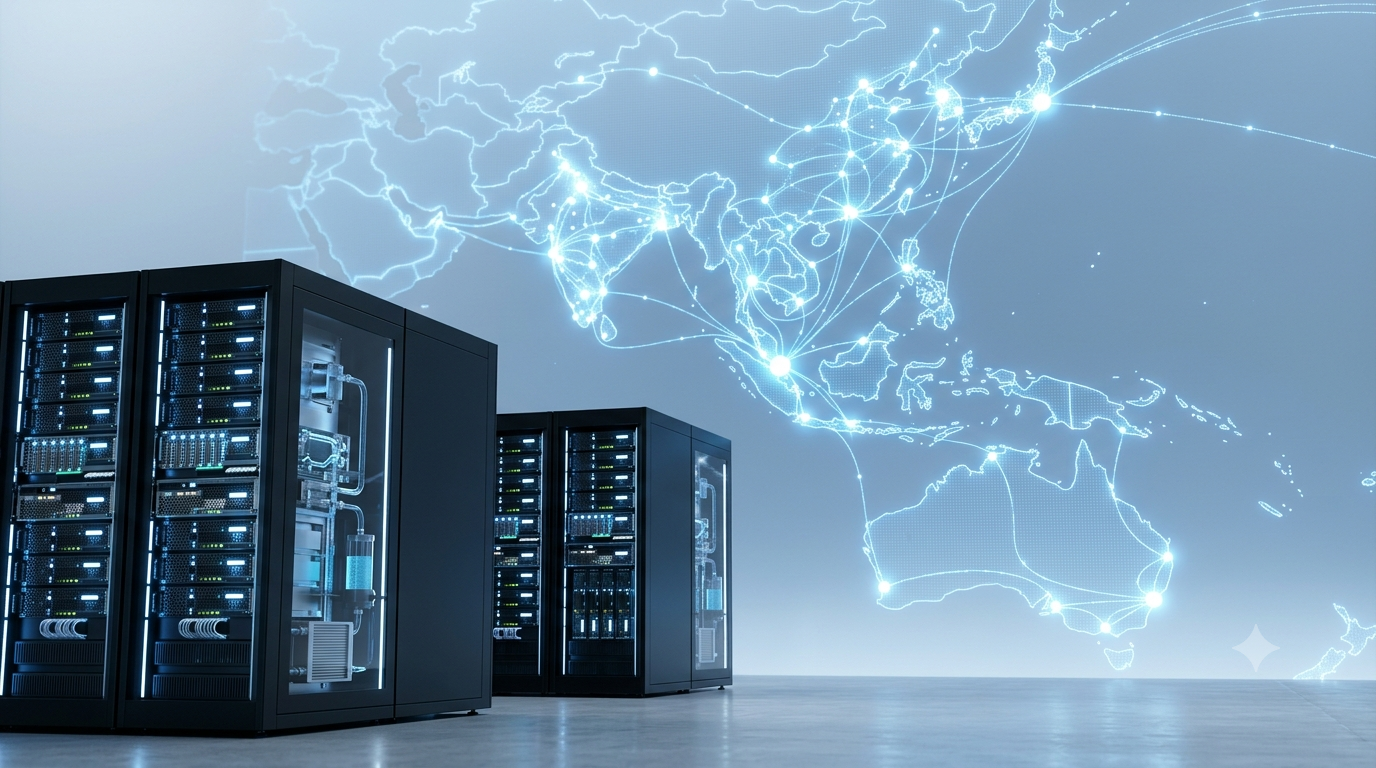
Artificial intelligence infrastructure is entering a new phase across the Asia-Pacific region. Instead of relying solely on hyperscale cloud providers, enterprises increasingly turn to regional GPU-as-a-Service (GPUaaS) companies. These emerging providers, often called “neoclouds,” specialize in delivering high-performance GPU clusters optimized for AI training and inference. Their rapid growth is reshaping how compute capacity reaches businesses, startups, research institutions, and governments. Traditional cloud platforms built their success through scale and broad service portfolios. However, AI workloads demand a different infrastructure model. Organizations require dedicated GPUs, predictable pricing, lower latency, and faster deployment. As demand accelerates, regional providers respond with specialized infrastructure rather than general-purpose cloud services.

Consequently, APAC has become one of the world’s fastest-growing markets for AI infrastructure investment. Countries including Singapore, Japan, India, Australia, South Korea, and Malaysia are expanding domestic compute capacity while supporting sovereign AI ambitions. This regional momentum has created favorable conditions for neocloud providers that understand local regulations, enterprise requirements, and connectivity challenges. Rather than competing directly with hyperscalers across every service category, these companies focus exclusively on AI compute. That specialization enables them to deploy GPU clusters faster and tailor infrastructure to enterprise AI workloads. As a result, regional providers increasingly occupy a strategic position within APAC’s evolving AI ecosystem.
Why Traditional Clouds Face New Competition
Hyperscale cloud providers continue investing billions in global infrastructure. Nevertheless, AI demand has exposed limitations within traditional cloud operating models. Enterprises frequently report GPU shortages, long provisioning times, and premium pricing for high-end accelerators. Many AI developers cannot afford extended waiting periods before launching new projects. Instead, they seek infrastructure partners capable of delivering dedicated GPU resources immediately. Neocloud providers address this requirement by concentrating investments on AI infrastructure rather than balancing resources across thousands of unrelated cloud services.
Pricing also influences purchasing decisions. Organizations training foundation models often require hundreds or thousands of GPUs for weeks or months. Dedicated AI infrastructure frequently offers more predictable operating costs than shared cloud environments. Consequently, enterprises increasingly evaluate total compute economics rather than simply comparing hourly pricing. Regional proximity provides another competitive advantage. AI inference workloads benefit from lower network latency because models respond more quickly to user requests. Local GPU infrastructure also simplifies compliance with national data residency regulations. These operational advantages allow regional providers to compete on service quality instead of infrastructure scale.
GPU-as-a-Service Changes the Infrastructure Equation
GPU-as-a-Service has evolved beyond simple hardware rental. Modern providers increasingly deliver complete AI infrastructure platforms that include networking, storage, orchestration software, security, and workload management. Customers therefore gain immediate access to production-ready environments without building expensive on-premises clusters. This service model significantly reduces deployment complexity. AI teams can focus on model development instead of infrastructure procurement, hardware installation, and cluster management. Faster deployment shortens development cycles while improving overall resource utilization.
Additionally, GPUaaS platforms often optimize clusters specifically for AI frameworks such as PyTorch, TensorFlow, and distributed training environments. These optimizations improve performance while reducing configuration effort for enterprise engineering teams. Meanwhile, many regional providers build infrastructure around NVIDIA accelerated computing platforms. Standardized architectures simplify software compatibility while enabling customers to scale workloads more efficiently. This approach helps smaller providers deliver enterprise-grade performance despite operating at a smaller scale than global hyperscalers.

Sovereign AI Fuels Regional Investment
Government policy has become another major driver behind APAC’s neocloud expansion. Several countries now consider AI infrastructure a strategic national asset rather than purely commercial infrastructure. Consequently, governments increasingly support domestic compute development through funding initiatives, public-private partnerships, and national AI strategies. Sovereign AI programs seek greater control over compute resources, sensitive datasets, and AI model development. Domestic GPU infrastructure reduces dependence on overseas cloud platforms while strengthening national digital resilience.
Singapore continues expanding its National AI Strategy through infrastructure investment and research partnerships. Japan supports domestic AI capabilities through semiconductor and digital transformation initiatives. India promotes indigenous AI development while expanding data center capacity. Australia and South Korea are similarly increasing investments in AI infrastructure and advanced computing ecosystems. These policies create favorable conditions for regional GPU providers because governments often prefer infrastructure located within national borders. As public-sector AI adoption grows, sovereign compute demand could become a significant long-term growth driver.
Capital Flows Toward AI Infrastructure
Investors increasingly recognize AI infrastructure as one of the technology sector’s fastest-growing opportunities. During previous cloud expansion cycles, investment primarily targeted software platforms and SaaS businesses. Today, venture capital and institutional investors increasingly fund GPU infrastructure companies capable of supporting generative AI applications. This investment trend reflects broader market dynamics. Demand for accelerated computing continues growing faster than global GPU supply. Infrastructure providers therefore occupy an attractive position within the AI value chain because they monetize scarce compute resources directly. Furthermore, enterprises increasingly treat AI infrastructure as essential business capability rather than experimental technology. Stable enterprise demand improves long-term revenue visibility for infrastructure providers while supporting continued expansion. Consequently, capital continues flowing into data centers, GPU clusters, liquid cooling systems, networking infrastructure, and AI cloud platforms across the Asia-Pacific region.
Specialization Gives Neoclouds a Competitive Edge
Regional neocloud providers rarely compete with hyperscalers across every cloud service. Instead, they focus exclusively on AI infrastructure. This specialization allows them to optimize every layer of the stack for GPU-intensive workloads. Engineers design these platforms around accelerated computing rather than traditional enterprise applications. As a result, customers receive higher GPU utilization, faster deployment, and simplified cluster management. Many providers also offer bare-metal GPU instances, managed Kubernetes, and preconfigured AI development environments. These services reduce operational complexity while accelerating AI deployment. Consequently, specialization has become one of the strongest competitive advantages in the regional GPU market.
Several providers also differentiate through customer support and deployment flexibility. Regional engineering teams often understand local business requirements better than global cloud providers. They respond faster to enterprise requests and customize infrastructure for specific workloads. Financial institutions, healthcare organizations, and manufacturing companies increasingly value these tailored services. Regional providers also maintain closer relationships with domestic regulators, making compliance easier for enterprise customers. This localized operating model strengthens customer retention while improving service quality. As AI adoption expands, personalized infrastructure support may become just as valuable as compute capacity itself.
Regional Leaders Expand the Compute Landscape
Singapore has emerged as one of APAC’s leading AI infrastructure hubs. Its mature data center ecosystem, international connectivity, and supportive regulatory environment continue attracting AI infrastructure investments. Several GPU cloud providers now operate regional clusters from Singapore to serve Southeast Asia’s growing enterprise market. These facilities support startups, multinational corporations, research institutions, and government agencies seeking low-latency AI infrastructure. India represents another rapidly expanding market. Rising enterprise AI adoption, government digital initiatives, and increasing data center investment continue driving GPU demand.
Domestic cloud providers increasingly deploy AI-optimized infrastructure while international operators expand their regional footprint. Large enterprises also seek dedicated GPU environments to support internal AI initiatives without relying entirely on overseas cloud platforms. Japan and South Korea are strengthening their AI infrastructure through semiconductor investment and advanced manufacturing capabilities. Both countries recognize AI compute as critical digital infrastructure. Consequently, governments and private companies continue investing in GPU clusters, research facilities, and high-performance computing resources. Australia also expands AI infrastructure through new data center developments designed to support enterprise AI adoption across multiple industries.
Infrastructure Challenges Remain Significant
Despite rapid growth, APAC’s neocloud market faces several structural challenges. GPU availability remains one of the most significant constraints. Demand for advanced accelerators continues exceeding global supply, forcing providers to secure long-term procurement agreements with hardware vendors. Smaller operators often compete against hyperscalers for limited inventory, increasing deployment costs and extending expansion timelines. Power availability presents another challenge. Modern AI clusters consume enormous amounts of electricity while generating significant heat. Data center operators therefore require reliable utility connections, advanced liquid cooling systems, and efficient power distribution infrastructure. Securing sufficient grid capacity has become increasingly difficult across several high-growth markets. Financing also influences expansion. Building AI-ready infrastructure requires substantial capital investments in servers, networking, storage, cooling, and facilities. While investor interest remains strong, providers must demonstrate sustainable utilization rates and long-term customer demand. Successful operators balance aggressive expansion with disciplined infrastructure planning.
Conclusion
The Asia-Pacific region is redefining how AI infrastructure reaches enterprise customers. Regional neocloud providers have demonstrated that specialization can compete effectively against infrastructure scale. By focusing exclusively on GPU-as-a-Service, these companies deliver dedicated AI environments optimized for modern workloads. Government investment, sovereign AI strategies, and accelerating enterprise adoption continue strengthening regional demand. At the same time, improvements in data center infrastructure, liquid cooling, and GPU availability support continued market expansion. Although hyperscalers remain dominant global providers, specialized GPU platforms increasingly fill critical gaps within the AI infrastructure ecosystem. The APAC neocloud wave therefore represents more than another cloud computing trend. It reflects a structural shift in regional compute geography, where proximity, specialization, and AI-focused infrastructure increasingly determine competitive advantage. As enterprises deploy larger AI workloads, regional GPU providers will likely become permanent pillars of Asia-Pacific’s expanding AI economy.












