 Skip to content
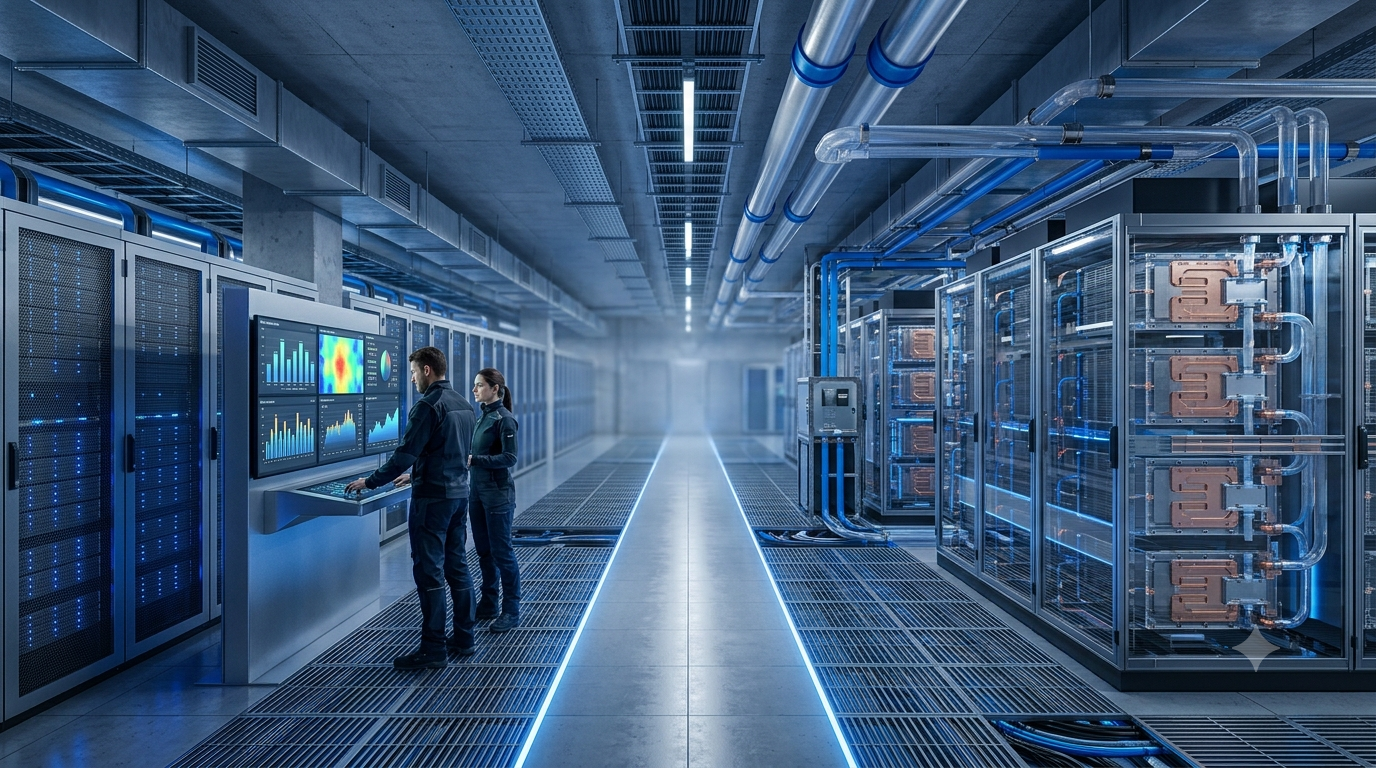
Artificial intelligence has changed data center design faster than many operators expected. Traditional facilities supported predictable enterprise workloads for many years. Today’s AI clusters generate far greater heat within much smaller physical footprints. Consequently, cooling has become one of the most important infrastructure decisions. Operators now evaluate thermal performance alongside power availability, scalability, and operational efficiency. Future-ready facilities require cooling systems that can evolve as computing technologies continue advancing.
AI Workloads Are Redefining Cooling Requirements
Modern AI servers consume far more power than conventional enterprise hardware. High-performance GPUs often operate continuously during training and inference workloads. As a result, rack densities continue increasing across hyperscale and colocation facilities. Many new AI deployments already exceed 50 kilowatts per rack. Some advanced clusters now approach or surpass 100 kilowatts per rack. Air cooling alone struggles to remove heat efficiently under these operating conditions. Traditional cooling systems served conventional computing environments exceptionally well for decades. However, AI infrastructure introduces thermal loads that fluctuate much faster than historical workloads. Training models create sustained heat, while inference clusters experience rapidly changing demand patterns. Meanwhile, processors continue becoming more powerful with every hardware generation. Cooling systems therefore require greater flexibility than previous infrastructure designs ever demanded. Operators increasingly need thermal strategies that adapt without major facility reconstruction.
Why Conventional Air Cooling Faces Growing Limitations
Air remains an effective cooling medium for many applications across existing data centers. Nevertheless, airflow becomes increasingly difficult to manage as rack densities continue rising. Higher fan speeds also increase energy consumption while generating additional operational noise. Consequently, operators often encounter diminishing efficiency beyond certain power thresholds. More cooling equipment cannot always solve growing thermal challenges. Physical airflow limitations eventually restrict infrastructure scalability. Heat distribution creates another important operational challenge. AI clusters rarely generate uniform thermal loads throughout an entire facility. Certain racks operate continuously at maximum capacity while nearby systems remain lightly utilized. Therefore, cooling demand varies significantly across different zones. Uniform air cooling frequently delivers unnecessary capacity to lower-density areas. Hybrid approaches instead target intensive workloads without overcooling the entire data hall.
Understanding The Hybrid Cooling Approach
Hybrid cooling combines multiple thermal management technologies within one coordinated infrastructure strategy. Air cooling continues supporting lower-density equipment and supporting facility environments. Liquid cooling activates wherever heat loads exceed practical air-cooling capabilities. Intelligent monitoring systems continuously evaluate workload conditions and thermal performance. Subsequently, cooling resources adjust according to actual operational requirements rather than fixed assumptions. This balanced approach improves efficiency while preserving deployment flexibility.
Several cooling technologies can operate together within hybrid environments. Direct-to-chip liquid cooling removes heat directly from processors using specialized cold plates. Rear-door heat exchangers capture thermal energy before warm air enters the surrounding room. Immersion cooling supports extremely dense AI deployments requiring exceptional thermal performance. Meanwhile, conventional air cooling continues serving networking equipment, storage platforms, and lower-density compute systems. Each technology performs where it delivers the greatest operational value.
Hybrid Cooling Protects Long-Term Infrastructure Investments
Data centers typically operate for decades despite rapidly changing computing technologies. However, AI hardware evolves much faster than traditional infrastructure assets. Replacing entire cooling systems after every hardware upgrade creates unnecessary capital expenses. Instead, hybrid architectures support multiple generations of processors without extensive facility modifications. This flexibility protects existing investments while simplifying future expansion projects. Operators gain greater confidence when planning long-term infrastructure strategies. Modular cooling also reduces deployment risks for growing AI environments. Organizations rarely install maximum computing capacity during initial construction phases. Instead, facilities often expand gradually as customer demand increases. Therefore, cooling infrastructure should scale alongside new compute deployments. Hybrid designs enable operators to introduce liquid cooling only where required. Existing air-cooled environments continue operating efficiently without disruptive facility-wide upgrades.
Comparing Hybrid Cooling Technologies
Direct-to-chip liquid cooling has become one of the fastest-growing thermal solutions for AI infrastructure. Cold plates transfer heat directly from processors into circulating coolant. Consequently, servers maintain stable operating temperatures during intensive training workloads. This approach supports higher rack densities without dramatically changing existing data center layouts. Many hyperscale operators view direct-to-chip systems as a practical migration path toward liquid cooling. Installation also integrates well with modern server platforms. Immersion cooling addresses even greater thermal demands by submerging servers within specially engineered dielectric fluids. Heat transfers directly into the surrounding liquid without relying on conventional airflow.
As a result, operators can support extremely dense computing environments using compact physical footprints. However, immersion systems often require specialized hardware designs and modified maintenance procedures. Many organizations therefore reserve immersion cooling for specialized AI clusters rather than entire facilities. Rear-door heat exchangers provide another valuable option within hybrid cooling strategies. These systems remove heat before warm air enters the data hall environment. Therefore, existing air-cooled facilities can support higher rack densities with relatively limited structural changes. Operators often deploy rear-door systems during infrastructure upgrades where complete liquid cooling remains impractical. This technology creates an effective transition between conventional cooling and advanced liquid-based approaches.
Intelligent Controls Improve Cooling Efficiency
Cooling technologies deliver greater value when paired with intelligent monitoring platforms. Modern control systems continuously measure temperature, airflow, humidity, coolant performance, and equipment utilization. Meanwhile, software analyzes operational data across thousands of sensors in real time. Operators receive detailed insights into changing thermal conditions before performance issues emerge. Predictive management improves reliability while reducing unnecessary energy consumption. Artificial intelligence also supports cooling optimization inside many modern facilities. Machine learning models identify workload patterns that influence heat generation throughout the data center. Consequently, cooling equipment responds dynamically instead of operating under fixed schedules. Pumps, fans, and chillers adjust according to actual computing demand. This responsive approach improves energy efficiency while maintaining consistent processor performance. Intelligent automation also reduces operational complexity for infrastructure teams.
Sustainability Is Becoming A Competitive Advantage
Energy efficiency has become a strategic priority across the data center industry. AI workloads consume significantly more electricity than traditional enterprise applications. Consequently, operators must reduce supporting infrastructure energy wherever possible. Hybrid cooling minimizes unnecessary airflow while directing liquid cooling toward the hottest components. This targeted approach lowers cooling power without sacrificing computing performance. Facilities therefore achieve better efficiency while supporting larger AI deployments. Water management also influences future cooling strategies. Traditional evaporative cooling systems can consume substantial water in warmer climates. However, many hybrid designs reduce water dependence through closed-loop liquid cooling technologies. Operators increasingly evaluate regional water availability before selecting cooling architectures. Sustainable infrastructure planning now considers both electricity and water alongside computing capacity. Environmental performance has become an important competitive differentiator.
Designing Data Centers For Continuous Evolution
AI hardware continues advancing at an extraordinary pace. Every new processor generation delivers higher performance while producing greater thermal output. Therefore, infrastructure designed only for current hardware may require expensive upgrades within a few years. Hybrid cooling provides the flexibility needed to accommodate changing server technologies over time. Operators can introduce new cooling methods without replacing existing facility infrastructure. Long-term adaptability reduces technical risk while extending asset life. Designing for flexibility also supports changing customer requirements. Enterprise AI, cloud computing, scientific research, and large language models all generate different thermal profiles. Consequently, one cooling method rarely suits every workload equally well. Hybrid environments allow operators to allocate cooling technologies according to specific operational needs. This flexibility improves resource utilization while simplifying future expansion strategies. Facilities become more resilient as technology continues evolving.
Lower Total Cost Of Ownership
Cooling represents one of the largest operational expenses after electricity purchases. Therefore, improving thermal efficiency directly influences long-term operating costs. Hybrid cooling reduces unnecessary energy consumption by matching cooling capacity with actual workload demand. Equipment also operates under more stable thermal conditions throughout its service life. Better temperature management reduces hardware failures while extending component longevity. These operational improvements strengthen overall return on infrastructure investments. Maintenance strategies also benefit from diversified cooling architectures. Operators avoid relying entirely on one technology across every computing environment. Instead, different cooling systems support workloads according to performance requirements. Maintenance teams can service individual cooling zones without disrupting the entire facility. This modular approach improves operational resilience while reducing planned downtime. Higher availability ultimately benefits both operators and enterprise customers.
Hybrid Cooling Is Becoming The Industry Standard
The transition toward hybrid cooling reflects broader changes across AI infrastructure rather than temporary market trends. Processor manufacturers continue increasing chip performance with each product generation. Meanwhile, hyperscale operators demand greater computing density without expanding physical footprints indefinitely. These requirements make flexible thermal management increasingly valuable across both new facilities and retrofit projects. Hybrid cooling has emerged as a practical response to these evolving operational realities. Several leading cloud providers and colocation companies already deploy combinations of air and liquid cooling across their newest AI facilities. Equipment manufacturers also design next-generation servers with liquid cooling compatibility in mind. Consequently, hybrid architectures are becoming foundational elements of future-ready infrastructure rather than specialized deployments. Organizations investing today increasingly prioritize adaptability alongside immediate performance gains. This shift reflects growing confidence in hybrid cooling as a long-term infrastructure strategy.
Conclusion
Artificial intelligence is reshaping every layer of modern data center infrastructure, and cooling sits at the center of that transformation. Conventional air cooling still delivers value for many workloads, yet it cannot independently support the thermal demands of next-generation AI clusters. Hybrid cooling offers a practical path forward by combining multiple technologies within one adaptable architecture. Operators gain higher efficiency, greater scalability, improved sustainability, and stronger protection for long-term infrastructure investments. As AI hardware continues evolving, facilities designed around flexible thermal management will remain better positioned to support future computing demands without repeated infrastructure overhauls.












