Skip to content
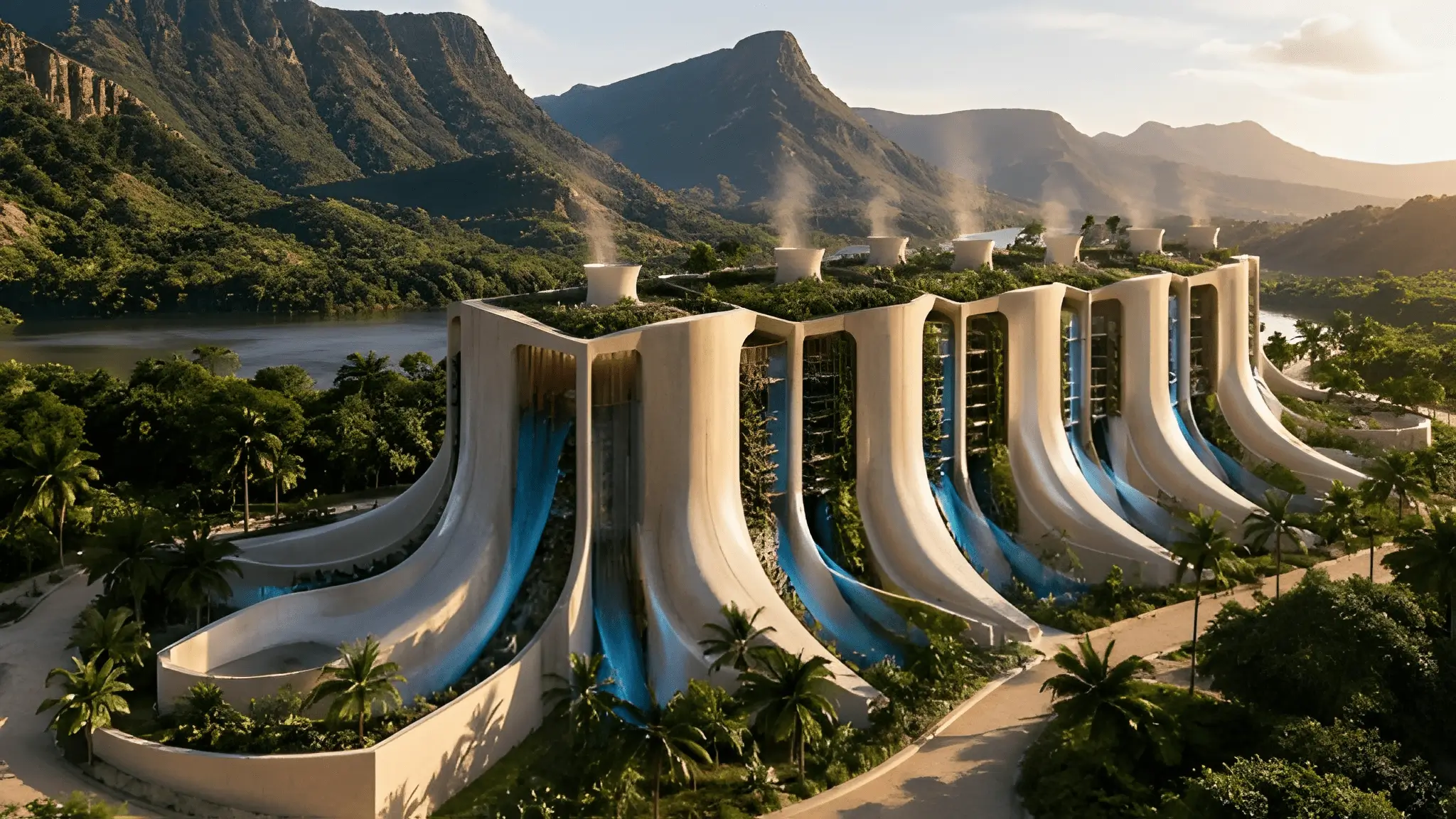
The next phase of data center evolution will not be defined by hardware alone but by how effectively infrastructure aligns with environmental physics, particularly in regions shaped by the Latin America climate. Regions that once stood on the periphery of digital infrastructure conversations are now gaining strategic relevance due to their natural climatic characteristics. Latin America, often viewed through a capacity or connectivity lens, presents emerging opportunities tied to localized thermal behavior and atmospheric conditions that can support more efficient cooling strategies when aligned with site-specific design. Operators are beginning to evaluate geography not just as a location variable but as an active component of system performance. This shift reframes infrastructure planning into a discipline that integrates environmental constants with engineered systems. The region’s climatic profile offers a measured opportunity to reduce reliance on mechanical cooling while improving operational stability.

Traditional infrastructure hubs evolved under constraints that forced heavy dependence on mechanical cooling systems. However, rising density and thermal output have exposed the inefficiencies of those legacy approaches. Latin America introduces a contrasting baseline where temperature variability remains moderate across large zones, reducing thermal shock and operational fluctuation. This consistency allows engineers to rethink airflow dynamics at a foundational level rather than layering solutions on top of constraints. The shift toward environmental integration does not eliminate engineered systems but changes their role within the architecture. It transforms cooling from a reactive process into a predictive and embedded design principle. As a result, infrastructure in this region can move toward a more balanced thermal ecosystem.
Latitude plays a decisive role in shaping thermal conditions, and certain parts of Latin America fall within zones that can experience relatively moderate seasonal variation compared to more extreme climates. This geographic positioning creates conditions where ambient temperatures remain within predictable ranges throughout the year. Stable climates reduce the frequency of peak cooling events that typically strain mechanical systems in more volatile regions. Engineers can leverage this consistency to design airflow pathways that operate efficiently without constant recalibration. The predictability of environmental inputs allows systems to maintain equilibrium over longer operational cycles. Consequently, infrastructure can achieve higher reliability with lower energy variance across seasons.
Temperature stability directly influences how air behaves within enclosed and semi-open structures. In regions with minimal fluctuation, airflow can be modeled with greater precision, allowing designers to optimize intake and exhaust systems. This reduces the need for overprovisioning cooling capacity, which often leads to inefficiencies in traditional facilities. Instead of compensating for unpredictable spikes, infrastructure can operate closer to its optimal thermal threshold. This approach enhances both energy efficiency and equipment longevity by minimizing thermal stress. The ability to maintain consistent airflow conditions also improves overall system resilience. Ultimately, climate becomes an integral component of infrastructure design rather than an external variable.

Wind patterns across several Latin American regions provide a consistent and underutilized resource for thermal management. Instead of treating wind as an environmental challenge, facility design can incorporate it as a controlled input. Orientation of structures relative to prevailing wind directions can support natural air movement through critical zones, contributing to reduced dependence on mechanical cooling when combined with engineered airflow systems. This reduces dependency on forced air systems while maintaining effective heat dissipation. Engineers can design intake vents, exhaust channels, and internal corridors that align with regional airflow characteristics. As a result, the facility operates in harmony with its surroundings rather than resisting them.
Elevation further enhances the effectiveness of wind-driven cooling strategies. Facilities located at higher altitudes often experience lower ambient temperatures and increased air movement. These conditions can support convective heat transfer in certain environments, contributing to more effective removal of thermal loads when integrated with appropriate system design. Structural design can amplify these benefits through vertical shafts and strategically placed openings. Airflow pathways become part of the architectural framework rather than an afterthought. This integration reduces the need for complex mechanical interventions and simplifies system design. Therefore, infrastructure can achieve both performance and efficiency through alignment with natural forces.
Land availability in several Latin American markets provides flexibility that extends beyond capacity expansion, enabling design approaches that can incorporate wider spacing and airflow considerations where feasible. Large plots enable designers to implement low-density layouts that prioritize airflow and thermal separation. Wider spacing between structures reduces heat recirculation and allows for cleaner air intake. Open corridors facilitate unobstructed airflow, improving the effectiveness of passive cooling strategies. This spatial flexibility supports the integration of natural ventilation without compromising operational efficiency. In constrained markets, such configurations remain difficult to achieve due to space limitations.
The ability to design horizontally rather than vertically transforms how heat is managed within a facility. Vertical stacking often leads to concentrated thermal zones that require intensive cooling solutions. In contrast, distributed layouts allow heat to dissipate more evenly across the environment. Engineers can incorporate thermal zoning strategies that isolate high-load areas while maintaining overall balance. This reduces localized hotspots and improves system stability. Additionally, maintenance operations benefit from clearer airflow pathways and reduced thermal interference. As a result, land becomes a critical enabler of advanced thermal design.
The concept of free cooling has evolved from a supplementary feature into a central criterion for site selection. Regions that naturally support passive or hybrid cooling models offer a strategic advantage in long-term operations. Latin America presents multiple zones where ambient conditions allow for extended periods of natural cooling. This reduces reliance on energy-intensive systems and lowers overall operational costs. Site evaluation increasingly considers climatic compatibility alongside connectivity, power availability, and regulatory factors, depending on operational priorities. Consequently, location decisions increasingly reflect thermal efficiency considerations.
Free cooling strategies rely on the ability to bring external air into the facility without compromising environmental control. In environments with relatively consistent ambient conditions, filtration and humidity management can become more predictable, supporting more stable operational performance when properly engineered. Hybrid systems can seamlessly transition between natural and mechanical cooling based on real-time conditions. This flexibility enhances operational resilience while maintaining efficiency. Infrastructure designed around these principles can adapt to varying loads without significant energy penalties. Moreover, the reduced mechanical strain extends the lifespan of cooling equipment. As a result, location-driven design becomes a cornerstone of modern infrastructure planning.
Next-generation infrastructure increasingly recognizes heat as the primary design constraint rather than an afterthought. Facilities in Latin America can adopt this approach more effectively due to their environmental advantages. By prioritizing heat dissipation pathways, designers can create systems that manage thermal loads proactively. Convection, airflow direction, and thermal zoning become foundational elements of the architecture. This shifts the focus from accommodating equipment to enabling optimal operating conditions. The result is a more balanced and efficient infrastructure model.
Thermal-first design also influences how equipment is deployed within the facility. High-density systems require precise airflow management to maintain performance and reliability. Engineers can position hardware in alignment with natural airflow patterns to maximize cooling efficiency. This reduces the need for localized cooling interventions and simplifies system complexity. Structured airflow channels ensure that heat is removed effectively without creating turbulence. Additionally, predictive modeling allows for continuous optimization of thermal behavior. Therefore, infrastructure becomes more adaptable to evolving technological demands.
Latin America stands at a point where it can explore alternative approaches to data center infrastructure by aligning environmental conditions with evolving design strategies. The region’s climatic stability, wind patterns, and land availability create a foundation for airflow-driven design that remains difficult to replicate elsewhere. By integrating these natural advantages into engineering practices, operators can achieve higher efficiency and resilience. This approach reduces dependency on energy-intensive systems while improving overall performance. It also aligns infrastructure development with broader sustainability objectives without compromising reliability. The opportunity lies in leveraging these conditions to establish new benchmarks for the industry.
The transition toward climate-integrated infrastructure requires a shift in both mindset and execution. Designers, operators, and investors must recognize the value of environmental alignment as a core strategic factor. Latin America offers a testing ground where these principles can be implemented at scale. Successful deployment in this region can influence global practices and set new standards for efficiency. As demand for high-performance infrastructure continues to rise, environmental integration is expected to play an increasingly important role in shaping future development approaches across regions. The window for innovation remains open, and Latin America is positioned to capitalize on it.