
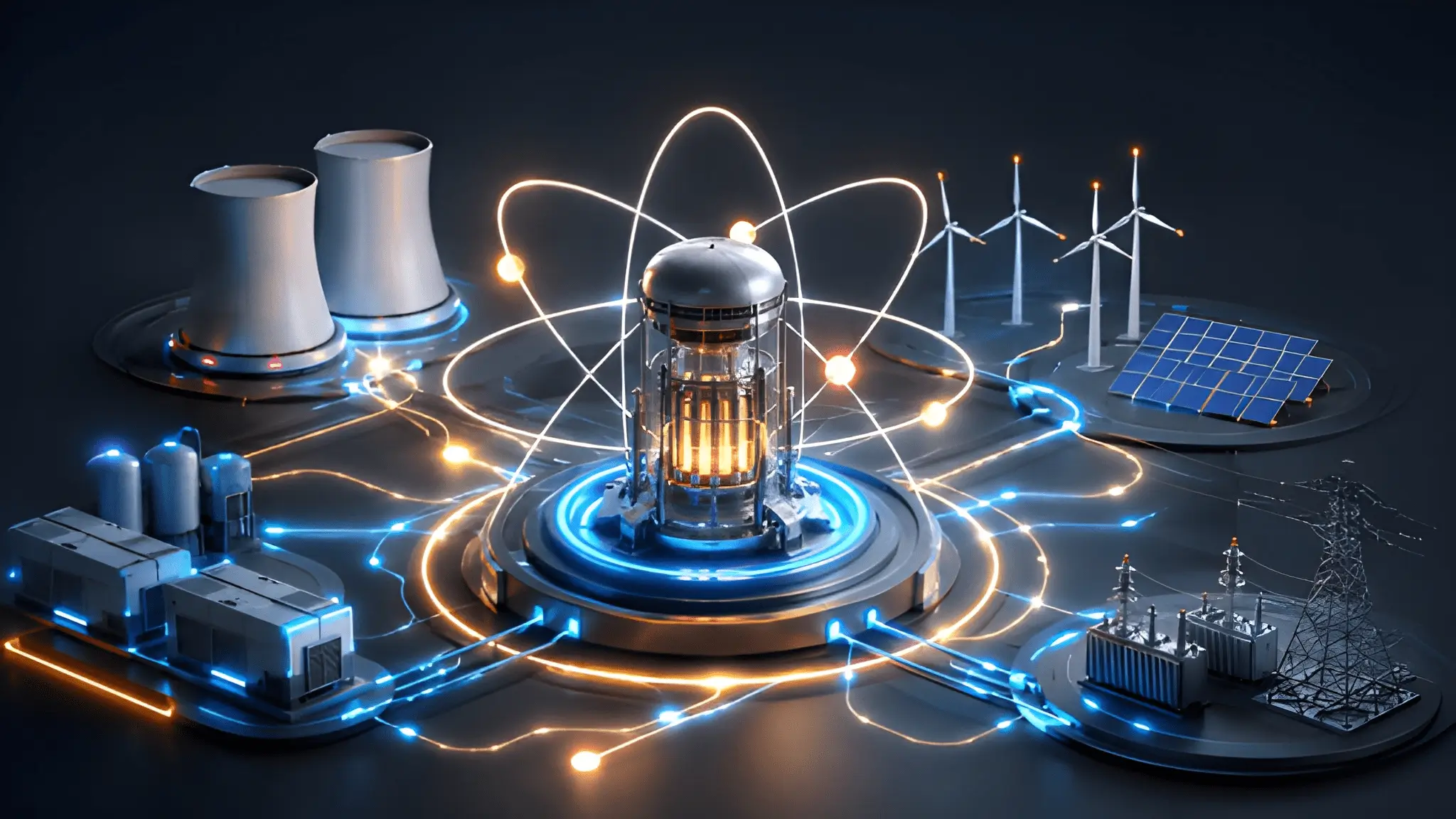
Artificial intelligence infrastructure is entering a phase in which access to electricity can determine whether a compute project moves from planning to operation. The central problem has shifted from securing land and servers to securing a credible path from generation to the customer’s meter. Grid connection studies, transmission upgrades, substations, transformers, switchgear, and utility approvals can now influence delivery schedules as directly as construction and equipment procurement. The International Energy Agency identifies grid capacity as an emerging bottleneck for connecting generation, demand, and storage, with connection queues reaching record levels across multiple regions. For hyperscalers, that changes the meaning of power procurement because a signed contract does not necessarily translate into electricity being available when a new AI cluster needs it. The strategic question in 2026 is therefore less about how many megawatts a company can announce and more about how reliably those megawatts can reach the site.

The distinction matters because AI workloads introduce a different demand profile from many traditional industrial loads. Large training clusters can create concentrated electricity demand, while rapid workload changes can introduce operational challenges for utilities and on-site power systems. Grid operators must assess voltage, frequency, transmission capacity, reserve requirements, and local network constraints before accepting major new loads. FERC has responded in the United States by directing regional grid operators to justify or reform tariffs governing large-load connections, explicitly linking faster integration with safeguards for existing customers. This signals a broader shift in which large-load customers are becoming active participants in electricity-market design rather than passive recipients of utility service. The buyer therefore needs to evaluate not just the energy source, but the entire chain that converts a power commitment into dependable compute availability.
Interconnection Now Shapes Project Delivery
Interconnection has become one of the most consequential variables in the AI infrastructure development cycle. A project can have land, financing, cooling plans, networking, and an anchor customer while remaining commercially constrained if the utility cannot provide a credible energization date. U.S. interconnection data illustrates the scale of the wider grid challenge, with Berkeley Lab reporting thousands of active generation and storage projects seeking transmission connections through the end of 2025. Those queues concern generation rather than data-center load, but they reveal the structural pressure facing networks that must accommodate new supply and demand simultaneously. Large AI projects add another layer because their connection can require transmission reinforcement, substation expansion, protection-system changes, and detailed load studies. Delivery planning must therefore treat the interconnection process as a critical path rather than a regulatory task that runs alongside construction.
Equipment availability can create an equally important constraint after an interconnection path becomes technically viable. High-voltage transformers and switchgear sit at the intersection of utility infrastructure and the data-center electrical architecture, making their availability essential to energization. A project may receive an acceptable connection study and still face delays if required equipment cannot arrive within the construction schedule. That creates a procurement problem that favors developers with stronger supplier relationships, standardized designs, early purchasing programs, and sufficient financial capacity to commit before every project detail reaches final approval. The buyer’s power strategy consequently needs an equipment strategy attached to it. The real delivery question becomes whether generation, grid capacity, electrical equipment, permitting, and construction can converge within the same window.
PPAs Offer Scale but Not Instant Power
Power purchase agreements remain one of the most established tools for hyperscalers seeking long-term electricity and clean-energy exposure. A PPA can provide price visibility, support new generation, and demonstrate demand for additional clean-energy investment. Yet a PPA does not automatically solve a local connection problem when the contracted generation sits far from the data center or depends on transmission infrastructure that remains constrained. The distinction between procuring energy attributes and securing physical power also matters, particularly when companies contract with existing nuclear plants whose electricity continues to enter the broader grid. Carnegie Endowment research notes that major hyperscalers have pursued both existing nuclear generation and emerging reactor technologies, with the commercial structures varying significantly between projects. The buyer must therefore examine the physical delivery structure behind every PPA rather than treating all long-term power contracts as equivalent.
Renewable PPAs can remain strategically important because they diversify supply and support corporate decarbonization objectives, but they do not eliminate the need for firm capacity. Solar and wind generation can contribute substantial energy while still requiring balancing resources, storage, transmission, or other dispatchable generation. For AI facilities operating around the clock, the value of a PPA increasingly depends on how its generation profile aligns with the site’s actual demand and grid conditions. That pushes buyers toward more sophisticated structures involving firming arrangements, storage, multiple generation sources, or portfolios spread across different regions. Moreover, the most attractive contract may not be the one with the lowest headline energy price. It may be the arrangement that produces the strongest combination of deliverability, reliability, flexibility, and long-term power-market resilience.

Behind-the-Meter Generation Brings Speed and Risk
Behind-the-meter generation has emerged as a direct response to the mismatch between AI construction schedules and grid connection timelines. Instead of waiting exclusively for a utility to deliver the full required capacity, developers can combine grid service with generation located at or near the facility. Natural gas generation, batteries, renewable resources, and other technologies can form a private power architecture that reduces dependence on a single connection path. Recent U.S. projects demonstrate the scale of this model, including major developments that combine data-center campuses with dedicated generation and storage. For hyperscalers, the attraction lies in control: a project can potentially create a more predictable energization pathway while retaining the grid as part of the broader supply portfolio. The model also changes the relationship between the data center, utility, generator, and infrastructure financier.
The tradeoff is that speed can introduce complexity. On-site generation requires fuel supply, maintenance, emissions management, electrical integration, backup planning, protection coordination, and operating expertise. AI loads also place demanding requirements on power quality and reliability, meaning a collection of generators cannot simply be treated as a substitute for a utility-grade electrical system. Recent reporting on off-grid data-center projects has highlighted equipment failures and integration risks, demonstrating that rapid deployment does not remove engineering risk. Therefore, buyers should assess behind-the-meter systems through the same reliability lens applied to utility connections. The strongest model may be a hybrid architecture in which on-site generation bridges the initial period while grid capacity, transmission upgrades, or additional clean generation comes online.
Nuclear Is Becoming a Strategic Procurement Category
Nuclear power has moved from a long-term sustainability discussion into mainstream hyperscaler procurement strategy. Existing reactors offer characteristics that AI operators value: continuous generation, high capacity utilization, and low operational carbon emissions. Microsoft, Meta, Amazon, and Google have all pursued nuclear-related arrangements, although the structures range from purchasing output from existing plants to supporting new advanced-reactor development. These deals show that hyperscalers increasingly view nuclear assets as strategic infrastructure rather than simply another source of renewable-energy credits. The underlying objective is dependable electricity that can support high-density compute without relying entirely on intermittent generation or an unconstrained transmission system.
Existing nuclear assets are also important because they can potentially deliver power sooner than entirely new reactor fleets. Restarting or extending the life of an operating or recently retired plant can avoid some of the manufacturing, licensing, construction, and first-of-a-kind risks associated with new nuclear development. Microsoft’s agreement involving the former Three Mile Island Unit 1 is an example of the renewed commercial interest in existing nuclear infrastructure, while other hyperscalers have pursued similar strategies around operating plants and life extensions. This makes existing nuclear generation one of the more credible nuclear pathways for the current decade. It does not remove regulatory, operational, transmission, or financing challenges, but it can shorten the distance between a power contract and actual generation compared with a reactor that has yet to be built.
SMRs Are a Long-Horizon Power Bet
Small modular reactors represent a different proposition because their strategic value depends on future deployment rather than immediate availability. Their potential appeal comes from smaller reactor units, factory-oriented manufacturing, standardized designs, and the possibility of locating generation closer to major industrial loads. Hyperscalers have already committed capital and commercial interest to advanced nuclear developers, including agreements involving companies developing SMRs and other advanced reactor technologies. The market, however, remains in a transition from technology demonstration toward repeatable commercial deployment. Reuters reported in August 2026 that SMRs are gaining momentum but remain commercially unproven in the United States, with manufacturing scale, regulatory execution, and utility participation still critical challenges.
That distinction should shape procurement decisions. A hyperscaler can use an SMR agreement to secure future capacity, support project development, and establish a strategic position in a constrained power market. It should not automatically treat that agreement as a substitute for power required for a facility coming online imminently. The buyer needs milestones covering licensing, site readiness, fuel availability, manufacturing, financing, construction, grid integration, and commercial operation. An SMR can become highly valuable when those milestones align with the expansion schedule of an AI campus. Until then, it functions more effectively as a future supply option than as a near-term solution to an immediate interconnection deficit.
India Requires a Different Power Playbook
India presents a distinct version of the same problem because AI infrastructure expansion intersects with state-level electricity regulation, open-access rules, captive generation, renewable procurement, and rapidly developing data-center clusters. The country has continued to expand its data-center base as AI and high-performance computing increase demand, with the government identifying electricity and water as important infrastructure requirements for the sector. Developers therefore have increasing incentives to locate projects where power availability, transmission capacity, renewable access, and industrial policy can align. This makes power strategy inseparable from site strategy. A data-center buyer evaluating India needs to examine not only the tariff but also the route through which electricity reaches the facility and the regulatory conditions governing that route.
Open access and captive generation can provide additional flexibility for large industrial consumers seeking greater control over electricity supply. India’s 2026 amendments to the Electricity Rules also revised the captive-generation framework, with the government describing the changes as an effort to remove ambiguity and support industrial competitiveness. These mechanisms can help large AI projects structure power portfolios around contracted renewable generation, captive assets, or combinations of grid and private supply. Meta’s India strategy illustrates the broader direction, with its Jamnagar AI-enabled data-center partnership alongside separate renewable-energy arrangements with Indian clean-energy providers. India’s opportunity therefore lies less in copying the U.S. nuclear model and more in combining grid access, open access, captive structures, renewable power, and efficient infrastructure planning.
The Buyer’s Guide Is Really a Delivery Guide
The most useful way to evaluate power options in 2026 is to rank them against the date on which electricity must become operational. Grid supply remains the foundation for many projects, but the buyer must understand the interconnection pathway and required upgrades before treating available capacity as committed capacity. PPAs provide valuable long-term supply and sustainability benefits, but their effectiveness depends on physical deliverability, generation profiles, transmission access, and contract structure. Behind-the-meter generation can accelerate initial deployment, although it introduces operational and integration risks that require sophisticated engineering and fuel planning. Existing nuclear facilities offer a stronger near-term nuclear proposition than first-of-a-kind SMRs, while SMRs remain strategic options for later phases of AI expansion.
The financing model also needs to reflect this hierarchy. Developers and hyperscalers increasingly have reasons to share development risk with utilities, independent power producers, equipment suppliers, and infrastructure investors. Long-term contracts can support financing for generation projects, while anchor customers can give developers confidence to invest in dedicated infrastructure. Large-load customers must also confront who pays for network reinforcement, because assigning every upgrade cost to utilities can transfer the burden to other ratepayers while forcing customers to absorb the full cost can discourage productive investment. Regulators are consequently under pressure to establish rules that connect large loads faster without allowing infrastructure costs to become an unpriced externality. The outcome will shape which AI projects advance, which projects wait, and which projects move toward private power architectures.
The Power Race Is Becoming a Delivery Race
The defining power problem for hyperscalers is no longer simply securing enough generation. It is synchronizing generation, interconnection, electrical equipment, permitting, financing, and grid operations with the construction schedule of compute infrastructure. The projects most likely to succeed will treat electricity as an integrated infrastructure program rather than a utility-service requirement. Nuclear, SMRs, PPAs, and behind-the-meter generation each have a role, but their usefulness depends on timing, physical deliverability, regulatory certainty, and operational maturity. The market is already showing this shift as hyperscalers sign long-term nuclear agreements, pursue dedicated generation, and explore alternative pathways around constrained grids.
The strategic lesson for buyers is straightforward: announced megawatts should never be confused with energized megawatts. A credible power strategy must identify the exact point at which electricity becomes available, the infrastructure required to reach that point, and the parties responsible for every dependency along the way. Meanwhile, utilities and regulators must adapt to customers whose scale and load behavior challenge assumptions embedded in conventional grid planning. For investors, the opportunity increasingly sits around the infrastructure that makes power deliverable: substations, transmission, generation, storage, equipment, fuel, and flexible grid capacity. The winners of the AI infrastructure race will therefore be those that secure not merely energy contracts, but a complete and financeable path from electrons to compute.











