 Skip to content
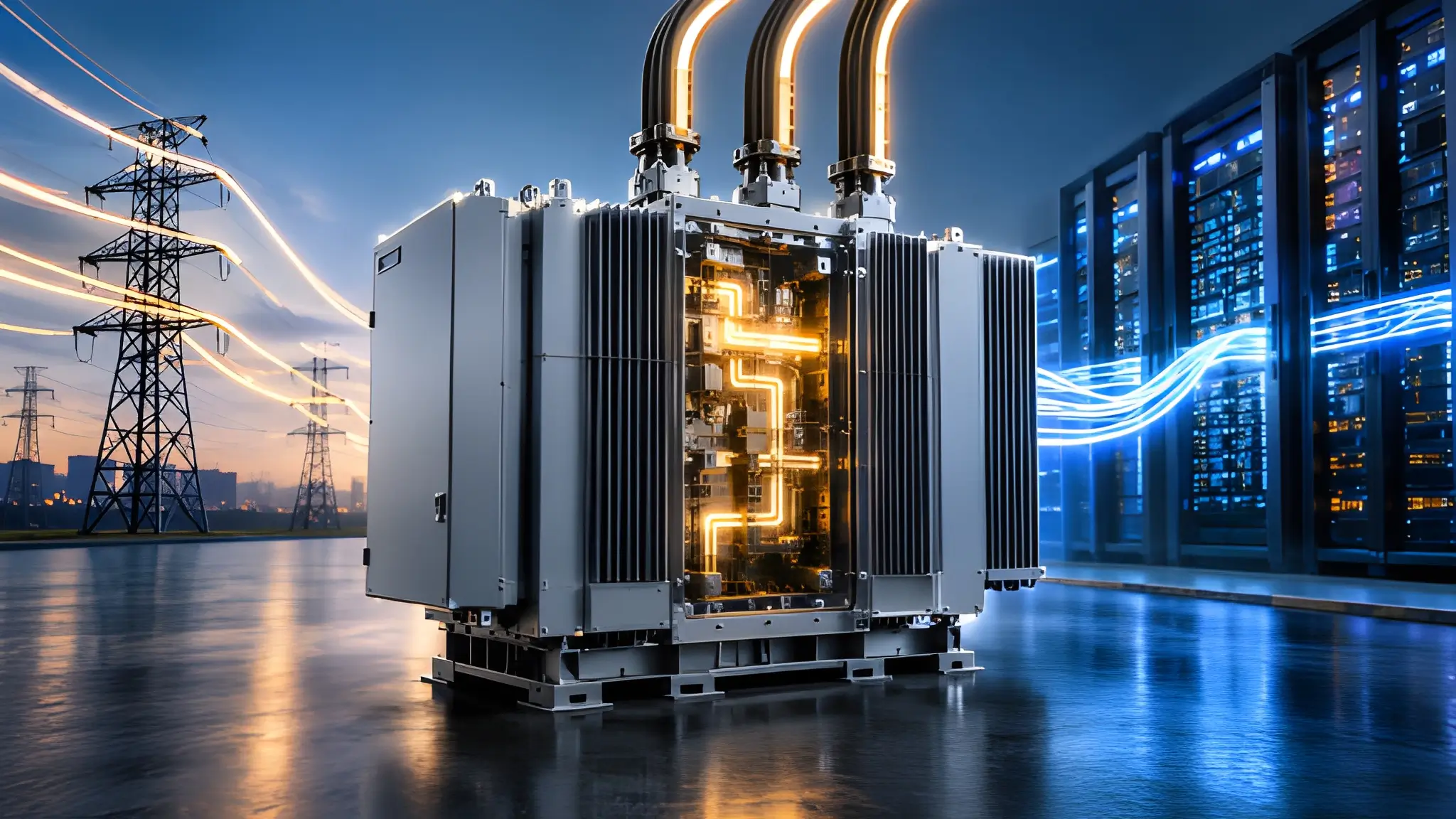
America’s electricity system is running into a problem that steel-and-copper transformers were never built to solve. Data centers are multiplying across the country, artificial intelligence workloads are pulling gigawatts from regional grids, and utilities are stretching decades-old infrastructure to keep pace. Into that gap steps Hyosung Heavy Industries, the South Korean power equipment maker, with a claim few competitors can currently match. The company says it has built the world’s first 22.9kV-class solid-state transformer, a device engineered to carry heavy urban loads while giving grid operators far tighter control than conventional hardware allows. Hyosung frames the technology as a direct answer to the power demands reshaping the American grid. The announcement lands at a moment when power availability, not chip supply, has become the binding constraint on data center growth.

America’s Power Crunch Meets an Aging Grid
The scale of the problem is difficult to overstate. Hyperscale data center campuses now require increasingly large blocks of interconnection capacity, and many of those requests are arriving faster than utilities can expand and modernize the infrastructure needed to serve them. Aging distribution infrastructure, much of it built decades ago, sits underneath this surge in demand and faces growing pressure as electricity consumption rises. Utilities are being asked to deliver more power, more reliably, to more concentrated loads than the grid was originally designed to handle. That mismatch between legacy equipment and modern demand curves is precisely the opening Hyosung is targeting with its high-voltage SST platform. Grid planners and data center developers increasingly treat power delivery timelines as a core factor in site selection alongside considerations such as land, water, and fiber access.
Hyosung’s SST traces its origins back to 2022, when the company completed development of a 1.05MVA-class unit rated at 22.9kV. That voltage class matters because it allows the transformer to connect directly into urban distribution networks, the very layer of the grid where data centers increasingly need to tap in. Unlike a conventional transformer, which passively steps voltage up or down through magnetic induction, an SST uses power semiconductors to actively shape the electricity passing through it. That active control gives grid operators capabilities for precisely managing voltage and current that go beyond those provided by a conventional transformer alone. Crucially, Hyosung’s design still preserves the electrical isolation function that utilities rely on for safety and fault protection in traditional transformers. The result is a piece of equipment that looks, from a wiring diagram, like a transformer, but behaves, from a control standpoint, like a piece of programmable grid infrastructure.
Why Solid-State Transformers Outperform Conventional Iron
The appeal of SST technology goes beyond raw capacity. Digital control capabilities embedded in the platform allow it to respond to fluctuating loads in near real time, a feature that becomes increasingly valuable as data centers introduce sharp, unpredictable power swings onto the grid. Traditional transformers primarily rely on fixed electromagnetic conversion, although many systems use tap changers and external control equipment for voltage regulation. An SST, by contrast, can actively control voltage and current through power semiconductors, capabilities that can support power-quality management in systems serving complex and rapidly changing electrical loads. That flexibility positions the technology as a natural fit for distribution systems that must serve increasingly complex, high-density power demands. Hyosung is positioning the technology for utilities facing this shift as equipment capable of actively participating in power-system control rather than functioning solely as a conventional passive transformer.
Hyosung describes the 22.9kV segment as an emerging market, one still in its early commercial stages but expanding quickly. Large data center campuses require enormous, concentrated blocks of electricity, and that requirement is creating fresh demand for equipment rated at higher distribution voltages than utilities have typically deployed at scale. Market research cited by the company projects the global SST market to grow at an average annual rate of more than 40%, a forecast that would place the technology among the fastest-expanding categories in grid hardware. However, high-voltage SST systems remain notoriously difficult to commercialize, and the semiconductor components at the heart of these systems are only part of the challenge. Engineers must also manage thermal loads that build up inside compact power-electronics enclosures, alongside insulation requirements, switching behavior, and control logic complex enough to operate safely at grid scale.
Cho Hyun-Joon’s National Security Framing
Hyosung Chairman Cho Hyun-Joon has positioned the company’s grid strategy in unusually strategic terms. “Driven by the expansion of AI and data centers, power infrastructure has now become a core industry directly linked to national security,” stated Chairman Cho. “Building on Hyosung Heavy Industries’ U.S. manufacturing facilities and technological prowess, we must establish ourselves as an irreplaceable, essential long-term partner in stabilizing the American power grid.” That framing elevates transformer manufacturing from an industrial supply question to a strategic policy concern, echoing the language now common around semiconductor fabrication and critical minerals. Cho’s comments suggest Hyosung views its SST program not as a single product launch but as a long-term bet on America’s electricity infrastructure. The chairman’s emphasis on national security also signals how closely power equipment suppliers are now watching Washington’s industrial policy conversations.

Words alone will not win utility contracts, and Hyosung appears to understand that. The company has already established domestic production capabilities for transformers and circuit breakers inside the United States, building a manufacturing footprint that predates this SST announcement. That local presence could prove strategically valuable as utilities and data center developers place increasing importance on supply-chain resilience and domestic manufacturing capacity for critical infrastructure equipment. Furthermore, local manufacturing shortens lead times on equipment that utilities need delivered on tight construction schedules, a factor that has become a genuine bottleneck across the power equipment industry. Hyosung’s existing U.S. manufacturing footprint gives the company local production capabilities that distinguish it from competitors relying entirely on imported equipment. That footprint, paired with the 22.9kV SST technology, forms the backbone of the company’s pitch to U.S. utilities and hyperscale developers alike.
The Long Road From Prototype to Grid-Scale Deployment
Traditional transformers still dominate electricity networks worldwide, and that will not change overnight. Meanwhile, the demands placed on those networks are shifting quickly as utilities evaluate new technologies capable of supporting increasingly complex and concentrated electrical loads. Data centers concentrate enormous electrical loads into relatively small footprints, and their growth is imposing stricter requirements on power quality and grid stability than most legacy networks were designed to deliver. SSTs address some of those pressures through faster, more precise electronic control, giving grid engineers a flexibility that passive transformer designs cannot match. Hyosung now plans to push its high-voltage SST technology toward demonstration projects and eventual commercialization, entering a field where only a handful of manufacturers are pursuing systems at these voltage levels.
For hyperscale operators, the arrival of high-voltage SST technology could eventually reshape how sites are planned. Faster, more precise voltage control at the distribution level could provide utilities with additional flexibility in managing complex loads, although broader interconnection timelines remain dependent on transmission capacity, generation availability, grid upgrades, and regulatory processes. Data center developers increasingly treat power availability as a primary siting factor, and equipment that improves the flexibility and reliability of power delivery can carry direct commercial value. If Hyosung’s SST platform proves reliable and scalable, it could become one option among several technologies utilities evaluate for supporting the large and increasingly concentrated power demands of major data center campuses. That outcome remains years away, contingent on successful demonstrations and regulatory approval processes that utilities apply cautiously to new grid hardware.
The Next Phase of America’s Power Buildout
Hyosung’s early move into 22.9kV SST development gives the company an early position in an emerging market as U.S. power demand continues to rise with the expansion of AI and data center infrastructure. The technology will not, by itself, solve America’s data center power crunch; no single piece of hardware can. It represents, instead, one component in a much larger, multi-decade effort to modernize the infrastructure feeding the country’s computing boom. Utilities, manufacturers, and policymakers are all being pulled into that effort simultaneously, each racing to keep pace with a demand curve that shows no sign of flattening. Hyosung’s bet is that being early to a technically difficult, high-barrier market will pay off as American grid operators look for partners capable of delivering both innovation and manufacturing scale. Whether that bet pays off will depend on execution over the coming years, not on the strength of a single announcement.












