
A major shift is underway in the hardware that powers artificial intelligence. Recent research from Counterpoint shows that AI ASIC shipments for servers are expected to triple by 2027 compared to 2024 levels, reflecting a rapid expansion in custom silicon designed specifically for AI workloads. By 2028, these specialized chips are projected to outnumber traditional GPU shipments, crossing more than 15 million units annually.
This trend signals something deeper than temporary market fluctuations. It marks a turning point in how data centers, hyperscale clouds, and enterprises will provision compute. Rather than relying on general-purpose graphics processors, companies are increasingly deploying chips optimized for defined AI tasks. This is reshaping infrastructure economics, performance expectations, and competitive dynamics across the industry.
What Makes ASICs Different from GPUs
GPUs have dominated AI compute for years. These processors were originally designed to render graphics, and their many parallel cores happen to accelerate the matrix operations at the heart of machine learning. That versatility enabled rapid adoption across both AI research and production inferencing tasks.
AI ASICs (Application-Specific Integrated Circuits) take a different approach. These chips are built with a narrow focus. They hard-wire processing patterns that accelerate specific elements of AI computation, such as neural network inference or training matrix operations. This narrow focus removes general-purpose circuitry that a GPU carries, allowing the silicon to dedicate nearly all of its resources to a focused workload. The result can be dramatic improvements in energy efficiency and performance per watt.
A well-known example is Google’s Tensor Processing Unit family. Google’s TPU ecosystems have powered large-scale AI operations for years. With generations from v4 through v7, these chips have delivered better performance per dollar for many AI tasks than GPU clusters of equivalent size. Many large language models, including Google’s own Gemini series, have been trained and served on TPU clusters, highlighting how custom silicon can scale AI in production.
Why Specialized Chips Are Growing Now
Several forces are reinforcing the move toward ASICs. The first is sheer scale. When cloud providers operate hundreds of thousands of GPUs to serve inference requests around the world, even small differences in energy use translate into millions of dollars in operating expenses. Custom ASICs eliminate unused circuitry and optimize memory access, reducing the cost per useful operation. For workloads that follow predictable patterns, this translates into efficiency gains that GPUs struggle to match.
The second driver is supply chain and control. Cloud operators increasingly want assurance they can provision chip capacity when they need it. Relying solely on merchant suppliers like NVIDIA or AMD subjects providers to external pricing power, production cycles, and inventory constraints. Designing their own ASICs gives large players direct control over performance targets, production timelines, and integration with their infrastructure stacks. A TrendForce analysis shows that hyperscale cloud service providers are rapidly expanding their internal ASIC programs to diversify risk and reduce dependence on external vendors.
A third force is competition. Counterpoint notes that market share among custom AI ASIC design partners is expected to fragment significantly by 2027 as more companies deploy their own silicon. Partners such as Broadcom are projected to capture significant design share while individual cloud platforms ramp up their bespoke solutions.
Examples from Hyperscale Players
Multiple real-world examples illustrate how ASICs are reshaping AI infrastructure.
Google has been an early leader. Its TPU pods form a backbone of its AI strategy, offering performance and cost advantages for both training and serving large models. These pods often connect thousands of chips with custom networking fabrics to achieve high throughput at predictable latency.
Amazon Web Services has developed ASICs such as Trainium and Inferentia, tailored for different stages of AI tasks. Trainium focuses on training efficiency, while Inferentia targets high-volume inference with low latency. Large enterprises and AI start-ups now run significant workloads on these dedicated chips, reducing their cloud bills compared with equivalent GPU clusters.
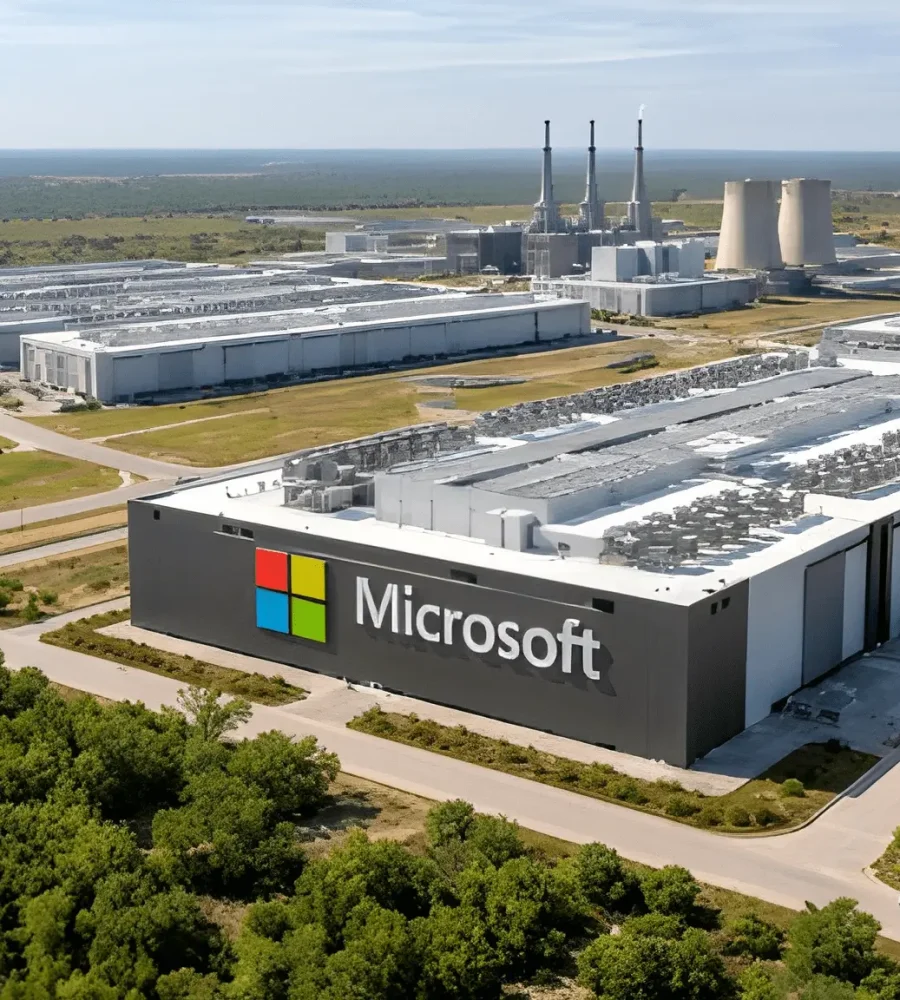
Meta Platforms is pursuing its own silicon with the MTIA series, and Microsoft has its Maia family. Both companies have internal chips designed to support foundational model workloads at scale. These efforts reflect a broader trend among hyperscalers to embed custom ASICs at the center of their compute strategy rather than treating them as optional complements to GPU racks.
Infrastructure Economics and Operational Efficiency
The economics of data center operation hinge on power, cooling, and density. Custom ASICs help reduce energy use because they often deliver higher performance per watt. This translates into lower electricity costs and smaller cooling burdens that would otherwise inflate operating expenses for extensive GPU clusters.
Models built for highly repetitive tasks also benefit from ASICs. Inference workloads can account for the bulk of AI operational costs because they run constantly in front-end applications serving real users. For these predictable patterns, ASICs can yield compelling cost per token savings compared with general-purpose GPUs.
This specialization reduces the total cost of ownership for AI deployments at scale, making cloud pricing more competitive and infrastructure investments more predictable.
Potential Challenges and Trade-offs
Despite their advantages, ASICs come with compromises. Designing a custom chip requires substantial upfront investment and deep expertise. The cycle from first silicon to mass production can span years. If AI architectures evolve rapidly, there is a risk that an ASIC optimized for a specific pattern may not deliver optimal performance as models change.
The software ecosystem also matters. GPUs benefit from mature toolchains such as CUDA and broad support across frameworks like TensorFlow and PyTorch. ASICs have historically had narrower ecosystems, requiring investment in toolchains and optimized libraries to extract peak performance.
Certain workloads remain better suited to general-purpose hardware because their patterns vary. For example, research training jobs with novel architectures still tend to run on GPUs to avoid the risk of redesigning silicon for evolving algorithms.
Market and Geopolitical Perspectives
The growth in ASIC adoption also reflects responses to broader industry and geopolitical conditions. As export controls and supply chain risks intensify, companies and nations alike are motivated to cultivate domestic silicon capabilities. TrendForce has documented how both U.S. and Chinese cloud providers are pushing in-house silicon development as a hedge against reliance on imported hardware.
This race for silicon independence parallels trends in other sectors, such as telecommunications and automotive, where localized design and production serve strategic goals beyond pure performance. For cloud providers, owning custom ASICs means less exposure to supply chain constraints and the ability to align hardware roadmaps with long-term planning.
Why Specialization Defines Scale Today
The broader lesson from this shift is that scaling compute now means more than stacking generic processors. True scale involves matching the right hardware to the right workload. GPUs will continue to play a vital role, especially in training and flexible experimentation. But ASICs are carving out a place at the heart of production infrastructure where predictable, high-volume tasks dominate cost structures.
In many ways, this transition is akin to developments in other industries where specialization drives performance and efficiency. Just as custom networking gear accelerated internet backbone performance, specialized AI chips are unlocking new levels of throughput for machine learning tasks that demand both speed and economy.
The moment of AI ASICs has arrived. It highlights how performance and efficiency will be balanced in the era of massive AI adoption. As ASICs proliferate, they will shape the economics of computing, influence decisions about infrastructure build-outs, and redefine how enterprises and cloud providers prepare for the next wave of AI demands.