.Nscale Locks $3.5 Billion Figure Robotics Compute Deal ·Qatar’s Meeza Lands Major Hyperscaler Deal for 8MW
·Qualcomm Strikes Amazon AI Chip Deal, Opens Door to $4 Billion Stock
·Hitachi Energy Bets $300M on China Grid Manufacturing
Corvex Builds Toward 8MW Cloud Infrastructure Footprint
LITEON Bets $176 Million on DCX Liquid Cooling
EdgeConneX Backs Singapore’s AI-Ready Tropical Data Center Testbed
.Nscale Locks $3.5 Billion Figure Robotics Compute Deal ·Qatar’s Meeza Lands Major Hyperscaler Deal for 8MW
·Qualcomm Strikes Amazon AI Chip Deal, Opens Door to $4 Billion Stock
·Hitachi Energy Bets $300M on China Grid Manufacturing
Corvex Builds Toward 8MW Cloud Infrastructure Footprint
LITEON Bets $176 Million on DCX Liquid Cooling
EdgeConneX Backs Singapore’s AI-Ready Tropical Data Center Testbed
Data Centers Are “Drinking the Planet Dry”? Numbers Tell a Different Story
AI data center water use has become a major topic in discussions around sustainability and artificial intelligence infrastructure. Headlines often
Akash Sharma
3 min read
Data Centers
World
Share
AI data center water use has become a major topic in discussions around sustainability and artificial intelligence infrastructure. Headlines often suggest that data centers are rapidly depleting local water resources, but the broader picture is more complex.
When people hear that a data center consumes millions of gallons of water, the immediate assumption is that it must be among the world’s biggest water users. The reality is more nuanced. Agriculture, food production, textiles, and landscape irrigation often consume far more water than many people realize. This does not mean data centers should avoid scrutiny. It means the discussion should be based on evidence rather than headlines.
AI Data Center Water Use: What the Numbers Show
Product or Activity
Estimated Water Use
What It Means
Cotton T-Shirt
~700 gallons (2,700 liters)
Enough water for one person’s drinking needs for several years.
Pair of Jeans
~2,000 gallons (7,500–10,000 liters)
Denim production is among fashion’s most water-intensive processes.
Avocado
~60 gallons (227 liters)
Water requirements vary by growing region and farming practices.
Almond
~1 gallon (3.8 liters) per nut
Small individually, but significant at scale.
Cup of Coffee
~140 liters
Most of the water footprint comes from growing coffee beans.
Rib-Eye Steak
~7,500 liters
Beef remains one of the most water-intensive foods globally.
Beer
~5 liters
Direct production water use; total agricultural footprint is higher.
Golf Course
Up to 100 million gallons annually
Water demand varies significantly by climate and course size.
Data Center
Millions of gallons annually
Primarily used for cooling infrastructure and maintaining uptime.
What About Data Centers?
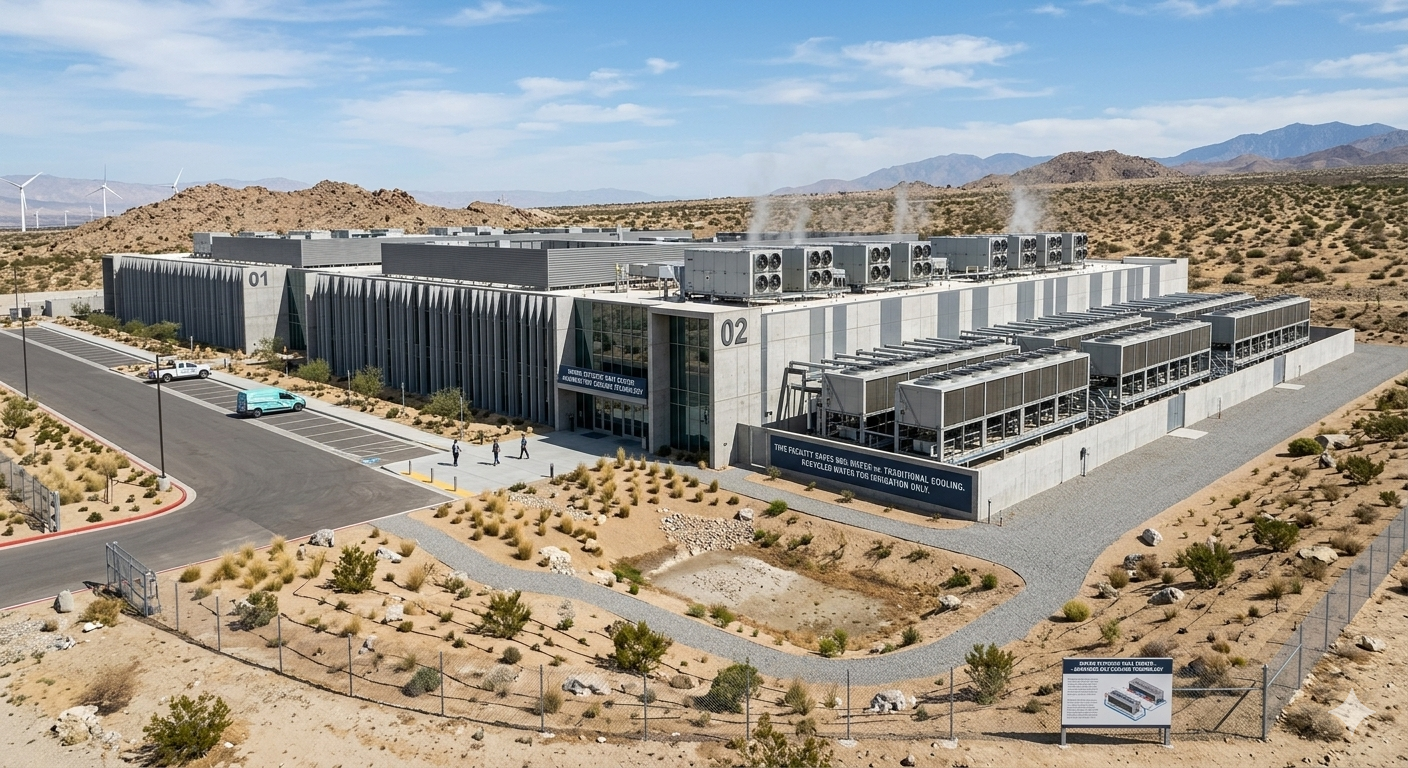
Data centers absolutely use water. According to a 2026 fact sheet from the Environmental Law Institute, U.S. data centers directly consumed approximately 66 billion liters of water in 2023, up substantially from 2014 as cloud computing and AI infrastructure expanded. Water is primarily used for cooling servers and maintaining operating temperatures. However, the picture is evolving.
Recycled Water Is Becoming More Common
66% of data centers already use recycled water. What the evidence does show is that many operators increasingly use reclaimed or recycled water sources where available, reducing dependence on potable drinking water supplies. The Environmental Law Institute notes that data centers can utilize “gray” sources such as reclaimed water and often maintain on-site treatment systems.
Zero-Water Cooling Is Real
Zero-water cooling systems are being built.
New cooling technologies include:
Air-cooled systems
Closed-loop cooling
Direct-to-chip liquid cooling
Hybrid cooling architectures
Industry studies report increasing adoption of waterless and low-water cooling methods, particularly in regions facing water stress.
Regulators Are Paying More Attention
Communities and regulators are increasingly examining the water implications of new AI infrastructure projects, especially in drought-prone regions. New permitting requirements, water stewardship programs, and transparency initiatives are emerging across several jurisdictions.
Why Comparing Water Use Is Difficult
One reason these debates become polarized is that people compare different kinds of water consumption.
A T-shirt’s water footprint includes:
Growing cotton
Processing fibers
Dyeing
Manufacturing
A steak’s water footprint includes:
Animal feed production
Drinking water
Processing
A data center’s water footprint includes:
Cooling systems
Electricity generation
Infrastructure operations
These are not always apples-to-apples comparisons. The question is not whether data centers use water. They do. The question is whether society considers the benefits of digital infrastructure worth the resources consumed, and whether operators are minimizing their impact.
The Bigger Picture
The discussion around AI and data center water consumption should not become a choice between concern and dismissal. Two facts can be true simultaneously:
AI infrastructure is increasing pressure on water resources, particularly in water-stressed regions.
Many everyday products—from cotton clothing and denim to beef and coffee—have water footprints that most consumers rarely consider.
The lesson is not that data centers deserve a free pass. The lesson is that water consumption is a broader economic issue than most headlines suggest. If society is going to debate water sustainability, the conversation should include agriculture, food systems, textiles, landscaping, manufacturing, and digital infrastructure alike. Only then do we get a complete picture of where our water really goes.
Not owning GPUs has become the default, deliberate strategy for building an AI company — not a compromise founders accept reluctantly. H100 rental rates fell 64-75% in fifteen months, a dense ecosystem of neoclouds and inference-as-a-service providers now lets startups skip infrastructure entirely, and credit programs can fund a company’s first year before a founder writes a check
A fire strategy becomes expensive when the building has already decided where walls, equipment,
Data Centers
Kiara Mandavia
Browse Topics
Disruptor Spotlight
issue
Featured company
Cerebras Systems
Data Centers
The chip that makes Nvidia nervous. Cerebras’ Wafer Scale Engine is rewriting the rules of AI inference at scale.
Faster
0x
YoY Revenue
0x
Transistors
0T
Market Pulse
MSFT
+1.02%
NVDA
+0.66%
AMZN
-0.078%
AMD
-6.95%
TSMC
-2.98%
Indicative only · Not financial advice
Upcoming Events
SEP
The AI Infrastructure Race (India)
WEBINAR · ONLINE
The AI Infrastructure Race: Won on Power, Land and Trust — Not Capital
MAY
0
AI Infrastructure Summit
DUBAI · IN PERSON
MEA’s premier AI infrastructure event.
JUN
00
Compute Forecast Summit
SINGAPORE · IN PERSON
Our flagship APAC event. Early bird open.
Latest Moves
Live
Ecolab Deepens Cooling Strategy With $4.75B CoolIT Acquisition
Ecolab is making one of its biggest moves yet into AI infrastructure after completing its $4.75 billion acquisition of liquid cooling specialist CoolIT Systems
Pure DC and AVK Deploy Europe’s First 110 MW Data Center Microgrid in Dublin
The Pure DC Dublin microgrid has made history as Europe’s first large-scale on-site data center microgrid, launched in partnership with power solutions provider AVK at Pure DC’s campus in Ireland.
Pace Digitek Partners With MEGMEET to Expand AI Data Center Power Business
India’s AI infrastructure ecosystem continues to mature as domestic technology manufacturers move beyond traditional telecommunications and industrial markets toward high-growth digital infrastructure opportunities