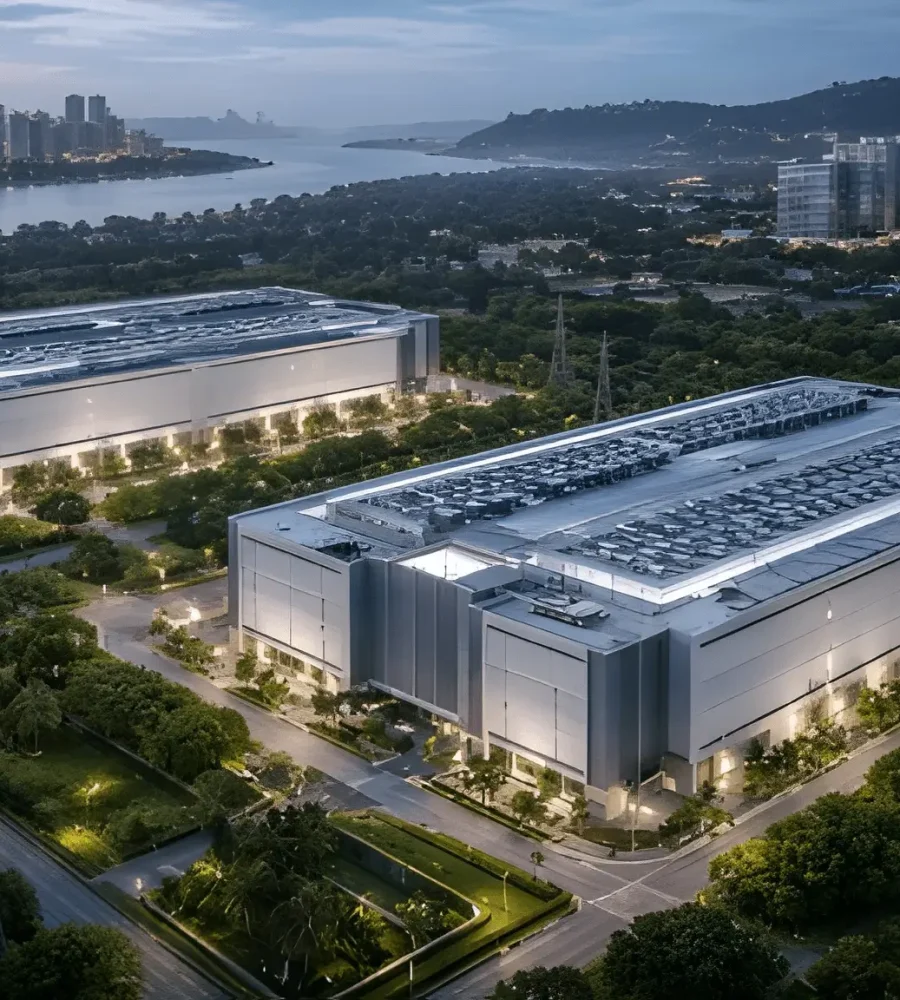
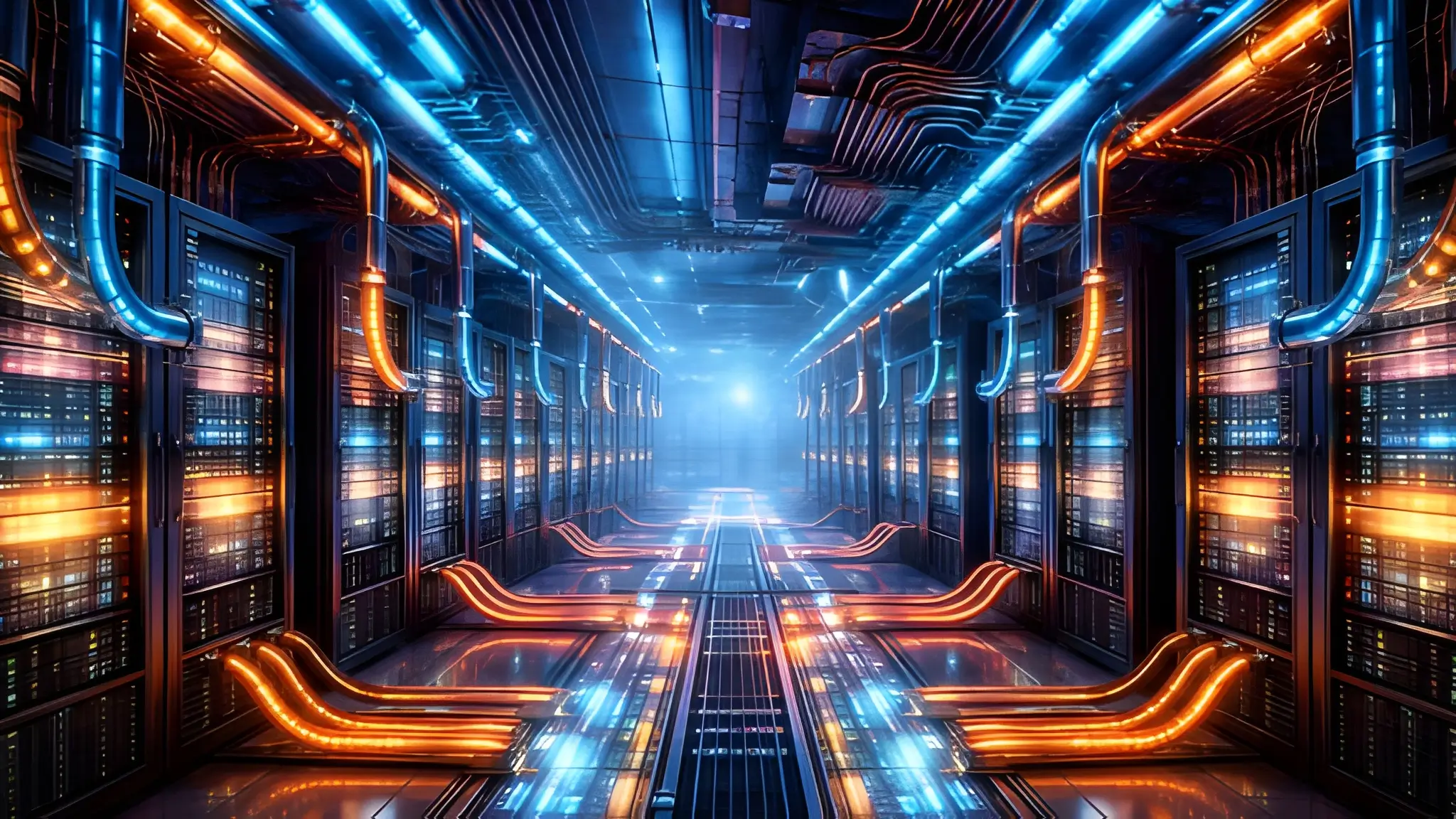
Legacy data centers were designed around predictable, low-density compute patterns that rarely exceeded 10–15 kW per rack, which now contrasts sharply with modern GPU clusters demanding 40–100 kW or more per rack. Existing UPS systems in many legacy facilities operate close to their originally provisioned load envelopes, which can limit available headroom for incremental rack-level demand increases without requiring system rebalancing or capacity upgrades.
Power distribution units in these environments typically rely on static configurations, and while intelligent variants exist, many legacy deployments lack the capability to dynamically reallocate capacity to areas where GPU clusters concentrate loads. Electrical pathways such as branch circuits and busbars impose hard limits that restrict how much power can reach specific racks despite sufficient upstream grid availability. This structural limitation leads to underutilized facility capacity, where megawatts remain stranded due to downstream bottlenecks rather than supply constraints. Consequently, operators often encounter scenarios where compute expansion becomes increasingly dependent on internal electrical redesign, although grid availability can remain a limiting factor in certain regions.
Operators attempting to densify racks within these environments often encounter cascading constraints that originate from transformer sizing and panelboard limitations. Cable management complexity increases significantly as higher amperage circuits require thicker conductors and tighter routing tolerances within existing infrastructure footprints. Voltage drop considerations become critical at higher loads, which forces conservative provisioning and limits achievable rack density even further. Maintenance risks can increase in legacy environments where system design limits the ability to isolate high-density segments without affecting adjacent infrastructure zones.As a result, the theoretical capacity of a facility rarely translates into deployable AI-ready infrastructure without targeted upgrades.
Thermal Saturation Thresholds in Air-Cooled AI Environments
Air-cooled environments depend on predictable heat dissipation patterns that align with distributed workloads, yet GPU clusters introduce concentrated thermal loads that disrupt this equilibrium. Cooling systems designed for uniform airflow begin to exhibit inefficiencies when localized heat output exceeds the capacity of cold aisle containment strategies. Temperature gradients can increase sharply across short distances, which creates hotspots that limited sensor granularity may fail to detect in real time. Airflow recirculation intensifies under these conditions, reducing effective cooling capacity even when total airflow volume appears sufficient. Operators often compensate by lowering ambient temperatures across the entire facility, which increases energy consumption without resolving localized saturation issues. Therefore, thermal constraints emerge as a primary limiting factor in scaling AI workloads within air-cooled environments.
The transition from linear to non-linear thermal behavior occurs when airflow systems reach their saturation thresholds, beyond which incremental cooling inputs fail to deliver proportional temperature reductions. High-density racks disrupt pressure differentials that traditional raised floor systems rely on, leading to uneven air distribution and reduced cooling efficiency. Cooling units such as CRACs and CRAHs in legacy configurations may struggle to respond to rapid thermal fluctuations generated by GPU workloads that shift dynamically during training cycles. This mismatch can lead operators to deploy interim solutions such as spot cooling or airflow overprovisioning, which may reduce overall system efficiency when used as long-term strategies. Liquid cooling technologies are increasingly adopted as necessary overlays in high-density scenarios, although air cooling remains viable under certain controlled conditions. However, integrating such systems into legacy environments introduces additional complexity in terms of plumbing, monitoring, and redundancy planning.
Clustered Compute vs Distributed Layouts: A Structural Misalignment
Traditional data center layouts prioritize distributed compute placement to balance power and cooling loads evenly across the facility footprint. GPU clusters, however, require physical proximity to minimize latency and maximize interconnect efficiency, particularly for high-speed networking architectures. This shift creates a structural misalignment between facility design and workload requirements, where optimal compute placement conflicts with infrastructure constraints. Cabling complexity increases as high-bandwidth interconnects demand shorter distances and more direct routing paths between nodes. Floor layouts that once supported scalability through distribution can hinder performance when they constrain optimal cluster configurations required for high-density GPU deployments. Consequently, achieving optimal AI performance often requires rethinking spatial organization within existing facilities.
Cluster proximity also intensifies localized demand for both power and cooling resources, which exacerbates the limitations of legacy infrastructure systems. Network architectures such as spine-leaf topologies rely primarily on logical design, although their performance can be influenced by physical layout constraints that legacy environments may not easily accommodate. Cable congestion becomes a significant operational challenge, increasing the risk of interference, maintenance difficulty, and airflow obstruction. Thermal zoning strategies can become less effective when clusters concentrate heat generation within confined areas, particularly if containment systems are not optimized for such density. Retrofitting these environments may involve redistributing workloads or physically reconfiguring rack placements, both of which can introduce operational disruption depending on implementation scope. Meanwhile, operators must balance performance optimization with infrastructure limitations that were never designed for such concentrated compute patterns.
Static Provisioning in a Dynamic Load Environment
Legacy facilities rely on static provisioning models that assume stable and predictable workloads, yet AI applications introduce highly variable power and thermal demands. GPU utilization fluctuates significantly during training and inference cycles, which creates rapid changes in power draw that static systems cannot accommodate efficiently. Fixed power allocations at the rack or row level lead to either underutilization or overload conditions depending on workload behavior. Cooling systems in legacy environments can struggle to adapt because they often operate based on predefined thresholds rather than fully integrated real-time demand signals. This mismatch results in inefficiencies where infrastructure either overcompensates or fails to respond adequately to dynamic conditions. Therefore, static provisioning models are becoming increasingly misaligned with AI-driven environments that exhibit high variability in load patterns.
Real-time monitoring and adaptive control systems offer a pathway to address these challenges, yet their integration into legacy environments remains complex. Sensors and telemetry platforms must operate at higher granularity to capture rapid fluctuations in load and temperature across GPU clusters. Control systems require advanced algorithms to dynamically adjust power distribution and cooling output without compromising system stability. However, some existing infrastructure lacks the digital backbone needed to support such responsiveness at scale, particularly in facilities that have not undergone recent modernization. Retrofitting these capabilities involves both hardware upgrades and software integration, which increases cost and implementation complexity. As a result, operators must carefully evaluate the trade-offs between incremental improvements and comprehensive infrastructure modernization.
Retrofitting for Density: Rewiring Power–Thermal Coupling
Retrofitting legacy facilities for AI workloads requires a fundamental reconfiguration of how power delivery and heat dissipation interact within the environment. Busway systems replace traditional cabling to provide flexible and scalable power distribution that can adapt to changing rack densities. Modular power units introduce localized capacity that reduces dependency on centralized infrastructure and enables targeted upgrades. Liquid cooling overlays, including direct-to-chip and immersion systems, address thermal challenges by removing heat at the source rather than relying solely on ambient airflow. These interventions collectively reshape the relationship between power and cooling, allowing facilities to support higher densities without compromising stability. Consequently, retrofitting becomes a strategic approach to unlocking latent capacity within existing infrastructure.
Integration challenges remain significant because these upgrades must coexist with legacy systems during transition phases. Electrical and mechanical systems require careful coordination to ensure compatibility and maintain redundancy standards. Installation processes often occur in live environments, which necessitates meticulous planning to avoid operational disruptions. Monitoring and control systems must also evolve to manage hybrid infrastructures that combine traditional and advanced technologies. Despite these complexities, retrofitting can offer a cost-effective alternative to building entirely new facilities in scenarios where structural and electrical upgrades remain feasible.Moreover, it enables operators to extend the lifecycle of existing assets while aligning them with emerging AI demands.
Converting Installed Capacity into Usable AI Output
The gap between installed capacity and usable AI output reflects the cumulative impact of power, thermal, and structural constraints embedded within legacy data center designs. Facilities that appear sufficient in terms of total megawatt capacity often fail to deliver equivalent compute performance due to localized bottlenecks. Addressing these limitations requires a shift from incremental adjustments to integrated infrastructure strategies that align with AI workload characteristics. Retrofitting initiatives demonstrate that significant gains can be achieved by reconfiguring existing systems rather than replacing them entirely. However, success depends on a holistic approach that considers power distribution, cooling efficiency, and spatial design as interconnected elements. Ultimately, the ability to convert infrastructure into effective AI capacity is emerging as a key factor influencing competitiveness in increasingly compute-intensive environments.