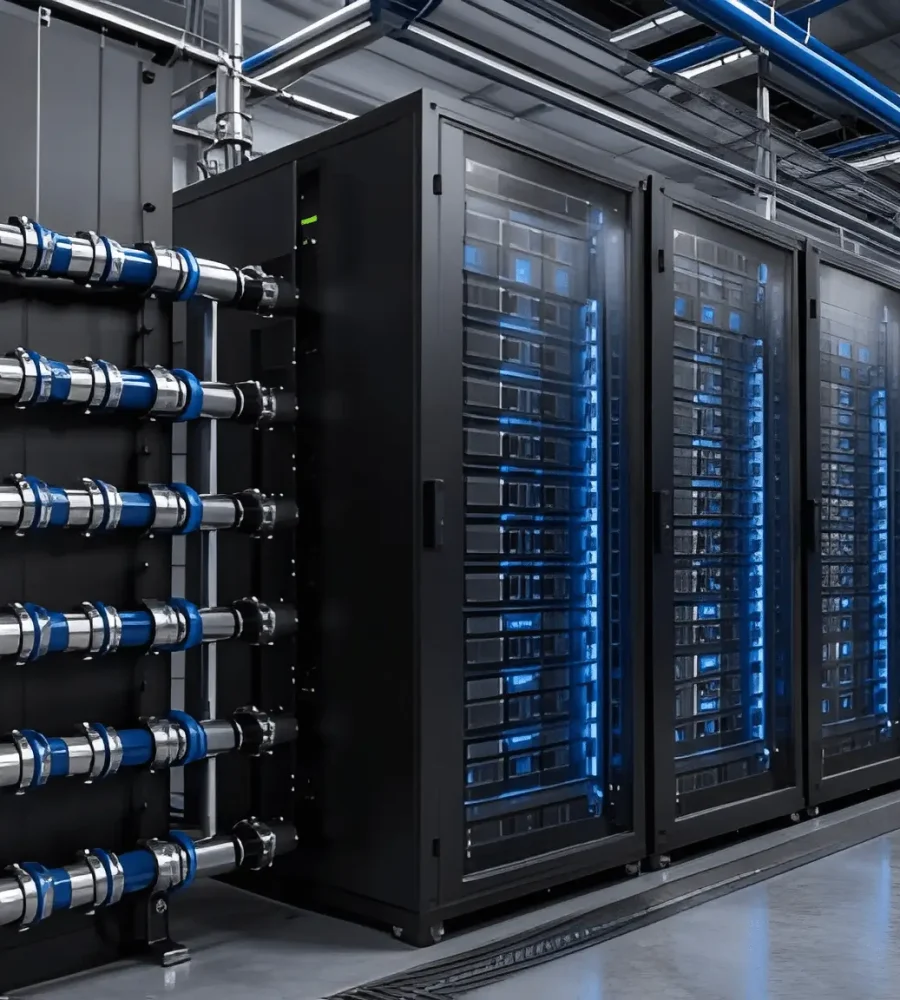
As AI workloads grow, data center operators are adopting liquid-based cooling systems to handle rising heat densities and energy demand. At first glance, liquid cooling appears to solve thermal challenges efficiently. It transfers heat more effectively than air and has become a critical element in high-performance computing design. Beneath this optimism, however, lie structural fragilities and overlooked risks that industry standards do not fully address. These issues threaten reliability, performance, and uptime in mission-critical AI deployments.
Standards Lag Behind Reality
Liquid cooling often relies on the assumption that published standards provide a reliable engineering foundation. In practice, many guidance documents fail to reflect real-world conditions in high-density AI environments. Technical analyses reveal that qualification tests referenced in standards sometimes use unrealistic temperatures, inappropriate materials, or simplified fluid conditions. As a result, operators may overestimate system reliability under actual load.
Consider glycol-based coolants. Industry protocols frequently treat these solutions as inherently stable, yet tests are often conducted under idealized conditions. While glycol resists freezing and supports broad operating ranges, it can require significantly more pumping energy than water-based fluids, reducing efficiency when cooling capacity is critical. Misjudgments in fluid dynamics can also create thermal hotspots near sensitive processors, increasing risk for costly GPU clusters.
Materials present additional concerns. Plastics commonly used in coolant loops allow oxygen permeability, which can accelerate corrosion and long-term degradation. When designers rely on incomplete assumptions about these materials, heat transfer effectiveness declines and maintenance costs rise.
Fluid Chemistry and Material Interactions
Reliability challenges extend beyond standards to include fluid chemistry and material compatibility. Propylene glycol and other additive-based mixtures can moderate freezing points and limit corrosion under controlled conditions. In operational settings, however, poor water chemistry or improper additive balance can accelerate corrosion, scale buildup, and fluid degradation, undermining heat transfer over time.
Particulate contamination also introduces subtle but significant risks. Even small debris can clog capillaries, valves, and microchannels in GPU and CPU cold plates. Because these systems are tightly integrated, minor contamination can produce disproportionate performance losses unless filtration and monitoring are robust.
Certain metal and fluid combinations create additional hazards. Galvanic corrosion can release microscopic particles that interfere with filtration and damage heat transfer surfaces. Many operators lack clear guidance on these interactions, forcing them to navigate complex material decisions without reliable benchmarks.
Complexity and Fragmentation in Cooling Ecosystems
Liquid cooling requires coordination across fluid loops, pumps, sensors, cold plates, and control systems. Unlike air cooling, which has decades of standardized practice, liquid systems lack universal specifications. Critical elements such as single-phase versus two-phase loops, connector interfaces, and compatible materials vary across vendors.
This fragmentation complicates operations. Different vendors often produce solutions that do not interoperate or benchmark consistently. Operators frequently assemble patchwork systems that function but lack shared standards. In China, the absence of unified cooling interfaces has increased integration costs and complicated long-term maintenance planning.
Innovation continues to outpace standards. Microfluidic channels embedded in silicon demonstrate that thermal management technology evolves faster than regulatory frameworks. Operators must navigate persistent compatibility and documentation challenges to maintain reliable systems.
Subtle Operational Risks
Liquid cooling failures often emerge gradually rather than catastrophically. Air system failures usually produce immediate overheating, while liquid systems can lose efficiency over weeks or months, silently eroding performance and hardware longevity.
Uneven coolant distribution during commissioning can create hotspots that air systems would have mitigated. These conditions may trigger intermittent server throttling, slowing AI training cycles and increasing operational costs without immediate alarms.
Reliance on sensors and alarms introduces additional complexity. Misconfigured thresholds can produce false positives or fail to detect subtle performance declines until they escalate. Gradual drift, mismatched components, and imperfect calibration collectively undermine system stability and require extensive troubleshooting.
Supply Chain and Resource Pressures
Fragility extends beyond design to include supply chains and workforce expertise. Specialized components such as quick-disconnect couplings, corrosion-resistant materials, and precision valves are concentrated among few suppliers, limiting scalability as AI deployments accelerate.
Skilled technicians capable of managing fluid systems and advanced heat transfer remain scarce. Even well-engineered systems can fail during deployment or maintenance if personnel lack proper expertise.
Environmental constraints further affect planning. Open-loop or evaporative systems face regulatory or logistical limits in regions with constrained water resources. Closed-loop systems reduce water consumption but require careful monitoring of fluid chemistry and waste management, factors often overlooked in standards that focus narrowly on heat transfer.
Corrosion Management as Core Engineering
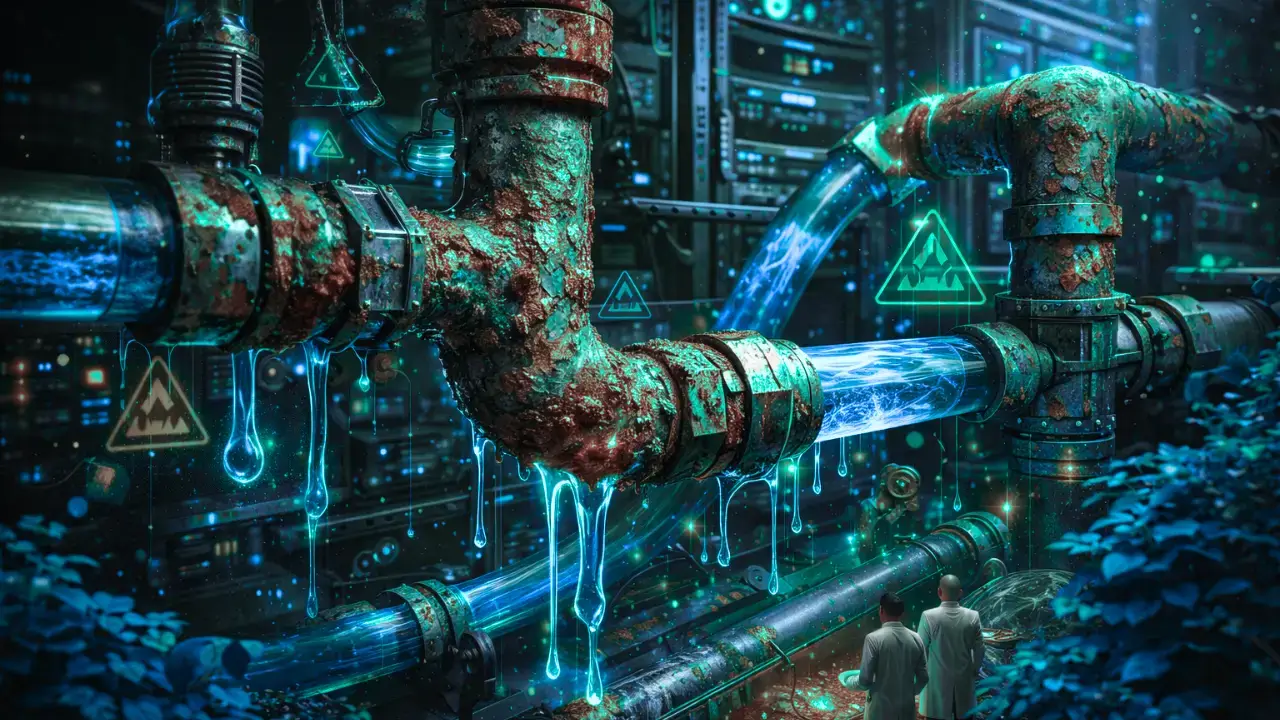
Corrosion represents a silent threat to liquid cooling. When it occurs in piping, heat exchangers, or cold plates, efficiency declines, pumps work harder, and system longevity decreases. Even small debris can clog microchannels and filtration systems, producing hotspots that damage hardware before detection.
Effective corrosion management demands materials with high resistance, continuous fluid monitoring, and filtration capable of removing particles as small as 25 microns. Treating corrosion as a core engineering practice is essential in AI environments where uptime drives revenue and competitiveness.
Aligning Standards with Reality
Liquid cooling remains essential for managing the thermal demands of AI and high-performance computing. It offers efficiency advantages that will become more critical as rack densities increase and air cooling approaches physical limits. Confidence in these systems requires realistic standards, rigorous engineering, and disciplined operational practices rather than assumptions about ideal performance.
Reliability emerges when standards reflect the complexities of fluid chemistry, material interactions, control systems, and human workflows. Fragility in AI cooling affects uptime, total cost of ownership, energy efficiency, and organizational reputation. Greater transparency, benchmarking, and adherence to operational best practices will ensure that liquid cooling supports AI infrastructure effectively rather than hiding vulnerabilities.