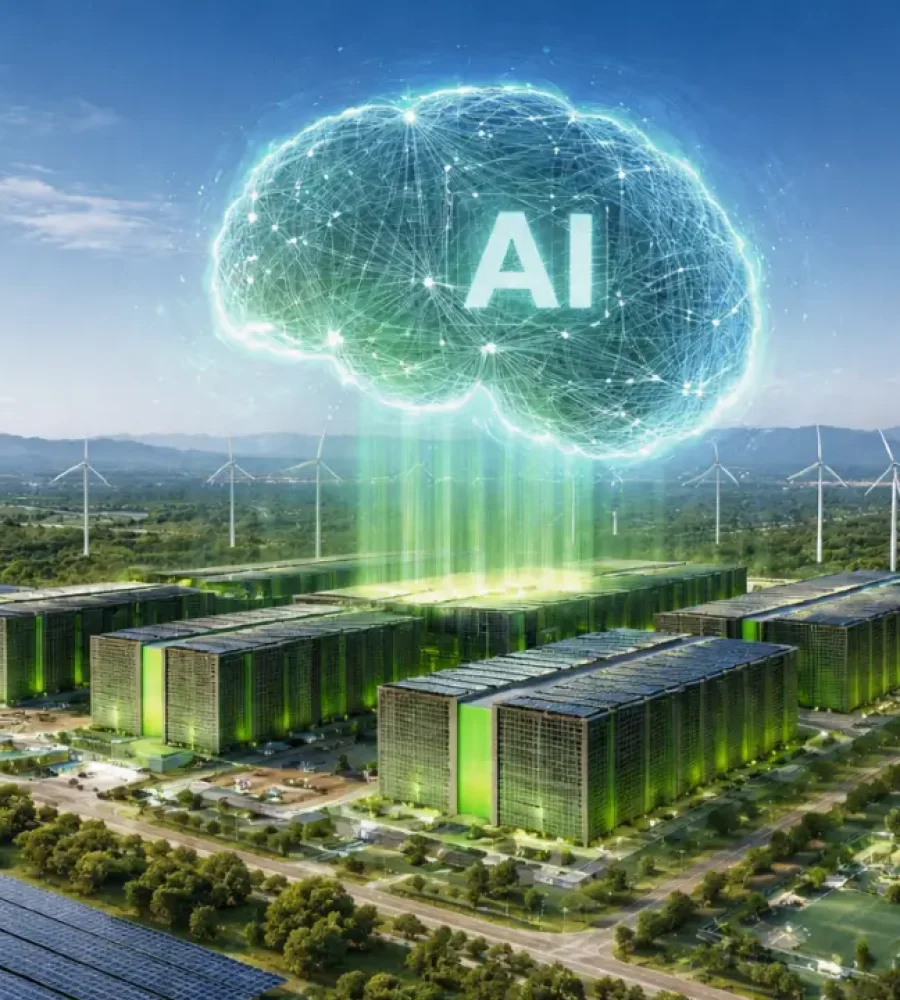
As data centers evolve to support generative artificial intelligence and high-performance computing, the thermal management challenge is moving beyond incremental tweaks. Next-generation AI accelerators and high-TDP (Thermal Design Power) processors push heat output to levels that conventional air cooling cannot manage. By 2026, industry metrics show that liquid cooling technologies are becoming mainstream because air-based systems reach physical limits long before rack densities hit 100 kilowatts or more per rack.
In this environment, a shift toward anhydrous cooling is emerging. Unlike traditional systems that rely on evaporating water to reject heat, anhydrous approaches use closed-loop fluids, often engineered dielectric liquids, to absorb and transport heat from hot components without consuming water. This blog explains why this technology is gaining traction, how it works, where it fits relative to other cooling methods, and the challenges that remain for widespread adoption.
Why Traditional Cooling Is Hitting Its Limits
Air-based thermal systems, once the backbone of data center design, are largely constrained by physics. Air has low heat capacity, so enormous volumes and powerful fans are needed to remove heat. This strategy becomes inefficient as rack power densities rise into the tens of kilowatts. Historically, adiabatic or water-assisted cooling rejected heat outside the data hall, but that approach released water into the atmosphere and raised concerns over water scarcity. In many regions, regulators are tightening rules for evaporative systems, making them less attractive for large facilities.
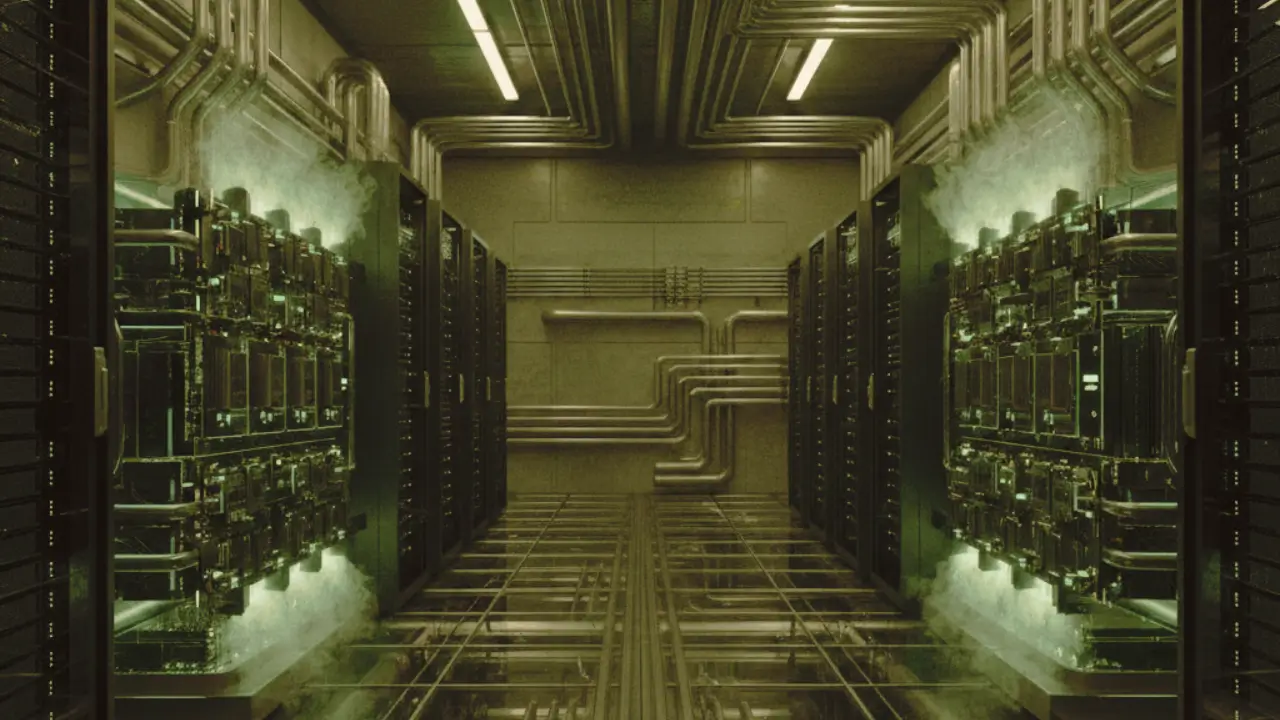
Liquid cooling, including cold plate and immersion systems, is widely adopted for high-density workloads because liquids carry hundreds of times more heat per unit volume than air. In direct-to-chip liquid cooling, coolant circulates through cold plates attached directly to CPUs and GPUs, efficiently removing heat at the source. Immersion cooling submerges entire servers in a dielectric fluid bath, allowing extremely high rack densities with minimal air handling. Both approaches lower energy overhead and improve overall Power Usage Effectiveness (PUE).
The latest development in this evolution is anhydrous cooling, which applies liquid heat transport while eliminating the need for water in the heat rejection stage.
What “Anhydrous Cooling” Really Means
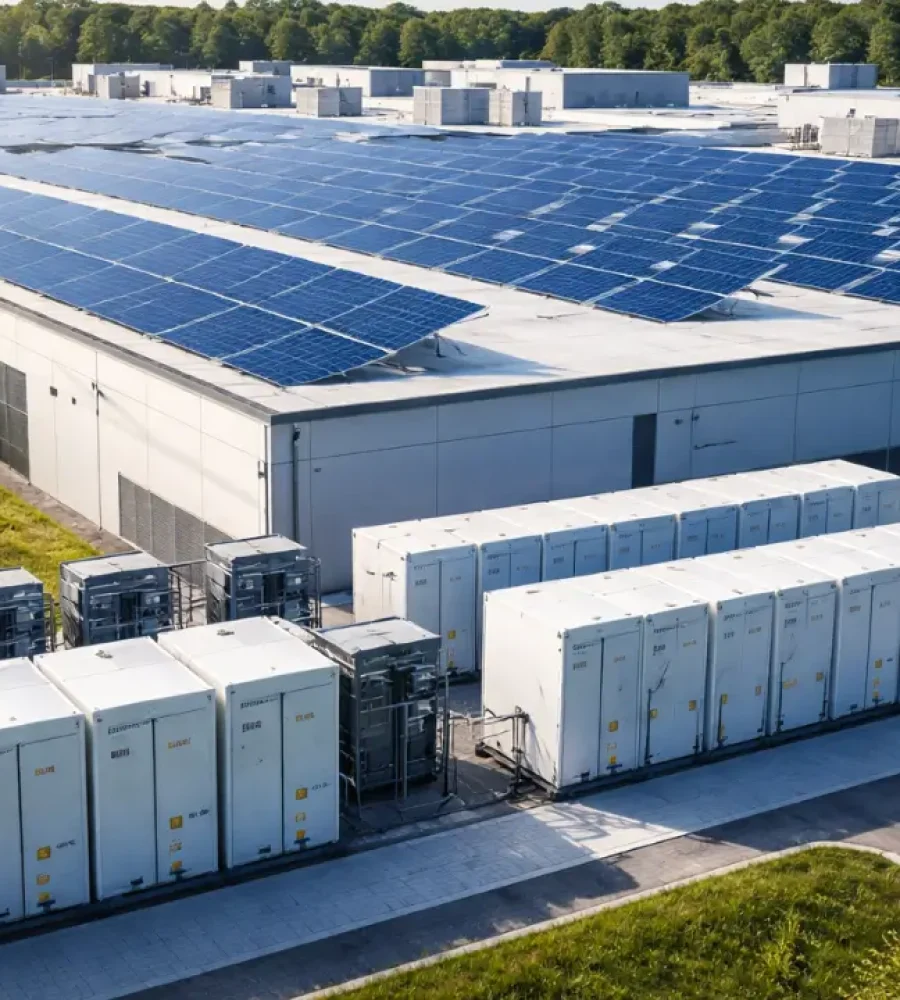
Anhydrous cooling refers to any system that manages heat without evaporating water or relying on wet systems like cooling towers. Unlike open-loop cooling, where water evaporates to carry heat away, anhydrous systems circulate closed-loop fluids. These fluids, often dielectric and non-conductive, safely contact sensitive electronics. They absorb heat and transfer it to a heat exchanger, dissipating it into the environment without using water.
Anhydrous designs are an advanced subset of liquid cooling. In single-phase systems, the fluid remains liquid throughout the loop and uses its high heat capacity to carry thermal energy away. In two-phase systems, the fluid undergoes a controlled phase change at hotspots on the chip. It boils into vapor and condenses back to liquid at a heat rejection surface. This latent heat transfer makes two-phase cooling extremely effective at handling high heat fluxes, the challenge presented by high-TDP clusters.
Why High-TDP Clusters Demand Anhydrous Solutions
Modern AI accelerators and GPU modules focus on performance rather than ease of cooling. These chips routinely dissipate over 1,000 watts of heat per device, and GPUs often operate in tightly packed racks with dozens of chips. This situation places enormous demands on thermal systems: heat must be removed quickly to prevent throttling, maintain reliability, and sustain performance under heavy workloads.
Air cooling struggles because of the thermal resistance between silicon and moving air. Even with aggressive airflow and powerful fans, air cannot remove enough heat when chips are deep in server racks. Liquid cooling reduces that resistance because liquids conduct heat far better than air. Anhydrous approaches extend this advantage by removing auxiliary water systems, making them especially valuable where water supply is limited or environmental regulations restrict evaporative cooling.
Anhydrous cooling addresses two critical constraints data centers face with extreme workloads: removing heat quickly and doing so sustainably without depleting local water resources.
Environmental and Operational Advantages
The main drivers for anhydrous cooling are performance and sustainability:
- Water Conservation: Heat rejection happens in closed loops without water evaporation, drastically reducing or eliminating freshwater consumption. This supports industry goals to improve Water Usage Effectiveness (WUE) and reduce environmental footprints.
- Energy Efficiency: By capturing heat at high density and rejecting it directly via heat exchangers, these systems can achieve lower PUEs than traditional air and evaporative systems. Advanced two-phase designs handle more than 100 kW per rack with minimal auxiliary energy overhead.
- Higher Rack Density: Anhydrous cooling supports densification trends. Immersion systems already allow racks with densities far beyond air cooling limits, and closed-loop variants achieve this without water trade-offs.
These benefits make anhydrous cooling attractive for hyperscale data centers and organizations seeking high density while remaining sustainable.
Challenges and Trade-Offs
Despite its promise, anhydrous cooling is not yet widespread. Several challenges affect adoption:
- Fluid and Infrastructure Costs: Engineered dielectric fluids and plumbing infrastructure are more expensive than traditional cooling plants, deterring smaller operators.
- Maintenance Complexity: Service personnel require training for sealed fluid systems. Fluid handling needs leak detection and strict safety protocols to prevent contamination.
- System Weight and Space: Immersion tanks and fluid containment add weight and often require building modifications. This influences site selection and facility design.
These trade-offs mean anhydrous cooling will likely coexist with other advanced liquid cooling systems. Operators must weigh thermal performance, environmental impact, and total cost of ownership when selecting the best approach.
Looking Ahead
The rise of anhydrous cooling reflects a broader trend in data center engineering: thermal strategy is now a first-order design consideration. As AI workloads push power densities higher, data centers must innovate beyond conventional cooling methods. Anhydrous approaches, with high thermal throughput and sustainable profiles, represent an important step.
The transition is well underway. Market forecasts show the global liquid cooling segment expanding rapidly as AI adoption grows, driven by major tech investments and the need for thermal designs that match compute demands.
In the near term, closed-loop, water-free cooling will gain visibility in flagship AI deployments and hyperscale facilities. Over time, improvements in fluid technology, manufacturing scale, and operational expertise will reduce barriers. For high-performance clusters seeking a balance of thermal efficiency and sustainability, anhydrous cooling is poised to become a defining technology in the AI infrastructure era.