Infrastructure used to sit quietly in the background, drawing power, rejecting heat, and fulfilling its function without question. Today, however, leadership teams expect more from the systems that sustain their operations.
As energy markets fluctuate and operational complexity intensifies, facilities can no longer remain passive participants in the grid. Organizations now examine infrastructure through a lens that blends engineering with enterprise positioning. Within this context, energy recovery emerges not as a technical add-on but as a structural shift in philosophy. The conversation moves beyond reducing consumption toward redefining how infrastructure creates value.
Rethinking Infrastructure Value Beyond Consumption
Operators measured success by how efficiently systems consumed electricity and minimized losses. Design teams optimized chillers, switchgear, and airflow patterns to shave incremental loads from operational baselines. Such an approach framed infrastructure as a cost center that required constant refinement but rarely strategic reinvention. Energy recovery disrupts that mindset by treating every watt as a potential asset rather than an expense.
Instead of focusing solely on input reduction, organizations now explore how output streams can feed adjacent systems.Therefore, infrastructure shifts from passive consumer to active node within a broader energy ecosystem. When facilities adopt this perspective, they stop asking how little energy they can use and start asking how much value they can circulate. Operational strategy evolves toward integration with district heating, industrial symbiosis, and local grids.
Moreover, planners evaluate energy flows alongside financial, reputational, and resilience considerations.This reframing elevates facilities management from maintenance oversight to ecosystem stewardship.Executives begin to recognize that infrastructure can generate returns indirectly through strategic alignment. Consequently, energy recovery becomes a lever that connects engineering detail with enterprise ambition.
From Heat Rejection to Resource Regeneration
For decades, excess heat represented an unavoidable byproduct of computing, manufacturing, and power conversion. Cooling towers and heat exchangers expelled thermal loads into the atmosphere as quickly as possible. Engineers prioritized thermal stability, often without considering downstream potential.Yet the physics of energy conservation tells a different story about so-called waste.Thermal energy retains usability when systems capture and redirect it with intention.Hence, the shift from rejection to regeneration reflects both philosophical and engineering evolution.
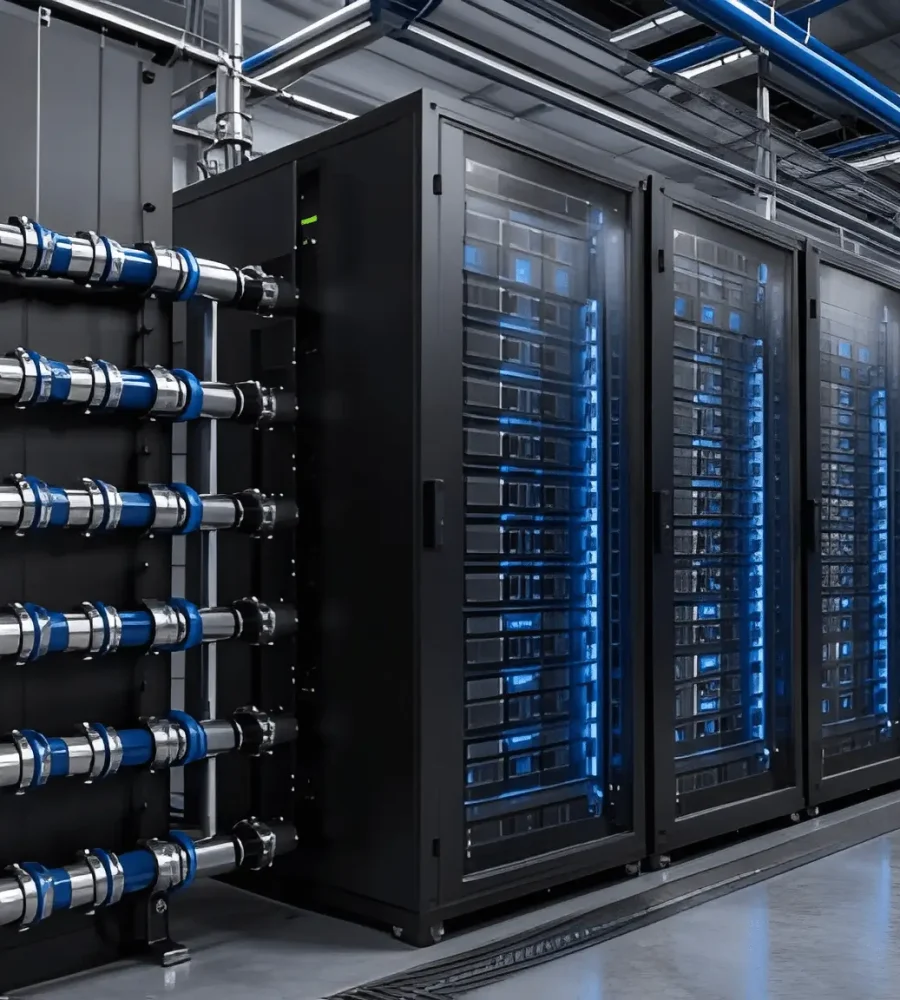
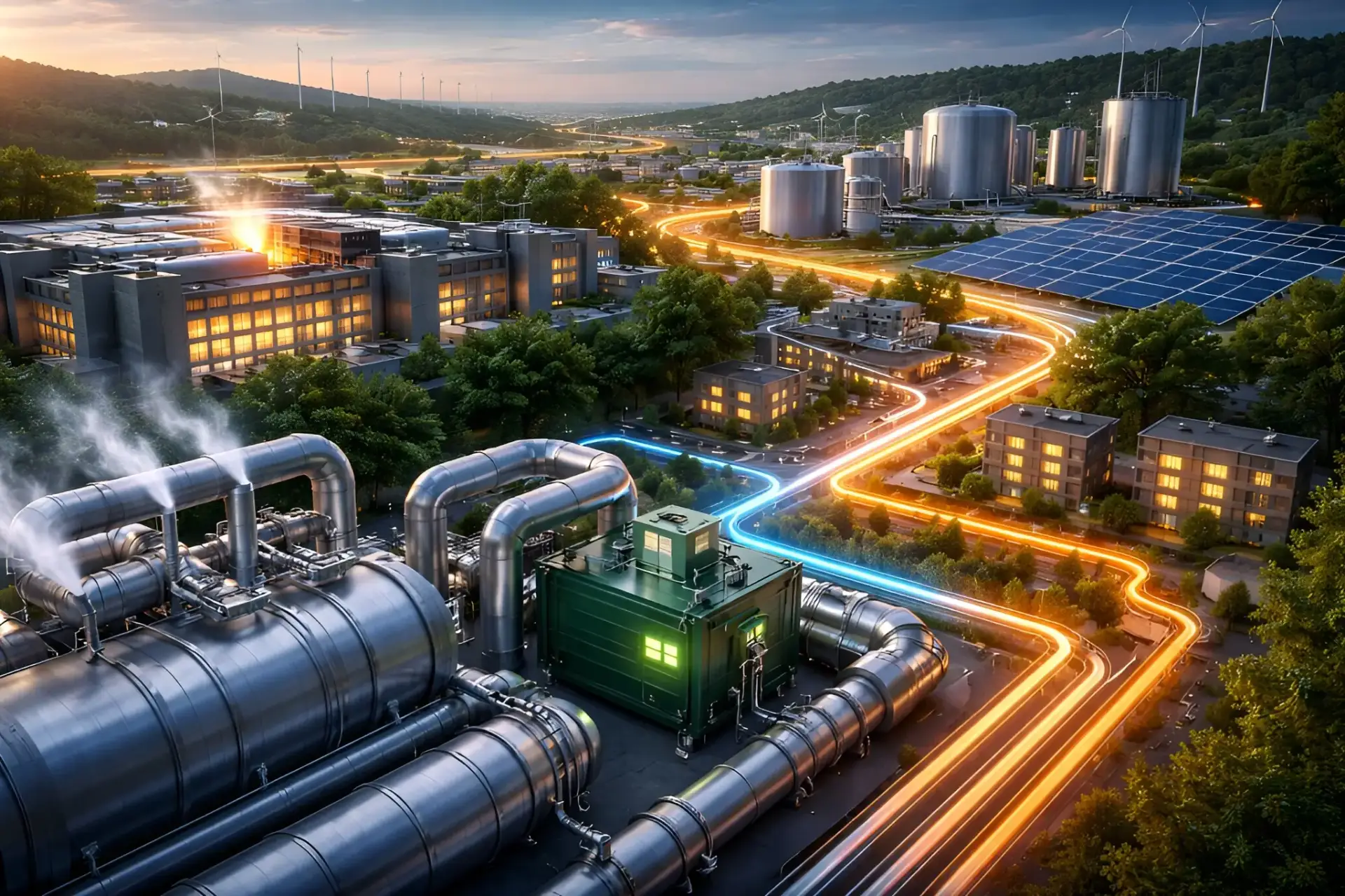
Designers now embed heat recovery loops into system architecture rather than bolting them on afterward. Mechanical rooms integrate plate heat exchangers, heat pumps, and storage buffers that translate temperature gradients into usable supply.Furthermore, facilities connect recovered heat to neighboring buildings, greenhouses, or industrial processes.This approach reframes excess output as a renewable input within a localized network.Operators therefore treat thermal discharge as a design parameter with economic relevance.In doing so, infrastructure transcends its original boundary and participates in regional energy circulation.
Recovered thermal energy does not universally translate into immediate usability without contextual alignment. The viability of reuse depends on temperature levels, proximity to demand centers, grid configuration, and the integration of heat pump technologies capable of upgrading low-grade heat. Therefore, system design must evaluate thermodynamic quality alongside distribution feasibility before defining recovery potential. Industrial-scale implementation often requires coordinated investment in storage, transfer infrastructure, and regulatory alignment to unlock full value. Although the strategic opportunity remains significant, practical realization varies across geographies and infrastructure maturity levels.
Designing for Circular Energy Flows at the System Level
Circular energy flows require alignment across architectural, electrical, and mechanical domains.Isolated component upgrades rarely deliver systemic regeneration because they overlook interdependencies.Instead, architects must consider thermal zoning, pipe routing, and load density from the earliest planning stages.
Electrical engineers align power distribution layouts with potential recovery nodes.Cooling specialists evaluate supply temperatures not only for equipment reliability but also for downstream usability.Through integrated design reviews, teams identify opportunities where energy loops can close. Facility planning extends beyond site boundaries when recovery becomes central to strategy.Urban planners collaborate with infrastructure developers to synchronize capacity with municipal demand.
Additionally, procurement teams evaluate equipment vendors based on compatibility with regenerative architecture.Commissioning processes validate not only performance but also the continuity of energy circulation pathways.As a result, system-level thinking replaces incremental retrofits as the dominant paradigm.This holistic discipline transforms facilities into orchestrated platforms rather than discrete assets.
Aligning Energy Recovery with Enterprise Strategy
Technical integration alone cannot elevate recovery to strategic status without executive sponsorship.Boardrooms increasingly assess infrastructure through resilience, risk management, and long-term positioning lenses.Energy recovery contributes to operational continuity by diversifying usable supply streams.Moreover, it supports stakeholder alignment as communities and regulators scrutinize energy intensity.Finance leaders recognize that regenerative design can stabilize exposure to volatile markets.Therefore, infrastructure strategy converges with enterprise governance objectives.
A notable illustration of this convergence appears in Northern Europe, where heat reuse in data-intensive facilities has gained measurable traction through district heating integration.Publicly documented projects in Finland show how excess heat from digital infrastructure feeds municipal heating systems through large-scale heat pump installations and grid modernization initiatives.
In this context, Fortum has positioned itself as a key integrator by investing in waste heat recovery projects that connect data center thermal output to urban heating networks.The company has stated in official releases that sector coupling and heat reuse strengthen long-term energy system resilience and support decarbonization strategies across cities.Under the leadership of Markus Rauramo, Fortum has emphasized the role of electrification and circular energy flows in enhancing regional energy security and reducing dependency on primary fuel inputs.Through coordinated investment in high-capacity heat pumps and infrastructure upgrades, the organization demonstrates how structured planning converts surplus heat into a strategic regional asset rather than a discarded byproduct.
The Cultural Shift: From Optimization to Regeneration
Engineering culture often prizes optimization, precision, and incremental gains.While such rigor remains essential, regenerative ambition requires broader collaboration across disciplines. Facilities managers must engage sustainability officers, finance teams, and strategic planners early in the process.Procurement models evolve to prioritize lifecycle integration over lowest upfront cost.Leadership mindset determines whether recovery initiatives receive long-term support or short-term scrutiny.Thus, culture shapes the trajectory of infrastructure transformation as much as technology does.
Training programs increasingly incorporate circular design principles into engineering curricula. Cross-functional workshops explore how thermal assets intersect with corporate risk frameworks.Internal metrics expand beyond efficiency ratios to include ecosystem contribution indicators.These shifts encourage teams to perceive infrastructure as a regenerative platform. Over time, organizations build institutional confidence in energy circulation models. Such confidence anchors recovery within strategic planning cycles rather than experimental pilots.
Conclusion: Building Infrastructure That Creates Energy Value
Energy systems no longer operate in isolation from economic and social dynamics. Infrastructure must therefore evolve from silent consumer to active contributor within interconnected networks.Energy recovery exemplifies this evolution by turning operational byproducts into strategic at-recovery.Through integrated design, enterprise alignment, and cultural commitment, organizations unlock regenerative potential.Efficiency remains important, yet it no longer defines the ceiling of ambition.The future belongs to infrastructure that circulates value, strengthens ecosystems, and reshapes how enterprises understand energy itself.