
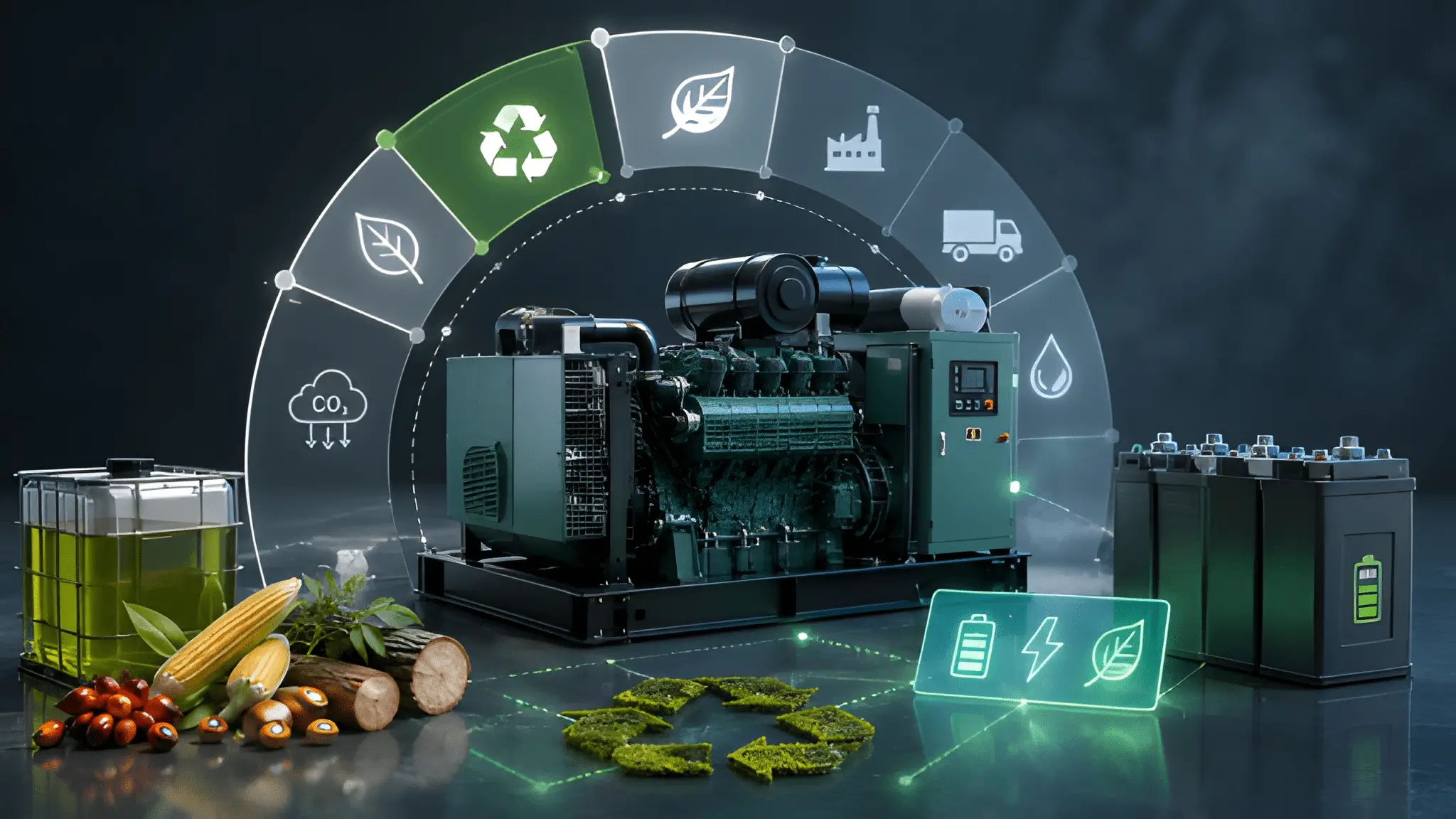
Artificial intelligence infrastructure continues expanding under ambitious decarbonisation commitments, yet one essential asset rarely receives equivalent environmental examination during sustainability assessments. Backup generation systems remain dormant for most operating hours, although their environmental profile extends far beyond the limited periods when engines actually operate during outages or resilience testing. Procurement decisions often prioritise reliability, runtime, emissions certification, and regulatory compliance while overlooking the upstream impacts embedded within equipment manufacturing, fuel sourcing, transportation logistics, storage practices, and eventual decommissioning. Investors increasingly evaluate environmental performance across complete infrastructure portfolios because hidden operational dependencies can materially influence climate disclosures, transition planning, and long-term governance expectations. Emergency power therefore represents an important component of infrastructure accountability rather than an isolated engineering safeguard with negligible reporting relevance.

Backup resilience has traditionally occupied a separate governance category because regulatory frameworks primarily focused on operational readiness instead of lifecycle environmental transparency across supporting infrastructure assets. Sustainability reporting standards are gradually encouraging organisations to understand indirect environmental impacts throughout value chains where procurement, logistics, maintenance, and end-of-life management influence reported performance. This broader perspective creates practical questions regarding infrastructure components that rarely consume energy during normal operations but still require manufacturing resources, transportation networks, periodic servicing, specialised fuels, and replacement programmes throughout decades of ownership. Corporate sustainability teams already request detailed information from equipment suppliers covering embodied emissions, recycled material content, and manufacturing practices for major infrastructure systems supporting digital operations. Comparable lifecycle documentation principles are already expanding across industrial equipment categories, and emergency power assets represent a logical area where organisations may voluntarily strengthen environmental transparency as stakeholder expectations continue evolving.
Why Your Cleanest AI Workload Still Has a Diesel Shadow
AI infrastructure operators increasingly combine renewable electricity procurement with low-carbon energy strategies to reduce operational emissions associated with large-scale training and inference workloads, yet emergency power systems introduce an additional lifecycle dimension that often receives less analytical attention during infrastructure planning. Even when GPU clusters operate under renewable electricity procurement strategies, uninterrupted AI services continue relying on standby generation designed to preserve compute availability whenever utility supply becomes unavailable. Carbon accounting methodologies generally distinguish between operational electricity consumption and other supporting infrastructure activities, creating situations where emergency preparedness receives limited visibility within public sustainability narratives despite remaining operationally essential. Equipment manufacturing, replacement schedules, maintenance activities, lubricants, spare components, and periodic fuel management collectively establish environmental impacts extending beyond the brief intervals when generators actually produce electricity.
Public sustainability disclosures frequently emphasise renewable electricity procurement, operational efficiency improvements, and emissions reduction trajectories because these indicators align with established reporting methodologies and recognised disclosure frameworks. Emergency generation infrastructure typically enters discussions around operational resilience rather than sustainability, despite requiring procurement, transportation, commissioning, maintenance, component replacement, and eventual retirement throughout decades of service supporting AI infrastructure. Investors, insurers, and regulators increasingly request decision-useful information demonstrating how organizations understand environmental dependencies across complete infrastructure ecosystems supporting critical digital services. Consequently, resilience planning may gradually evolve beyond availability metrics toward documentation explaining material environmental characteristics associated with standby assets and supporting operational practices. Transparent governance does not diminish the operational necessity of emergency generators because resilience remains fundamental for healthcare systems, financial services, cloud infrastructure, telecommunications, and industrial operations requiring continuous availability.

HVO in the Tank Looks Green. What Does Its Life Story Say?
Hydrotreated vegetable oil has attracted growing attention as a lower lifecycle greenhouse gas fuel option for standby generation because it can often replace conventional diesel with limited engine modifications depending on manufacturer approval and fuel specifications. Environmental performance, however, depends upon considerably more than the chemical composition delivered into a storage tank because feedstock selection, refining technology, transportation routes, and supply chain controls collectively influence lifecycle emissions. Waste-derived feedstocks generally produce different lifecycle outcomes than crop-based inputs, while regional production methods introduce additional variability that procurement teams cannot identify through fuel appearance or performance alone. Independent certification schemes, chain-of-custody documentation, and recognised lifecycle assessment methodologies therefore become increasingly important when organisations evaluate renewable fuel claims within broader sustainability programmes. Infrastructure operators seeking reliable environmental evidence benefit from requesting verifiable documentation describing feedstock origin, production pathways, allocation methodology, and transportation assumptions supporting declared lifecycle performance.
Lifecycle transparency also extends beyond fuel production because storage conditions, inventory turnover, contamination prevention, and operational handling practices influence long-term fuel quality and environmental stewardship throughout the operating life of emergency power systems. Renewable fuels frequently travel across international supply chains before reaching critical facilities, creating additional transportation emissions that organizations should understand when evaluating complete environmental performance instead of isolated combustion characteristics. Procurement specifications can therefore expand beyond technical fuel standards by requesting independently verified lifecycle documentation alongside recognised sustainability certifications supporting supplier declarations. Furthermore, consistent disclosure enables investors and auditors to compare environmental attributes across multiple facilities using comparable evidence rather than inconsistent assumptions derived from different reporting practices. Standardised documentation would also strengthen governance by helping organisations demonstrate that renewable fuel procurement decisions followed measurable environmental criteria supported by recognised assessment frameworks.
Non-Emergency Operations and Their Contribution to Backup Emissions
Standby generators spend relatively little time supplying emergency electricity, yet routine operational activities continue throughout the equipment lifecycle to preserve readiness and maintain regulatory compliance under applicable maintenance programmes. Functional testing verifies engine performance, battery condition, cooling systems, control logic, and automatic transfer capabilities before unexpected grid disturbances occur during critical operational periods. Maintenance schedules also include lubrication replacement, filter changes, coolant servicing, inspection procedures, load testing, and occasional component replacement that collectively consume materials, energy, and supporting logistics resources over many years. Fuel polishing programmes further preserve stored fuel quality by removing contaminants and maintaining operational reliability, although these activities require specialised equipment and additional operational inputs supporting long-term asset performance. These recurring operational practices rarely appear within external sustainability narratives despite representing measurable activities supporting resilience throughout the useful life of emergency generation assets.
Routine operational emissions often remain comparatively small when measured against continuous facility electricity consumption, although consistent reporting principles favour documenting material activities using transparent methodologies rather than selective visibility across infrastructure systems. Organizations already maintain detailed maintenance records for operational reliability, making environmental documentation a logical extension of existing asset management practices instead of an entirely separate administrative process. Digital asset management platforms already capture inspection frequency, runtime hours, fuel inventory, replacement components, and service interventions, enabling organisations to incorporate this operational evidence into existing sustainability reporting processes where appropriate. Meanwhile, consistent reporting across geographically distributed facilities would improve comparability by allowing governance teams to evaluate resilience assets through standardised operational indicators instead of inconsistent local reporting approaches. This approach does not imply that every maintenance activity carries significant environmental impact, but it strengthens organisational confidence that reported sustainability information reflects complete infrastructure operations rather than selected operational boundaries.
Defining What a Sustainability Declaration for Backup Power Should Include
An environmental disclosure framework for emergency power infrastructure, comparable in principle to lifecycle assessment or Environmental Product Declaration methodologies where applicable, could present standardised information extending beyond engine emissions certification and rated performance. Core disclosure elements could include equipment manufacturing location, embodied carbon assessment where available, fuel production pathway, certified feedstock origin, transportation distance, storage duration, inventory turnover practices, and documented operational efficiency during testing. Additional parameters should address battery manufacturing for starting systems, lubricant management, coolant handling, replacement component frequency, maintenance resource consumption, and verified end-of-life recovery or recycling pathways for major equipment assemblies. Consistent reporting would also benefit from documenting fuel degradation characteristics, storage monitoring practices, contamination controls, and supplier certification status using recognised international methodologies whenever practical. Standardised data structures would enable infrastructure owners, auditors, investors, insurers, and enterprise customers to evaluate resilience assets using comparable evidence across geographically diverse facilities without relying upon inconsistent reporting assumptions.
Future declarations may also integrate digital asset records capable of linking operational information directly with procurement documentation and independently verified supplier evidence throughout the service life of backup infrastructure. Digital product passports, environmental product declarations where applicable, and structured lifecycle assessment methodologies already demonstrate how complex industrial equipment can support transparent environmental reporting through standardised datasets rather than narrative claims alone. Emergency generation systems may ultimately follow a comparable trajectory as stakeholder expectations increasingly favour measurable documentation supporting infrastructure investment decisions across resilient digital ecosystems. Such reporting would strengthen governance without altering the operational responsibility of maintaining dependable emergency power because resilience and environmental accountability address complementary organisational priorities rather than competing objectives. Organizations adopting structured documentation before mandatory disclosure requirements emerge would likely face fewer implementation challenges as sustainability reporting frameworks continue expanding across infrastructure-intensive industries.
Closing Perspective
AI infrastructure has elevated backup power from a facility engineering consideration to a strategic resilience asset that directly supports high-value compute availability. Organizations already evaluate standby systems through the lenses of reliability, compliance, and operational readiness, while environmental governance increasingly encourages broader visibility across supporting infrastructure assets. Lifecycle transparency does not reduce the importance of emergency generation because uninterrupted digital services continue depending upon dependable backup capability during unexpected grid disturbances. Instead, stronger documentation enables procurement teams, infrastructure investors, enterprise customers, and sustainability leaders to evaluate resilience assets using evidence that extends beyond operational runtime alone. As lifecycle reporting practices continue evolving across industrial sectors, organisations that establish structured environmental documentation for supporting infrastructure will likely respond more effectively to future stakeholder expectations without disrupting operational resilience.











