 Skip to content
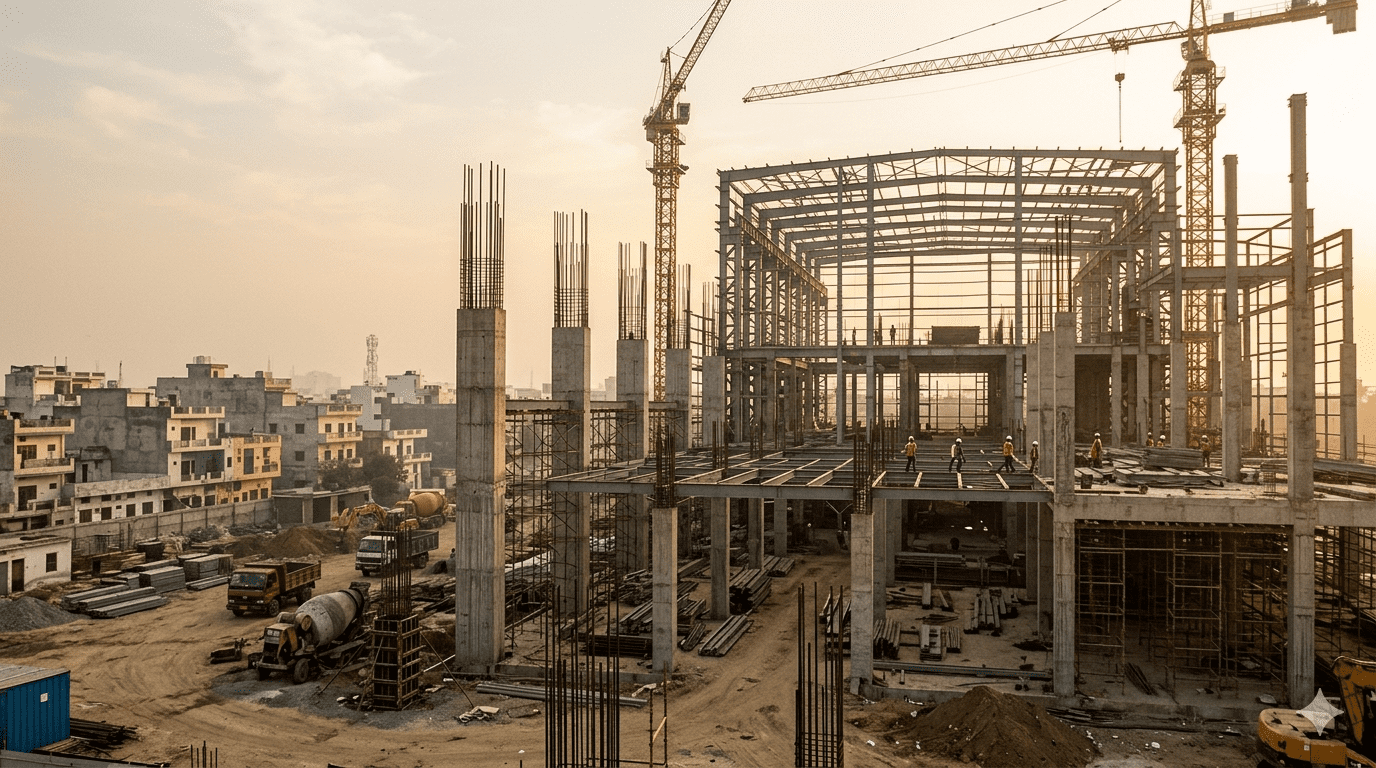
India’s data center market produces announcements at a pace that bears little relationship to the pace at which projects actually get built. The pipeline of declared capacity is enormous. Hyperscalers, domestic conglomerates, and international colocation operators have collectively announced projects adding gigawatts of capacity across Mumbai, Chennai, Hyderabad, Pune, and Delhi NCR. Each announcement arrives with renderings, investment figures, and timelines. Most of them then go quiet. The construction cranes do not follow the press releases at anything like the rate the headlines suggest.

That gap between announcement and execution is not unique to India. Every high-growth data center market produces more declared intent than delivered capacity at any given moment. What makes India distinctive is the scale of the gap and the specific reasons it exist. The constraints that slow execution in India are not primarily financial. Capital is available. Hyperscaler demand is real. The constraints are operational and structural, and they sit in parts of the development process that announcements never mention. Understanding them is the difference between a market participant who builds on time and one who is still waiting for power three years after breaking ground.
Why Announcements Outpace Construction in India
The Indian data center market rewards announcement speed for straightforward commercial reasons. An operator that announces a large project in a high-demand city signals market commitment, attracts hyperscaler conversations, and establishes a competitive position before the physical infrastructure exists to support it. The announcement creates commercial optionality. The execution comes later, constrained by a set of operational realities that the announcement process does not require anyone to address.
Power readiness sits at the top of that list. A data center campus in India requires reliable, high-capacity power supply from a state distribution company that may be managing grid infrastructure under significant stress. State-level utilities vary enormously in their capacity to accommodate new large industrial loads quickly. In some states, securing a firm power connection for a large campus can take two to three years after site acquisition. As covered in our analysis of India’s data center boom becoming a transmission problem, the gap between where developers want to build and where reliable power actually exists is wider than most project announcements acknowledge.

The Power Readiness Problem Is Structural
India’s power infrastructure at the state level is uneven in ways that the national-level narrative about renewable energy capacity and digital infrastructure investment tends to obscure. The country has added significant renewable generation capacity. However, the transmission and distribution infrastructure that connects that generation to the locations where data centers need power has not scaled at the same pace. A data center developer choosing a site based on land availability, connectivity, and proximity to demand centers may find that the power infrastructure serving that site cannot deliver the load the campus requires on any commercially viable timeline.
That mismatch between site selection criteria and power availability is the single most common reason that announced Indian data center projects stall pre-construction. The developer secures the land, completes the facility design, begins the permitting process, and then discovers that the power timeline extends the project schedule by years. At that point, the options are to wait, to invest in on-site generation that adds significant cost, or to relocate to a site with better power access that may not have the other attributes the original site had. None of these outcomes appear in the announcement.
Channel Capability Is the Other Gap Nobody Talks About
Beyond power, the execution gap in India’s data center market reflects a shortage of the channel capability required to deliver hyperscale-grade infrastructure at the pace and quality standard that global operators expect. Hyperscale data center construction requires a specific combination of general contracting expertise, mechanical and electrical engineering capability, commissioning experience, and supply chain access that the Indian construction market has not yet developed at sufficient depth to support the volume of projects the pipeline implies.
The contractors who can deliver hyperscale data center projects to the quality standards and timelines that global operators require are in short supply relative to the demand the announced pipeline creates. Operators who move early to secure those contractors, establish supply chain relationships for critical long-lead components, and build the project management capability required to oversee complex simultaneous construction programs will execute. Those who assume that the Indian construction market can absorb the pipeline at face value will find their timelines slipping in ways that damage hyperscaler relationships and competitive position.
What Separates the Operators Who Will Actually Build
The Indian data center operators who will convert their announcements into delivered capacity share a set of characteristics that distinguish them from those who will remain perpetually in pre-construction. Power commitments get secured before announcing, not after. Relationships with state utilities come early, and in some cases these operators commit to investing in distribution infrastructure upgrades that improve power access for their specific locations. Contractor relationships get locked in and procurement for long-lead electrical components begins before construction contracts are signed.
Realism about timelines in commercial conversations with hyperscaler customers is equally important. A hyperscaler that commits capacity to an Indian facility based on an optimistic timeline and then faces a two-year delay has a real operational problem. The operators who are honest about what execution in India actually requires and build realistic schedules into their hyperscaler agreements will build durable customer relationships. Those who win business on aggressive timelines they cannot meet will damage relationships that are difficult to repair in a market where hyperscaler trust is the most valuable commercial asset a developer can hold.












