
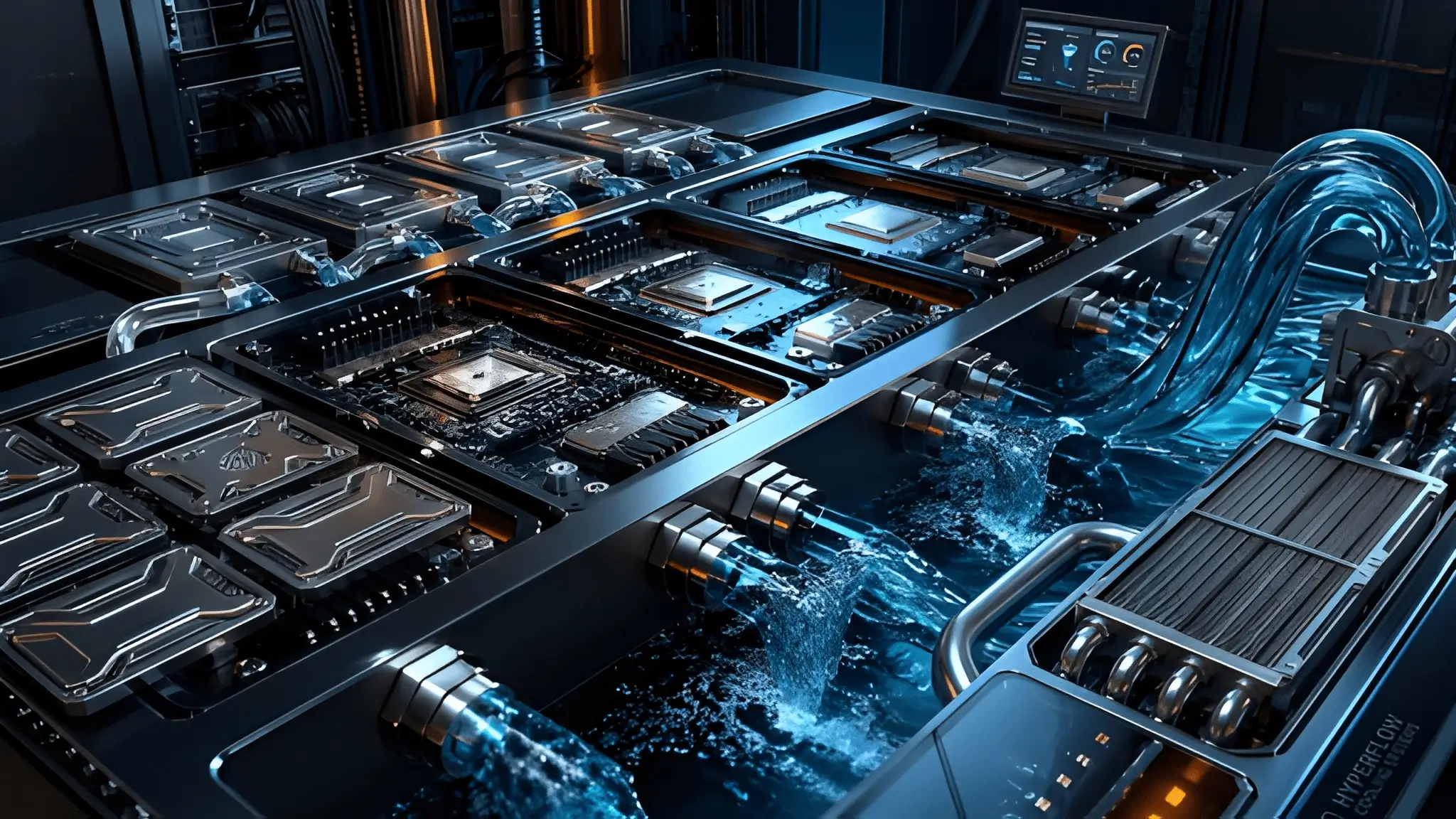
The acceleration of artificial intelligence has shifted the competitive landscape from model capability to deployment readiness, where the ability to deliver output quickly defines operational advantage. Organizations no longer measure success purely by model sophistication because infrastructure latency now dictates real-world performance timelines. High-density processing environments introduce thermal constraints that directly influence system availability and stability under sustained load conditions. Cooling architecture, once treated as a background utility, now plays a significant role in deployment execution timelines and system scaling. Engineering teams now face a constraint where thermal inefficiencies translate into delayed activation cycles and reduced operational throughput. The race to deliver faster output increasingly depends on how efficiently infrastructure can handle heat at scale as one of several key design factors.

This shift forces a reevaluation of infrastructure priorities, where traditional build timelines fail to align with the rapid activation expectations of modern workloads. Deployment strategies that once accommodated gradual scaling now struggle under sudden demand spikes driven by intensive processing requirements. Thermal design limitations introduce friction that slows down commissioning processes and delays system readiness. Data center operators increasingly recognize that cooling systems determine not only efficiency but also the speed of bringing capacity online. The integration of advanced cooling technologies changes the equation by reducing dependencies on large-scale facility retrofits. As a result, infrastructure planning now centers on eliminating thermal bottlenecks before they impact deployment velocity.
Immersion Is Redefining Deployment Timelines
Thermal readiness has become inseparable from deployment speed, as inadequate cooling systems introduce measurable delays in infrastructure activation. High-density environments generate heat loads that exceed the capabilities of conventional air-based systems, forcing operators to delay full-scale operation until thermal stability is achieved. Commissioning cycles extend when cooling infrastructure requires iterative tuning to maintain safe operating conditions under peak demand. These delays translate directly into postponed workload execution, reducing the efficiency of capital investment and operational planning. Liquid-based cooling approaches address this challenge by enabling precise heat removal at the source, which can reduce the extent of prolonged calibration in many deployments. The result is a more predictable activation timeline where systems reach operational readiness without extended thermal adjustment phases.
The impact of thermal inefficiencies extends beyond activation delays into ongoing operational constraints that limit sustained performance. Systems operating near thermal thresholds experience variability that forces throttling mechanisms to maintain safe conditions, reducing overall throughput. Air cooling systems struggle to maintain uniform temperature distribution across densely packed components, creating hotspots that disrupt workload consistency. Liquid cooling eliminates these inconsistencies by delivering targeted thermal management that stabilizes system behavior under continuous load. This stability reduces the need for conservative operating margins that often limit performance in traditional setups. Therefore, thermal optimization becomes a direct contributor to both deployment speed and sustained operational efficiency.

Immersion cooling introduces a structural shift in how infrastructure is deployed by embedding thermal management directly into system design. Pre-integrated solutions arrive ready for installation, removing the need for extensive on-site cooling infrastructure assembly. Deployment teams can bypass complex ducting, airflow planning, and large-scale mechanical installations that traditionally extend project timelines. This streamlined approach can enable faster rack-level deployment in many scenarios, allowing systems to become operational more quickly after installation. The reduction in on-site complexity can lower the risk of certain configuration errors that may delay commissioning. As a result, immersion-based systems redefine expectations around how quickly infrastructure can transition from delivery to full operation.
The modular nature of immersion systems further accelerates deployment by enabling standardized installation processes across different environments. Operators can replicate deployment models without redesigning cooling strategies for each new facility, improving consistency and reducing planning overhead. Equipment arrives as a cohesive unit where thermal management has already been validated, eliminating the need for iterative testing cycles. This predictability can help shorten project timelines and improve coordination between infrastructure and operations teams. Immersion technology also reduces dependency on facility-level cooling upgrades, which often represent the most time-consuming aspect of deployment projects. Consequently, infrastructure expansion becomes a faster and more controlled process aligned with the pace of demand growth.
Designing for Instant Density, Not Gradual Scale
Many modern workloads exhibit sudden demand patterns that can require infrastructure to support high-density operation from the moment systems go live. Traditional scaling models assume gradual increases in load, allowing cooling systems to adapt incrementally over time. However, current processing demands often reach peak intensity immediately, exposing the limitations of designs that rely on phased capacity expansion. Thermal systems that cannot handle full density at launch force operators to delay workload execution or operate below optimal capacity. Liquid cooling solutions can enable infrastructure to support higher density from the outset by efficiently managing concentrated heat loads.This capability can reduce the need for staged upgrades that may otherwise slow down deployment timelines.
The ability to sustain high density without transitional phases changes how infrastructure investments are planned and executed. Organizations can deploy systems with confidence that thermal constraints will not limit immediate utilization. This approach reduces the complexity of future upgrades and minimizes disruption to ongoing operations. Liquid cooling technologies provide the thermal headroom necessary to accommodate evolving performance requirements without structural redesigns. As demand patterns continue to shift toward instantaneous load spikes, infrastructure must align with this reality by supporting full-capacity operation from day one. In this context, thermal readiness becomes a prerequisite for operational agility rather than a secondary consideration.
Cooling architecture is moving away from large, centralized systems toward embedded solutions that operate at the component level. Direct-to-chip and immersion technologies integrate thermal management directly into hardware, reducing reliance on facility-scale infrastructure. This shift simplifies deployment by eliminating the need for extensive cooling plant installations and complex airflow engineering. Embedded systems provide more efficient heat removal by targeting the source rather than conditioning the entire environment. This approach reduces energy losses associated with traditional cooling methods and improves overall system efficiency. Moreover, it can enable faster deployment cycles by reducing dependence on certain facility construction timelines.
The transition to embedded cooling also enhances flexibility in infrastructure design and deployment location. Systems no longer depend on large-scale cooling infrastructure, allowing operators to deploy high-density environments in a wider range of settings. This flexibility can support distributed deployment models that align with evolving operational requirements. Embedded cooling solutions reduce the physical footprint of thermal management systems, freeing up space for additional processing capacity. They also simplify maintenance by localizing thermal management within individual units rather than across entire facilities. Consequently, infrastructure becomes more adaptable and responsive to changing workload demands without extensive redesign efforts.
Thermal Stability Is the New Performance Accelerator
Consistent thermal conditions play a critical role in maintaining stable performance under sustained workloads. Variations in temperature can lead to fluctuations in processing efficiency, forcing systems to adjust performance dynamically to avoid overheating. Liquid and immersion cooling technologies provide precise temperature control that significantly reduce these fluctuations. Stable thermal environments allow systems to operate closer to optimal performance levels while reducing the likelihood of triggering protective throttling mechanisms. This consistency improves overall throughput and ensures predictable system behavior under continuous load. As a result, thermal stability becomes a key factor in maximizing operational efficiency.
The benefits of thermal stability extend beyond performance into reliability and hardware longevity. Systems operating within stable temperature ranges experience less stress, reducing the likelihood of component failure over time. This reliability translates into fewer interruptions and lower maintenance requirements, improving overall operational continuity. Advanced cooling solutions maintain uniform conditions across all components, preventing localized overheating that can degrade performance. These advantages support long-term infrastructure sustainability while maintaining high levels of performance. Therefore, thermal management evolves into a strategic lever for enhancing both efficiency and reliability in modern environments.
The future of AI deployment will favor architectures that eliminate thermal friction at every stage of infrastructure design and operation. Systems that integrate advanced cooling technologies from the outset can achieve faster activation timelines and more consistent performance under demanding conditions. Liquid and immersion solutions provide the foundation for this shift by enabling precise, efficient, and scalable thermal management. Organizations that prioritize thermal readiness can reduce delays associated with traditional cooling limitations and improve their ability to deliver output. This transformation reflects a broader industry movement where infrastructure design plays an increasingly important role in competitive positioning. Ultimately, the ability to deliver rapid results will depend in part on how effectively systems manage heat as a core design principle.











