In 2026, the global map is changing through “compute corridors”. Artificial intelligence has evolved from a Silicon Valley novelty into the central nervous system of modern nations. Consequently, a new geopolitical asset has emerged: the Sovereign GPU Reserve.
Across the world, nations are moving beyond leasing digital intelligence from foreign cloud providers. For example, from New Delhi to Abu Dhabi and throughout the European Union, countries are racing to stockpile high-performance GPUs (Graphics Processing Units). These reserves serve national security, cultural preservation, and environmental sustainability.
Here is why the world is transitioning from “Crude to Compute.” Moreover, future superpower status will be measured in TFLOPS and Performance-per-Watt.
The Silicon Shield: National Security in the Age of Agents
For decades, oil fueled national security. Today, silicon performs that role. Governments recognize that healthcare systems, energy grids, and defense infrastructure powered by AI models hosted in foreign jurisdictions cannot guarantee complete sovereignty.
A Sovereign GPU Reserve functions as a digital insurance policy. By owning physical hardware: whether NVIDIA Blackwells, AMD Instincts, or custom national ASICs, nations can maintain control over their “Agentic AI” systems, which manage everything from traffic to taxation, without depending on foreign entities or corporate terms of service.
The India Example: In February 2026, India announced the expansion of its national compute capacity to over 58,000 GPUs under the IndiaAI Mission. In addition, the government treats compute as a public utility and offers access to startups for as little as ₹65 per hour. This approach ensures that the “Fifth Industrial Revolution” rests on domestic infrastructure rather than rented clouds.
Digital Language Sovereignty: The Battle for the Mother Tongue
The first generation of AI displayed linguistic bias. Models like GPT-4 were trained mainly on English-centric datasets. As a result, they often misrepresented local values or struggled with the subtleties of regional dialects.
To preserve cultural identity, nations are building GPU reserves to train Sovereign Foundation Models. These models are tailored to local languages and customs.
The UAE’s Stargate Project: A 1-gigawatt (GW) cluster in Abu Dhabi is refining Arabic-native models. These models understand regional cultural and legal contexts more accurately than generic models.
Europe’s AI Gigafactories: With a €20 billion fund, the EU is establishing massive hubs, each housing over 100,000 chips. This effort ensures AI in French, German, and Italian complies with local privacy laws. Moreover, it aligns AI behavior with European ethical standards.
The Green Mandate: Solving the Energy-Inference Paradox
The term “Green” in these reserves represents a critical physical necessity. In 2026, data centers consume over 1,000 Terawatt-Hours (TWh) annually, matching the energy usage of entire nations such as Japan.
Nations are developing GPU reserves that support AI growth while reducing environmental impact.
The Sovereign Advantage: Governments can site facilities where energy is most abundant. Iceland and Norway are using geothermal and hydro power to establish “Sovereign Compute Havens.”
Planet Sutra: At the 2026 AI Impact Summit in New Delhi, India introduced the “Planet Sutra” mandate, a global framework requiring national GPU reserves to operate on dedicated renewable grids and protect public electricity supplies.
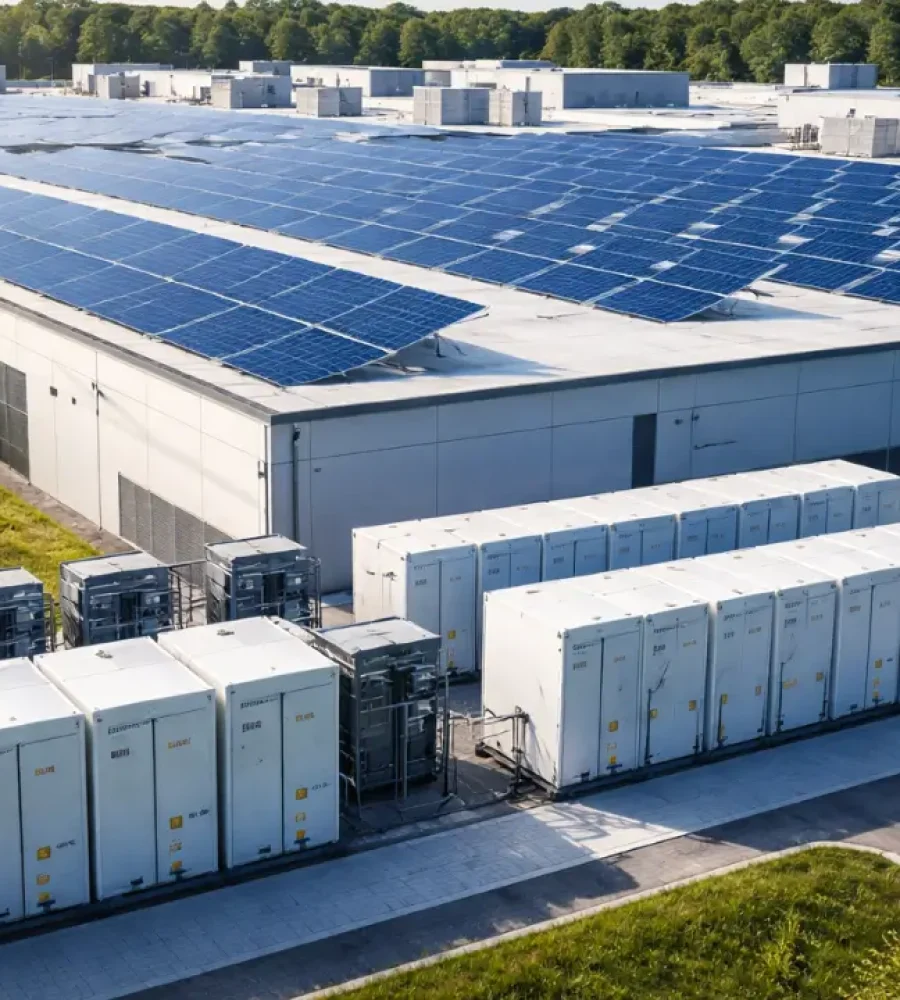
Liquid Gold: To manage the heat from next-generation chips, reserves implement Direct-to-Chip Liquid Cooling, cutting energy waste by up to 50 percent compared with conventional air-cooled centers.
Economic Democratization: Breaking the Big Tech Monopoly
Training a frontier AI model in 2026 can exceed $1 billion. Without national reserves, only the world’s largest companies could afford innovation, creating a technological divide.
Sovereign reserves act as 21st-century public libraries. By offering subsidized, high-tier compute to SMEs and researchers, nations enable developers in remote regions to access the same capabilities as engineers in Silicon Valley.
Saudi Arabia’s HUMAIN: This Public Investment Fund subsidiary plans for 6.6 GW of capacity by 2034. Its goal is to process 7 percent of global AI workloads, transforming the Kingdom from an oil exporter to an “Intelligence Exporter.”
The Hardware Specs: What’s Inside the Reserve?
In 2026, establishing a Sovereign Reserve requires highly specialized hardware. The focus extends beyond raw speed to inference efficiency, maximizing intelligence per kilowatt-hour.
Processor Backbone: NVIDIA Rubin & AMD MI450
- NVIDIA Rubin (Vera Rubin NVL72): Features the Vera CPU, offering a 2.75x increase in memory bandwidth over Blackwell chips. It can run trillion-parameter models on a single rack with 50 PFLOPS of FP4 precision, reducing the cost of national-scale inference.
- AMD Instinct MI450: Preferred for “open” sovereign clouds, it has 432GB of HBM4 memory, ideal for long-context models that process entire national archives.
Thermal Management: Direct-to-Chip Liquid Cooling
- Modern racks draw 120–130 kW, generating heat beyond the capacity of air cooling.
- Closed-loop liquid cooling pumps a biostatic coolant directly over silicon, enabling Power Usage Effectiveness (PUE) as low as 1.1 and ensuring compliance with green mandates.
Connective Tissue: Optical Interconnects
- Copper cables cannot meet the bandwidth needs of 100,000 GPUs.
- National reserves now rely on 1.6 Terabit-per-second optical links, allowing the cluster to operate as a unified “super-brain,” reducing latency that affects AI agent performance.
Memory & Storage: HBM4 and NVMe Fabrics
- HBM4 Priority: High-Bandwidth Memory is critical for overcoming the “Memory Wall,” where AI speed exceeds available data.
- Massive Throughput: NVMe-over-Fabrics (NVMe-oF) ensures terabytes of data move seamlessly from storage to GPUs for national language models.
The Era of Compute Patriotism
As 2030 approaches, national strength will increasingly depend on Compute-to-GDP ratios. The “Green” GPU reserves under development today form the foundation of tomorrow’s digital economies, ensuring AI development becomes an asset nations build for themselves rather than a resource controlled externally.