As countries and utilities accelerate the shift to wind and solar power, one persistent challenge remains: energy intermittency. Renewable generation does not always align with electricity demand. Solar output peaks during midday hours, while wind often generates most strongly overnight. Consequently, these mismatches create supply gaps that complicate grid management.
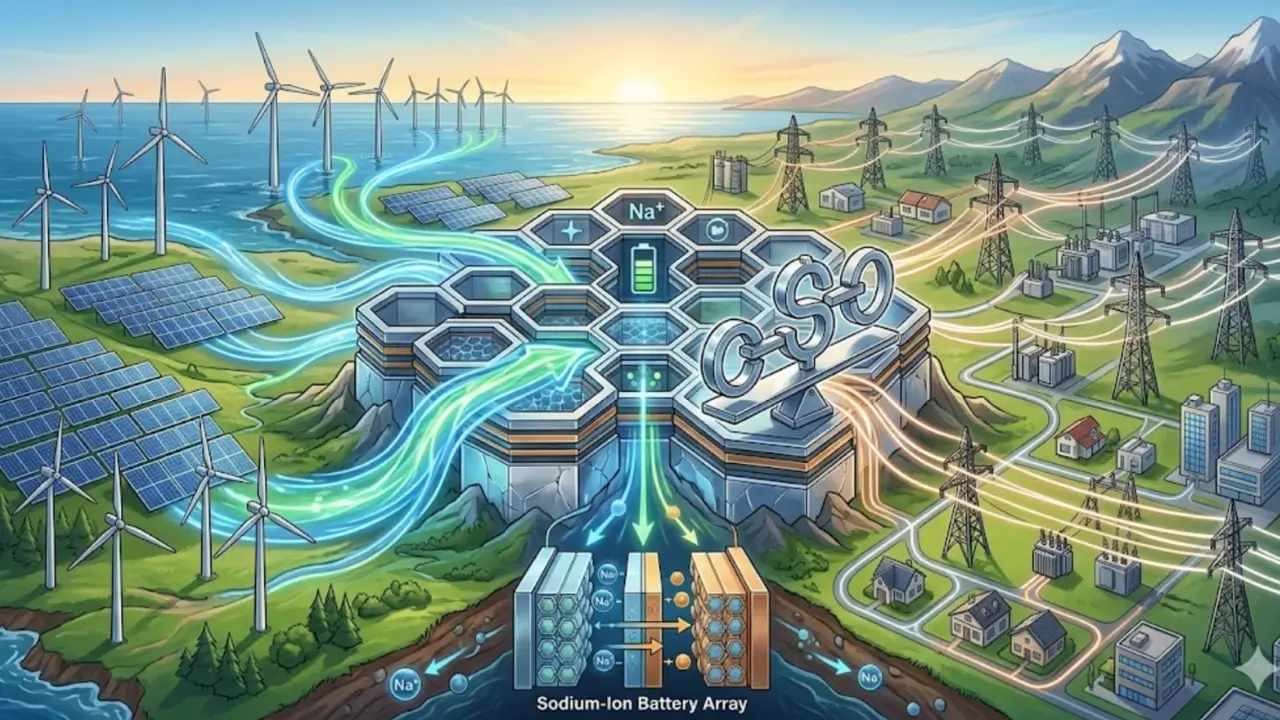
To address this imbalance, energy storage systems play a critical role. They absorb surplus generation when production exceeds demand and dispatch electricity during peak consumption periods. In this evolving landscape, sodium-ion batteries deserve serious attention. They are not fringe alternatives or experimental concepts. Rather, they are practical tools capable of supporting renewable integration and advancing broader energy transition goals.
A Storage Landscape That Needs Options
For decades, lithium-ion technology has dominated the energy storage market. Lithium-ion packs deliver high energy density and strong performance across applications ranging from electric vehicles to residential solar systems. However, grid-scale storage presents a different set of priorities than mobile or consumer use cases.
Large stationary systems place greater emphasis on cost efficiency, operational safety, long lifespan, and material availability. In these contexts, energy density becomes less critical because space and weight are rarely primary constraints. As a result, sodium-ion batteries align more closely with the functional demands of renewable-heavy power systems.
Abundant Materials Lower Costs and Reduce Risk
One of sodium-ion technology’s most compelling advantages lies in material abundance. Sodium is one of the most plentiful elements on Earth. By contrast, lithium supplies remain geographically concentrated and subject to price volatility.
Producers can source sodium from common salt and seawater with relatively limited environmental disruption. This accessibility diversifies supply chains and reduces geopolitical risk. As global storage demand accelerates, such diversification becomes strategically important.
Moreover, lower raw material costs can translate into reduced system prices per kilowatt-hour. Industry analysis suggests that sodium-ion battery costs could decline significantly as manufacturing scales. If that trend continues, sodium-ion systems may become highly competitive with lithium-ion in grid applications. Lower storage costs, in turn, accelerate renewable deployment because storage often represents a substantial portion of total project investment.
Safety and Thermal Stability Improve Reliability
Beyond cost considerations, grid operators prioritise safety and reliability. Large battery installations connected to critical infrastructure must operate under varied environmental conditions for extended periods.
In this regard, sodium-ion batteries typically offer higher thermal stability and a lower fire risk than many lithium-ion chemistries. Their chemistry is more resistant to thermal runaway, the chain reaction that can lead to fires in lithium-based systems. Consequently, safety risks can be reduced, and system reliability improved.
Because of this inherent stability, sodium-ion installations may require fewer complex fire suppression and cooling systems. That reduction can lower project costs and simplify deployment. Additionally, sodium-ion systems often tolerate a broader temperature range, enabling installation in remote or extreme climates without extensive thermal management infrastructure.
Grid-Scale Performance and Renewable Integration
Although sodium-ion batteries do not yet match lithium-ion in energy density, that limitation carries less weight in stationary grid applications. Since physical footprint is rarely a binding constraint, performance characteristics such as durability and discharge stability become more important.
Sodium-ion systems perform effectively when storing excess renewable output during peak production periods. They discharge reliably during evening demand surges and respond rapidly to grid signals. Their predictable degradation patterns further assist operators in planning long-term capacity.
Importantly, these systems excel at load shifting. They store solar power generated at midday and release it during evening peaks. They also support frequency regulation and voltage control, services that become increasingly critical as renewable penetration rises. By balancing supply and demand more smoothly, sodium-ion batteries help stabilize grids with high shares of variable generation.
Complementing Existing Technologies
Rather than replacing lithium-ion outright, sodium-ion batteries are positioned to complement existing technologies. Lithium-ion will likely continue to dominate sectors that require high energy density and rapid cycling, such as electric vehicles and short-duration storage.
Meanwhile, sodium-ion systems can shoulder a substantial portion of stationary storage needs. They are particularly well suited to projects that prioritize longevity, safety, and cost over compact size. This natural division of roles strengthens the overall storage ecosystem.
Indeed, pilot projects are already demonstrating this complementary approach. Some hybrid installations combine lithium-ion and sodium-ion technologies within a single project. In such configurations, lithium chemistry delivers rapid response capabilities, while sodium-ion provides cost-effective buffering over longer durations. Together, these systems enhance grid flexibility in regions with high renewable penetration.
Supporting Grid Resilience and Decarbonisation
Renewable integration involves more than balancing electrons. Governments and utilities worldwide have established ambitious decarbonisation targets. Meeting those targets requires storage technologies that can scale sustainably and affordably.
Sodium-ion batteries expand the portfolio of viable solutions. They offer particular advantages in emerging markets, where cost sensitivity and access to critical minerals can constrain deployment. By reducing reliance on lithium and cobalt, sodium-ion systems also address environmental and ethical concerns associated with certain mining practices.
In addition, sodium extraction typically carries a lower environmental footprint. Recycling pathways appear comparatively straightforward. These factors further strengthen the case for incorporating sodium-ion batteries into diversified storage strategies.
Challenges and the Path Forward
Despite these advantages, sodium-ion batteries still face technical hurdles. Energy density and cycle life continue to improve but remain below the performance of leading lithium-ion cells. As a result, certain high-performance applications remain out of reach.
However, research and development efforts are advancing rapidly. Improvements in electrolytes, electrode materials, and manufacturing processes are steadily narrowing the performance gap. Each technical breakthrough expands commercial viability.
As production scales and technological refinement continues, sodium-ion batteries are likely to serve a broader array of grid storage applications.
A Strategic Asset for Renewable-Rich Grids
Ultimately, sodium-ion batteries are emerging as a strategic asset for renewable integration. Their strengths in cost, material abundance, safety, and grid performance align closely with the needs of large-scale storage systems.
The energy transition demands reliable infrastructure with a lower carbon footprint. Sodium-ion batteries matter because they expand the toolkit available to utilities and policymakers. While they may not replace every existing technology, they reinforce the foundation of a more resilient, flexible, and sustainable power system.