A decade ago, showcasing a low carbon footprint could elevate a facility into industry headlines and conference keynotes. Today, that same claim barely earns a second glance because environmental alignment has become an assumed condition of participation. The shift did not happen overnight, yet it has fundamentally altered how infrastructure leaders position their capabilities. Rather than serving as a badge of innovation, sustainability now operates as a structural boundary that shapes every operational decision. Consequently, competitive narratives have moved toward architecture, latency strategies, and workload orchestration instead of green credentials. This evolution signals a deeper transformation in how the data center sector defines strategic advantage.
Enterprise transformation, artificial intelligence workloads, and edge deployments have intensified the scrutiny placed on physical infrastructure. As digital dependency expands, society expects supporting systems to align with broader environmental priorities without compromise. Market conversations therefore no longer ask whether facilities pursue responsible practices but how seamlessly those practices integrate into performance delivery. Because of this reframing, sustainability functions as a prerequisite rather than a promotional asset. Leaders who once differentiated themselves through renewable sourcing now compete on resilience engineering and design intelligence. The competitive frontier has shifted from environmental intent to operational execution.
Sustainability Has Shifted from Strategy to Expectation
Early sustainability programs emerged as bold strategic commitments that signaled foresight and corporate responsibility. Organizations invested in renewable procurement and efficiency retrofits to distinguish themselves within a rapidly digitizing economy. Over time, however, industry standards matured and stakeholders internalized those practices as normal operational conduct. What once appeared visionary now resembles responsible housekeeping in a sector under constant environmental observation. Clients evaluating colocation or cloud partnerships increasingly assume that baseline measures already exist. As a result, sustainability initiatives no longer command premium attention because they reflect minimum professional competence.
Technological maturity has reinforced this normalization process across global infrastructure ecosystems. Advanced cooling methods, modular construction approaches, and smarter power management systems have entered mainstream adoption cycles. Vendors integrate environmental efficiency into default product specifications rather than optional upgrades. Consequently, differentiation through sustainability claims alone has grown difficult since comparable capabilities appear across competing facilities. Procurement teams therefore treat green compliance as a checkbox rather than a strategic tie-breaker. The narrative emphasis has quietly moved toward adaptability and ecosystem connectivity.
Industry benchmarks and voluntary reporting frameworks have further accelerated the shift from ambition to expectation. Transparency standards now encourage organizations to disclose energy practices and climate commitments in consistent formats. This visibility reduces asymmetry in market perception because performance indicators become easier to compare. While transparency enhances accountability, it also narrows the space for differentiation based solely on environmental posture. Operators must therefore innovate in design intelligence or workload optimization to command distinct market positioning. Sustainability remains essential, yet it rarely commands exclusive recognition.
Regulatory Pressure Has Redefined the Playing Field
Environmental governance has evolved from aspirational pledges to enforceable compliance regimes across major regions. Legislative bodies increasingly formalize efficiency thresholds, disclosure obligations, and carbon management responsibilities for digital infrastructure. Once regulations standardize practices, competitive advantage tied to voluntary initiatives naturally diminishes. Compliance becomes a matter of operational continuity rather than optional leadership. Infrastructure planners must therefore embed environmental controls into project lifecycles from inception. Regulatory clarity has effectively leveled expectations across jurisdictions.
Policy developments in markets such as the United States, Germany, and Singapore illustrate how regional frameworks increasingly converge on similar sustainability standards. Authorities now scrutinize water usage, grid interaction, and reporting accuracy with heightened precision. These frameworks encourage responsible growth while limiting room for symbolic environmental positioning. Since all serious participants must align with comparable compliance structures, differentiation through environmental branding alone becomes constrained. Strategic energy planning thus shifts toward reliability under regulatory oversight. Competitive narratives pivot toward execution excellence within defined environmental parameters.
As oversight intensifies, infrastructure strategy integrates policy awareness as a core competency rather than an afterthought. Legal teams, engineering units, and sustainability officers collaborate earlier in project design to mitigate regulatory risk. This coordination embeds environmental alignment directly into facility architecture and operational modeling. Because adherence now dictates market entry, sustainability transforms into a structural requirement rather than a voluntary differentiator. Organizations unable to meet regulatory expectations risk exclusion from expansion opportunities. Compliance has therefore become inseparable from competitive viability.
Customers Now View Sustainability as Table Stakes
Enterprise clients and hyperscale platforms increasingly evaluate infrastructure partners through comprehensive governance frameworks. Environmental alignment forms part of broader procurement assessments that include security, uptime assurance, and geographic reach. However, sustainability no longer provides decisive leverage because it represents a baseline condition of partnership eligibility. Buyers assume responsible sourcing, efficient cooling, and transparent reporting before discussions even begin. Consequently, environmental credibility rarely influences final vendor selection unless gaps appear. Differentiation instead arises through latency optimization, service agility, and integration capabilities.
Corporate climate commitments have further reshaped customer expectations across digital supply chains. Many global enterprises now align with science-based emission targets and require vendors to demonstrate compatible environmental standards. This alignment ensures that upstream infrastructure does not undermine downstream sustainability reporting. Yet because these requirements apply universally, they do not create unique advantage for any single provider. Sustainability becomes a qualifying criterion rather than a competitive amplifier. Market competition therefore concentrates on operational depth and scalability resilience.
Procurement conversations reflect this normalization in subtle yet decisive ways. Environmental credentials rarely occupy headline discussion time during contract negotiations because they represent assumed compliance. Instead, dialogue centers on redundancy architecture, cross-regional orchestration, and workload mobility. Sustainability still matters deeply, yet it no longer surprises or differentiates sophisticated buyers. Clients interpret environmental responsibility as professional maturity rather than exceptional innovation. Competitive energy thus shifts toward performance ecosystems and strategic adaptability.
Efficiency Is About Survival, Not Branding
Energy optimization once supported marketing narratives that highlighted environmental leadership. Today, efficiency directly underpins cost stability and infrastructure survivability in volatile energy markets. Facilities must manage power density, cooling dynamics, and grid variability with precision to maintain service continuity. These operational realities transcend branding considerations because they determine long-term economic feasibility. Consequently, engineering teams approach efficiency as risk management rather than promotional storytelling. Performance stability defines competitive endurance.
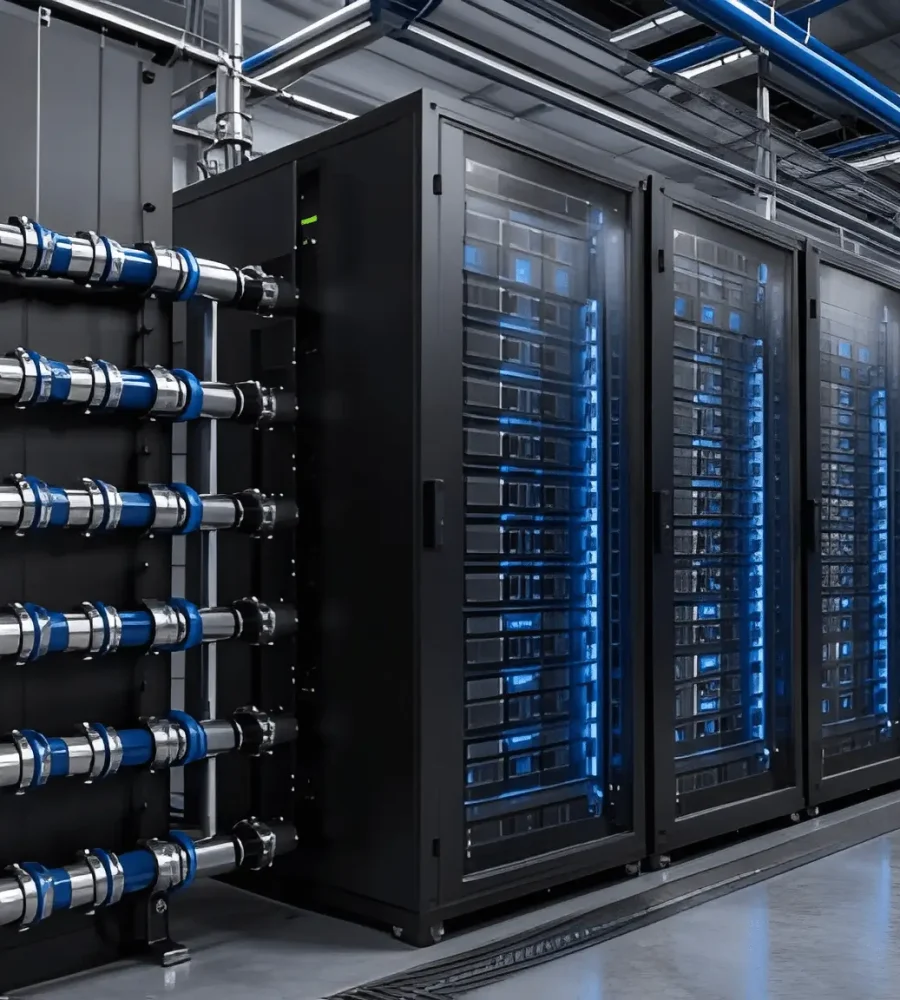
Cooling innovation illustrates how necessity now outweighs narrative positioning in infrastructure design. Techniques such as liquid cooling and advanced airflow containment respond to escalating compute density rather than reputational ambition. As workloads intensify, thermal management determines hardware lifespan and reliability thresholds. Organizations therefore invest in optimized systems to secure operational integrity under rising performance demands. Efficiency becomes inseparable from uptime assurance and lifecycle planning. Market recognition follows reliability, not slogans.
Resource stewardship extends beyond electricity into water usage, material sourcing, and lifecycle refurbishment strategies. Infrastructure planners increasingly adopt circular design principles to reduce waste and enhance asset longevity. These initiatives protect supply chains and mitigate operational disruptions under tightening environmental constraints. Because resource volatility can destabilize service commitments, efficiency safeguards business continuity. Environmental discipline thus merges with resilience engineering in practical execution. Competitive advantage flows from integrated systems thinking rather than isolated green claims.
The Rise of Performance-First Sustainability
A more integrated philosophy now defines modern infrastructure strategy across global markets. Sustainability considerations enter early-stage architectural modeling alongside latency targets and scalability forecasts. Design teams evaluate environmental impact simultaneously with compute density and network topology. This holistic planning approach dissolves the historical separation between green initiatives and performance engineering. Infrastructure leaders treat environmental parameters as coequal design constraints rather than external obligations. Competitive strategy therefore evolves toward synchronized optimization.
Artificial intelligence workloads accelerate this integration because they demand extraordinary power density and thermal precision. Facilities supporting advanced training clusters must balance energy intensity with grid responsibility. Engineers refine orchestration frameworks that align workload distribution with energy availability patterns. Such coordination preserves reliability while maintaining environmental alignment. Performance-driven sustainability emerges from technical necessity rather than symbolic aspiration. Competitive positioning increasingly depends on architectural intelligence.
Interconnection ecosystems further reinforce this integrated mindset across distributed environments. Edge nodes, core campuses, and hybrid cloud platforms interact within complex digital supply chains. Sustainability decisions influence network topology, latency performance, and geographic placement strategies. Therefore, infrastructure planning demands multidimensional modeling that harmonizes environmental parameters with service excellence. Organizations that master this synthesis achieve resilience without sacrificing performance ambition. The industry now measures sophistication through integrated design capability.
Competing Beyond the Sustainability Baseline
Infrastructure competition now unfolds on terrain shaped by shared environmental obligations rather than divergent green ambitions. Sustainability remains indispensable, yet it no longer elevates a facility above peers in isolation. Instead, differentiation arises from architectural foresight, adaptive scalability, and ecosystem intelligence layered upon responsible foundations. Organizations must therefore innovate beyond compliance while maintaining unwavering environmental discipline. Strategic advantage depends on orchestrating performance, resilience, and governance within unified design frameworks. The era of sustainability as spectacle has given way to sustainability as structural constraint.