Edge intelligence no longer operates within the forgiving boundaries of centralized data centers, where redundant power feeds and industrial cooling systems absorb inefficiencies. Distributed autonomy unfolds in constrained environments where energy scarcity, thermal buildup, and unpredictable operating conditions define performance limits. Engineers now confront a fundamental question that reshapes system architecture from the transistor upward: how can machines think locally without exhausting their own lifeline? The answer requires rebalancing computational ambition with electrical realism across every architectural layer. Sustainable autonomy emerges from this recalibration, not as a trend but as a design imperative anchored in physics and systems engineering, defining the foundation of energy-aware autonomous edge architecture.
Energy as a Design Constraint, Not an Afterthought
Edge intelligence must treat energy availability as a first-order design input rather than a downstream optimization variable. Silicon architects shape transistor density, voltage thresholds, and leakage management strategies according to expected power envelopes in deployment contexts. Firmware developers calibrate clock gating, dynamic voltage scaling, and sleep-state transitions to preserve operational continuity during idle or low-demand intervals. Software engineers refine model architectures to minimize redundant computations and memory transfers that inflate energy expenditure. Product teams evaluate deployment environments early, mapping sunlight exposure, battery capacity, or grid reliability into system requirements. Energy modeling therefore influences architecture diagrams long before printed circuit boards move into production.
Autonomous systems operating in remote or mobile scenarios cannot rely on constant connectivity for offloading heavy workloads. Designers incorporate on-chip neural accelerators that execute inference tasks within tightly bounded power budgets while avoiding excessive memory access. Power domains segment components so that nonessential modules can shut down independently without affecting mission-critical logic. Hardware abstraction layers expose energy telemetry to upper software stacks, allowing runtime decisions that align compute intensity with remaining battery capacity. Engineers validate prototypes through workload simulation under varied environmental and power conditions to uncover failure thresholds. Such discipline ensures that devices sustain intelligence even when replenishment cycles stretch beyond original assumptions.
Battery chemistry and energy harvesting technologies further influence architectural decisions in distributed deployments. Lithium-ion packs impose strict charging curves and thermal sensitivities that dictate safe operational windows for compute bursts. Solar or kinetic harvesting modules generate intermittent power flows that fluctuate with environmental variability and mechanical movement. Embedded controllers monitor charge states, current draw, and degradation rates to avoid premature cell fatigue. Systems integrate protective circuitry that prevents over-discharge events capable of corrupting memory or damaging processing units. Energy therefore becomes a living parameter inside system logic rather than a static specification in a product brochure.
Balancing Compute Intensity with Hardware Efficiency
Edge intelligence demands substantial compute throughput for tasks such as vision processing, anomaly detection, and sensor fusion. Low-power processors based on ARM architectures provide a foundation for efficient control logic while specialized accelerators handle parallel workloads. Designers select neural processing units that execute quantized models using integer arithmetic to reduce floating-point overhead. Memory hierarchies undergo careful tuning to minimize off-chip data movement, which often consumes more energy than arithmetic operations themselves. Model compression techniques including pruning and weight sharing reduce parameter counts without sacrificing essential accuracy. Hardware-software co-design aligns algorithm structure with silicon capabilities to eliminate wasted cycles.
Embedded GPUs and FPGAs offer configurable performance for variable workloads across industrial and mobility applications. Development teams profile representative inference tasks to identify bottlenecks in tensor operations, memory bandwidth, or pipeline stalls. Optimization passes reorganize kernels to exploit vectorization and minimize branch divergence across compute units. Compiler toolchains integrate energy estimation models that inform scheduling decisions during build time. Engineers measure performance per watt as a primary success metric rather than focusing solely on latency or throughput. Balanced architectures emerge when compute resources align precisely with workload characteristics rather than exceeding them unnecessarily.
Workload-specific silicon increasingly replaces general-purpose processors in constrained deployments. Application-specific integrated circuits execute narrow inference tasks at dramatically lower power consumption compared with universal CPUs. Designers evaluate trade-offs between flexibility and efficiency when committing to fixed-function hardware blocks. Modular architectures permit incremental upgrades where new accelerators integrate without redesigning the entire power delivery network. Field data informs subsequent silicon revisions, tightening energy budgets around real-world usage patterns. Precision engineering across layers ensures that computational strength does not overwhelm limited power reserves.
Thermal Stability in Compact Edge Deployments
Dense compute within compact enclosures generates thermal gradients that threaten component reliability and operational continuity. Engineers model heat distribution using computational fluid dynamics to anticipate hotspots around processors and power regulators. Passive cooling solutions such as heat sinks, vapor chambers, and phase-change materials dissipate thermal energy without adding mechanical complexity. Material selection for chassis and internal frames influences heat conduction pathways throughout the device. Thermal interface compounds bridge microscopic gaps between silicon and cooling structures to improve energy transfer efficiency. Stable temperature management preserves both performance consistency and component lifespan in remote installations.
Constrained deployments often prohibit active cooling due to dust exposure, vibration, or maintenance limitations. Designers optimize airflow channels within sealed enclosures to leverage natural convection patterns. Firmware integrates thermal sensors that continuously monitor die temperature and trigger adaptive clock adjustments. Performance throttling activates gracefully when temperature thresholds approach safe limits, protecting hardware integrity without abrupt shutdowns. Edge analytics platforms log thermal data for predictive maintenance and long-term reliability assessment. Reliable autonomy depends on maintaining equilibrium between computational demand and thermal dissipation capacity.
Miniaturization intensifies heat density, especially in devices mounted on vehicles or industrial equipment. Engineers incorporate graphite sheets and advanced ceramics to distribute localized heat across broader surface areas. Mechanical designers collaborate with electrical teams to position high-power components away from sensitive sensors or communication modules. Environmental factors such as ambient temperature, humidity, and solar exposure enter validation testing protocols. Thermal budgets receive equal attention alongside electrical budgets during system specification reviews. Effective heat management sustains deterministic performance in unpredictable physical contexts.
Localized Energy Management and Adaptive Workloads
Autonomous edge systems operate under fluctuating energy availability that demands real-time adaptation. Embedded controllers monitor instantaneous power draw alongside battery state-of-charge metrics. Intelligent schedulers classify workloads into critical, deferrable, and optional categories based on mission objectives. Processing intensity scales dynamically through frequency adjustments and selective accelerator activation. Edge orchestration frameworks coordinate sensor polling intervals with compute demand to avoid unnecessary wake cycles. Local energy awareness transforms static devices into adaptive agents capable of preserving autonomy during uncertainty.
Developers implement workload throttling mechanisms that reduce model complexity when energy reserves decline. Quantized inference pathways activate under constrained conditions while full-precision models run when power remains abundant. Data sampling rates adjust according to environmental stability, reducing redundant analysis during steady states. Systems store intermediate results locally to minimize communication bursts that drain batteries. Runtime policies evolve through machine learning techniques trained on historical energy consumption patterns. Adaptive compute strategies enable devices to maintain essential functionality even during extended low-power intervals.
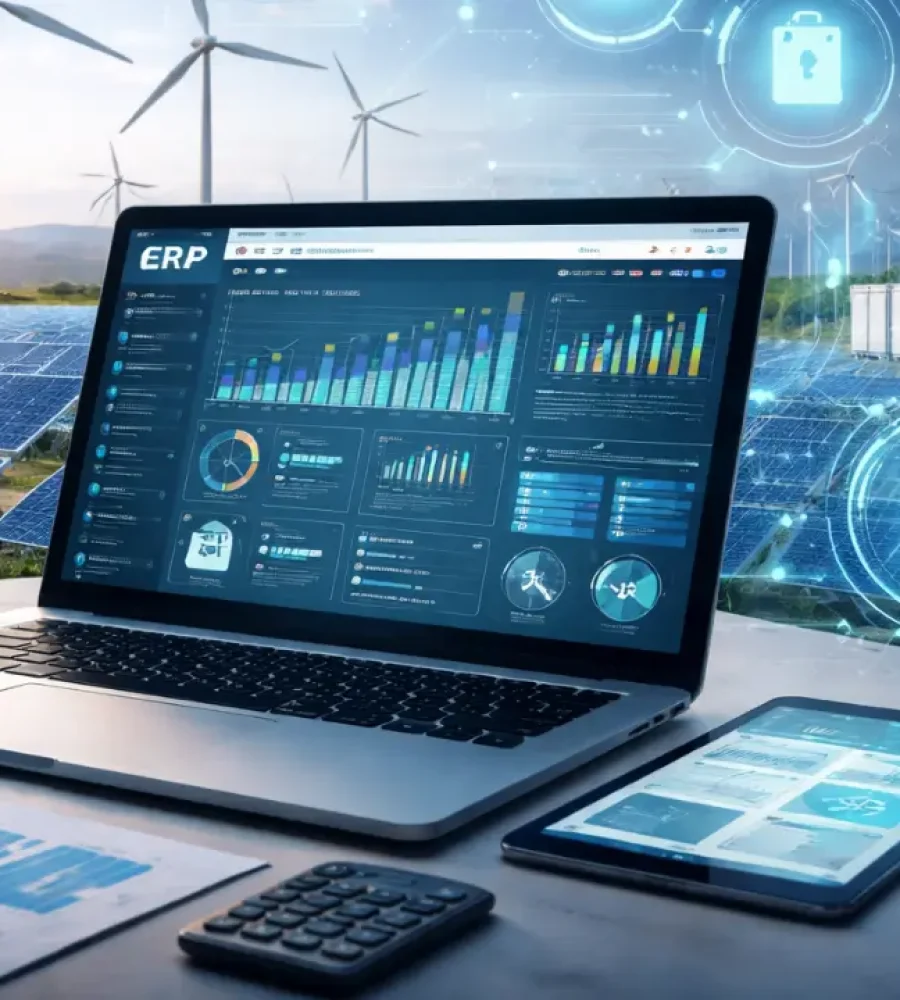
Operators managing distributed fleets require visibility into energy consumption patterns across nodes. Telemetry dashboards aggregate battery health, workload distribution, and thermal performance metrics in near real time. Predictive analytics identify nodes approaching energy depletion and recommend workload redistribution across the network. Edge clusters collaborate to shift noncritical processing toward units with higher energy reserves. Firmware updates propagate refined energy management algorithms based on fleet-level insights. Consequently, localized adaptation scales into coordinated resilience across entire deployments.
Distributed Power Ecosystems at the Edge
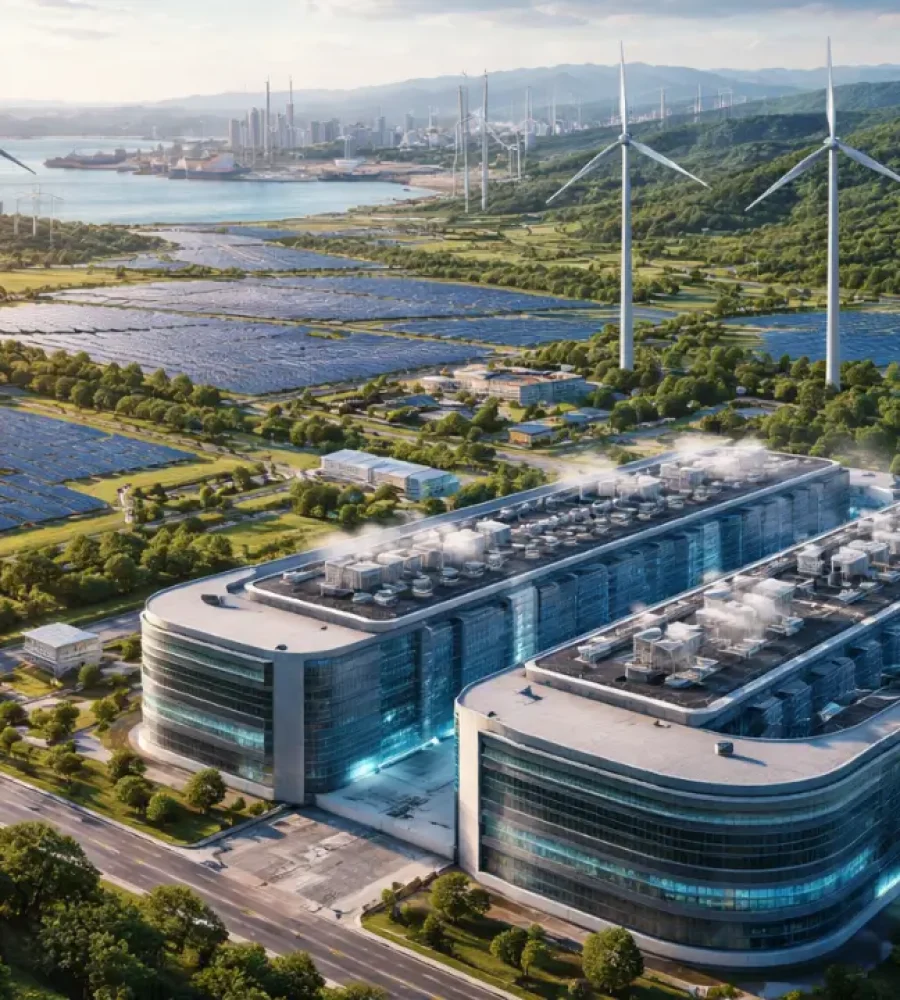
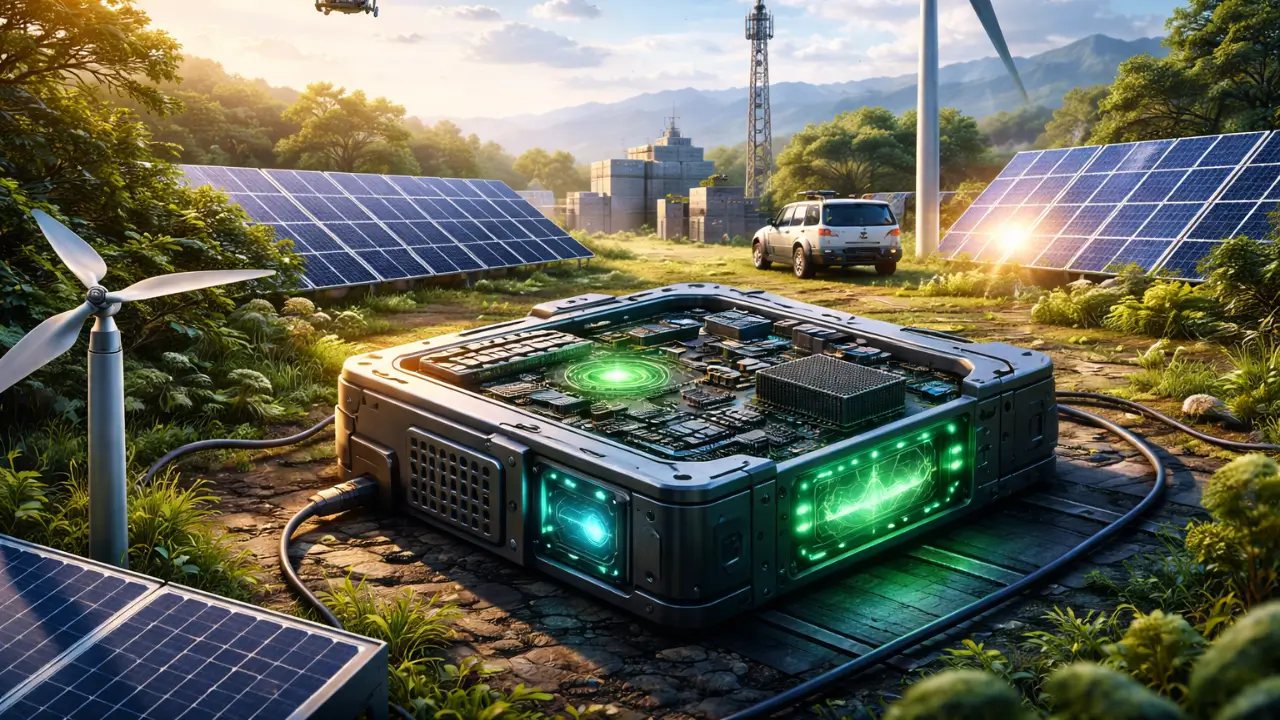
Edge deployments increasingly integrate with localized energy infrastructures such as microgrids and renewable installations. Autonomous systems interface with solar arrays, small wind turbines, or hybrid battery storage modules in remote facilities. Power electronics regulate voltage fluctuations and harmonize multiple energy inputs into stable supply lines. Communication protocols enable devices to negotiate power allocation within shared microgrid environments. Engineers design failover strategies that prioritize critical nodes during constrained supply conditions. Distributed intelligence extends beyond computation into energy orchestration itself.
On-device storage solutions such as supercapacitors and solid-state batteries buffer intermittent renewable generation. Charge controllers optimize energy capture during peak production periods while protecting cells from stress. Edge nodes forecast expected energy availability based on historical generation data and environmental sensors. Workloads schedule compute-intensive tasks during predicted surplus windows to maximize efficiency. Integration with local infrastructure reduces reliance on centralized grids and enhances deployment flexibility. Systems achieve higher resilience when compute logic aligns with surrounding energy ecosystems.
Architectural frameworks support coordination among geographically dispersed nodes within shared power domains. Distributed consensus algorithms manage task allocation while accounting for energy metrics across participants. Security layers protect power negotiation channels from malicious interference or data corruption. Standardized interfaces simplify integration with diverse energy hardware vendors and regional regulations. Edge networks therefore evolve into energy-aware collectives rather than isolated devices. Moreover, this coordination enables sustainable autonomy at scale without sacrificing reliability or mission integrity.
Engineering Autonomy with Energy Intelligence
Autonomous edge systems now inhabit environments where every watt carries strategic weight. Engineers embed energy awareness into silicon layouts, firmware routines, and orchestration platforms to secure operational longevity. Thermal management, hardware efficiency, and adaptive scheduling converge into a unified architectural philosophy. Organizations deploying distributed intelligence increasingly evaluate performance through endurance metrics rather than raw compute benchmarks. The maturation of localized power ecosystems further reinforces the need for integrated design thinking across compute and energy domains. Sustainable autonomy ultimately depends on harmonizing intelligence with power consciousness, ensuring that machines remain capable, stable, and enduring wherever they operate.