 Skip to content
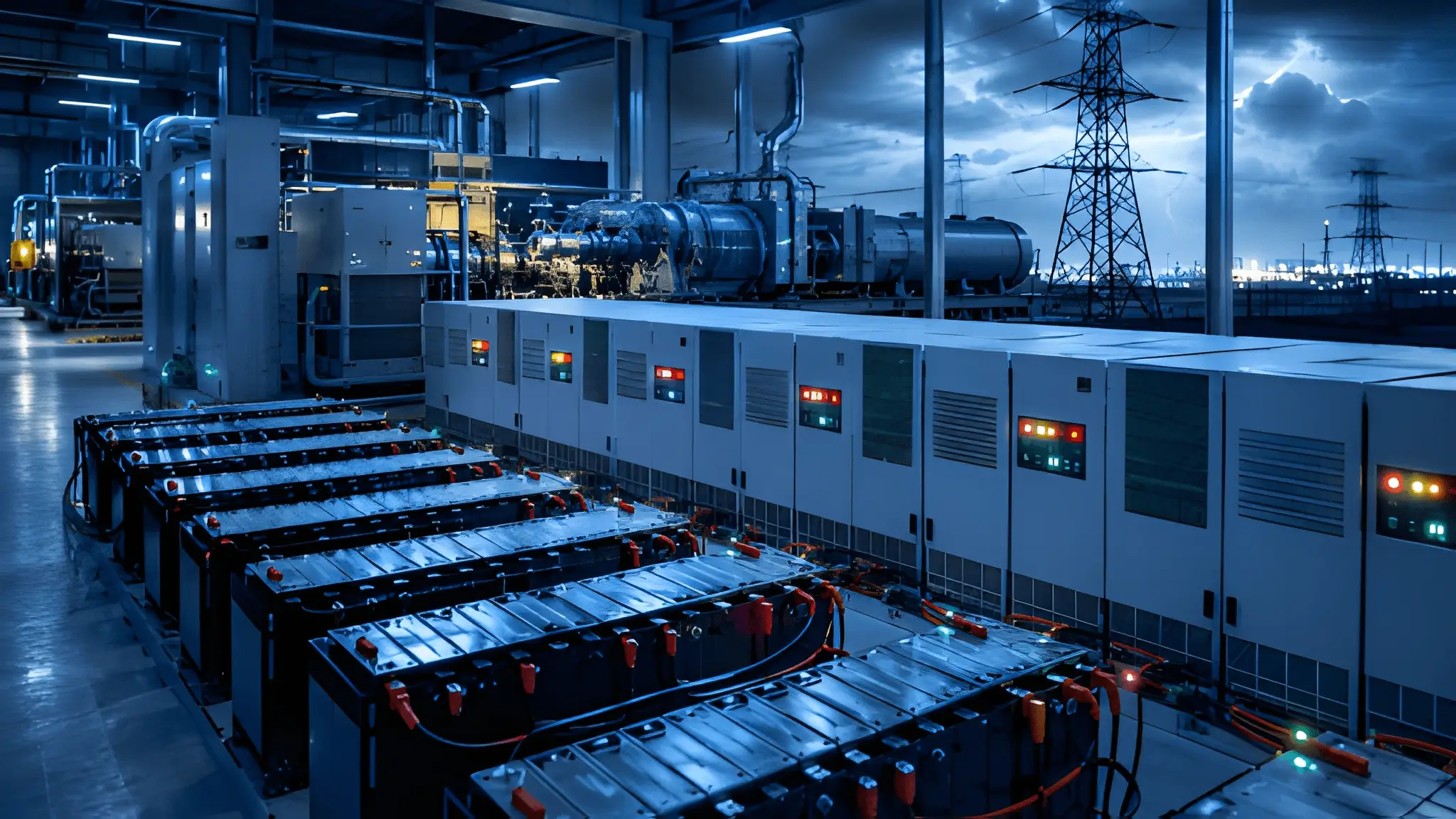
Power availability has quietly become a design variable that rivals compute density in strategic importance. Infrastructure teams increasingly account for electrical equipment procurement as a major factor influencing commissioning schedules alongside server delivery, utility interconnections, and rack integration. Long procurement windows for transformers, switchgear, and utility interconnections reshape resilience planning because temporary solutions often remain in service far longer than originally intended. Battery selection therefore becomes a business continuity decision instead of a simple backup power exercise. Engineering teams must evaluate how different chemistries behave across extended standby periods, uncertain commissioning timelines, and repeated operating cycles rather than focusing exclusively on discharge duration. Executive decisions now require close coordination between procurement, electrical engineering, finance, and operations because each discipline influences the practical limits of infrastructure availability.

Conventional resilience models assumed that permanent utility infrastructure would arrive within predictable construction schedules, allowing temporary energy systems to bridge relatively short commissioning gaps. That assumption has weakened as supply constraints extend procurement timelines for high-voltage equipment across multiple global markets. Organizations planning large AI deployments increasingly evaluate energy storage as part of a broader operational risk strategy rather than treating batteries as isolated electrical assets. Successful projects now balance procurement uncertainty, maintenance requirements, equipment aging, and financial exposure within a single engineering framework. However, resilience planning remains effective only when technology choices reflect realistic infrastructure delivery assumptions instead of optimistic construction schedules. Reliable availability ultimately depends on aligning storage chemistry with the practical realities of electrical infrastructure development rather than theoretical design conditions.
Transformer Lead Times as the New SLA Clock
Service-level expectations traditionally centered on redundant power paths, backup generation, and short-duration battery systems because utility infrastructure generally followed predictable delivery timelines. Procurement conditions have changed that calculation as manufacturers report extended lead times for large power transformers driven by sustained demand, manufacturing capacity, and specialized material requirements. Electrical infrastructure now influences operational readiness long before software deployment begins, making procurement schedules part of availability planning rather than simply construction management. Infrastructure architects therefore evaluate storage technologies according to their ability to support prolonged commissioning uncertainty instead of only addressing brief utility interruptions. Battery chemistry selection increasingly occurs during early design phases because changing storage architecture later often affects electrical distribution, cooling, and capital allocation simultaneously. Organizations that integrate procurement intelligence into engineering decisions reduce downstream redesign efforts while maintaining more realistic deployment expectations.
Lengthening transformer procurement windows also alter the financial assumptions surrounding temporary infrastructure because backup systems frequently operate beyond their original planning horizon. Equipment initially intended for contingency use may remain commissioned for extended periods while permanent electrical assets await delivery and installation. Storage technologies therefore require evaluation across standby efficiency, maintenance intervals, degradation behavior, recharge flexibility, and operational reliability under uncertain schedules. Engineering teams increasingly compare lifecycle performance instead of focusing solely on upfront procurement cost because replacement activities during delayed infrastructure projects introduce additional operational complexity. Consequently, resilience planning expands beyond outage response into sustained infrastructure support that preserves operational continuity despite evolving construction timelines. Procurement risk has effectively become another engineering parameter that shapes availability outcomes across large-scale AI facilities.
Beyond the 4-Hour Standard: Defining ‘AI-Ready’ Duration
Traditional battery deployments are often optimized around economic discharge durations that balanced capital investment with expected outage frequency across commercial facilities. AI infrastructure introduces different operational priorities because sustained model training, checkpoint preservation, and workload continuity create higher costs when extended interruptions occur. Some infrastructure operators and large-scale facility developers evaluate resilience scenarios extending beyond conventional battery planning assumptions, particularly when temporary infrastructure may need to support prolonged commissioning schedules resulting from electrical equipment availability. These evaluations do not imply that batteries should replace generation assets entirely, but they do require a more sophisticated understanding of chemistry capabilities under prolonged operational demands. Financial analysis therefore expands from initial installation costs toward lifecycle resilience, recharge performance, maintenance obligations, and integration flexibility. Storage architecture now supports business continuity objectives that extend beyond traditional emergency backup functions.
Long-duration resilience planning also changes how engineering teams compare competing battery chemistries because operational priorities extend beyond energy density alone. Calendar life, thermal stability, voltage behavior during discharge, maintenance expectations, and recharge constraints become equally significant when infrastructure uncertainty extends project timelines. No single chemistry consistently outperforms every alternative because performance depends on environmental conditions, operational profiles, maintenance capabilities, and integration with supporting electrical systems. Executive decision-makers therefore benefit from evaluating storage technologies through scenario analysis rather than assuming one architecture satisfies every resilience objective. Meanwhile, infrastructure investments achieve stronger long-term value when storage decisions anticipate procurement uncertainty before equipment shortages become operational constraints. Engineering discipline increasingly depends upon realistic assumptions regarding infrastructure availability rather than optimistic forecasts surrounding equipment delivery.

Thermal Runaway Isn’t the Only Fire: Corrosion, Cycling, and Calendar Risk
Battery performance receives significant attention during discharge events, yet extended standby operation often introduces equally important engineering considerations that influence long-term reliability. Systems supporting critical infrastructure may remain fully charged for prolonged periods while waiting for permanent electrical assets, exposing materials to gradual chemical and mechanical aging even without frequent cycling. Corrosion mechanisms within terminals, connectors, busbars, and enclosure components can slowly increase electrical resistance, affecting efficiency and maintenance requirements over time. Calendar aging also reduces usable capacity through irreversible electrochemical changes that progress regardless of operational activity, making storage duration only one part of lifecycle evaluation. Engineering teams therefore assess storage technologies according to degradation pathways alongside discharge characteristics because replacement planning directly influences operational continuity. Selecting an appropriate chemistry requires understanding how environmental conditions, maintenance intervals, and standby behavior collectively affect dependable performance throughout extended deployment periods.
Thermal stability remains an essential design consideration, although it should not dominate every discussion surrounding battery reliability because multiple failure mechanisms influence long-term system performance. Different chemistries exhibit distinct responses to temperature variation, state of charge, humidity, and maintenance practices, requiring operators to evaluate complete lifecycle behavior rather than isolated safety metrics. Monitoring strategies increasingly incorporate impedance measurements, thermal sensing, environmental controls, and predictive diagnostics to identify gradual degradation before it affects availability objectives. Asset management programs also integrate periodic inspection schedules with digital monitoring platforms that provide early visibility into declining battery health across distributed installations. Furthermore, engineering organizations increasingly coordinate maintenance planning with procurement forecasts so replacement decisions align with realistic infrastructure delivery schedules instead of fixed calendar assumptions. Reliable resilience ultimately depends upon disciplined lifecycle management that recognizes aging as an operational variable rather than an unexpected maintenance event.
Hybrid Stack Sizing: Letting Chemistry Dictate the Gas Turbine, Not Vice Versa
Hybrid energy system design benefits from evaluating the operational characteristics of the selected storage technology alongside dispatchable generation assets so that both systems can be sized to complement one another. Electrical architecture often benefits from matching generation characteristics with battery recharge capability, voltage behavior, and expected operating profile rather than sizing storage around an already selected turbine configuration. This approach enables engineers to reduce unnecessary cycling, improve system efficiency, and simplify operational control during prolonged infrastructure constraints. Storage technologies with different discharge profiles influence generator loading, startup sequencing, reserve margins, and maintenance scheduling in distinct ways that directly affect lifecycle economics. Engineering teams therefore evaluate hybrid configurations through integrated simulation models that consider electrical performance, operational flexibility, and long-term asset utilization instead of isolated equipment specifications. Strategic infrastructure planning increasingly treats batteries and generation resources as interconnected operational assets rather than independent procurement categories.
System integration also extends beyond hardware selection because energy management software determines how batteries, generators, and facility loads interact throughout changing operating conditions. Control strategies influence recharge timing, dispatch priorities, load sharing, and reserve capacity, allowing infrastructure operators to preserve battery health while maintaining availability objectives. Effective hybrid architectures reduce unnecessary stress on every component by assigning operational responsibilities according to each technology’s performance characteristics instead of forcing uniform operating patterns across dissimilar assets. Financial performance likewise improves when dispatch logic minimizes inefficient generator operation while avoiding battery usage that accelerates degradation without providing meaningful resilience benefits. Engineering organizations increasingly validate these operating strategies through digital modeling before construction begins because simulation identifies performance constraints that traditional equipment sizing methods frequently overlook. Successful resilience programs therefore emerge from coordinated electrical design, operational planning, and procurement strategy working within a unified engineering framework.
Underwriting Uptime When the Long Pole Isn’t IT
Infrastructure resilience increasingly depends upon factors that originate outside computing environments, making electrical equipment procurement an operational consideration rather than only a construction milestone. Extended delivery schedules for critical grid infrastructure influence storage selection, maintenance planning, lifecycle economics, and business continuity well before facilities become operational. Executive leadership therefore benefits from incorporating procurement uncertainty into resilience governance alongside cybersecurity, operational risk, and capacity planning because each element shapes long-term service availability. Battery selection achieves greater strategic value when evaluated through lifecycle performance, infrastructure dependencies, and integration flexibility instead of focusing exclusively on initial capital expenditure. Availability policies also become more realistic when engineering assumptions reflect verified equipment delivery expectations rather than ideal construction schedules. Organizations that integrate procurement intelligence into infrastructure strategy strengthen operational resilience without relying upon optimistic project timelines.
Long-term infrastructure planning increasingly rewards organizations that recognize electrical supply chains as integral components of operational risk management instead of treating them as external procurement issues. Board-level investment decisions gain greater accuracy when engineering teams quantify the operational implications of equipment availability alongside traditional financial and technical performance indicators. Storage chemistry, generation strategy, maintenance planning, and procurement forecasting together establish the practical limits of infrastructure resilience across AI deployments operating at substantial scale. Decision-makers who align these disciplines early create facilities that remain adaptable despite evolving equipment markets and changing infrastructure constraints. Careful engineering judgment ultimately delivers stronger availability than isolated technology choices because resilience emerges from coordinated planning across every layer of the electrical ecosystem. Operational confidence therefore begins with understanding that dependable uptime depends as much on infrastructure readiness as it does on computational capability.












