Modern AI workloads rely on tightly coupled GPU clusters that operate with precise synchronization across nodes. Training frameworks distribute model parameters across thousands of GPUs, where each step depends on collective communication primitives such as all-reduce operations. Even a minor delay in one node disrupts the timing across the entire cluster, creating inefficiencies that compound over time. Engineers often observe that synchronization latency does not degrade linearly but escalates sharply once thresholds are crossed. This sensitivity makes distributed training inherently fragile under imperfect operating conditions. The architecture assumes uniform performance, yet real-world systems rarely maintain that consistency.
Failures in synchronization rarely present themselves as binary outages, which complicates detection and response. Instead, clusters experience stragglers where certain GPUs lag behind due to hardware variability, network jitter, or resource contention. These stragglers force faster nodes to idle while waiting for synchronization barriers, reducing overall throughput. The inefficiency can appear subtle at first, but over extended training cycles, it results in substantial performance loss. Observability tools often struggle to pinpoint the root cause because the issue manifests across multiple layers simultaneously. Consequently, operators face difficulty in distinguishing between transient delays and systemic faults.
Framework-level mitigation techniques attempt to address synchronization fragility through gradient compression and asynchronous updates. These approaches reduce communication overhead but introduce trade-offs in model accuracy and convergence stability. Engineers must carefully balance performance gains against potential degradation in training outcomes. The complexity increases when workloads scale dynamically across heterogeneous hardware environments. Furthermore, coordination protocols become more intricate as clusters grow beyond predictable network boundaries. This tension between efficiency and correctness defines a core operational challenge in GPU-dense environments.
Distributed checkpointing provides a safeguard against synchronization failures, yet it introduces additional overhead that affects training velocity. Systems must periodically save model states across nodes, which consumes bandwidth and storage resources. Recovery from a failed synchronization event depends on the granularity and frequency of these checkpoints. Frequent checkpoints reduce recovery time but increase operational cost and system load. In contrast, infrequent checkpoints risk losing significant computational progress during failures. Therefore, teams must design checkpoint strategies that align with workload sensitivity and infrastructure constraints.
The interplay between software frameworks and hardware interconnects further amplifies synchronization risks. High-performance interconnects such as NVLink and InfiniBand aim to minimize latency, yet they introduce their own failure modes under heavy utilization. Packet loss, congestion, or firmware inconsistencies can disrupt synchronization without triggering explicit alerts. Engineers often discover these issues only after performance degradation becomes noticeable. As a result, system reliability depends not only on algorithmic design but also on the stability of underlying communication fabrics. This layered dependency creates a fragile equilibrium that demands continuous monitoring and tuning.
Network Congestion in East-West Traffic Storms
GPU clusters generate intense east-west traffic as nodes exchange gradients, parameters, and intermediate results during training cycles. Unlike traditional cloud workloads that emphasize north-south traffic, AI infrastructure places extraordinary pressure on internal network pathways. Each training iteration involves synchronized data exchange across multiple nodes, which can saturate available bandwidth. Bottlenecks emerge when network topology and available bandwidth cannot efficiently accommodate simultaneous communication patterns at scale, which has been observed to reduce training efficiency in distributed systems.This congestion often leads to packet queuing, increased latency, and eventual throughput degradation. The system’s performance becomes tightly coupled to network efficiency.
Network congestion rarely occurs uniformly across the cluster, which complicates detection and mitigation strategies. Certain links or switches experience disproportionate load due to uneven traffic distribution or suboptimal routing algorithms. These hotspots create localized bottlenecks that ripple across the system, affecting overall performance. Operators may observe that some nodes consistently underperform without clear hardware faults. The imbalance often stems from architectural constraints rather than isolated failures. Identifying these patterns requires deep visibility into network telemetry and traffic flows.
Congestion control mechanisms attempt to regulate traffic flow, but their effectiveness varies under AI-specific workloads. Traditional protocols such as TCP struggle to adapt to high-throughput, low-latency environments typical of GPU clusters. Advanced solutions like RDMA and congestion-aware routing aim to optimize performance, yet they introduce complexity in configuration and management. Engineers must carefully tune parameters to match workload characteristics and hardware capabilities. Misconfigurations can exacerbate congestion rather than alleviate it. This dynamic environment demands continuous calibration and expertise.
Moreover, large-scale training jobs often trigger synchronized communication bursts that overwhelm network capacity. These bursts occur when multiple nodes initiate data exchange simultaneously during synchronization phases of training, a behavior documented in distributed learning workloads.The resulting traffic spikes can create transient congestion that impacts the active workload and may affect co-located jobs depending on network isolation and scheduling policies.Scheduling systems may not account for these patterns, leading to resource contention across tenants. Consequently, performance unpredictability becomes a persistent challenge in shared AI infrastructure. Effective isolation mechanisms remain critical to maintaining service quality.
Emerging network architectures attempt to address congestion through hierarchical designs and adaptive routing strategies. These approaches distribute traffic more evenly across available paths, reducing the likelihood of bottlenecks. However, implementation complexity increases significantly as clusters scale to thousands of GPUs. Operators must integrate hardware capabilities with software-defined networking frameworks to achieve optimal results. The success of these solutions depends on precise coordination between multiple system layers. In addition, continuous monitoring ensures that network behavior aligns with expected performance profiles.
Thermal Runaway in High-Density GPU Environments
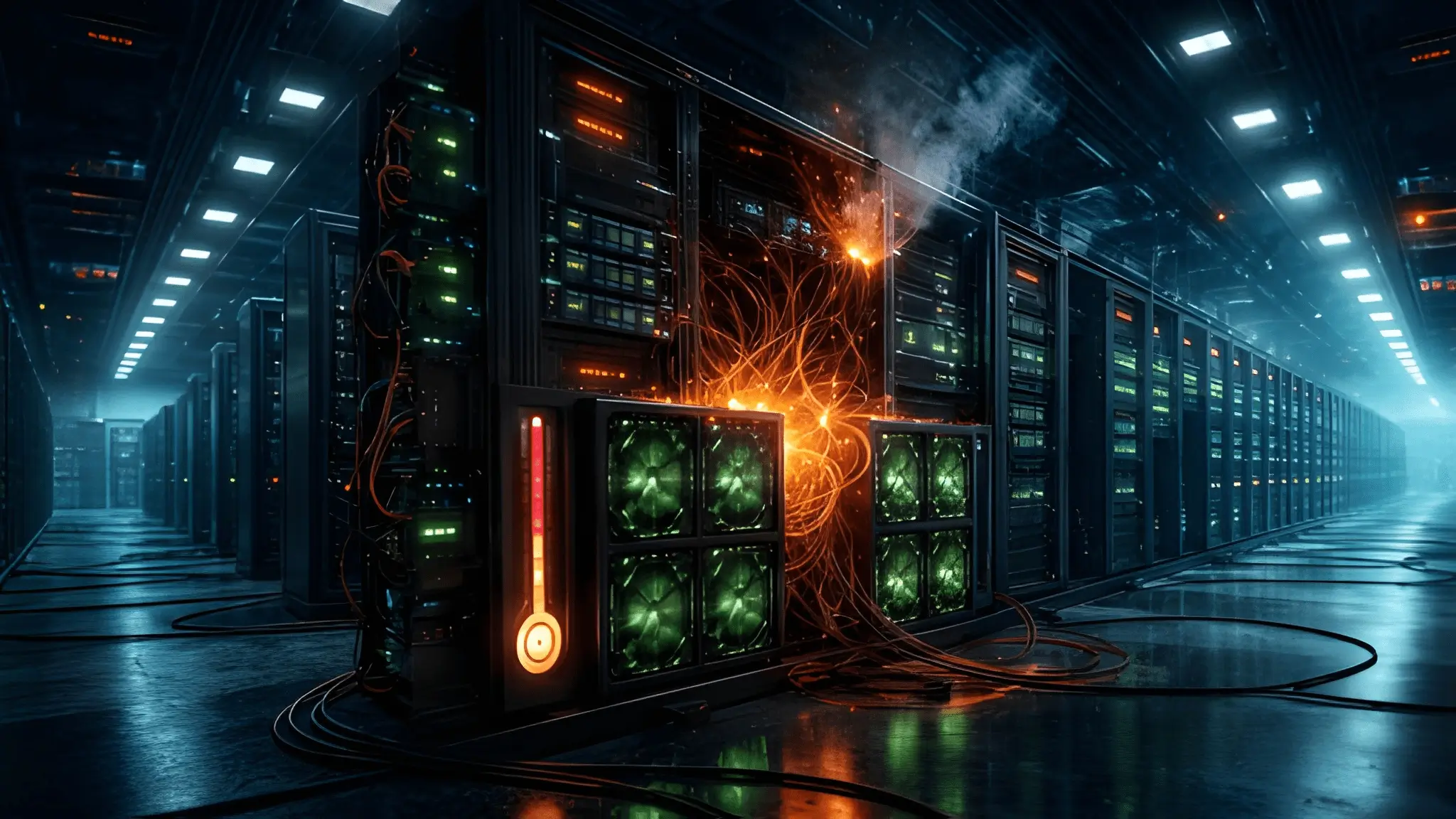
High-density GPU deployments concentrate significant computational power within confined physical spaces, which creates substantial thermal challenges. Each GPU generates heat proportional to its workload, and dense configurations amplify this effect across racks and clusters. Cooling systems must maintain consistent temperature distribution to prevent localized hotspots. Even slight imbalances in airflow or coolant distribution can lead to uneven thermal conditions, which are known to affect hardware performance in high-density data center environments.These hotspots often remain undetected until they impact hardware performance or stability. The risk increases as workloads push GPUs to sustained peak utilization.
Thermal escalation can occur when localized overheating increases component temperatures and reduces efficiency, which may further elevate heat generation under sustained workloads. As components heat up, their efficiency declines, leading to higher power consumption and additional heat generation. This effect can extend to neighboring components within the same system if cooling remains uneven, potentially influencing overall cluster performance.Traditional monitoring systems may report acceptable average temperatures while masking localized hotspots, a limitation recognized in data center thermal management practices.Engineers must therefore rely on granular thermal data to identify and address emerging risks. Precision in thermal management becomes essential for maintaining system integrity.
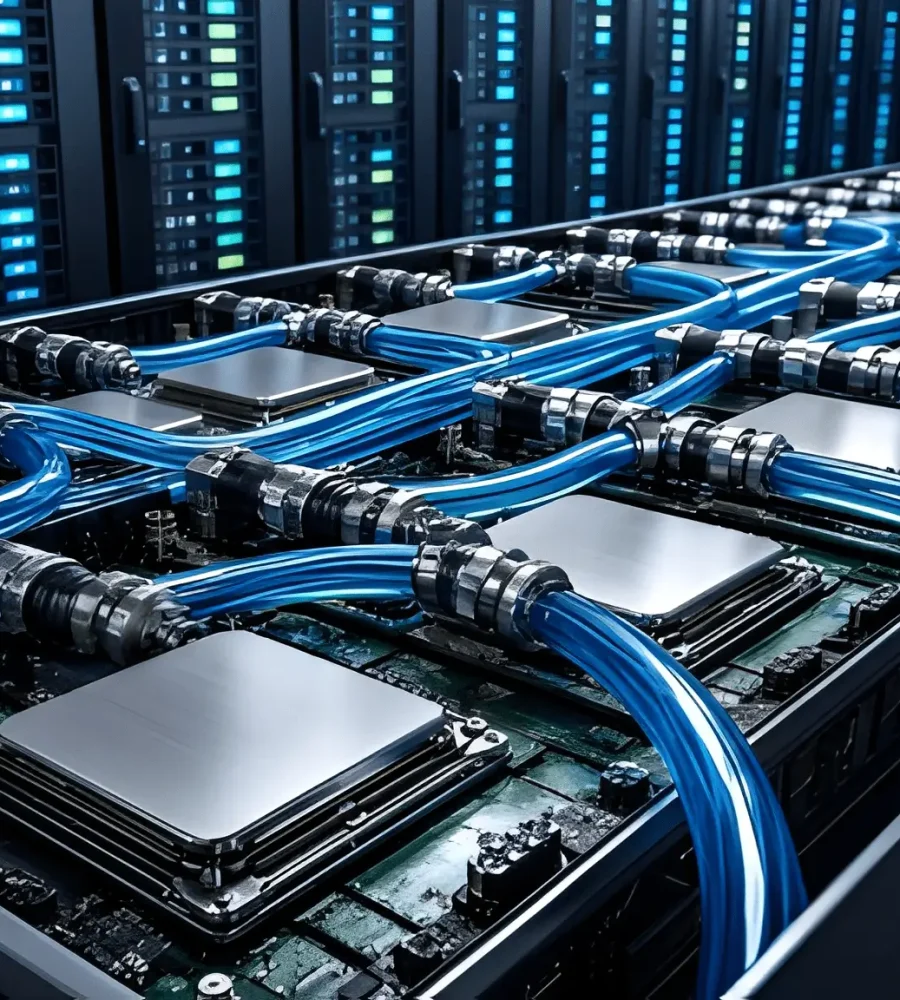
Cooling technologies such as liquid cooling and immersion systems offer improved thermal performance compared to air-based solutions. These methods enable higher heat dissipation and support denser configurations without compromising stability. However, they introduce new operational complexities related to maintenance, reliability, and infrastructure design. Leaks, pump failures, or coolant degradation can disrupt cooling efficiency and create additional risks. Operators must implement rigorous monitoring and maintenance protocols to ensure consistent performance. The adoption of advanced cooling solutions reflects the evolving demands of GPU-intensive workloads.
Workload scheduling plays a critical role in managing thermal dynamics within GPU clusters. By distributing high-intensity tasks across different nodes, systems can reduce the likelihood of localized overheating. However, scheduling algorithms often prioritize performance and resource utilization over thermal considerations. This imbalance can lead to concentrated workloads that strain cooling systems. Integrating thermal awareness into scheduling decisions requires sophisticated modeling and real-time data analysis. Such integration remains an emerging area of research and development in AI infrastructure.
Furthermore, environmental factors such as ambient temperature and facility design influence thermal stability. Data centers located in warmer climates face additional challenges in maintaining optimal operating conditions. Cooling systems must compensate for external heat, which increases energy consumption and operational cost. Efficient facility design, including airflow management and heat containment, mitigates these challenges. Operators must align infrastructure design with geographic and environmental constraints. This alignment ensures sustainable performance under varying conditions.
Orchestration Blind Spots at Scale
Orchestration systems coordinate resource allocation, workload scheduling, and fault management across GPU clusters. These systems rely on abstractions that simplify complex infrastructure into manageable units. However, abstraction often obscures critical details that affect performance and reliability. Blind spots emerge when orchestration layers lack visibility into hardware-level conditions or network dynamics. These gaps can lead to suboptimal scheduling decisions that degrade system efficiency. As clusters scale, the impact of these blind spots becomes more pronounced.
Scheduling algorithms attempt to optimize resource utilization while meeting workload requirements. They consider factors such as GPU availability, memory capacity, and job priority. Yet they often overlook transient conditions such as network congestion or thermal stress. This limitation results in workloads being assigned to nodes that appear suitable but perform poorly under current conditions. Operators may struggle to diagnose these issues due to limited observability. Consequently, orchestration systems must evolve to incorporate real-time telemetry and predictive analytics.
Multi-tenant environments introduce additional complexity in orchestration, as workloads from different users compete for shared resources. Isolation mechanisms aim to prevent interference, but they cannot fully eliminate contention in high-density clusters. Resource fragmentation occurs when available capacity becomes distributed in ways that hinder efficient allocation. This fragmentation reduces overall system utilization and increases scheduling latency. Engineers must design orchestration policies that balance fairness with performance. Achieving this balance remains a persistent challenge in AI cloud platforms.
Observability tools provide insights into system behavior, yet they often operate at coarse granularity. Metrics such as CPU utilization or memory usage fail to capture nuanced interactions within GPU clusters. Fine-grained telemetry, including interconnect performance and thermal conditions, remains difficult to integrate into orchestration workflows. Without this visibility, systems cannot respond effectively to emerging issues. Operators must therefore invest in advanced monitoring solutions that bridge this gap. Enhanced observability supports more informed decision-making and improved system resilience.
Automation plays a key role in managing large-scale infrastructure, but it also introduces risks when based on incomplete information. Automated systems may propagate errors بسرعة across the cluster, amplifying their impact. Human intervention becomes necessary to diagnose and resolve complex issues that automation cannot address. However, manual processes do not scale effectively in large environments. This tension highlights the need for hybrid approaches that combine automation with expert oversight. Effective orchestration requires both precision and adaptability.
Partial Failures and the Illusion of Availability
AI cloud platforms often report high availability metrics, yet these metrics can obscure underlying performance degradation. Partial failures occur when components operate below optimal capacity without triggering complete outages. Examples include degraded GPU performance, intermittent network issues, or memory errors that affect specific workloads. These issues do not halt operations but reduce efficiency and reliability. Users may experience slower training times or inconsistent results without clear indications of failure. This discrepancy creates an illusion of availability that masks systemic problems.
Detection of partial failures requires sophisticated monitoring techniques that go beyond traditional health checks. Systems must analyze performance metrics at granular levels to identify deviations from expected behavior. Machine learning models increasingly assist in detecting anomalies across large datasets. However, these models depend on accurate baseline data and continuous updates. False positives and false negatives remain challenges in anomaly detection. Engineers must refine detection mechanisms to balance sensitivity and accuracy.
Fault isolation becomes critical in addressing partial failures within GPU clusters. Systems must identify affected components and prevent issues from spreading across the infrastructure. Isolation mechanisms include workload migration, node quarantine, and dynamic resource reallocation. These strategies minimize the impact of failures on overall system performance. However, they require precise coordination and timely execution. Delays in isolation can exacerbate the problem and increase recovery time.
User experience often reflects the cumulative effect of partial failures rather than individual incidents. Small inefficiencies accumulate over time, leading to noticeable performance degradation. Users may attribute these issues to workload complexity rather than infrastructure limitations. This misinterpretation complicates communication between operators and users. Transparent reporting and clear performance metrics help bridge this gap. Effective communication ensures that users understand the true state of the system.
Resilience strategies must account for partial failures as a fundamental aspect of system design. Redundancy, fault tolerance, and adaptive resource management contribute to maintaining performance under imperfect conditions. These strategies require careful planning and continuous refinement. Systems must evolve to handle new failure modes as technology advances. The goal is not to eliminate failures but to manage their impact effectively. This perspective shifts the focus from prevention to resilience.
Designing for Failure in AI-Native Infrastructure
Recent developments in commercial AI cloud platforms illustrate how theoretical risks translate into operational challenges under production conditions. Reports around rapid scaling efforts by Lambda Labs and Crusoe have highlighted the complexity of maintaining performance consistency across large GPU clusters, particularly as demand for high-density deployments accelerates. Operators have observed that provisioning delays, network constraints, and cluster coordination issues can emerge when infrastructure expands faster than its supporting systems mature. In parallel, engineering discussions across large-scale AI deployments emphasize the sensitivity of multi-node training to interconnect performance and synchronization overhead. These cases do not represent isolated failures but instead reflect systemic pressures inherent in scaling GPU-intensive environments. The industry increasingly acknowledges that operational stability must evolve alongside raw compute capacity to sustain reliable AI workloads.
Designing for Failure in AI-Native Infrastructure
The operational risks associated with GPU-dense infrastructure highlight the need for a paradigm shift in system design. Engineers must recognize that failures are inevitable in complex, large-scale environments. Designing for failure involves building systems that can detect, isolate, and recover from issues efficiently. Observability plays a central role in this approach, providing the insights needed to understand system behavior. Resilience becomes a core principle rather than an afterthought. This mindset enables more robust and reliable AI cloud platforms.
Future infrastructure must integrate advanced monitoring, adaptive scheduling, and fault-tolerant architectures to address emerging challenges. These components work together to create systems that can adapt to changing conditions and workloads. Collaboration between hardware and software teams ensures that solutions address issues across all layers of the stack. Continuous innovation remains essential as AI workloads evolve in complexity and scale. Operators must remain vigilant in identifying and addressing new vulnerabilities. This proactive approach supports sustainable growth in AI infrastructure.
Ultimately, the success of AI cloud platforms depends on their ability to maintain performance and reliability under diverse conditions. Systems must balance efficiency with resilience, ensuring that workloads continue to operate effectively despite disruptions. This balance requires ongoing investment in research, development, and operational expertise. Organizations that prioritize resilience will gain a competitive advantage in the evolving AI landscape. The path forward demands a commitment to robust design and continuous improvement.