
Co-located renewable energy projects have emerged as a practical response to this challenge by combining multiple renewable technologies within a single operational boundary. Shared infrastructure such as transmission corridors, substations, and site access networks creates opportunities to reduce redundancy while improving energy delivery pathways. This development reflects a broader transition in power system design where efficiency arises from integration rather than isolated generation assets. Hybrid renewable campuses now represent an operational model that allows wind turbines and solar arrays to coexist within the same physical landscape while contributing electricity through unified grid connections. Engineers, planners, and grid operators increasingly view these combined facilities as a pathway toward optimized renewable generation systems.
Infrastructure Efficiency in the Next Phase of Renewable Expansion
Renewable energy infrastructure traditionally evolved through independent projects that focused on a single technology and operated as discrete generation nodes across wide regions. Such configurations required individual land allocations, dedicated transmission infrastructure, and separate grid interconnection approvals for each project. Developers now recognize that shared infrastructure can provide operational advantages when multiple renewable technologies operate in proximity to one another. The emergence of co-located renewable systems therefore reflects both economic reasoning and power system modernization strategies. Shared substations and transmission lines streamline electricity delivery while reducing duplication of infrastructure across renewable installations. These systems create a more coordinated relationship between generation assets and grid access points. Energy planners increasingly explore this configuration as a mechanism to accelerate renewable deployment without intensifying land or grid congestion.
Infrastructure sharing also introduces operational flexibility that single-technology renewable plants cannot achieve on their own. Wind and solar generation patterns rarely align in identical temporal cycles, which means their combined presence within the same project area allows generation output to complement rather than compete. Grid operators benefit from the smoother power flow that results from multiple renewable sources feeding into a shared electrical backbone. Developers gain improved capacity utilization from infrastructure that remains active across more hours of the day. Hybrid renewable campuses therefore transform the concept of a power plant from a singular technology installation into a coordinated energy ecosystem. Engineers design these sites with careful attention to electrical compatibility and generation balancing across technologies. This emerging model illustrates how renewable infrastructure development increasingly depends on integration rather than scale alone.
The Evolution of Renewable Energy Site Design
Renewable energy projects once developed as isolated installations that focused entirely on one form of generation within a defined land parcel. Wind farms typically occupied elevated landscapes with strong wind resources while solar plants appeared across regions with consistent sunlight exposure. Developers built independent transmission infrastructure and substations to connect each facility with nearby power networks. The physical separation between technologies reflected both engineering constraints and regulatory frameworks that treated each project independently. Energy planners therefore approached renewable expansion through the replication of standalone plants across multiple locations. This approach succeeded in building early renewable capacity but introduced inefficiencies in infrastructure use and grid connectivity.
Energy system modernization has encouraged a different approach that integrates renewable technologies within shared development zones. Co-located renewable campuses combine wind turbines, solar arrays, and supporting infrastructure within the same operational footprint. Engineers design these campuses with centralized grid connection points that allow multiple generation technologies to feed electricity into the same transmission interface. This integration reduces the need for duplicate infrastructure while simplifying the process of grid interconnection. Developers also benefit from streamlined construction logistics because roads, electrical conduits, and monitoring systems support multiple generation assets simultaneously. The concept of the renewable campus therefore transforms individual plants into coordinated generation environments.
Infrastructure Integration as a Design Philosophy
Integrated renewable campuses rely on infrastructure planning that anticipates multi-technology deployment from the earliest design stages. Project planners assess land characteristics, wind regimes, and solar exposure patterns to determine how technologies can coexist without interfering with each other’s performance. Turbine placement often follows ridgelines or wind corridors while solar arrays occupy flatter sections of the same landscape. Shared electrical collection systems transport power from both technologies to centralized substations located within the campus boundary. Engineers design these systems to maintain electrical stability as different generation sources feed into the same infrastructure network. Such planning ensures that integration improves performance rather than creating operational complexity.
Hybrid renewable campuses also influence how regulatory agencies and grid operators evaluate energy projects. Authorities increasingly recognize the efficiency advantages that arise when multiple renewable sources share infrastructure within a single development permit. Grid connection approvals can proceed more smoothly when generation technologies aggregate their output through coordinated electrical systems. This approach reduces the administrative burden associated with approving separate infrastructure networks for multiple projects. Developers therefore gain a clearer pathway to project execution when renewable technologies operate within a unified infrastructure plan. Integrated campuses now represent an emerging standard for large-scale renewable energy development.
Energy Generation Within a Shared Landscape
Land availability plays a critical role in renewable energy expansion because large installations require significant geographic space. Wind farms typically distribute turbines across wide areas to prevent aerodynamic interference between structures. Solar installations require open land surfaces that receive unobstructed sunlight throughout the day. Co-located renewable projects address these requirements by layering technologies across the same landscape rather than assigning separate land parcels for each system. Turbines can rise above solar arrays while maintaining sufficient spacing that protects both wind flow and solar exposure. This arrangement allows the same acreage to support multiple energy generation mechanisms simultaneously. The resulting configuration increases the productive capacity of renewable development zones without expanding the total land footprint.
Developers approach land productivity through detailed spatial planning that identifies suitable zones for each technology within a shared project boundary. Wind turbines require placement along corridors where atmospheric flow remains consistent and unobstructed. Solar arrays typically occupy flatter areas where installation can occur with minimal ground disturbance. Engineers map these conditions during early feasibility studies to determine how technologies can coexist within the same geographic envelope. Access roads, monitoring stations, and maintenance facilities serve the entire campus rather than individual technologies. This shared planning strategy transforms renewable land use from segmented infrastructure into an integrated landscape for energy production.
Coexistence of Renewable Technologies on the Same Terrain
The coexistence of wind and solar infrastructure within the same terrain requires careful engineering decisions that preserve performance for both technologies. Turbine foundations occupy relatively small ground areas, which allows solar arrays to operate in surrounding spaces without obstruction. Wind turbines also elevate their rotating blades well above ground level, creating vertical separation between technologies. Solar panels therefore function without interference from turbine structures while benefiting from open land that remains free of competing developments. Engineers often design panel orientations and row spacing to avoid shading effects that could occur during specific sun angles. This coordination ensures that both technologies operate at their intended efficiency levels within the same landscape.
Integrated land use also contributes to environmental stewardship by reducing the number of separate sites required for renewable energy generation. Consolidating technologies within one development area limits the need for additional access roads, transmission corridors, and substations across broader landscapes. Environmental planners can concentrate mitigation strategies within a single project zone rather than distributing them across multiple sites. Wildlife monitoring, habitat protection measures, and land restoration efforts therefore operate through unified management frameworks. Co-located renewable projects demonstrate how infrastructure efficiency and environmental responsibility can align within modern energy planning.
Coordinated Grid Connection for Hybrid Renewable Sites
Electricity generated from renewable projects must travel through transmission networks before reaching distribution systems and end users. Standalone renewable plants traditionally required dedicated transmission lines that connected each project individually to the grid. Developers constructed these lines based on the projected output capacity of a single generation technology operating at that site. Co-located renewable projects approach grid connectivity through a coordinated infrastructure model that allows multiple generation technologies to use the same transmission corridor. This design reduces the need for parallel infrastructure while enabling electricity from several sources to flow through a shared pathway toward grid interconnection points. Transmission systems therefore become integrated conduits for renewable generation rather than isolated lines tied to a single project.
Shared transmission infrastructure begins with planning the electrical architecture of the renewable campus as a unified power generation environment. Engineers design internal collection systems that gather electricity from wind turbines and solar arrays before routing it toward a common substation. High-voltage transmission lines then transport aggregated electricity from that substation into regional power networks. Grid operators prefer such arrangements because they consolidate renewable output into a single interface with the grid. A unified interconnection point simplifies grid management and improves coordination between renewable projects and system operators. Developers also benefit from avoiding the need to build duplicate transmission corridors across surrounding landscapes. Transmission sharing therefore supports both infrastructure efficiency and grid integration objectives.
Accelerating Project Deployment Through Shared Infrastructure
Infrastructure duplication often delays renewable development because new transmission lines require environmental assessments, permitting procedures, and construction timelines. Co-located renewable projects shorten this process by aligning multiple technologies around the same transmission framework. Once a transmission corridor receives regulatory approval, developers can integrate additional renewable capacity within that infrastructure boundary. Wind turbines and solar installations therefore expand generation capability without requiring separate grid connection projects. Transmission sharing becomes a catalyst that accelerates renewable deployment while maintaining grid reliability. Project timelines benefit from this streamlined infrastructure approach.
Grid planners also recognize that coordinated renewable campuses provide a more predictable interface with power networks. Instead of managing separate renewable plants scattered across different grid nodes, operators interact with a consolidated generation hub. This structure simplifies power dispatch coordination and reduces complexity in transmission scheduling. Electricity markets can integrate renewable generation more effectively when it arrives through centralized interconnection points. Co-located renewable infrastructure therefore strengthens the operational relationship between generation assets and transmission networks. The result is a grid connection strategy that aligns with the broader evolution of modern power systems.
Infrastructure Utilization Across Multiple Technologies
Transmission infrastructure often experiences fluctuating utilization levels when connected to a single renewable technology. Solar plants generate electricity primarily during daylight hours while wind turbines depend on atmospheric conditions that vary across time. When both technologies share the same transmission line, generation output can occupy transmission capacity more consistently across different periods. Wind generation may contribute electricity during nighttime hours while solar generation contributes during daylight conditions. Transmission infrastructure therefore operates closer to its design capability throughout a wider portion of the day. This improved utilization strengthens the economic and operational efficiency of grid connectivity infrastructure.
Engineers design electrical systems within hybrid renewable campuses to manage the flow of electricity from multiple sources while maintaining grid stability. Power electronics, transformers, and control systems regulate how generation from wind turbines and solar arrays enters the shared transmission line. These systems maintain voltage consistency and frequency alignment as electricity travels toward the grid interface. Coordinated infrastructure therefore ensures that the presence of multiple generation technologies does not introduce instability within transmission networks. Electrical design becomes a critical component in the successful operation of co-located renewable facilities.
Substation Sharing and Power Aggregation
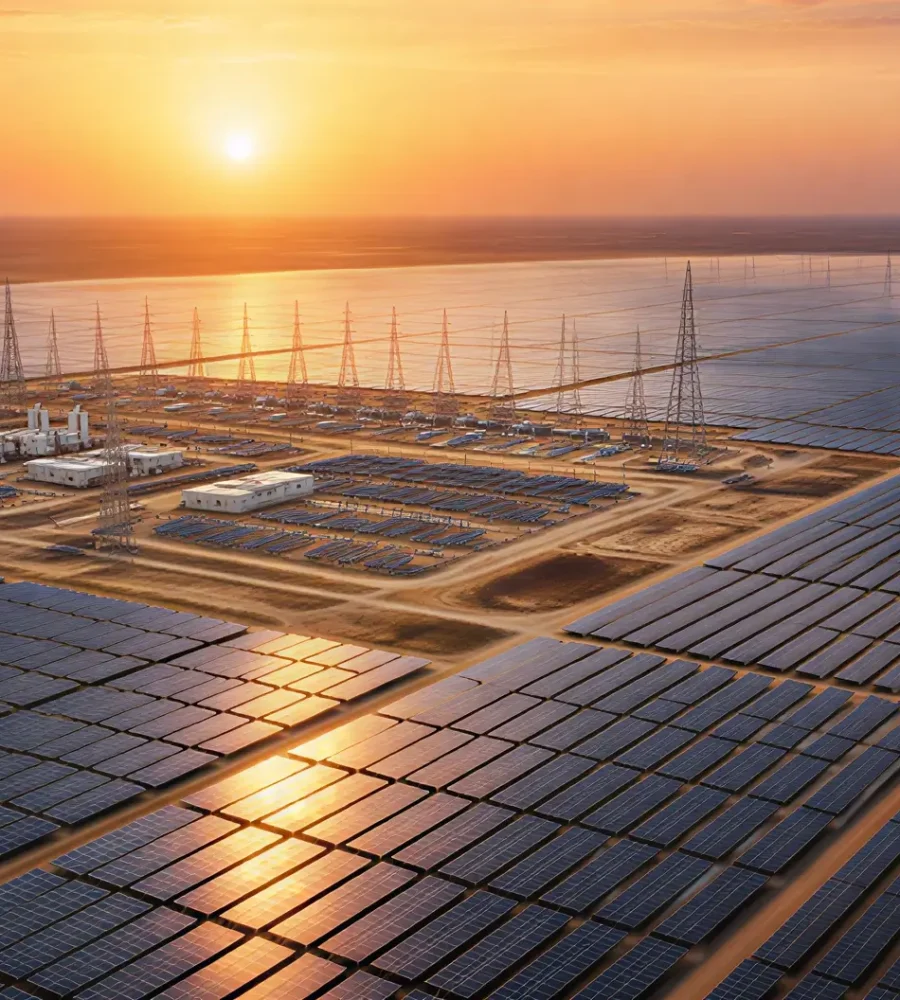
Substations serve as essential electrical nodes that convert generated electricity into voltage levels suitable for transmission networks. Standalone renewable plants often construct individual substations dedicated solely to the electricity produced at that specific site. Co-located renewable campuses approach this infrastructure differently by using centralized substations that collect power from several generation technologies. Wind turbines and solar arrays route electricity through internal collection systems that converge at a shared substation facility. Transformers within the substation elevate voltage levels before electricity enters the transmission system. This aggregation model reduces the need for multiple substations distributed across nearby landscapes.
Centralized substations simplify electrical infrastructure within hybrid renewable projects because all generation technologies connect to the same transformation and switching equipment. Engineers configure busbars, transformers, and switchgear to accommodate input from multiple renewable sources. This design allows operators to monitor electricity flows from wind and solar assets through a unified control environment. Maintenance teams also benefit because they service a single substation facility rather than multiple independent installations. Consolidated infrastructure therefore improves operational coordination within renewable campuses. Electrical aggregation becomes a defining feature of co-located renewable development.
Aggregating Renewable Generation for Grid Integration
Power aggregation at centralized substations enables renewable campuses to function as integrated generation hubs rather than separate power plants. Electricity from turbines and solar panels merges within the substation before moving toward high-voltage transmission lines. This combined output simplifies the interface between renewable projects and grid operators because the grid receives electricity from a single connection point. Aggregation also improves the predictability of power flows entering transmission networks. Wind variability and solar production cycles blend within the substation before reaching the grid interface. The aggregated output therefore presents a more balanced energy profile to system operators.
Substation sharing also allows renewable developers to deploy advanced monitoring and control technologies that oversee multiple generation sources simultaneously. Digital control systems track electricity flows, voltage conditions, and transformer performance within the facility. Operators can adjust electrical routing in response to generation fluctuations from wind or solar installations. This centralized control capability strengthens operational oversight and ensures reliable energy delivery. Renewable campuses therefore rely on substations not only as electrical conversion points but also as coordination centers for integrated energy systems.
Engineering Considerations in Shared Substation Design
Shared substations require engineering designs that accommodate variable generation inputs from multiple renewable technologies. Electrical equipment must handle different output patterns without creating overload conditions within transformers or switchgear systems. Engineers also ensure that protective relays and fault detection mechanisms operate correctly when electricity arrives from several sources simultaneously. This careful design prevents electrical disturbances from affecting the entire renewable campus. Substation engineers therefore focus on maintaining reliability while supporting integrated generation operations. Infrastructure resilience remains central to hybrid renewable project design.
Site layout considerations also influence substation placement within co-located renewable projects. Engineers select locations that allow efficient electrical routing from both wind turbines and solar arrays. Underground cabling or overhead collection lines connect these generation assets with the centralized substation facility. Access roads and maintenance pathways also converge around the substation because it functions as the operational heart of the campus. This centralized infrastructure approach reinforces the concept of renewable campuses as unified energy production systems. The substation becomes the electrical focal point where diverse generation technologies operate as a coordinated network.
Temporal Balance Between Wind and Solar Resources
Wind and solar energy follow distinct generation cycles shaped by atmospheric dynamics and solar radiation patterns. Solar arrays produce electricity when sunlight reaches panel surfaces during daytime hours. Wind turbines generate electricity when air currents create sufficient rotational force across turbine blades. These two renewable resources rarely follow identical generation schedules across a given day. Co-located renewable projects take advantage of this natural variation by combining technologies that produce electricity at different periods. The resulting energy profile distributes generation more evenly across time within the same project site.
Energy planners view this complementary relationship as a practical advantage for hybrid renewable campuses. Solar output often peaks during daylight hours when sunlight remains strongest across panel surfaces. Wind conditions frequently strengthen during evening or nighttime periods depending on regional atmospheric patterns. When both technologies operate within the same infrastructure network, their combined output reduces extreme fluctuations in generation availability. Grid operators receive a steadier stream of electricity because one resource can contribute when the other produces less power. Complementary generation patterns therefore strengthen the reliability of renewable energy systems.
Coordinated Output Across Hybrid Renewable Assets
Operational coordination ensures that generation assets within a co-located renewable project function as a synchronized system rather than isolated facilities. Digital monitoring platforms track real-time electricity production from wind turbines and solar arrays across the campus. Operators analyze these data streams to understand how generation patterns interact throughout the day. Forecasting tools also estimate future generation levels based on weather conditions and atmospheric modeling. These insights allow operators to anticipate changes in electricity production from each renewable source. Coordinated planning therefore supports efficient dispatch of renewable energy into transmission networks.
Hybrid renewable campuses also integrate power electronics and control systems that regulate how electricity flows from multiple generation technologies into shared infrastructure. Inverters, converters, and grid interface equipment maintain voltage and frequency alignment across the electrical network. These systems ensure that electricity generated from wind turbines and solar arrays enters the transmission system with consistent electrical characteristics. Engineers therefore design hybrid renewable facilities to maintain compatibility between different generation technologies. Electrical coordination forms the technical foundation that enables complementary renewable resources to function within a shared infrastructure environment.
Enhancing Renewable Reliability Through Resource Diversity
Resource diversity within renewable campuses improves operational resilience because generation does not rely on a single environmental condition. Solar arrays depend on sunlight exposure while wind turbines rely on atmospheric motion. When both resources operate within the same project area, variability in one source may coincide with stronger generation from the other. This diversity reduces the likelihood that the entire campus experiences low generation simultaneously. Electricity output therefore becomes more consistent across broader operational periods. Renewable infrastructure sharing thus contributes to both efficiency and reliability in energy production systems.
Integrated renewable campuses demonstrate how combining natural energy resources within a coordinated infrastructure environment enhances overall system performance. Engineers analyze long-term weather patterns and solar exposure levels to determine how technologies complement each other within specific regions. These assessments guide the placement of turbines and solar arrays across shared project landscapes. The goal remains to maximize the combined performance of both technologies without compromising the efficiency of either system. Resource complementarity therefore becomes a strategic element in the design of co-located renewable energy facilities.
Shared Physical Assets Across Renewable Technologies
Infrastructure investment forms one of the largest components of renewable project development because energy facilities require access roads, electrical systems, monitoring equipment, and operational facilities. Standalone renewable plants typically replicate these components for each project even when developments occur in adjacent geographic areas. Co-located renewable campuses change this model by allowing multiple generation technologies to utilize the same physical infrastructure network. Wind turbines and solar arrays share roads that support installation equipment and ongoing maintenance vehicles. Electrical collection networks transport electricity from both technologies through unified cabling systems. Shared monitoring stations track environmental conditions and equipment performance across the entire campus. This infrastructure consolidation reduces redundancy while improving coordination between generation assets.
Developers approach cost optimization through detailed planning that identifies infrastructure elements capable of supporting several technologies simultaneously. Access roads often represent one of the earliest shared components because construction vehicles require reliable routes to reach turbine locations and solar installation zones. Once established, these roads remain available for routine inspections and equipment servicing across the entire renewable campus. Electrical conduit systems and underground cable pathways can also transport electricity from multiple generation technologies without requiring parallel installations. Engineering teams design these systems with capacity and routing flexibility that anticipates hybrid renewable operations. Infrastructure therefore evolves from isolated support systems into integrated operational frameworks.
Economies of Coordination in Renewable Development
Shared infrastructure enables developers to coordinate construction activities across different renewable technologies within a single project schedule. Heavy equipment used during turbine foundation construction may also assist with solar installation preparation when project timelines overlap. Workforce coordination becomes more efficient when engineers, technicians, and logistics teams operate within the same development environment. Procurement strategies also benefit because large infrastructure components serve multiple energy systems across the campus. Electrical hardware, transformers, and monitoring systems can support aggregated renewable generation rather than separate facilities. These coordinated development processes contribute to overall cost optimization across hybrid renewable projects.
Infrastructure consolidation also reduces long-term operational expenses because maintenance resources concentrate within a unified project environment. Service crews travel across the same internal road networks to inspect wind turbines and solar arrays during routine maintenance cycles. Monitoring systems collect performance data from both technologies through centralized digital platforms. Equipment servicing and spare component management therefore occur through coordinated operational procedures. Renewable campuses thus demonstrate how infrastructure efficiency extends beyond construction into ongoing operational management. Cost optimization arises through integration rather than through scale alone.
Financial Planning for Integrated Renewable Infrastructure
Financial planning for hybrid renewable campuses considers how infrastructure investment distributes across multiple generation technologies. Developers allocate capital expenditures toward shared electrical systems, transmission interfaces, and monitoring facilities that support the entire project. This approach contrasts with traditional renewable development where each technology required independent infrastructure investment. Financial models therefore evaluate infrastructure efficiency through aggregated project performance rather than individual plant economics. The combined output of wind and solar generation supports infrastructure utilization throughout different operational periods. Investment efficiency improves when infrastructure assets serve several technologies simultaneously.
Energy investors increasingly recognize that co-located renewable projects offer infrastructure advantages that strengthen long-term project viability. Shared infrastructure reduces duplication while improving operational coordination between technologies. Financial frameworks therefore incorporate hybrid project design as a mechanism for maximizing infrastructure productivity within renewable energy portfolios. This perspective aligns with broader energy system modernization efforts that emphasize integration across generation technologies. Renewable campuses represent a strategic infrastructure model that balances cost efficiency with operational resilience. Hybrid development continues to gain momentum as energy planners seek more efficient renewable deployment strategies.
Managing Multi-Technology Energy Production
Operating a co-located renewable campus requires careful coordination between different energy generation technologies. Wind turbines and solar arrays operate through distinct mechanical and electrical processes that respond to different environmental conditions. Operators monitor both systems simultaneously through integrated control platforms that collect performance data across the entire campus. Digital monitoring tools display electricity generation levels, equipment status, and environmental indicators within centralized dashboards. This unified visibility allows operators to understand how each technology contributes to total energy production. Operational coordination therefore ensures that hybrid renewable facilities function as cohesive energy systems.
Control systems within renewable campuses analyze generation patterns in real time to maintain balanced electrical output across shared infrastructure. Wind turbines may produce increased electricity during certain atmospheric conditions while solar generation responds to solar radiation cycles. Operators use forecasting software to anticipate these variations and prepare infrastructure systems accordingly. Electrical dispatch adjustments ensure that electricity flows remain stable as generation levels fluctuate across technologies. Operational planning therefore becomes a continuous process that aligns environmental conditions with energy production capabilities. Hybrid renewable campuses rely on digital intelligence to coordinate these complex interactions.
Maintenance Coordination Within Hybrid Facilities
Maintenance planning within co-located renewable projects benefits from coordinated scheduling that considers the operational characteristics of both wind and solar technologies. Technicians conduct turbine inspections and solar array maintenance within the same operational timeframe whenever possible. Access routes and service equipment support maintenance activities across the entire campus. Monitoring systems identify equipment conditions that require servicing before mechanical issues disrupt generation performance. Maintenance teams therefore respond efficiently to operational alerts generated by digital monitoring platforms. Coordinated maintenance strategies help sustain reliable performance across hybrid renewable facilities.
Operators also maintain communication with grid authorities to ensure that maintenance activities align with broader grid operational requirements. Temporary generation reductions may occur during equipment servicing or inspection procedures. Coordinated scheduling ensures that these activities occur without disrupting grid stability or electricity delivery commitments. Renewable campuses therefore maintain operational flexibility that allows maintenance work to proceed while preserving grid integration. Effective coordination between operators and grid managers forms an essential component of hybrid renewable facility management. Renewable energy production continues to expand while maintaining reliability through structured operational oversight.
Digital Platforms Supporting Renewable Coordination
Modern renewable campuses rely heavily on digital monitoring platforms that integrate performance data across different energy technologies. Sensors installed on wind turbines collect information related to wind speed, turbine rotation, and mechanical performance. Solar monitoring systems track irradiance levels, panel temperatures, and electrical output from photovoltaic modules. Data from these systems flows into centralized control platforms that analyze operational trends across the campus. Engineers use these insights to optimize energy production and detect anomalies that may require maintenance intervention. Digital coordination therefore supports efficient operation of hybrid renewable infrastructure.
Integrated digital platforms also facilitate communication between operational teams responsible for different technologies within the renewable campus. Wind specialists and solar engineers share performance data and operational insights through collaborative monitoring environments. These systems encourage coordinated responses to environmental changes or equipment performance shifts. Hybrid renewable facilities therefore depend on digital infrastructure that connects technical expertise across multiple energy technologies. Operational coordination evolves into a collaborative process supported by real-time information systems. Renewable campuses thus represent technologically integrated environments where diverse generation assets function as unified energy systems.
Strategic Land Allocation for Hybrid Renewable Sites
Renewable infrastructure development requires careful land planning because energy generation technologies interact with landscapes in different ways. Wind turbines require open areas that allow uninterrupted airflow while solar arrays require exposure to consistent sunlight across large ground surfaces. Co-located renewable campuses integrate these requirements through strategic land allocation within a shared development boundary. Turbines often occupy elevated or wind-exposed sections of the site while solar arrays utilize flatter terrain within the same landscape. Environmental planners evaluate terrain characteristics, vegetation patterns, and wildlife habitats before finalizing project layouts. Land planning therefore ensures that renewable infrastructure integrates responsibly with surrounding ecosystems.
Environmental considerations remain central to renewable campus development because infrastructure expansion must coexist with natural habitats and land resources. Planners assess environmental conditions through ecological surveys that identify species habitats, water pathways, and vegetation patterns. Mitigation strategies protect wildlife movement corridors and minimize disruption to ecological systems within project boundaries. Developers often design infrastructure layouts that maintain buffer zones around environmentally sensitive areas. These planning decisions support renewable generation while preserving environmental balance across the development landscape. Co-located renewable projects therefore combine energy production with responsible environmental stewardship.
Environmental Integration Through Consolidated Infrastructure
Consolidating renewable technologies within one development site reduces the need for separate infrastructure networks across broader landscapes. Transmission lines, substations, and access roads remain concentrated within a single renewable campus rather than spreading across multiple geographic regions. This consolidation reduces land disturbance and simplifies environmental management efforts during project construction and operation. Environmental monitoring programs operate more effectively when ecological assessments focus on one project area. Developers therefore implement habitat monitoring, vegetation management, and land restoration within a coordinated framework. Consolidated infrastructure supports both renewable deployment and ecological oversight.
Hybrid renewable campuses also support land-use compatibility with other activities such as agriculture or conservation when infrastructure planning allows flexible landscape management. Turbine foundations occupy limited ground area while solar arrays can coexist with certain vegetation management practices. Environmental planners evaluate how renewable infrastructure can coexist with land preservation goals within the project boundary. These integrated land-use approaches demonstrate how renewable development can align with broader environmental and community priorities. Co-located renewable infrastructure therefore represents a balanced approach to land utilization. Energy production and ecological stewardship operate within the same planning framework.
Long-Term Environmental Monitoring
Environmental monitoring continues throughout the operational life of renewable campuses to ensure that infrastructure remains compatible with surrounding ecosystems. Monitoring teams observe wildlife behavior, vegetation conditions, and soil stability within and around the project area. Data from these observations informs environmental management strategies that adapt to changing ecological conditions. Renewable project operators collaborate with environmental specialists to implement mitigation measures when necessary. Continuous monitoring therefore supports sustainable renewable energy operations across extended project lifecycles. Hybrid campuses integrate environmental stewardship into long-term operational planning.
Environmental planning also influences the design of decommissioning strategies that address the eventual retirement of renewable infrastructure. Developers consider how equipment removal and land restoration will occur once generation assets reach the end of their operational lifecycle. Integrated renewable campuses simplify this process because infrastructure remains concentrated within one development zone. Restoration efforts can therefore proceed through coordinated land rehabilitation plans rather than dispersed project sites. Environmental responsibility extends beyond construction and operation to include the long-term lifecycle of renewable infrastructure. Co-located renewable projects demonstrate how responsible planning supports sustainable energy development.
Power Output Stability Through Multi-Source Generation
Strengthening Grid Reliability Through Hybrid Generation
Electric power systems depend on stable and predictable generation flows to maintain operational balance across transmission networks. Renewable energy technologies often experience natural variability because their output depends on environmental conditions such as sunlight intensity and atmospheric motion. Co-located renewable campuses address this variability by combining multiple generation technologies within a single infrastructure environment. Wind turbines and solar arrays generate electricity under different environmental conditions, which creates opportunities for balanced energy output across broader operational periods. Hybrid renewable systems therefore introduce a diversified generation profile within a single project boundary. Grid operators benefit from this diversity because electricity supply becomes more consistent when different renewable resources contribute energy throughout the day. Integrated renewable campuses demonstrate how resource diversity strengthens grid reliability without introducing additional fossil-based generation infrastructure. (https://www.nrel.gov/grid-integration)
Energy planners increasingly analyze renewable resource interactions when designing hybrid renewable campuses because complementary generation behavior enhances system stability. Solar generation follows daily sunlight patterns that produce energy during daylight hours when solar radiation reaches photovoltaic panels. Wind generation patterns often strengthen during periods when solar generation declines, depending on regional atmospheric conditions and geographic features. When both resources contribute electricity to the same infrastructure network, variations from one technology may coincide with stronger output from the other. This interaction moderates fluctuations that could otherwise appear in single-technology renewable plants. Co-located renewable infrastructure therefore supports smoother electricity delivery patterns across transmission systems. Hybrid generation environments contribute to grid stability while expanding renewable energy capacity. (https://www.iea.org/reports/renewable-energy-integration)
Operational Resilience Within Hybrid Renewable Sites
Operational resilience emerges as a defining advantage of multi-source renewable generation because system performance does not depend entirely on one environmental resource. Solar generation may decline under cloud cover or seasonal variations while wind turbines continue producing electricity when atmospheric motion remains active. Conversely, solar generation can provide consistent energy output during calm wind conditions that reduce turbine production. This reciprocal relationship strengthens overall energy availability within the renewable campus. Infrastructure systems that serve multiple technologies therefore remain active across a wider range of environmental scenarios. Hybrid renewable campuses demonstrate how diversified generation sources enhance operational continuity. Renewable electricity delivery becomes more resilient through coordinated infrastructure design.
Energy system operators also benefit from improved forecasting accuracy when renewable campuses integrate multiple resource types. Weather forecasting models evaluate atmospheric patterns and solar radiation levels simultaneously to estimate future electricity generation. Forecasting accuracy improves because different environmental indicators contribute to generation projections within the same project environment. Operators can therefore anticipate shifts in renewable output with greater confidence when wind and solar generation interact within shared infrastructure. This predictive capability supports more efficient grid scheduling and operational planning. Hybrid renewable campuses strengthen coordination between energy generation and grid management systems. Integrated forecasting becomes a vital component of modern renewable infrastructure.
Integrated Resource Management in Renewable Campuses
Integrated resource management involves coordinating generation technologies in a manner that maximizes combined performance across hybrid renewable facilities. Engineers analyze environmental data to understand how wind speeds, solar radiation levels, and seasonal patterns influence energy production across the site. These insights inform decisions regarding equipment placement, electrical system design, and operational strategies. Renewable campuses therefore evolve into dynamic environments where multiple natural resources contribute to electricity production simultaneously. Operators continually evaluate generation data to refine performance optimization strategies across the campus. Resource coordination strengthens both efficiency and reliability within renewable infrastructure systems. Hybrid energy development increasingly depends on integrated resource management practices.
Renewable energy planners view hybrid generation sites as essential elements within modern electricity systems that aim to reduce dependence on singular energy resources. Diversified renewable infrastructure contributes to long-term energy resilience because electricity generation emerges from several environmental conditions rather than one dominant factor. Infrastructure sharing amplifies this advantage by ensuring that multiple technologies utilize the same transmission and electrical systems. Grid operators therefore interact with renewable campuses that deliver diversified energy profiles through unified grid connections. Multi-source generation improves the reliability of renewable electricity within evolving power systems. Co-located renewable infrastructure strengthens the operational stability of modern energy networks.
Managing Transmission Capacity Through Hybrid Generation
Transmission congestion occurs when electricity generation exceeds the capacity of transmission lines to deliver power across the grid. Renewable expansion has introduced new generation sources into regions where transmission infrastructure was originally designed for different energy systems. Co-located renewable campuses address this challenge by coordinating generation technologies that produce electricity at different times. Wind and solar resources often generate power during distinct operational periods, which allows shared transmission infrastructure to accommodate energy flows more evenly. Transmission lines therefore experience balanced utilization rather than sudden surges from a single technology. Hybrid renewable infrastructure helps optimize transmission capacity across existing grid networks. Coordinated generation reduces the likelihood of congestion within shared transmission corridors.
Grid planners evaluate transmission congestion risks when approving renewable energy projects because excessive generation at certain grid nodes may create operational constraints. Co-located renewable campuses help address these concerns by balancing electricity production across multiple environmental resources. Solar generation often declines during evening hours while wind production may increase depending on atmospheric patterns. This temporal variation distributes electricity flows across broader time intervals within the transmission system. Grid operators therefore receive energy from hybrid renewable campuses in a more distributed manner across operational periods. Shared infrastructure thus contributes to more efficient use of transmission capacity. Renewable integration becomes more manageable when generation profiles complement each other within the same project.
Coordinating Grid Interaction Through Shared Interconnections
Hybrid renewable campuses connect to the grid through shared interconnection points that aggregate electricity from multiple generation technologies. This configuration simplifies the relationship between renewable projects and transmission operators because the grid receives electricity from a unified generation hub. Coordinated interconnections allow grid operators to monitor electricity flows through centralized control interfaces. Transmission scheduling becomes more predictable when renewable generation originates from integrated infrastructure environments. Grid managers can therefore plan electricity distribution strategies with improved visibility into renewable generation patterns. Shared interconnections strengthen operational coordination between renewable projects and power networks. Hybrid infrastructure supports efficient grid interaction across evolving electricity systems.
Infrastructure sharing also provides opportunities for grid optimization strategies that enhance renewable integration across regional power systems. Transmission operators analyze generation patterns from hybrid campuses to identify opportunities for balancing electricity flows across the network. Renewable campuses may deliver electricity during periods when other generation sources decline or when electricity demand shifts across regions. This coordination supports more flexible grid operations while maintaining infrastructure efficiency. Shared renewable infrastructure therefore contributes to the broader modernization of transmission networks. Renewable integration evolves from isolated project connections into coordinated energy delivery systems. Hybrid campuses represent a strategic component within these emerging grid frameworks.
Infrastructure Planning for Congestion Mitigation
Transmission planners incorporate hybrid renewable campuses into long-term infrastructure strategies designed to reduce congestion across energy networks. Developers and grid authorities collaborate during project planning to ensure that generation capacity aligns with available transmission infrastructure. Electrical engineers design collection systems and substations that regulate electricity flows before entering transmission lines. These systems allow operators to manage generation distribution across available transmission capacity. Infrastructure planning therefore becomes a collaborative process between renewable developers and grid authorities. Hybrid renewable projects align generation deployment with grid capabilities through coordinated infrastructure design. Transmission efficiency improves when renewable campuses operate within carefully planned grid environments.
Renewable campuses also encourage the development of advanced grid technologies that support flexible electricity distribution. Grid operators deploy monitoring platforms and digital forecasting tools to understand generation behavior across hybrid renewable sites. These insights inform operational decisions that prevent congestion while maintaining electricity delivery reliability. Renewable infrastructure therefore integrates closely with grid modernization initiatives that enhance system intelligence and coordination. Co-located renewable campuses represent an important element within this technological transformation. Shared infrastructure helps power systems accommodate renewable expansion while preserving transmission stability. Integrated planning supports efficient electricity delivery across evolving energy networks.
Expanding Renewable Capacity Within Existing Infrastructure
Renewable energy expansion requires substantial infrastructure investment when projects rely on independent development models. Each standalone renewable facility typically demands separate transmission lines, substations, and access networks. Co-located renewable campuses enable a different pathway for expansion by allowing additional generation technologies to utilize existing infrastructure assets. Developers can introduce new renewable capacity within established project boundaries without replicating entire infrastructure systems. Transmission interfaces, substations, and electrical networks remain capable of supporting multiple generation technologies within the same campus. This infrastructure synergy accelerates renewable deployment while preserving construction efficiency. Hybrid renewable campuses therefore support scalable energy development strategies. Renewable infrastructure evolves into flexible platforms capable of accommodating multiple energy technologies.
Infrastructure synergy also influences how governments and energy planners approach national renewable expansion strategies. Renewable campuses provide a framework where new generation capacity can emerge within pre-existing development zones. This approach reduces the need for additional land acquisition, infrastructure permitting, and environmental assessments across new geographic regions. Policymakers therefore view hybrid renewable campuses as practical mechanisms for accelerating renewable capacity deployment. Infrastructure reuse and integration strengthen the pace of renewable expansion within modern energy systems. Energy planners increasingly incorporate co-located renewable infrastructure into long-term decarbonization strategies. Hybrid energy development aligns infrastructure efficiency with broader climate objectives.
Infrastructure Platforms Supporting Future Energy Technologies
Hybrid renewable campuses also create infrastructure platforms capable of supporting emerging energy technologies beyond wind and solar generation. Electrical systems within these campuses may accommodate energy storage installations that balance renewable generation across operational periods. Energy planners explore how battery systems or other storage technologies can integrate within existing renewable infrastructure. Shared substations and transmission connections allow these technologies to connect without requiring separate infrastructure development. Renewable campuses therefore evolve into flexible energy ecosystems capable of supporting multiple generation and storage technologies. Infrastructure synergy supports innovation within renewable energy development frameworks. Hybrid campuses become strategic environments for technological experimentation and deployment.
Energy developers recognize that infrastructure synergy provides long-term advantages as renewable technologies continue to evolve. New equipment designs and energy technologies can integrate within established renewable campuses through upgrades to electrical systems or control platforms. Infrastructure flexibility therefore supports technological progress without requiring entirely new project sites. Renewable campuses transform into adaptive environments where evolving energy technologies coexist within shared infrastructure frameworks. This adaptability strengthens the resilience of renewable investments across extended project lifecycles. Hybrid renewable infrastructure therefore contributes to both scalability and technological evolution in the global energy landscape.
Strategic Planning for Renewable Infrastructure Growth
Strategic planning ensures that renewable campuses maintain infrastructure capacity capable of supporting future expansion across multiple energy technologies. Engineers design electrical networks and substations with flexibility that allows additional generation assets to connect within the campus boundary. Transmission infrastructure also receives planning attention to ensure that future renewable expansion remains compatible with grid capacity. Developers collaborate with grid operators to anticipate how renewable generation may evolve across the lifespan of the campus. These planning decisions support renewable energy growth while maintaining infrastructure efficiency. Hybrid renewable campuses therefore represent long-term strategic assets within modern power systems. Infrastructure synergy becomes a cornerstone of renewable development planning.
Energy systems across the world increasingly adopt integrated renewable development strategies because infrastructure efficiency plays a crucial role in accelerating decarbonization goals. Hybrid renewable campuses demonstrate how infrastructure sharing can support large-scale renewable expansion without creating unnecessary duplication of electrical systems. Developers, policymakers, and grid operators therefore view co-located renewable infrastructure as a practical pathway toward scalable clean energy deployment. Renewable energy systems continue to evolve through integrated infrastructure models that combine technological innovation with efficient resource utilization. Hybrid renewable campuses illustrate how renewable expansion can proceed through coordinated infrastructure strategies rather than isolated development projects. Energy systems benefit from the efficiency and adaptability that shared infrastructure provides.
Electrical Integration Across Multiple Generation Systems
Engineering hybrid renewable campuses requires addressing technical challenges that arise when different energy technologies operate within the same electrical environment. Wind turbines generate alternating current electricity through rotating mechanical systems connected to generators. Solar photovoltaic systems produce direct current electricity that requires conversion before entering transmission networks. Engineers therefore design electrical infrastructure that harmonizes these distinct electrical outputs into a unified system. Power converters, transformers, and control equipment regulate electricity flows across the shared network. Electrical compatibility becomes essential for maintaining stable operations within hybrid renewable campuses. Infrastructure design ensures that multiple generation technologies function together without disrupting grid synchronization.
Electrical engineers must also consider how fluctuations in renewable generation affect shared infrastructure components. Wind turbines respond rapidly to changing atmospheric conditions while solar arrays respond to variations in sunlight exposure. These fluctuations influence voltage levels and power flow within the shared electrical system. Control systems therefore regulate generation inputs to maintain stable electrical conditions across the campus infrastructure. Engineers implement advanced monitoring technologies that detect anomalies within electrical networks. Hybrid renewable campuses depend on robust electrical design to maintain operational reliability across diverse generation technologies. Infrastructure resilience remains central to engineering strategies within these integrated energy systems.
Infrastructure Design and System Coordination
Infrastructure design within hybrid renewable campuses requires coordination between multiple engineering disciplines including electrical engineering, civil engineering, and environmental planning. Civil engineers develop turbine foundations, access roads, and structural supports that accommodate the physical characteristics of both wind and solar technologies. Electrical engineers design substations, cabling systems, and power electronics that connect generation assets to the transmission grid. Environmental specialists evaluate how infrastructure placement interacts with surrounding ecosystems and land conditions. This interdisciplinary collaboration ensures that renewable campuses operate efficiently across technical, environmental, and operational dimensions. Engineering coordination therefore forms the foundation of successful hybrid renewable infrastructure development. Integrated design approaches support long-term operational performance within renewable campuses.
System coordination also involves aligning the operational behavior of wind and solar technologies with shared electrical infrastructure. Control platforms analyze real-time generation data to maintain balanced electricity flows within the campus network. Engineers configure protective systems that respond quickly to electrical disturbances or equipment malfunctions. These systems isolate affected components while maintaining electricity delivery from other generation assets. Hybrid renewable campuses therefore require sophisticated control strategies that coordinate multiple technologies within one infrastructure framework. Engineering innovation continues to evolve in response to these operational complexities. Integrated infrastructure design supports reliable renewable energy production.
Technological Innovation Supporting Hybrid Infrastructure
Technological innovation plays an important role in addressing engineering challenges associated with hybrid renewable development. Power electronics technologies continue to advance in ways that support integration between different renewable generation systems. Modern inverters and converters regulate electricity flows with high precision across hybrid electrical networks. Digital monitoring platforms analyze operational data from turbines and solar arrays simultaneously. These technologies allow engineers to understand system performance and identify opportunities for efficiency improvements. Innovation therefore strengthens the reliability and performance of co-located renewable infrastructure. Hybrid renewable campuses benefit from continuous advancements in energy technology.
Engineering research institutions and renewable technology developers collaborate to improve the design of integrated renewable infrastructure. Experimental projects and simulation models explore how wind and solar generation interact within shared electrical environments. These studies provide insights that guide future renewable campus development strategies. Engineers apply these findings to refine electrical systems, control platforms, and infrastructure layouts across hybrid projects. Renewable campuses therefore evolve through ongoing technological innovation and research collaboration. Integrated renewable infrastructure continues to improve as engineering knowledge expands. Hybrid renewable systems represent a dynamic frontier within modern energy engineering.
The Strategic Advantage of Shared Renewable Infrastructure
Co-located renewable energy projects represent an important evolution in the design and deployment of renewable power systems across the global energy landscape. Traditional renewable plants operated as independent installations that relied on dedicated infrastructure and separate grid connections. Hybrid renewable campuses introduce a coordinated infrastructure model where wind and solar generation technologies operate within shared electrical environments. Transmission lines, substations, monitoring systems, and operational facilities support multiple energy technologies within the same development boundary. This integration improves infrastructure utilization while reducing duplication across renewable projects. Renewable energy development therefore evolves toward collaborative infrastructure frameworks that support efficient electricity generation. Hybrid renewable campuses illustrate how energy systems can expand while maintaining infrastructure efficiency.
Shared infrastructure within renewable campuses strengthens both operational reliability and energy delivery efficiency. Wind and solar technologies contribute electricity during different environmental conditions, creating complementary generation patterns within the same project environment. Grid operators benefit from diversified renewable output that stabilizes electricity flows across transmission networks. Infrastructure utilization improves because electrical systems remain active across broader operational periods. Renewable campuses therefore enhance the relationship between generation assets and grid infrastructure. Energy planners increasingly view co-located renewable infrastructure as a strategic model for modern power systems. Integrated renewable development supports both reliability and efficiency in electricity generation.
Infrastructure Integration Driving the Future of Clean Energy
Infrastructure sharing also supports broader renewable energy expansion strategies by enabling scalable development within established project environments. Developers can introduce additional renewable technologies within existing campuses without replicating entire infrastructure systems. Governments and energy planners recognize the value of this approach as renewable deployment accelerates across national energy systems. Hybrid renewable campuses therefore serve as platforms that support technological innovation, energy storage integration, and future energy technologies. Infrastructure synergy allows renewable energy systems to evolve while maintaining operational efficiency. Energy transition strategies increasingly depend on integrated infrastructure models that maximize renewable resource utilization. Co-located renewable infrastructure represents a practical pathway toward scalable clean energy development.
The continued evolution of renewable infrastructure will likely emphasize integration, coordination, and technological innovation as essential elements of energy system modernization. Hybrid renewable campuses demonstrate how wind and solar technologies can coexist within shared infrastructure environments while delivering reliable electricity to power networks. Engineers, policymakers, and energy developers continue to refine these models as renewable deployment expands across global energy systems. Infrastructure efficiency and resource complementarity will remain central themes in future renewable development strategies. Co-located renewable projects illustrate the potential for renewable technologies to operate collaboratively rather than independently. Shared renewable infrastructure therefore represents a strategic advantage in the transition toward resilient and sustainable energy systems.