 Skip to content
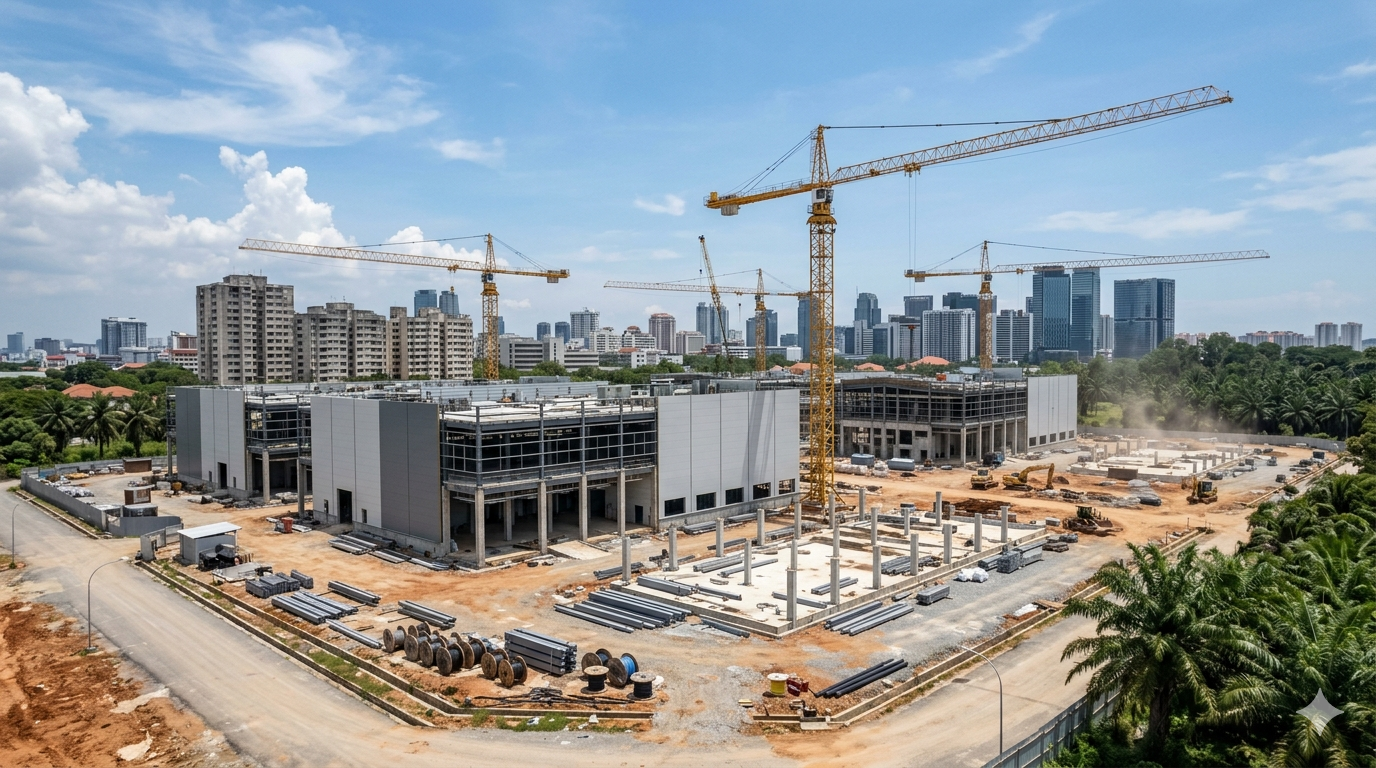
The United States has dominated AI infrastructure investment since the current buildout cycle began. Northern Virginia remains the largest data center market on earth. Texas is emerging as its closest domestic rival. The hyperscalers driving the $700 billion capital expenditure wave are American companies, and the majority of the GPU clusters they are building sit on American soil. That concentration reflects the historical path dependency of where digital infrastructure was built, where the capital to fund it is headquartered, and where the regulatory environment has been most permissive.

The next phase of AI infrastructure development will not follow the same geography. The structural forces that made the US the dominant location for first-generation AI infrastructure are giving way to a different set of forces that are distributing capacity more broadly, drawing in sovereign capital from regions that were peripheral to the first wave, and creating competitive dynamics in markets that have never hosted significant AI compute before. Understanding where AI infrastructure is going next, and why, requires setting aside the assumption that the current geographic distribution of compute will persist as the buildout scales.
Why the US Cannot Build Fast Enough to Stay Dominant
The primary constraint on US AI infrastructure expansion is no longer capital. The hyperscalers have the money. The constraint is power, and the power constraint is structural enough that it will redirect meaningful volumes of AI infrastructure investment to markets where power is more accessible regardless of other factors.
Grid connection delays in Northern Virginia, the world’s densest data center market, now stretch three to five years. Texas, which attracted significant investment partly because its grid operator ERCOT had historically been more accessible than PJM, is generating its own congestion as AI demand concentrates there. The permitting and interconnection queue problems that have delayed over $160 billion in US data center investment reflect a grid infrastructure that was not designed for the speed and scale of demand that the AI buildout requires.
How the Regulatory Environment Is Compounding the Problem
The time-to-power crisis is AI infrastructure’s hidden scaling ceiling, and its effects are already redirecting investment. Developers who cannot get power commitments in primary US markets are looking at secondary US markets, but they are also looking internationally. Markets in Southeast Asia, the Middle East, Latin America, and India that can offer power commitments faster than Northern Virginia or Northern Texas are beginning to compete for infrastructure investment on a criterion that the US has historically taken for granted.
The regulatory and community opposition dimension compounds the power constraint. Twenty-seven US states are considering legislation that would require data centers to fund their own grid upgrades. Moratorium proposals are circulating in New York, Vermont, and other states. Community opposition is growing in markets from Pennsylvania to Arizona. The political and regulatory environment for AI infrastructure development in the US is becoming more complex, not less, and that complexity is raising the effective cost and extending the effective timeline of US-based projects in ways that improve the relative attractiveness of international alternatives.

The India Opportunity and Its Constraints
India is the clearest example of a market where the structural conditions for significant AI infrastructure development are converging rapidly. The country has established a 100 percent foreign direct investment regime for data centers under the automatic route, eliminating the equity partnership requirements that complicate investment in many other large emerging markets. The national AI mission has allocated $1.24 billion for domestic compute access over five years, signalling government commitment to building sovereign AI capability. Adani Group has announced a $100 billion roadmap for AI infrastructure and renewable energy development that would make it one of the largest infrastructure investors in the world if executed at that scale.
Why Transmission Is the Binding Constraint
India’s data center boom is becoming a transmission problem before it fully becomes a data center boom, and that sequencing matters. The last-mile power delivery infrastructure that connects new data center campuses to India’s grid is not keeping pace with the development of the campuses themselves. Transformer availability, substation capacity, and transmission line construction are all constraints that affect deployment timelines in ways that the availability of land and capital do not resolve. The operators building successfully in India are those who have integrated power infrastructure procurement into their project development process from the earliest stages, rather than treating it as a downstream implementation detail.
Microsoft‘s commitment of $17.5 billion to AI and cloud infrastructure across India from 2026 to 2029, including a flagship Hyderabad region going live in mid-2026, reflects hyperscaler conviction that India’s demand profile justifies the investment complexity. AWS, Google Cloud, and Oracle are all expanding Indian presence on comparable timelines. The competitive dynamic between India and the Gulf as data center allocation destinations is partly about power availability, partly about latency to regional enterprise customers, and partly about the sovereign AI requirements of government and regulated sector workloads that are increasing the premium for domestically-hosted compute in both markets.
The Gulf’s Strategic Compute Position
The Gulf’s digital recalibration is converting hydrocarbon wealth into compute capacity at a pace that has few historical precedents for any region’s infrastructure transformation. The UAE and Saudi Arabia have emerged as the most aggressive non-US sovereign capital deployers in AI infrastructure, and their strategies share a common logic: position as neutral compute hubs serving demand from markets where direct US hyperscaler infrastructure carries political sensitivity, while simultaneously building the domestic AI capability that national economic diversification requires.
The Scale of Hyperscaler Commitments in the Gulf
The scale of Gulf AI infrastructure commitment is substantial enough to constitute a structural shift in the global compute geography rather than a regional market development story. Microsoft’s $15.2 billion UAE investment plan includes 200 megawatts of new data center capacity. Oracle deployed the Middle East’s first OCI Supercluster in Abu Dhabi. Google Cloud and Saudi Arabia’s Public Investment Fund advanced their AI hub partnership to $10 billion. AWS is building a new Saudi Arabia cloud region with more than $5.3 billion in investment alongside a separate AI Zone announced with HUMAIN.
The Gulf’s strategic advantage in AI infrastructure is specifically about positioning as a compute hub for demand that cannot or will not route through the US. Western enterprises operating in markets where US infrastructure carries political sensitivity, African and South Asian enterprises whose latency requirements favour Gulf proximity over US hyperscaler regions, and regional governments building sovereign AI capability that requires domestic data processing: all of these customer segments create genuine demand for Gulf-hosted compute that goes beyond the Gulf’s own domestic AI requirements.
Southeast Asia’s Distributed Opportunity
Southeast Asia presents a different infrastructure development pattern than either India or the Gulf. The region lacks a single dominant market with the scale and capital depth of India or the sovereign wealth concentration of the Gulf states. Instead, it is a collection of mid-scale markets with heterogeneous regulatory frameworks, varying power grid quality, and different sovereign AI ambitions that are collectively generating significant infrastructure demand without a single concentration point.
Singapore has historically been the primary gateway for AI infrastructure in Southeast Asia, but its government-imposed data center permit caps have created a structural supply constraint that is redistributing development to adjacent markets. The Johor region of Malaysia and Batam in Indonesia have become a cross-border data center cluster serving demand that Singapore cannot accommodate, with hyperscalers and large colocation operators establishing campuses that leverage lower land costs and more accessible power while maintaining connectivity to Singapore’s submarine cable landing station infrastructure.
Which Markets Are Gaining Most From Singapore’s Constraints
Malaysia is the most significant emerging beneficiary of Singapore’s constraints. A Goldman Sachs-backed project called Rio AI City is targeting significant AI data center capacity in the region. Hyperscalers are establishing new availability zones in Malaysia’s Johor region in part to serve the Singapore market and in part to access the broader Southeast Asian enterprise customer base from a lower-cost location. The risk for Malaysia, as studies by Ember Energy have noted, is that the data center buildout could consume a significant fraction of national power demand, creating grid stress that requires proactive investment planning to manage.
Vietnam, Indonesia, Thailand, and the Philippines are all experiencing early-stage AI infrastructure development activity driven by domestic digital economy growth and hyperscaler interest in serving large, fast-growing economies. None of these markets is yet at the scale where it constitutes a tier-one AI infrastructure destination, but the trajectory of demand growth in each suggests that the tier-one assessment may need updating within five years.
The Africa Infrastructure Gap and Its Strategic Significance
Africa’s current share of global data center capacity is less than one percent. That figure reflects decades of infrastructure underinvestment, the grid instability that affects data center operations in many markets across the continent, the limited domestic capital available for large-scale infrastructure development, and the historical pattern of global technology investment flowing to markets with established infrastructure rather than to markets that require it to be built.
The strategic significance of Africa’s infrastructure gap, however, exceeds its current market size. Sub-Saharan Africa has a combined population exceeding a billion people, a median age well below the global average, and a digital economy growth trajectory that is accelerating as mobile connectivity reaches populations that have never had fixed-line internet access. The enterprise and consumer AI demand that will emerge from that digital economy growth will eventually require infrastructure to serve it at regional latency levels. The question is not whether that infrastructure will be built but who will build it and on what terms.
The Leapfrogging Opportunity
A proposed $60 billion Africa AI Fund aims to pool multilateral financing for shared infrastructure and regional compute hubs. Individual market developments include significant investment in South Africa, Kenya, Nigeria, Egypt, and Morocco, each of which is developing its own data center ecosystem and in some cases attracting hyperscaler attention. The constraint across most African markets is reliable, affordable power at the scale that modern AI data centers require.
The leapfrogging opportunity in Africa’s infrastructure development is real and has precedent. Several African markets skipped fixed-line telecommunications infrastructure and moved directly to mobile. The same dynamic could apply to power infrastructure, with AI data centers in constrained markets using behind-the-meter solar, battery storage, and fuel cell combinations to achieve power reliability independent of grid quality. That model adds capital cost but reduces the dependency on grid infrastructure that is the primary barrier to development in the markets where grid quality is the binding constraint.
Latin America’s Infrastructure Trajectory
Latin America’s AI infrastructure development is concentrated in Brazil, which hosts nearly half of all planned and existing data centers in the region and is attracting investment from global companies because of its connectivity through submarine cables, government initiatives to support digital infrastructure, and a growing domestic tech ecosystem generating genuine AI demand. Brazil’s national AI plan allocates approximately $4 billion for AI infrastructure, research, and sovereign cloud development.
Mexico’s Different Value Proposition
The Goldman Sachs-backed Rio AI City project in Brazil targets expansion from the region’s current 443 megawatts of AI data center capacity to 1.6 gigawatts by 2031, representing a substantial increase from a low base. Mexico’s position as a manufacturing hub with free trade agreements across more than fifty countries gives it a different infrastructure value proposition than Brazil: proximity to the US market, integration into North American supply chains, and a growing domestic enterprise technology sector that creates demand for regional AI infrastructure.
Latin America’s infrastructure development faces the same sovereign AI pressure that is reshaping infrastructure deployment decisions globally. Countries developing national and regional AI models to reduce reliance on foreign platforms and improve local language representation need domestic compute infrastructure to train and serve those models. That sovereign requirement creates demand for AI infrastructure that market economics alone would not yet justify in some Latin American markets but that national policy is willing to subsidise or mandate.
The Financing Challenge That Distinguishes Emerging Market Infrastructure
The structural difference between AI infrastructure development in the US and Europe and AI infrastructure development in emerging markets is not primarily about demand, power, or regulatory environment. It is about capital. The financing structures that fund hyperscale AI infrastructure development in mature markets, including investment-grade corporate bonds, long-term power purchase agreements, and off-balance-sheet vehicles backed by contracted revenue, are not readily available in markets where currency risk, political risk, and infrastructure operating risk are less well understood by institutional capital.
Strategic capital drives compute supremacy in ways that create structural advantages for nations and operators with sovereign capital backing over those competing purely on commercial terms. The sovereign wealth funds of the Gulf states, the national AI missions of India and Brazil, and the multilateral financing vehicles targeting African infrastructure are all attempting to bridge the gap between the commercial capital available for emerging market AI infrastructure and the capital required to build it at the speed that AI demand growth requires.
Why the Financing Gap Persists
That financing gap is the primary reason why AI infrastructure in emerging markets is developing more slowly than the underlying demand trajectory would suggest it should. The demand is real. The technical conditions are often manageable. The regulatory frameworks are in many cases more permissive than US or European equivalents. The constraint is the availability of capital at the cost and tenor required to fund large-scale infrastructure in markets where institutional capital applies emerging market risk premiums that materially affect project economics.
The operators and investors who develop the capability to structure financing for AI infrastructure in emerging markets, working with sovereign co-investors, multilateral development institutions, and the local capital markets that are growing alongside the digital economies they serve, are building access to a demand pool that mature market operators cannot serve as efficiently. The gap between AI infrastructure supply and AI infrastructure demand is largest in emerging markets, and it will remain large until the capital markets that fund infrastructure development find ways to price and structure emerging market AI infrastructure risk effectively.
The Sovereign AI Layer
Sovereign AI and global AI represent a layered coexistence model rather than competing alternatives. The countries building sovereign AI infrastructure are not closing themselves off from global AI ecosystems. They are ensuring that they have the domestic compute capacity to participate in those ecosystems on their own terms, with their own data, under their own regulatory frameworks. That distinction, between participation in the global AI economy and dependency on foreign infrastructure for core sovereign capabilities, is the distinction that is driving infrastructure investment decisions from Riyadh to Nairobi to Jakarta.
The AI infrastructure buildout outside the US is real, accelerating, and structurally significant. The organisations that navigate the financing, power, and hardware supply constraints most effectively will define the AI infrastructure geography of the next decade in markets where competitive positions are still being established.
The Power Leapfrogging Thesis
The most optimistic scenario for emerging market AI infrastructure development rests on a leapfrogging thesis that has worked in other infrastructure categories. Mobile telecommunications in Africa bypassed fixed-line buildout entirely because the economics of mobile infrastructure were better suited to the density and income profile of the markets being served. Renewable energy in some emerging markets has bypassed centralised grid expansion because distributed generation economics reached viability before grid extension economics did.
What Makes the AI Infrastructure Case Different
The AI infrastructure equivalent of this leapfrogging dynamic would be the deployment of modular, behind-the-meter power generation alongside AI compute facilities, bypassing the grid reliability problem that is the primary operational barrier to data center development in markets with unreliable utility supply. Bloom Energy‘s deployment model, which delivered a fully operational fuel cell system to Oracle in 55 days and is now targeting 2.8 gigawatts of capacity for US AI data center deployment, is the kind of modular, fast-deploy power solution that could translate to emerging market contexts if the capital structures to fund it in those markets can be developed.
The constraint on leapfrogging is always the same: the alternative technology must reach cost parity with the incumbent approach before the leapfrogging dynamic can accelerate. Behind-the-meter power for AI data centers is not yet at cost parity with grid power in most markets, which is why it is primarily a solution for grid-constrained developed markets rather than a widespread emerging market deployment model. But the trajectory of cost reduction in fuel cells, battery storage, and modular solar suggests that behind-the-meter economics will continue improving, and the markets where it becomes the primary AI data center power strategy first will likely be the markets where grid alternatives are most expensive or least reliable.
The Talent and Ecosystem Development Imperative
AI infrastructure development in emerging markets creates a requirement for talent and technical ecosystem development that the infrastructure investment alone cannot satisfy. A data center built in Lagos or Jakarta or Lima needs to be operated. The engineers, technicians, and operations specialists required to maintain high-availability AI infrastructure at production scale exist in depth in Northern Virginia and Silicon Valley but are not yet available at scale in most emerging markets. Building the infrastructure without building the talent to run it creates operational risk that affects the reliability of the compute capacity being deployed.
How Latency Requirements Will Pull Infrastructure Toward Urban Centres
The hyperscalers investing in India have explicitly incorporated workforce development commitments into their investment plans. Microsoft‘s India commitment includes training 20 million Indians in AI skills by 2030. The sovereign AI programmes in the Gulf states include educational and talent development components that reflect the recognition that infrastructure without capability is a stranded asset waiting to happen. The emerging market AI infrastructure investment wave is therefore not purely a physical infrastructure story. It is a capability development story, and the markets that invest in building operational and engineering talent alongside physical infrastructure will compound the value of their investment in ways that markets treating talent as secondary will not.
The latency consideration adds a second dimension to the talent and ecosystem question. AI applications that require low-latency response to serve their users effectively need infrastructure that is close to those users. As AI applications become more deeply embedded in enterprise and consumer workflows, the latency tolerance for many workloads will decrease. That decreasing latency tolerance will pull AI inference infrastructure toward population centres and enterprise hubs in emerging markets in the same way that it is already pulling inference infrastructure away from remote power-rich US locations toward metro-adjacent US markets.
Emerging market operators who build AI inference infrastructure close to major urban centres, with the connectivity and talent to serve enterprise customers at the quality levels those customers require, are building a geographic advantage that remote hyperscaler infrastructure cannot replicate. That advantage is modest today. It becomes more significant as agentic AI applications and real-time AI services create workloads where sub-100-millisecond response times become product requirements rather than preferences.
What Operators and Investors Should Be Watching
The markets that will define the next phase of AI infrastructure geography are the ones where two or three key conditions are converging simultaneously: genuine and growing enterprise AI demand from a large domestic economy, a government that has committed to sovereign AI capability and is willing to create the regulatory and financial conditions that attract infrastructure investment, and a power supply trajectory that can reach the reliability and scale that production AI data centers require.
India meets all three conditions at a scale that makes it the clearest large emerging market opportunity for AI infrastructure investment over the next five years. The Gulf states meet all three conditions with the additional advantage of sovereign capital that can fund infrastructure at terms commercial investors cannot match. Malaysia and Indonesia are moving toward meeting all three conditions and represent the most credible Southeast Asian opportunities for operators who can navigate the regulatory complexity of two-country infrastructure deployments.
Where Africa and Latin America Stand
Africa’s largest economies, specifically South Africa, Kenya, Nigeria, and Egypt, meet the demand condition and in varying degrees the government commitment condition, but the power supply condition remains unresolved for large-scale AI data center deployment in most markets. The operators who position in Africa early, before the power infrastructure conditions are fully resolved, will capture the best land, connectivity, and sovereign partnership positions. Those who wait for the power problem to solve itself will find those positions taken.
Latin America’s opportunity is real but slower-developing than Southeast Asia or India. Brazil’s combination of domestic demand, government support, and international connectivity makes it the clearest entry point, but the infrastructure development timelines in Brazil are longer than in markets where the regulatory and financing environments are more streamlined. Operators who can work within Brazil’s infrastructure development process rather than fighting it will build durable positions in a market that will be significantly larger in five years than it is today.
The Risk Factors That Could Slow the Geographic Shift
The thesis that AI infrastructure development will distribute more broadly outside the US is compelling, but several risk factors could slow or partially reverse that distribution. The most significant is the semiconductor supply chain. GPU allocation decisions by Nvidia and the handful of other companies producing AI accelerators at commercial scale are not purely commercial. They reflect geopolitical considerations, export control frameworks, and the sovereign partnership dynamics that shape who gets hardware, in what quantities, and on what timeline.
The US government’s AI chip export controls have already created a two-tier hardware market in which China must develop domestic alternatives while other markets compete for the same constrained supply of advanced AI accelerators that US hyperscalers consume at scale. Emerging market infrastructure operators competing with hyperscalers for GPU supply are at a structural disadvantage that sovereign partnerships can partially but not fully offset. Markets that cannot secure reliable GPU supply cannot build the AI infrastructure their demand requires regardless of how favourable their power, regulatory, and financing conditions are.
The geopolitical dimension of hardware supply is the risk variable that most complicates the emerging market AI infrastructure thesis, and it is the one that market-level analysis of power, capital, and regulatory conditions cannot fully account for. The operators and investors positioning in emerging markets need to incorporate hardware supply security into their infrastructure strategy, not as an afterthought but as a first-order constraint that shapes site selection, sovereign partnership structure, and timing.
The AI infrastructure buildout outside the US is real, accelerating, and structurally significant. It is also constrained, unevenly distributed, and dependent on resolving financing, power, and hardware supply challenges that differ in character and severity across the markets where the opportunity is largest. The organisations that navigate those constraints most effectively will define the AI infrastructure geography of the next decade.












