
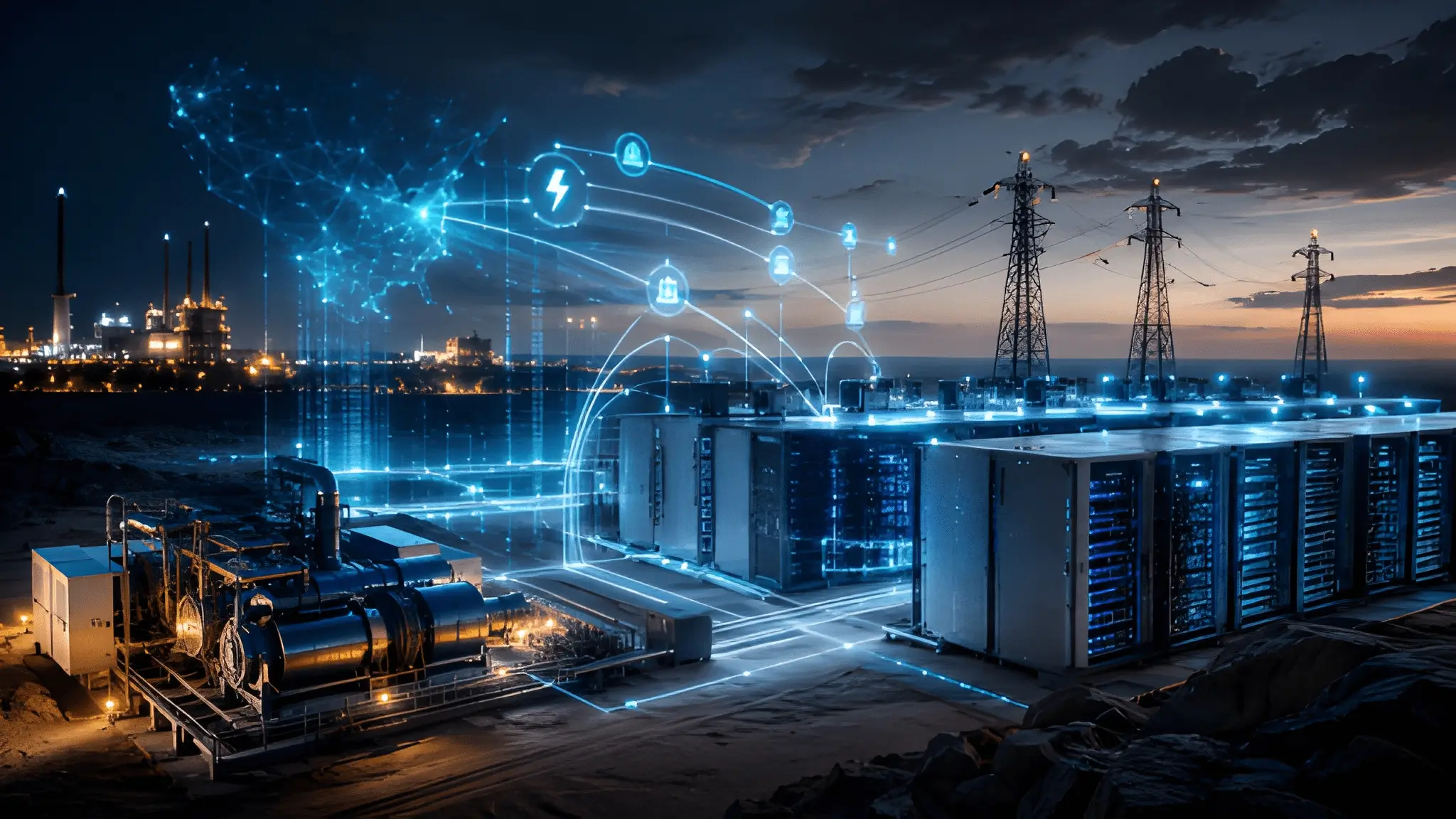
The conversation around AI infrastructure has quietly shifted away from processors, racks, and cloud software. A different layer now determines whether large-scale compute projects move ahead or remain stranded on planning documents, and that layer sits beneath every server hall ever constructed. Power availability has become one of the primary constraints shaping AI infrastructure planning, influencing site selection, deployment sequencing, and expansion strategies as AI computing demand increases, according to infrastructure developers, utilities, and energy sector analyses. They have changed the starting point of infrastructure development itself by treating energy as the primary asset and compute as the application built upon it. That inversion represents far more than a different business strategy because it changes how projects are financed, designed, constructed, expanded, and ultimately valued.
Infrastructure industries rarely reinvent themselves by replacing their own foundations, yet that process now appears visible across several AI-focused developers whose operating philosophy begins with generation assets rather than buildings. Conventional data center development traditionally identified strong connectivity markets before solving for electrical supply, but energy-first developers reverse that sequence by securing dependable energy opportunities before planning digital capacity. Such an approach changes every assumption surrounding geography, construction timelines, procurement strategy, operational culture, engineering priorities, and commercial relationships with AI customers. Companies inspired by this model increasingly resemble integrated infrastructure operators rather than specialist real estate developers because every major decision traces back to energy availability instead of metropolitan demand.
When Compute Became the Byproduct
For decades, digital infrastructure followed an almost universal sequence that started with market demand before expanding toward physical deployment. Developers evaluated metropolitan growth, telecommunications connectivity, customer concentration, and utility availability before determining where additional capacity could produce acceptable commercial returns. Energy represented an essential requirement throughout that process, although it remained one dependency among many rather than the defining strategic asset around which every other decision revolved. The energy-first model reverses that order by beginning with abundant power opportunities and allowing digital infrastructure to emerge wherever those energy resources support sustained compute deployment. Such an inversion transforms the data center from the central product into one component within a broader integrated energy system that ultimately delivers AI capability instead of merely leasing physical space.
The Infrastructure Stack Turned Upside Down
That reversal also changes how infrastructure organizations evaluate value creation across the development lifecycle. Traditional operators generate returns primarily through land development, capacity leasing, operational reliability, and customer relationships, while upstream energy procurement often remains outside direct organizational control. Energy-first developers instead capture value by integrating generation strategy with compute deployment so that electricity and digital infrastructure reinforce one another throughout planning and execution. Compute therefore becomes the mechanism through which previously underutilized or strategically developed energy resources generate sustained economic productivity rather than existing as an isolated commercial objective. Such integration compresses organizational boundaries because engineering, construction, procurement, and operational planning evolve together rather than progressing independently across disconnected companies.
Developers operating under this philosophy naturally begin thinking less like landlords and more like integrated infrastructure owners responsible for balancing physical energy systems with digital demand. Internal decision-making consequently favors long-term coordination between generation assets, transmission options, cooling architecture, modular construction, and workload deployment instead of optimizing each discipline independently. Every incremental expansion therefore strengthens the overall platform because energy development and compute growth reinforce one another through common planning assumptions. That integrated operating model helps explain why observers increasingly describe these organizations as creating an entirely different category within digital infrastructure rather than simply extending traditional colocation practices into the AI era. The shift does not eliminate the importance of data centers because it changes what role those buildings actually play inside a much larger infrastructure ecosystem.
Energy Became the Primary Product
Viewing compute as the outcome instead of the starting point also changes investment priorities across every stage of project execution. Among energy-first infrastructure developers such as Crusoe, project planning begins by securing dependable energy opportunities before finalizing architectural specifications, reflecting a development model in which long-term electrical availability guides infrastructure design from the outset. Engineering teams therefore optimize around energy integration rather than adapting energy systems after broader development plans already exist. Procurement discussions similarly evolve because equipment selection begins reflecting site-specific energy characteristics instead of applying standardized templates across unrelated locations. Such behavior resembles the planning discipline found within large-scale energy developments more closely than conventional commercial real estate expansion.
Commercial relationships also change because customers increasingly purchase confidence in long-term energy access alongside physical computing capacity. Infrastructure providers therefore compete not merely through operational excellence but through their ability to demonstrate durable control over upstream power availability that supports future expansion without depending entirely upon external utility timelines. Such assurance becomes especially valuable for organizations planning sustained AI deployment because infrastructure continuity depends upon predictable energy strategy as much as server availability. Procurement teams consequently examine the resilience of integrated infrastructure ecosystems rather than limiting evaluation to building specifications or equipment inventories. In vertically integrated operating models such as Crusoe’s, infrastructure reliability is supported through coordinated management of energy systems, engineering, construction, and cloud operations rather than relying exclusively on separately managed infrastructure providers.
Fuel First, Facility Second
Conventional digital infrastructure planning has historically relied upon an extensive assessment of connectivity ecosystems before meaningful engineering work begins. Fiber density, carrier diversity, regional demand, workforce availability, and commercial proximity traditionally shaped the earliest stages of development because reliable electrical supply could often be negotiated after an appropriate market had been identified. That sequence reflected decades of infrastructure growth during periods when compute demand expanded at a pace that utilities could generally accommodate through established planning cycles. AI infrastructure now operates within a different environment where electrical availability frequently determines whether an otherwise attractive location can support meaningful deployment within commercially relevant timeframes. Energy-first developers therefore initiate project planning by examining dependable generation opportunities before evaluating the broader characteristics of a potential digital infrastructure location.
Infrastructure Begins Where Energy Already Exists
The shift alters engineering priorities because site evaluation expands beyond conventional real estate considerations into a broader assessment of resource integration and long-term operational resilience. Development teams increasingly study fuel availability, transmission pathways, environmental operating conditions, generation compatibility, and expansion flexibility before architectural concepts mature into detailed infrastructure programs. Those assessments shape every subsequent decision regarding cooling design, electrical distribution, equipment configuration, modular construction strategy, and long-term capacity planning because each discipline ultimately depends upon the characteristics of the energy source itself. Such planning reflects a systems engineering perspective where upstream infrastructure and downstream compute evolve together instead of progressing through independent project stages. Energy therefore becomes the organizing framework around which every technical discipline aligns rather than an external requirement addressed after major development decisions have already been completed.
This philosophy also changes how organizations define infrastructure optionality because flexibility increasingly depends upon energy integration rather than metropolitan expansion opportunities alone. A location with dependable long-term energy characteristics may support successive compute deployments even if it lacks many attributes historically associated with large digital markets. Engineering teams can subsequently extend connectivity, operational capability, and supporting infrastructure around a secure energy foundation rather than attempting to solve persistent electrical limitations within otherwise attractive metropolitan regions. The development sequence therefore becomes additive instead of corrective because infrastructure grows outward from dependable power rather than compensating for constrained electrical environments after construction has already begun. That reversal explains why energy-first developers frequently evaluate locations that traditional data center expansion strategies would have overlooked despite possessing substantial long-term infrastructure potential.
Site Selection Now Follows Resource Integration
The operational consequences of this planning model extend well beyond geography because they reshape how organizations evaluate project risk before committing substantial capital. Conventional developments often encounter uncertainty as utility coordination, transmission planning, and interconnection processes unfold alongside construction activities that depend upon external schedules remaining predictable throughout execution. Energy-first developers reduce exposure to those uncertainties by integrating energy strategy into the earliest phases of project planning, allowing infrastructure design to proceed with greater alignment between engineering assumptions and available electrical resources. Such coordination strengthens decision-making because every major infrastructure discipline develops around a common operational foundation instead of adapting to evolving external constraints. The resulting projects frequently exhibit greater internal coherence because their physical design reflects the characteristics of the energy system from the beginning rather than incorporating substantial adjustments later in development.
Resource integration also influences equipment selection because infrastructure components increasingly support specific operational environments rather than generalized deployment scenarios. Cooling architectures, electrical distribution systems, backup strategies, modular assembly techniques, and maintenance planning all benefit from understanding the characteristics of the underlying energy platform before detailed engineering begins. Development teams therefore optimize infrastructure around known operating conditions instead of designing for broad compatibility across diverse locations with differing electrical constraints. Such alignment reduces unnecessary engineering complexity while strengthening operational consistency throughout the asset lifecycle because major infrastructure systems share common planning assumptions from inception through long-term operation. Integrated planning consequently produces infrastructure that behaves more like a unified industrial platform than a collection of independently optimized technical systems.
Built Like an Energy Company, Branded Like a Cloud
Organizational identity has always influenced infrastructure performance because the assumptions embedded within daily operations ultimately determine how engineering decisions translate into long-term reliability. Traditional data center operators have historically built their culture around availability, maintenance discipline, customer responsiveness, and controlled operational processes that support continuous digital services across carefully managed environments. Energy-first developers that integrate energy production, infrastructure engineering, and cloud operations require close collaboration across technical disciplines because upstream energy decisions directly influence infrastructure design, deployment sequencing, maintenance planning, and future expansion. That combination produces organizations whose technical culture extends beyond the walls of a server environment into the broader systems that sustain compute throughout its operational lifecycle. The resulting workforce therefore approaches infrastructure through a wider industrial perspective where electrical continuity, mechanical resilience, construction coordination, and cloud deployment function as interconnected responsibilities rather than isolated technical specialties.
Operational Culture Starts Long Before the Data Hall
Field operations consequently become central to organizational performance because infrastructure reliability depends upon coordinated execution across geographically distributed energy assets as well as digital environments. Engineering teams regularly engage with electrical systems, generation equipment, environmental operating conditions, logistics planning, and modular deployment activities that traditionally existed outside the responsibilities of conventional cloud infrastructure organizations. Such operational breadth encourages decision-making grounded in practical engineering realities where design assumptions receive continuous validation through direct interaction with physical infrastructure rather than remaining confined to planning documentation. Experience accumulated across these environments strengthens organizational adaptability because technical teams understand how upstream infrastructure choices influence downstream compute performance under real operating conditions. That continuous connection between planning and execution distinguishes energy-first organizations from business models that rely more heavily upon outsourced infrastructure dependencies.
Operational discipline therefore evolves through repeated interaction with industrial infrastructure instead of focusing exclusively upon digital service management. Maintenance planning, engineering oversight, construction sequencing, equipment commissioning, and resource coordination become integrated elements of one operating philosophy rather than separate organizational functions connected only through contractual relationships. Teams develop familiarity with both energy systems and computing environments because reliable AI infrastructure depends upon understanding how those domains influence one another across the entire development lifecycle. Such integration encourages technical ownership that extends from generation assets through electrical distribution and into production computing environments without artificial organizational boundaries interrupting decision-making. The infrastructure itself consequently reflects a culture that values operational continuity across every layer supporting AI deployment rather than optimizing isolated technical domains independently.
Cloud Delivery Built Upon Industrial Operations
Energy-first developers present themselves to customers through cloud platforms, managed infrastructure, and AI compute environments, yet the internal mechanics supporting those services increasingly resemble those of integrated industrial operators rather than conventional hosting providers. Customers ultimately consume digital capacity through familiar cloud interfaces, although the operational discipline behind that experience depends upon coordinated execution across generation planning, electrical engineering, construction management, logistics, commissioning, and infrastructure lifecycle maintenance. That distinction matters because organizational resilience increasingly derives from direct operational control instead of contractual coordination between numerous independent service providers. Technical leadership therefore spends as much time optimizing upstream infrastructure relationships as refining customer-facing compute platforms because both domains influence overall service reliability. The cloud brand remains visible to customers, while the underlying operating model reflects an infrastructure organization whose capabilities extend well beyond traditional digital operations.
This identity shift also changes how engineering organizations approach continuous improvement across the infrastructure lifecycle. Conventional operators frequently optimize individual operational domains through specialized teams that focus on networking, mechanical systems, electrical infrastructure, customer operations, or software platforms within relatively distinct organizational boundaries. Energy-first developers instead encourage cross-functional collaboration because design improvements often emerge from understanding how upstream resource decisions influence downstream compute efficiency, deployment sequencing, maintenance planning, and future expansion opportunities. Engineering discussions therefore become more holistic, with infrastructure specialists evaluating consequences across multiple technical disciplines before implementing meaningful changes. Such collaboration strengthens long-term operational consistency because technical decisions reflect an integrated understanding of infrastructure rather than isolated optimization within individual engineering functions.
The Speed Advantage No One Saw Coming
Infrastructure deployment has traditionally progressed through a sequence of independent activities that require continuous coordination among landowners, utilities, engineering consultants, contractors, equipment manufacturers, network providers, and future customers. Every stage introduces new dependencies that may remain technically manageable while still extending project schedules through contractual negotiations, permitting coordination, engineering revisions, procurement lead times, and infrastructure integration. Energy-first developers challenge that sequence by consolidating many upstream responsibilities within a unified operating framework where planning decisions evolve alongside energy strategy rather than waiting for external milestones to conclude. The resulting development process does not eliminate complexity because large-scale infrastructure remains inherently complex, although it reduces organizational fragmentation throughout project execution. Vertical coordination therefore becomes a strategic capability rather than simply an operational preference because fewer organizational boundaries interrupt engineering momentum once development begins.
Vertical Control Compresses Development Timelines
Integrated planning also improves engineering continuity because project assumptions remain aligned from early resource evaluation through commissioning and long-term operation. Development teams responsible for energy integration, site engineering, modular construction, electrical systems, cooling architecture, and compute deployment collaborate around common technical objectives instead of independently optimizing separate contractual deliverables. Design revisions consequently occur within a coordinated engineering environment where downstream operational consequences receive immediate consideration rather than emerging after major construction activities have already progressed. Such continuity reduces unnecessary redesign cycles while strengthening confidence that completed infrastructure will perform according to the original operating philosophy established during project conception. The value of that alignment becomes increasingly apparent as AI infrastructure grows more electrically intensive and technically interconnected across every stage of deployment.
The acceleration achieved through vertical coordination reflects organizational integration rather than simply faster construction techniques or more aggressive project management practices. Engineering disciplines that traditionally exchanged information through contractual interfaces instead collaborate continuously throughout planning, procurement, installation, commissioning, and operational transition. Technical risks become visible earlier because specialists from multiple infrastructure domains contribute to project decisions before detailed engineering reaches irreversible stages. Organizations therefore preserve greater flexibility while maintaining clearer visibility into how individual technical choices influence broader infrastructure performance over time. Speed emerges not from rushing execution but from reducing the number of organizational interruptions that historically separated one stage of infrastructure development from the next.
Control Over Energy Reduces External Dependencies
Every infrastructure project depends upon external relationships, yet the degree of dependence varies considerably according to how development responsibilities are distributed across participating organizations. Conventional data center expansion often requires extensive synchronization with utility planning cycles because electrical availability influences nearly every subsequent engineering decision despite remaining largely outside direct developer control. Energy-first developers reduce that exposure by integrating energy planning into their own operating strategy, allowing infrastructure decisions to reflect resources that the organization understands and actively manages from the earliest stages of development. Such alignment does not eliminate collaboration with external stakeholders, although it changes the balance between internally coordinated execution and externally driven scheduling constraints. Development teams therefore spend more effort refining integrated engineering solutions than reacting to evolving infrastructure uncertainties beyond their immediate operational influence.
Reduced dependence also strengthens planning confidence because engineering assumptions remain closely connected to infrastructure characteristics already incorporated into the broader development strategy. Mechanical systems, electrical distribution, cooling architectures, modular assembly, networking design, and operational procedures evolve around a stable understanding of available energy resources rather than speculative assumptions awaiting future confirmation. Procurement activities similarly benefit because equipment selection reflects known infrastructure conditions instead of requiring substantial contingency planning to accommodate uncertain electrical outcomes. The cumulative effect produces projects whose technical architecture remains more internally consistent throughout construction and operational transition because foundational infrastructure decisions receive early validation. Such predictability becomes increasingly valuable as AI deployments demand greater coordination across tightly integrated physical systems.
Why Location Logic Has Completely Changed
The geographic assumptions that guided digital infrastructure expansion for many years increasingly reflect an earlier generation of computing demand rather than the operational realities of AI-scale deployment. Metropolitan proximity, dense carrier ecosystems, established commercial districts, and mature real estate markets historically provided compelling advantages because digital services benefited from locating near concentrations of users and business activity. AI infrastructure introduces a different planning equation where sustained electrical availability often outweighs many of the historical advantages associated with established digital hubs. Energy-first developers therefore evaluate geography through the lens of resource accessibility, long-term infrastructure resilience, transmission opportunities, and expansion potential before considering the commercial characteristics that once dominated location strategy. That evolution does not diminish the importance of connectivity because it changes the order in which infrastructure priorities receive strategic attention during project planning.
Energy Geography Is Replacing Traditional Infrastructure Geography
Regions previously regarded as peripheral to mainstream digital infrastructure now attract renewed technical interest because they possess characteristics aligned with the operational demands of modern AI compute. Development teams increasingly study areas with dependable energy resources, existing industrial infrastructure, favorable construction conditions, and sufficient physical space to support long-term expansion without encountering the limitations common within heavily developed metropolitan environments. Such locations may require additional investment in supporting digital connectivity, although that work often proceeds more predictably than attempting to overcome persistent electrical constraints within saturated infrastructure markets. Engineering organizations consequently begin viewing geography as an integrated systems challenge rather than a competition to secure increasingly constrained urban capacity. Energy availability therefore influences regional attractiveness more directly than many traditional indicators that previously shaped infrastructure investment decisions.
The practical effect reaches beyond site selection because it reshapes long-term regional development patterns across the broader digital infrastructure ecosystem. Suppliers, construction partners, engineering firms, transmission specialists, and logistics providers increasingly align around emerging infrastructure corridors where dependable energy creates sustained opportunities for compute deployment over extended planning horizons. Supporting ecosystems subsequently develop around those corridors, allowing regions with strong energy foundations to mature into significant infrastructure clusters despite lacking the historical characteristics associated with major cloud markets. That progression reflects the natural evolution of integrated infrastructure rather than temporary geographic experimentation because technical capability increasingly follows dependable energy instead of preceding it. AI infrastructure therefore redraws the map through engineering logic rather than through conventional commercial concentration alone.
Stranded Energy Is Becoming Strategic Infrastructure
One of the most significant conceptual shifts introduced by energy-first development involves the changing perception of energy resources that previously existed outside mainstream digital infrastructure planning. Areas possessing abundant energy potential but limited traditional commercial demand often remained disconnected from large-scale compute deployment because developers prioritized proximity to established digital ecosystems over upstream resource integration. Energy-first organizations challenge that assumption by recognizing that dependable energy itself can become the foundation around which modern AI infrastructure grows, provided engineering teams design supporting systems with sufficient coordination and long-term planning. Infrastructure therefore expands toward energy rather than requiring energy to conform to historical patterns of commercial development. Such reasoning transforms resource-rich locations into strategic opportunities capable of supporting sustained digital growth through integrated engineering rather than conventional market proximity alone.
Engineering strategies naturally adapt to this perspective because infrastructure planning begins emphasizing modularity, scalable electrical architecture, transport connectivity, and phased deployment that collectively allow compute capacity to grow alongside energy integration over time. Construction sequencing becomes more flexible since development no longer depends exclusively upon locating within highly constrained metropolitan environments where competing infrastructure priorities frequently complicate expansion. Technical teams instead design systems capable of evolving with available energy resources while preserving operational consistency across successive deployment phases. Such flexibility encourages long-term infrastructure thinking because organizations evaluate locations according to their enduring engineering potential rather than immediate commercial familiarity. The result is an infrastructure strategy that prioritizes sustainable operational capability over historical assumptions regarding where digital capacity should naturally exist.
The Talent Shift Behind the Model
The emergence of energy-first development has introduced a workforce model that differs substantially from the organizational structures historically associated with either cloud infrastructure or conventional data center development. Traditional teams often separated expertise into specialized disciplines where electrical engineering, construction management, networking, operations, procurement, and customer support functioned through well-defined organizational boundaries with relatively predictable responsibilities. Energy-first organizations continue to require deep technical specialization, although they increasingly prioritize professionals capable of understanding how decisions within one infrastructure domain influence performance across several others. Engineering capability therefore expands beyond narrow technical excellence toward integrated systems thinking that connects upstream resource management with downstream compute delivery. The workforce evolves accordingly because infrastructure itself has become a tightly interconnected technical platform rather than a collection of largely independent operational functions.
Infrastructure Teams No Longer Fit Traditional Roles
Energy-first infrastructure developers operating integrated engineering models recruit professionals with expertise spanning industrial infrastructure, energy systems, electrical architecture, modular construction, mechanical integration, and digital infrastructure to support multidisciplinary project execution. Organizations seek individuals who understand how physical infrastructure behaves throughout its operational lifecycle rather than limiting technical knowledge to isolated components within computing environments. Cross-disciplinary collaboration becomes increasingly valuable because engineering decisions affecting energy integration frequently influence cooling performance, deployment sequencing, maintenance planning, equipment selection, and long-term operational flexibility. Technical professionals therefore contribute most effectively when they understand the relationships connecting these domains instead of viewing each engineering discipline through a separate organizational lens. Such expectations encourage the development of infrastructure teams capable of solving complex operational challenges through integrated technical reasoning rather than sequential specialization.
Within integrated infrastructure organizations, technical management coordinates engineering teams across multiple infrastructure disciplines because project delivery depends upon continuous collaboration among energy, construction, electrical, mechanical, networking, and operational specialists. Project planning requires continuous communication among specialists responsible for generation integration, electrical systems, civil engineering, cooling architecture, networking, commissioning, logistics, and cloud operations throughout every stage of infrastructure development. Managers therefore cultivate organizational cultures that reward technical curiosity, operational ownership, and collaborative engineering rather than emphasizing isolated functional performance. Those cultural characteristics become increasingly important as AI infrastructure projects grow more integrated and electrically intensive across successive deployment cycles. The talent model supporting energy-first development consequently reflects the infrastructure itself by valuing coordinated systems expertise over traditional organizational separation.
Engineering Careers Are Converging Across Infrastructure Disciplines
The technical workforce supporting AI infrastructure increasingly develops along career paths that would have appeared uncommon during earlier generations of digital infrastructure expansion. Engineers now move between energy systems, electrical integration, industrial construction, mechanical design, cloud infrastructure, commissioning, automation, and operational planning with far greater frequency because modern projects require continuous coordination across these technical domains. Organizations therefore value professionals capable of understanding how decisions made within one engineering discipline influence performance throughout the broader infrastructure ecosystem rather than rewarding narrow specialization alone. Practical experience across integrated infrastructure environments becomes a meaningful advantage because AI deployment depends upon tightly coordinated physical systems operating with consistent technical objectives. The workforce gradually evolves into a multidisciplinary engineering community whose expertise reflects the convergence of industries that once operated with far clearer organizational boundaries.
Professional development also changes because engineers increasingly participate in project stages extending well beyond their traditional technical responsibilities. Electrical specialists contribute to discussions surrounding cooling integration, construction sequencing, commissioning strategy, operational resilience, and long-term expansion planning because each decision influences the overall infrastructure platform supporting AI workloads. Construction managers develop greater familiarity with energy integration, while cloud infrastructure teams deepen their understanding of mechanical systems and industrial operating environments that sustain digital services. This broader technical awareness strengthens collaboration by reducing communication barriers between engineering disciplines that historically interacted only through formal project handoffs. Organizations benefit because integrated knowledge enables faster technical decision-making without sacrificing engineering rigor or long-term operational quality.
What Hyperscalers Are Really Buying Now
The commercial relationship between hyperscalers and infrastructure developers has entered a period where technical capability increasingly outweighs simple capacity availability as the defining measure of long-term value. Earlier procurement strategies often concentrated on obtaining reliable space, dependable power delivery, network connectivity, operational excellence, and expansion opportunities within established digital markets because those attributes aligned with prevailing cloud growth patterns. AI infrastructure introduces a more interconnected planning environment where customers evaluate how effectively an infrastructure partner controls the conditions required for sustained compute deployment rather than assessing physical capacity in isolation. Energy-first developers therefore compete through their ability to demonstrate integrated stewardship across upstream energy planning, engineering execution, operational continuity, and long-term infrastructure scalability. That proposition changes procurement discussions because the underlying resilience of the development model becomes as significant as the immediate availability of compute resources.
Capacity Alone No Longer Defines Infrastructure Value
Infrastructure certainty has consequently emerged as an important element within strategic procurement because long-term AI programs depend upon predictable physical expansion supported by dependable operational planning. Customers increasingly seek confidence that future deployment phases can proceed according to technical requirements instead of relying upon uncertain external developments that remain outside the direct influence of infrastructure providers. Energy-first organizations address this expectation by demonstrating coordinated ownership of the engineering decisions shaping future capacity growth rather than presenting expansion as a sequence of independent projects requiring repeated external alignment. Such confidence strengthens commercial relationships because procurement teams evaluate infrastructure platforms capable of evolving through integrated planning instead of isolated capacity transactions. The discussion therefore shifts from securing available compute toward establishing durable infrastructure partnerships grounded in coordinated technical execution.
Engineering transparency also assumes greater commercial importance because sophisticated infrastructure customers increasingly understand that long-term AI deployment depends upon physical systems extending far beyond server hardware and networking equipment. Procurement teams therefore examine how developers integrate energy strategy, electrical architecture, cooling systems, modular construction, commissioning practices, operational governance, and future expansion into one coherent infrastructure platform. Organizations capable of articulating those relationships demonstrate a level of technical maturity that extends beyond conventional real estate development or cloud service delivery alone. Energy-first developers naturally align with this expectation because their operating philosophy already emphasizes integrated infrastructure stewardship rather than compartmentalized project execution. Capacity remains essential, although it increasingly represents the visible outcome of a much broader engineering capability supporting sustained AI operations.
Procurement Increasingly Values Long-Term Infrastructure Confidence
Modern AI procurement increasingly reflects long planning horizons because organizations deploying advanced compute platforms must consider how physical infrastructure will evolve alongside future technological requirements rather than satisfying immediate deployment objectives alone. Decision-makers therefore evaluate whether infrastructure partners possess the technical foundations necessary to accommodate changing compute densities, evolving cooling architectures, expanding electrical requirements, and successive phases of digital infrastructure growth without introducing unnecessary operational uncertainty. Energy-first developers position themselves effectively within this environment because their planning philosophy begins with durable resource integration that naturally supports long-term engineering flexibility. Such an approach allows procurement discussions to focus on sustained infrastructure capability rather than limiting evaluation to current deployment characteristics. Confidence consequently becomes a product of integrated technical planning rather than contractual assurances alone.
This shift also influences commercial due diligence because infrastructure customers increasingly examine the organizational capabilities underpinning long-term project delivery in addition to reviewing physical assets already in operation. Technical leadership, engineering integration, operational culture, supply chain coordination, resource planning, construction methodology, and infrastructure governance collectively contribute to assessments regarding future execution capability. Procurement therefore becomes a multidisciplinary evaluation of infrastructure competence instead of concentrating exclusively upon individual project specifications or equipment inventories. Organizations capable of demonstrating coherent operational integration across these domains strengthen their competitive position because customers recognize that future AI infrastructure depends upon coordinated execution throughout the development lifecycle. Energy-first developers benefit precisely because their business model integrates these capabilities into one operational framework from the outset.
A New Species of Infrastructure Company
The emergence of the energy-first developer represents a structural evolution within digital infrastructure rather than the extension of an existing business model into another technology cycle. Traditional data center developers continue to play a critical role by delivering highly reliable digital infrastructure, while cloud providers remain indispensable in building software platforms, distributed services, and global computing ecosystems that support modern digital economies. Energy-first organizations occupy a different position because they integrate upstream energy strategy, infrastructure engineering, modular construction, operational execution, and compute delivery into one coordinated development philosophy. Their competitive advantage does not arise from replacing either established model but from connecting disciplines that historically operated through separate commercial relationships. The result is the formation of an infrastructure category whose defining characteristic is systems integration rather than specialization within any single segment of the digital infrastructure market.
Neither Traditional Developer Nor Conventional Cloud Provider
That distinction becomes increasingly important as AI infrastructure continues demanding greater coordination between electrical resources and computing platforms throughout the full lifecycle of development. Engineering complexity no longer resides exclusively inside the data hall because decisions involving generation, electrical architecture, cooling strategy, modular deployment, networking, commissioning, and operational governance collectively determine whether advanced compute environments can expand predictably over time. Organizations capable of managing those interdependencies within a unified operating framework naturally approach infrastructure differently from developers focused primarily on buildings or cloud providers focused primarily on digital services. Their value emerges from maintaining technical continuity across disciplines that traditionally interacted through external contractual relationships instead of direct organizational ownership. Energy-first development therefore reflects a broader convergence of industries whose operational boundaries continue becoming less distinct as AI infrastructure matures.
Industry classification will likely evolve alongside these operational changes because existing terminology no longer captures the full scope of organizations integrating energy systems with large-scale compute deployment. Describing such companies exclusively as cloud providers overlooks their extensive engineering and infrastructure capabilities, while defining them solely as data center developers understates the strategic role of energy integration within their operating models. Infrastructure markets routinely develop new categories when technological shifts alter how value is created across previously separate industries, and energy-first development increasingly reflects that pattern. The defining feature of these organizations lies not in the products they deliver individually but in the operational architecture connecting every stage of infrastructure creation into one coherent engineering platform. A new infrastructure category therefore emerges because the technical realities supporting AI deployment now demand capabilities that neither traditional classification fully describes.
The Future Infrastructure Stack Starts With Energy
Looking ahead, the significance of the energy-first model extends beyond the organizations currently adopting it because it introduces a planning philosophy likely to influence future infrastructure development across much of the AI ecosystem. Developers that continue relying upon sequential coordination between independent energy procurement, site development, engineering, construction, and compute deployment may increasingly examine opportunities to integrate those activities more closely as infrastructure complexity continues rising. The objective will not necessarily involve replicating every characteristic of existing energy-first organizations but rather applying the underlying principle that upstream resource planning should shape downstream compute architecture from the earliest stages of development. Engineering disciplines will therefore continue converging around integrated systems thinking instead of maintaining historical boundaries established during earlier phases of digital infrastructure growth. Energy becomes the organizing framework because every subsequent infrastructure decision ultimately depends upon the quality and resilience of that foundation.
The long-term influence of this approach may also reshape adjacent industries supporting AI infrastructure through deeper collaboration across engineering, construction, manufacturing, logistics, automation, and operational services. Suppliers will increasingly design technologies that integrate more naturally with coordinated energy platforms, while engineering organizations will continue developing expertise that spans multiple infrastructure disciplines instead of focusing exclusively upon isolated technical domains. Workforce development, project planning, procurement methodologies, commissioning practices, and lifecycle management will similarly reflect the growing importance of integrated infrastructure thinking across every stage of deployment. These changes will occur because AI infrastructure depends upon tightly coordinated physical systems whose performance cannot be optimized independently without affecting the broader operational ecosystem. The energy-first developer therefore represents both an organizational model and a catalyst encouraging wider transformation throughout the infrastructure value chain.











