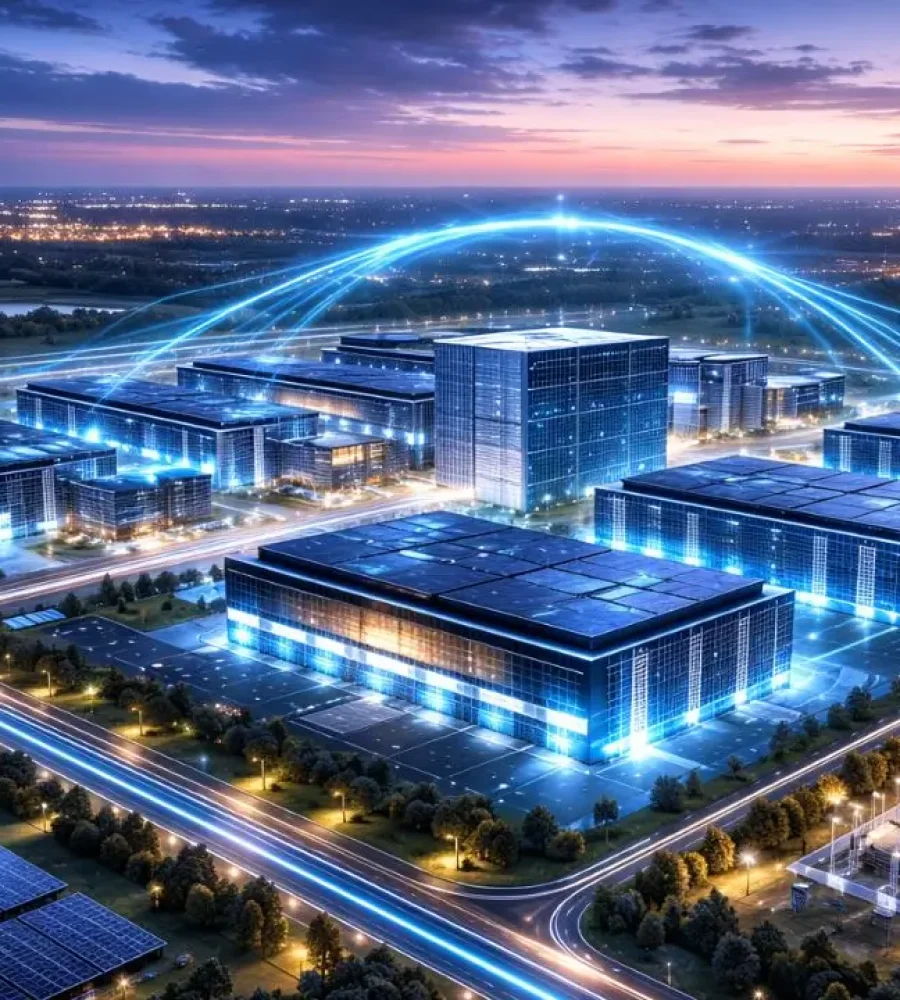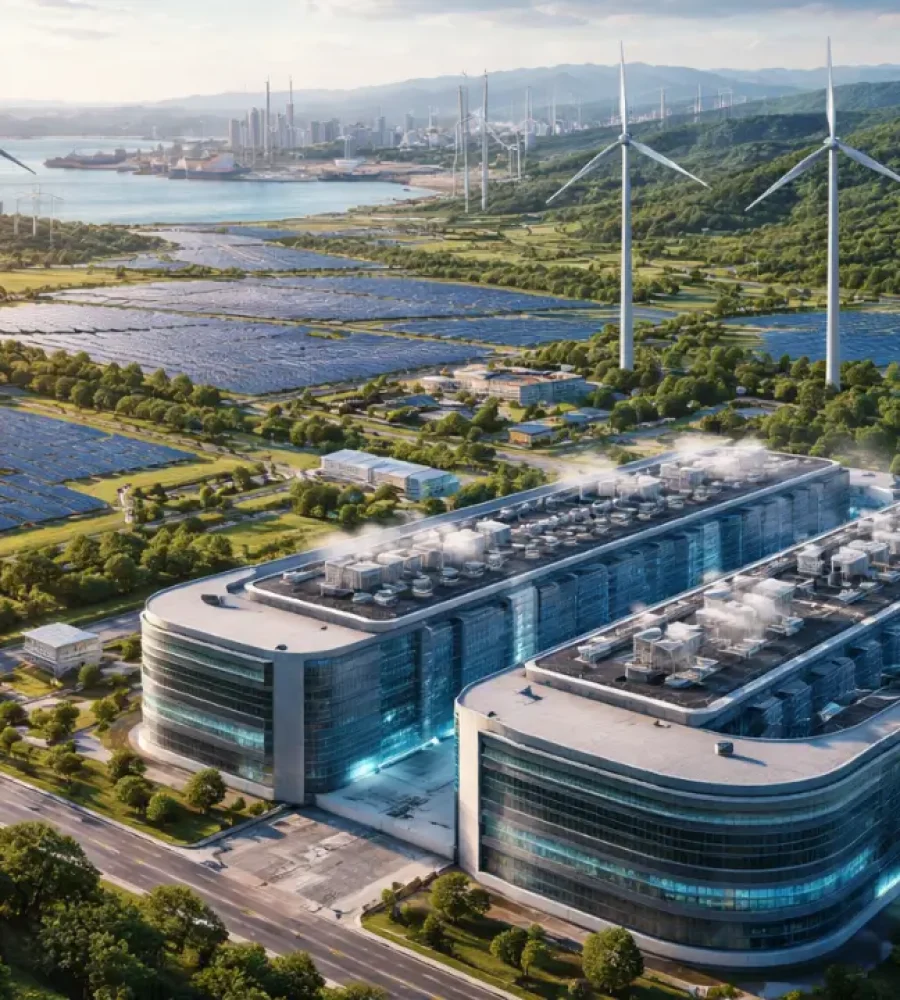

Artificial intelligence has introduced an unprecedented electricity load to power grids once designed for predictably slow demand growth. Modern data centres and AI clusters defy traditional utilization forecasts by behaving not like incremental loads but as near-continuous industrial power hubs with unique temporal and electrical characteristics. They stress grids at every scale, compelling utilities to reassess how topology, redundancy, and network planning account for rapid load growth whose character differs from anything in prior decades.
The Compute Shock to Traditional Grid Architecture
Historically, electrical infrastructure planning assumed linear demand growth with gradual increases in residential, commercial, and industrial consumption. Grid expansion could follow multi-year forecasts with minor revisions. The advent of AI workloads has disrupted this model by aggregating extremely high load densities into discrete geographic clusters. These clusters abruptly shift capacity needs, forcing grid operators to rethink network topology and reliability assumptions that once counted on diversified, gradual demand increases.
AI-oriented loads behave differently because they demand high continuous power rather than cyclical peaks over long periods, contradicting the typical demand patterns utilities model. This behavior challenges conventional redundancy planning because fluctuations arise from compute scheduling and cooling systems that are not predictable in daily load curves, requiring adaptive planning beyond legacy tools. Utilities must transition toward models that integrate real-time data and digital forecasting to maintain reliability.
Digitally equipped planners increasingly recognize that the traditional radial networks optimized for one-way flow from central generation to distributed load lack the flexibility to manage such concentrated, high-density consumption without impacting stability or network loss characteristics. Such loads demand enhanced sensor and control capabilities traditionally reserved for generation and wholesale markets.
The compute-induced stress on grids also highlights a contradiction in planning philosophy: grids designed for resilience through geographic and temporal diversification face new concentrated stress points that do not align with those assumptions, forcing planners to adopt long-range assessments that account for spatial load clustering. Technological tools such as phasor measurement units (PMUs) and digital twins have become more valuable in these contexts because they offer visibility into real-time stability margins, enabling operators to plan and react to AI-driven loads with unprecedented precision.
Transmission Bottlenecks in the Age of Hyperscale
Transmission bottlenecks are no longer temporary imbalances caused by predictable seasonal peaks; they are structural constraints emerging from concentrated demand centers sprouting in regions with limited grid capacity. Hyperscale campuses cluster data centres heavily to exploit cooling resources, fiber connectivity, and economic incentives. But their aggregated power consumption often overtaxes existing corridors whose planning anticipated dispersed industrial and residential loads, not multi-hundred-megawatt single-sites.
Congestion in key transmission corridors near these clusters reduces operational flexibility and forces redispatch strategies that can defer or distort generation scheduling. The result is a network where local constraints ripple into system-wide inefficiencies and reliability risks, a problem planners in both the United States and Europe acknowledge as grid modernization lags behind load growth.
Legacy corridors, designed decades ago for predictable flows, suffer from narrow capacity margins and limited control granularity, making them ill-equipped to balance the dynamic flows associated with large data centre loads. Operators increasingly rely on mitigation measures like redispatch or curtailable contracts, neither of which address the structural imbalance created by hyperscale demands.
While reconductoring and other incremental upgrades can provide some relief by increasing capacity on existing paths, planners are cautious because such solutions don’t always align with long-term variability and the directional load forecasts that hyperscale compute requires. The conflict between static planning horizons and dynamic, fragmented demand growth means bottlenecks increasingly define where power can or cannot flow, compelling grid operators to rethink corridor assignments and investment priorities.
Interconnection Queues as Strategic Gatekeepers
Interconnection queues have transformed from administrative checkpoints into decisive strategic filters that shape where digital infrastructure ultimately materializes. Grid operators require formal studies to assess system impact, fault current contribution, voltage stability, and transmission reinforcement needs before approving large loads. Those studies now encounter unprecedented volumes of generation and load requests, creating layered procedural complexity that influences development sequencing.
Developers of large AI clusters often encounter uncertainty during these reviews because grid operators must simulate contingencies under multiple scenarios to preserve reliability standards. Each study evaluates how new demand alters short-circuit levels, thermal limits, and dynamic stability margins within interconnected systems. These technical evaluations determine whether costly network reinforcements precede energization, effectively converting queue position into a competitive variable.
Grid authorities across several jurisdictions have introduced reforms to streamline queue management, yet these changes focus on clustering similar projects and enhancing study transparency rather than bypassing reliability safeguards. Such reforms recognize that unmanaged queue growth can stall infrastructure expansion while preserving system integrity remains non-negotiable. The strategic implication remains clear: interconnection approval defines capital deployment timing without relying on arbitrary acceleration.
Transmission planners increasingly treat queue data as an early indicator of geographic stress because aggregated requests reveal where infrastructure lags anticipated load expansion. That visibility allows grid operators to anticipate reinforcement corridors rather than react to individual applications in isolation. Interconnection has therefore evolved into a structural planning instrument rather than a procedural hurdle.
Large compute operators now evaluate grid readiness and queue depth before committing to land acquisition or construction, recognizing that physical buildout without interconnection certainty introduces material risk. Site selection thus intertwines deeply with transmission topology and regulatory throughput capacity. Interconnection queues no longer merely record projects; they actively shape the geography of digital infrastructure.
Inside Electric Reliability Council of Texas: Managing Volatility and Load Surges
The Electric Reliability Council of Texas operates a uniquely structured power market that isolates most of its grid from interstate jurisdiction, creating distinct operational and planning dynamics. Rapid growth in large flexible loads has prompted ERCOT to refine how it evaluates transmission adequacy and system resilience under evolving demand conditions. Grid operators must maintain real-time frequency stability while accommodating new high-density load proposals.
ERCOT’s planning approach integrates forward-looking scenario modeling to assess how substantial load additions interact with generation dispatch and congestion patterns. Engineers evaluate transmission constraints, voltage support requirements, and resource adequacy implications before authorizing new connections. This technical scrutiny ensures that sudden compute expansions do not compromise system reliability standards.
Market design also influences infrastructure outcomes because ERCOT balances open competition with reliability obligations, requiring transparent processes for approving new large loads. Transmission expansion plans must align with long-term system needs while respecting cost allocation frameworks embedded within its regulatory structure. This dynamic reflects the tension between market flexibility and infrastructure permanence.
The integration of renewable generation within Texas further complicates planning because variability in wind and solar output intersects with concentrated compute demand. Grid operators deploy advanced forecasting and real-time monitoring tools to anticipate ramping needs and maintain reserve margins under fluctuating supply conditions. These operational adaptations illustrate how regional grids adjust to volatility without compromising core reliability obligations.
Large load interconnection policies in Texas increasingly emphasize transparency and technical coordination between developers and transmission planners. That coordination allows for early identification of reinforcement requirements and reduces uncertainty in system impact evaluations. ERCOT’s experience demonstrates how regional operators adapt institutional frameworks to manage AI-driven load surges responsibly.
National Grid and the Reinvention of Grid Readiness
National Grid operates across the United Kingdom and parts of the northeastern United States, managing transmission systems undergoing simultaneous decarbonization and digital expansion pressures. The organization has articulated modernization strategies that integrate electrification, renewable integration, and growing digital infrastructure demand within a unified planning horizon. Grid readiness now encompasses resilience, digital monitoring, and anticipatory reinforcement.
Transmission operators under National Grid’s jurisdiction increasingly rely on digital substations, enhanced control systems, and predictive maintenance platforms to strengthen operational reliability. These upgrades improve situational awareness and reduce outage risks associated with complex power flows. Enhanced monitoring supports the accommodation of emerging load centers such as hyperscale data facilities without destabilizing surrounding networks.
Long-distance reinforcement projects within the United Kingdom illustrate how strategic corridor development underpins decarbonization goals while preparing for new electricity demand sources. Infrastructure planning must reconcile renewable resource geography with urban load centers and digital clusters. Such integration requires sustained investment and coordination across regulatory and technical domains.
Policy alignment plays a central role because national decarbonization mandates require accelerated renewable integration even as demand from digital infrastructure rises. Transmission modernization therefore operates at the intersection of climate commitments and energy security. Grid readiness now implies preparedness for both structural demand growth and generation transition.
National Grid’s evolving framework demonstrates that grid modernization cannot rely solely on incremental upgrades but must incorporate systemic digitalization, dynamic control capabilities, and long-term reinforcement planning. This approach supports sustained compute growth while preserving reliability and decarbonization objectives. The reinvention of readiness reflects a broader transformation unfolding across advanced power systems.
From Radial Networks to Mesh Intelligence
Traditional radial networks transmit electricity in a unidirectional flow from central generation plants to distributed consumers, a configuration that simplifies protection schemes but limits adaptability. High-density AI loads expose the rigidity of such structures because localized congestion or faults can cascade more quickly when alternative pathways remain constrained. Grid engineers increasingly explore meshed configurations that enhance redundancy and controllability.
Meshed networks distribute power across multiple interconnected pathways, allowing operators to reroute electricity dynamically during contingencies or peak demand conditions. Digital monitoring systems support this flexibility by providing granular visibility into voltage levels, line loading, and frequency stability. Enhanced topology transforms the grid from a passive delivery system into an actively managed platform.
Advanced protection schemes accompany this structural evolution because bidirectional flows and distributed generation introduce complexity into fault detection and isolation. Intelligent relays and adaptive protection algorithms respond to real-time conditions rather than static assumptions embedded in radial designs. Such capability becomes essential when AI clusters introduce concentrated and persistent demand variability.
Digital twins and real-time analytics further support mesh intelligence by simulating system responses to sudden load shifts or transmission contingencies. These tools allow planners to stress-test reinforcement strategies before physical deployment, reducing uncertainty in large-scale upgrades. The grid thus evolves toward a cyber-physical system capable of anticipating and absorbing AI-driven variability.
Transitioning from radial simplicity to mesh intelligence requires careful coordination across planning, protection engineering, and regulatory approval. Utilities must balance the complexity of meshed operations with reliability standards that demand predictability. Nonetheless, adaptive network architecture offers a path toward accommodating sustained compute growth without compromising system stability.
High-Voltage DC Corridors as the New Arteries of Compute
High-voltage direct current transmission has re-emerged as a strategic infrastructure choice for connecting distant generation resources with concentrated load centers. Alternating current networks dominate traditional grids, yet HVDC offers controllable power flows, lower line losses over long distances, and enhanced stability characteristics under specific configurations. AI-driven load clustering amplifies the need for such controllable corridors because they enable deliberate routing of bulk power into compute-dense regions.
HVDC systems rely on converter stations that transform alternating current into direct current for transmission and then invert it back at the receiving end, providing operators with precise control over magnitude and direction of flow. This controllability reduces the risk of loop flows and congestion that often complicate heavily meshed AC systems. Compute clusters benefit because planners can dedicate HVDC pathways to large load hubs without destabilizing adjacent regional networks.
Remote renewable generation resources, including offshore wind and desert solar installations, often lie far from urban and semi-urban areas where hyperscale facilities emerge. HVDC corridors bridge that geographic separation efficiently, aligning decarbonized supply with high-intensity digital consumption. Transmission planning therefore increasingly considers HVDC not as a niche technology but as a foundational artery for sustained compute growth.
Grid operators also value HVDC links for their ability to enhance system resilience during disturbances because converter controls can rapidly modulate power transfers under contingency events. Such dynamic response capabilities complement the stability requirements of AI clusters that demand uninterrupted supply continuity. Coordinated deployment of these corridors reshapes transmission topology toward intentional long-distance reinforcement.
Large-scale HVDC buildout requires regulatory alignment, land acquisition, and capital coordination across jurisdictions, yet its technical advantages position it as a central mechanism for linking remote generation with compute-heavy corridors. Planners increasingly treat these lines as strategic infrastructure rather than incremental upgrades. High-voltage DC thus becomes an enabling platform for the AI era’s electricity demands.
The Rise of the Advanced Substation
Substations once served primarily as voltage transformation points, converting high-voltage transmission into lower-voltage distribution. Modern grid demands require these nodes to operate as digitally orchestrated control hubs capable of automation, remote monitoring, and dynamic switching. AI-era loads intensify this evolution because concentrated demand introduces rapid fluctuations that require localized intelligence.
Digital substations integrate intelligent electronic devices, fiber-optic communication networks, and centralized control systems that enhance situational awareness. Engineers deploy advanced protection schemes capable of isolating faults quickly while maintaining service continuity for adjacent circuits. This architecture reduces outage risk in regions hosting hyperscale compute facilities.
Automation within advanced substations supports real-time load balancing and voltage regulation, functions critical for facilities operating high-density server clusters and cooling infrastructure. Operators gain granular data that informs proactive maintenance and predictive asset management strategies. Such intelligence transforms substations into active grid-edge decision nodes rather than passive switching yards.
Integration with supervisory control and data acquisition systems further enables coordinated response across transmission and distribution layers. When AI clusters ramp demand abruptly, automated switching and transformer tap adjustments stabilize voltage profiles without manual intervention. This capability strengthens reliability in areas experiencing compute-driven growth.
Advanced substations also prepare grids for bidirectional flows associated with distributed generation and on-site power assets. Protection systems must adapt to these new configurations while maintaining coordination with upstream transmission operators. The substation therefore emerges as a technological fulcrum balancing innovation with stability.
On-Site Generation and the Return of Vertical Energy Integration
Concentrated compute demand has prompted renewed interest in co-located generation assets designed to hedge against transmission uncertainty. Hyperscale facilities evaluate on-site generation not as an isolated backup mechanism but as an integrated component of long-term energy strategy. This approach reflects the recognition that transmission buildout may not always align with development timelines.
On-site generation configurations range from gas turbines and reciprocating engines to emerging low-carbon technologies such as hydrogen-ready systems and battery storage integration. These assets provide dispatchable capacity that can stabilize operations during grid disturbances or congestion events. Engineers design such systems to synchronize seamlessly with utility supply, ensuring compliance with interconnection standards.
Vertical integration of energy resources allows operators to manage power quality and reliability parameters internally, reducing exposure to upstream transmission constraints. Facilities can modulate on-site generation in coordination with grid conditions, supporting broader system stability when structured appropriately. This operational flexibility enhances resilience in compute-dense regions.
Policy frameworks influence the viability of co-located generation because permitting requirements and emissions standards vary across jurisdictions. Developers must navigate these regulatory dimensions while aligning with broader decarbonization goals. Integration strategies increasingly incorporate renewable procurement and storage technologies to balance reliability with environmental commitments.On-site generation thus represents a structural adaptation to transmission uncertainty rather than a temporary workaround. Its strategic deployment underscores the interplay between grid infrastructure readiness and digital infrastructure growth. Vertical energy integration redefines how compute operators interact with the broader electricity ecosystem.
Energy Security Versus Decarbonization: A Policy Crossroads
Rapid growth in electricity demand from AI clusters intensifies the longstanding tension between energy security and decarbonization objectives. Policymakers seek to accelerate renewable integration while ensuring reliable supply for emerging digital industries. This dual mandate introduces complexity into transmission planning and resource adequacy discussions.
Energy security emphasizes dispatchable capacity and firm infrastructure capable of withstanding extreme events and sudden demand surges. Decarbonization strategies prioritize renewable generation, electrification, and emissions reduction pathways. Balancing these priorities requires coordinated investment in grid modernization and storage technologies.
AI-driven demand growth complicates policy alignment because concentrated load centers amplify the consequences of supply disruptions. Grid operators must maintain reliability standards while integrating variable renewable resources at scale. Transmission reinforcement becomes central to reconciling these competing objectives. Some jurisdictions respond by accelerating permitting reforms for transmission projects, recognizing that delays hinder both clean energy integration and digital expansion. Regulatory clarity supports infrastructure investment while preserving environmental review processes. Policy evolution thus shapes the pace at which grids adapt to AI-era pressures.
The crossroads between security and sustainability does not present a binary choice but rather a design challenge requiring synchronized modernization of networks, markets, and generation portfolios. Strategic planning must integrate reliability obligations with climate commitments in a coherent framework. AI’s electricity appetite makes this alignment increasingly urgent.
Grid Flexibility as a Competitive Advantage
Jurisdictions that anticipate AI-driven electricity demand increasingly recognize that grid flexibility shapes investment attraction as decisively as tax policy or fiber connectivity. Transmission planning frameworks that incorporate adaptive reinforcement pathways and dynamic load management tools offer greater confidence to infrastructure developers. Flexible grids demonstrate capacity to integrate concentrated loads without destabilizing surrounding networks, thereby reducing systemic risk.
Regulatory environments that streamline interconnection processes while preserving technical rigor enhance predictability in project development. Developers assess whether utilities provide transparent planning roadmaps, digital modeling access, and coordinated upgrade scheduling before selecting compute sites. This institutional readiness directly influences capital allocation decisions in regions competing for digital infrastructure.
Advanced demand response frameworks further strengthen flexibility by enabling large loads to participate in grid stabilization under defined protocols. AI clusters equipped with controllable workloads can modulate consumption temporarily when grid operators require system balancing. Such coordination transforms compute facilities from passive consumers into active grid participants without compromising operational continuity.
Energy storage integration complements this model by buffering short-duration volatility and supporting voltage regulation at critical nodes. Grid operators deploy battery systems strategically near load centers or along constrained corridors to reinforce stability margins. These assets enhance resilience while supporting renewable integration within decarbonization pathways.
Forward-looking transmission planning that incorporates HVDC corridors, advanced substations, and digital control platforms signals long-term readiness for sustained compute growth. Regions that align infrastructure modernization with transparent regulatory frameworks position themselves competitively in the evolving AI landscape. Grid flexibility thus becomes a structural differentiator in the global race for digital capacity.
Planning for Permanence in a Rapidly Scaling Load Environment
Electric grids historically expanded through incremental upgrades calibrated to gradual consumption growth across dispersed sectors. AI-driven demand disrupts this pattern by introducing sustained high-density loads that require foundational reinforcement rather than patchwork expansion. Transmission planners must therefore adopt long-horizon strategies that assume persistent compute intensity rather than temporary surges.
Long-term infrastructure planning integrates scenario modeling that considers evolving generation portfolios, electrification trends, and digital expansion trajectories. Engineers evaluate how transmission corridors will perform under diverse contingencies while accommodating concentrated data center clusters. Such modeling informs reinforcement sequencing that anticipates future growth instead of reacting to present constraints.
Asset lifecycle management gains renewed importance because transformers, circuit breakers, and conductors must withstand sustained high utilization without accelerated degradation. Utilities invest in condition monitoring technologies that detect thermal stress, insulation wear, and harmonic distortion associated with large nonlinear loads. This proactive approach extends infrastructure longevity while preserving reliability margins.
Transmission expansion increasingly aligns with decarbonization objectives by linking renewable-rich regions to compute-heavy urban centers through strategic corridors. Integrated resource planning frameworks ensure that reinforcement supports both emissions reduction targets and reliability mandates. Permanence in this context signifies structural resilience rather than rigid inflexibility.
Digitalization underpins this permanence by embedding real-time analytics, automated controls, and cyber-secure communication networks into the physical grid fabric. Operators gain continuous visibility into performance parameters and contingency thresholds, enabling adaptive management under evolving demand conditions. Long-horizon infrastructure thus combines physical robustness with intelligent oversight.
Engineering a Grid Built for Intelligence
Artificial intelligence has reframed electricity not as a background utility but as a strategic foundation for digital capability. Concentrated compute clusters challenge legacy assumptions embedded in transmission planning, congestion management, and reliability modeling. Grid modernization now requires coordinated evolution across corridors, substations, and regulatory frameworks to sustain this structural demand shift.
High-voltage DC corridors provide controllable bulk transfer pathways that connect remote renewable generation with compute-intensive hubs. Advanced substations introduce automation and granular visibility at critical nodes, strengthening operational resilience. On-site generation strategies complement transmission reinforcement by mitigating exposure to corridor constraints and policy delays.
Interconnection reform, flexible regulatory processes, and long-horizon planning approaches collectively determine how effectively grids absorb AI-era pressures. Regional operators such as ERCOT and organizations like National Grid illustrate adaptive strategies that reconcile reliability mandates with digital expansion. These institutional responses demonstrate that infrastructure transformation depends as much on governance as on hardware.
Energy security and decarbonization objectives converge within this modernization agenda rather than diverge irreconcilably. Transmission reinforcement enables renewable integration while supporting sustained high-density electricity consumption from AI clusters. Strategic investment in flexibility, storage, and digital control systems ensures that climate commitments coexist with industrial growth.Engineering a grid built for intelligence demands permanence in vision and adaptability in execution. Transmission networks must evolve into resilient, digitally orchestrated systems capable of managing concentrated loads without compromising stability. The AI era does not merely increase demand; it redefines the architectural logic of electricity itself.