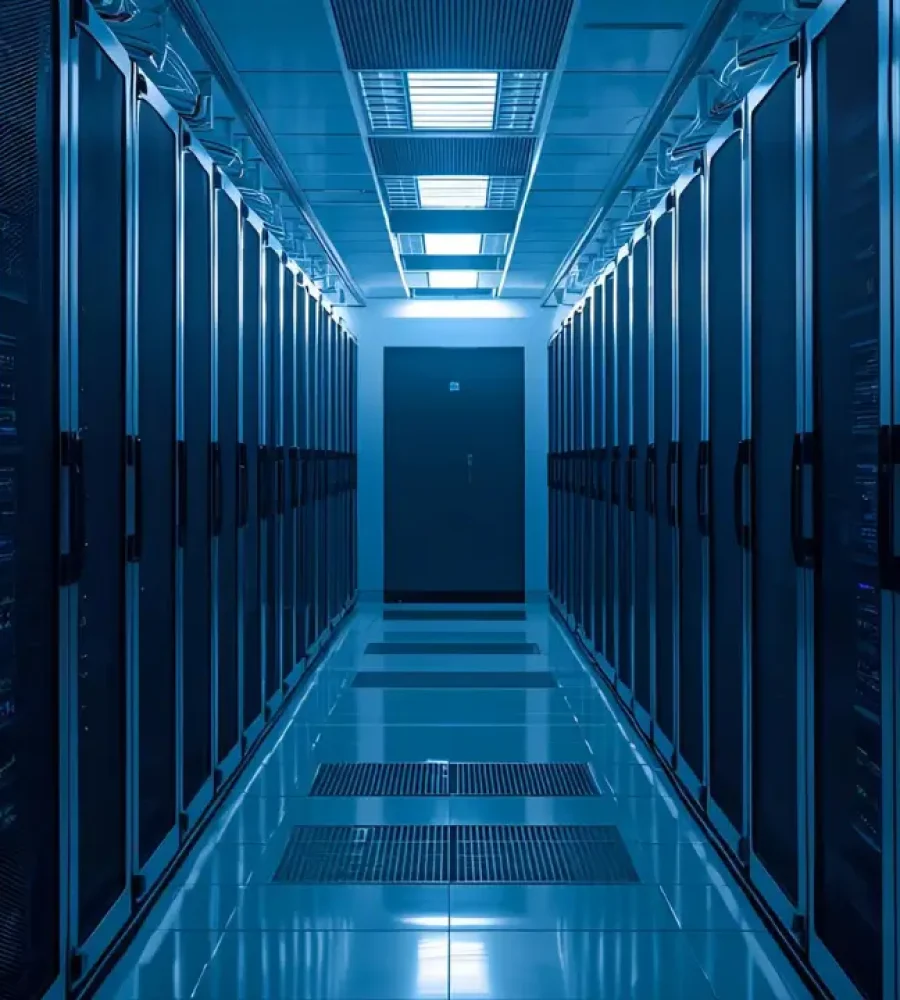
As the world’s power systems face rapidly growing demand from the electrification of transport and the rise of AI-driven data centers, fundamental limitations in legacy electrical infrastructure are becoming increasingly clear. Conventional conductors such as copper and aluminum, while reliable, suffer significant resistive losses, generate heat, and require large amounts of space when transmitting and distributing high volumes of electrical energy. These inefficiencies spread across grids and facilities, leading to wasted energy, higher operational costs, and increased environmental impact. High-temperature superconductors (HTS) offer a dramatic improvement over traditional conductors.
By transmitting electrical current with near-zero resistance, HTS cables and devices eliminate the resistive losses that hinder conventional systems. Their high current density and compact size also allow engineers to rethink how power is delivered across modern grids and within energy-intensive facilities such as data centers. Rather than simply improving existing infrastructure incrementally, HTS technology has the potential to reshape power delivery architectures, enhancing efficiency, resiliency, and sustainability.
This report examines the potential of HTS technology, covering the physics that make it unique and its applications in grid systems and next-generation data centers. We evaluate opportunities and technical challenges, placing the technology within the context of current research and potential future breakthroughs.
As global electricity demand rises and energy systems decarbonize, improving power delivery efficiency becomes central to sustainability strategies. Data centers, projected to consume an increasing share of electricity, could reduce their environmental footprint and community impact by minimizing energy losses and limiting physical infrastructure needs. Technology leaders such as Microsoft are exploring HTS power lines to support high-density AI computing while reducing grid strain and space requirements.
The Science of HTS
What Is Superconductivity?
Superconductivity is a quantum phenomenon in which a material exhibits zero electrical resistance and expels magnetic fields (the Meissner effect) when cooled below a characteristic critical temperature (Tc). In this state, electrical current can flow indefinitely without energy loss. Unlike conventional conductors, superconducting wires do not generate heat when current passes through them.
Early superconductors, discovered in the early 20th century, were low-temperature superconductors (LTS) that required extremely cold conditions, often near 4 K. While these materials remain useful in scientific and industrial applications such as MRI magnets, they are impractical for many power delivery systems due to the complexity and cost of maintaining such temperatures.
Emergence of High-Temperature Superconductors
The discovery of high-temperature superconductors (HTS) in the 1980s marked a turning point. HTS materials achieve superconductivity at higher temperatures, typically above the boiling point of liquid nitrogen (~77 K or –196 °C), which is far more economical than liquid helium cooling.
HTS materials often consist of complex ceramic compounds with layered crystal structures. Unlike conventional metallic superconductors, which follow traditional electron-phonon interaction models, these ceramics display superconductivity through mechanisms that remain actively studied in condensed-matter physics. One prominent class of HTS materials is rare-earth barium copper oxide (ReBCO). These materials support high critical temperatures and large current densities, making them promising for power applications where high operating temperatures and robust current capacity are required.
Operating Conditions: Cooling and Cryogenics
Even at higher temperatures, HTS still requires cryogenic cooling using liquid nitrogen or other systems to maintain superconductivity. HTS cables and devices are typically housed in a cryostat, an insulated structure that preserves low temperatures and blocks heat from the surrounding environment.
Maintaining this cryogenic environment introduces technical complexity and energy demand. However, the efficiency gains from HTS often outweigh the energy required for cooling, particularly in high-capacity or long-distance power transmission.
Zero Resistance and High Current Density
In the superconducting state, HTS materials exhibit near-zero electrical resistance. This allows electricity to flow with almost no energy loss, reducing heat generation and improving overall system efficiency.
HTS conductors also handle much higher current densities than copper or aluminum of similar size. This capability enables more power to pass through smaller conductors, which is particularly useful in space-constrained locations or high-capacity corridors.
Superconducting Devices Beyond Cables
HTS materials are used in devices beyond transmission lines. They form the basis of superconducting fault current limiters (SFCLs) and superconducting magnetic energy storage (SMES) systems.
SFCLs automatically limit excessive currents during faults, enhancing grid stability. SMES systems store energy in magnetic fields generated by superconducting coils and can release it rapidly, providing efficient, fast-response support for power quality and grid reliability.
These applications show that HTS technology, combined with power electronics and grid controls, can play a broader role in energy delivery and grid management.
Material Challenges and Engineering Developments
HTS materials are typically brittle ceramics that require careful processing into wire or tape forms. Challenges include maintaining structural integrity, ensuring consistent superconducting properties, and developing reliable connections and terminations for cryogenic operation.
Ongoing research aims to accelerate HTS material development, standardize testing, and expand the range of usable superconductors. These efforts address a key barrier to widespread deployment of HTS technology.
HTS in Power Systems: Efficiency and Loss Reduction
High-temperature superconductors (HTS) attract attention in modern energy systems because they can dramatically reduce energy loss during power transmission. Conventional conductors, such as copper or aluminum, always produce resistive losses, converting electrical energy into waste heat. In contrast, HTS cables carry current with virtually zero electrical resistance once cooled below their superconducting temperature. This key difference allows engineers to design and operate power systems more efficiently.
The Inefficiency of Conventional Conductors
Traditional power cables inevitably produce Joule heating as electrical current encounters resistance. These losses reduce overall system efficiency and require cooling systems to manage heat. In high-demand scenarios, such as long-distance transmission or dense data centers, these losses accumulate. Even modern grids lose a measurable portion of generated power simply by moving it from point A to point B.
Utilities often increase transmission voltage, such as using high-voltage direct current (HVDC) systems, to reduce losses. Higher voltage lowers current and therefore reduces resistive losses for a given power level. However, HVDC lines still experience some energy loss over long distances.
HTS cables eliminate resistive loss once cooled below their critical temperature, typically using liquid nitrogen or advanced cryogenic systems. This near-lossless transmission could expand capacity and reduce energy losses to almost zero, greatly improving overall system efficiency.
Near-Zero Loss Transmission and Increased Capacity
With virtually no electrical resistance, HTS cables remove the main source of energy loss in conventional systems. Pilot projects show that superconducting lines can carry equal or higher electrical loads than traditional cables while dissipating minimal energy. Their high current density allows more power to flow through smaller conductors.
The practical benefits include:
- Reduced generation demand: Utilities must generate less extra power because near-lossless transmission delivers more energy to end users.
- Higher usable capacity: Existing urban conduits or underground ducts can handle more current without adding new corridors.
- Lower environmental impact: Reduced energy waste decreases greenhouse gas emissions, supporting decarbonization goals.
For utilities and grid operators, efficiency becomes a strategic advantage, particularly in dense urban areas or regions integrating variable renewable energy sources.
Efficiency Advantages for Data Centers
Data centers place unique demands on power distribution due to massive electrical loads from AI, cloud computing, and high-performance computing. Conventional distribution networks, including thick copper busbars and extensive cable arrays, generate heat and occupy substantial space.
HTS technology eliminates resistive heating within the facility’s power infrastructure. Reports show that superconducting cables reduce cooling requirements by removing heat generated in conventional conductors. They also allow higher current over longer distances within a facility, enabling more efficient routing and distribution.
For example, Microsoft has tested HTS for data center power delivery. Superconducting cables transported the same electrical load as traditional conductors but in a compact, efficient format. This reduces both energy loss and physical constraints that might otherwise limit facility expansion.
Operational Impacts Beyond Wires
HTS benefits extend beyond cables. Superconducting fault current limiters (SFCLs) automatically restrict extreme currents during electrical faults, enhancing grid reliability. Unlike conventional breakers that must be oversized for worst-case scenarios, SFCLs react instantly to prevent damage.
Superconducting magnetic energy storage (SMES) systems store energy in superconducting coils and release it rapidly with minimal loss. These systems improve both energy quality and grid resilience, demonstrating that HTS technology enhances more than just transmission.
Long-Distance Transmission and Renewables
Efficient long-distance transmission is essential for connecting remote renewable energy installations to urban load centers. HTS lines transmit power with minimal losses, outperforming conventional AC or HVDC systems. This improves the viability of distant wind or solar farms and ensures more of their output reaches consumers.
In summary, HTS’s ability to carry electricity with near-zero resistance and high current density promises to transform power transport, from large-scale grids to data center distribution, improving efficiency, operational costs, and environmental impact.
Compact Infrastructure: Reducing Footprints in Urban and Remote Areas
HTS technology also reduces the physical footprint of power infrastructure, an advantage in both urban and remote locations.
Space Constraints in Modern Power Systems
Urban centers, industrial campuses, and data center campuses often face severe space limitations. Installing new transmission lines or expanding substations is expensive, time-consuming, and politically sensitive. Traditional high-capacity networks require thick copper or aluminum lines, large transformers, and extensive cooling infrastructure, which demand wide trenches or large substations.
HTS enables smaller, lighter power delivery systems without compromising capacity.
Compact HTS Cables and Higher Current Density
HTS cables carry more current per unit cross-section than conventional conductors, reducing the volume and space required for power lines. In data centers, a single superconducting cable can replace dozens of copper conductors without generating heat or requiring bulky busbars.
For example, a large data center that traditionally needs multiple 600 mm² copper cables can use one HTS cable to deliver the same power at the same voltage. This reduces trenching, conduits, and internal busway requirements.
HTS cables do not emit heat, eliminating the need for thermal spacing or ventilation. This is particularly valuable when routing cables underground alongside existing utilities or within data halls with complex HVAC systems. The compactness lowers civil engineering costs, speeds deployment, and minimizes community impact.
Direct Impact on Data Center Design and Layout
Conventional power distribution occupies significant floor and ceiling space. High current at low voltage requires thick conductors and clearance for safety and cooling. HTS cables carry the same current in smaller conduits without producing heat.
Microsoft’s experiments with HTS demonstrate how superconducting technology can optimize internal power architecture. Early tests with 3 MW HTS cables show that direct-to-rack delivery is feasible, enabling more power to server racks without expanding cable trays or feeders.
Reducing the physical footprint provides multiple benefits:
- More space for computing and storage infrastructure.
- Lower material and labor costs due to reduced cabling.
- Reduced HVAC loads from minimal heat output.
- Easier retrofits of existing facilities.
Urban Routing and Underground Installations
HTS cables can be installed in narrow underground trenches in dense urban areas without requiring wide clearances. Minimal heat and low electromagnetic fields allow close proximity to other utilities.
This enables high-capacity power lines beneath cities, railways, or other built environments with minimal civil disruption. The reduced construction footprint lowers life-cycle costs, including excavation, materials, and installation time.
Environmental and Community Impact
Compact HTS infrastructure offers environmental and social benefits. Conventional overhead transmission alters landscapes, requires forest clearing, and faces community resistance. By contrast:
- Underground HTS lines need smaller trenches and less land.
- Fewer surface structures improve aesthetics and reduce opposition.
- Minimal heat emission protects soil and nearby ecosystems.
Together, these factors allow power system expansion that is less intrusive, more sustainable, and more acceptable to communities and regulators.
Enhancing Grid Resilience and Stability
High-temperature superconductors (HTS) offer more than energy efficiency and compact infrastructure. They can also enhance the resilience and operational stability of electrical grids, a key advantage as renewable penetration, electrification, and large loads such as data centers stress traditional networks.
The Resilience Challenge for Modern Grids
Modern power networks face three major challenges:
- Increasing demand: Electrification of transportation, industry, and digital infrastructure drives load growth.
- Intermittent supply: Wind and solar generation introduce variability and rapid fluctuations.
- Aging infrastructure: Many transmission and distribution systems were built decades ago and struggle to handle high peak loads.
In this context, resilience means the grid can remain reliable under stress, recover quickly from faults, and accommodate load swings without failures.
How Zero-Resistance Transmission Supports Stability
Resistance in conventional conductors wastes energy, generates heat, and limits how quickly the system can respond to changing loads. HTS cables carry current with nearly zero resistance once cooled below their critical temperature. This reduces losses and thermal stress along the conductor.
The effects include:
- Negligible voltage drops: Power flows become more predictable.
- Reduced thermal overloads: Equipment derating or failure risk declines.
HTS strengthens dynamic system stability by limiting the spread of disturbances. Minor deviations in voltage or frequency remain localized instead of propagating across the grid.
Fault Current Management with HTS Devices
HTS also supports superconducting fault current limiters (SFCLs), which help grids handle unexpected surges. During a short circuit, current can spike to damaging levels, forcing conventional breakers to trip and disconnect parts of the network. An SFCL detects and limits fault current before it reaches dangerous levels, offering:
- Faster fault mitigation than mechanical breakers alone.
- Reduced cascading outages as local circuits absorb stress without widespread shutdown.
- Lower wear on protection equipment, extending lifecycle and reducing maintenance costs.
Because SFCLs switch quickly and reset automatically, they enable a more resilient grid than networks that rely solely on resistive conductors. These devices illustrate how HTS improves grid performance beyond basic transmission.
Case Studies: HTS Demonstrations and Pilot Projects
Real-world implementations confirm HTS’s resilience benefits. The Holbrook Superconductor Project in Long Island, New York, one of the first commercial superconducting transmission installations, showed stable operation under large loads with liquid nitrogen cooling. The system supplied a 138 kV substation with minimal resistive losses and reliability comparable to conventional lines.
Research and pilot programs in Europe and the U.S. now explore second-generation HTS cables for medium- and high-voltage applications. These projects demonstrate that zero-resistance transmission can relieve congestion, reduce losses, and increase capacity without acquiring new rights-of-way.
Renewable Integration and Dynamic Load Handling
Integrating variable renewables creates grid challenges. Solar and wind can inject large amounts of power when conditions are favorable and drop sharply as weather changes. These fluctuations stress grid control systems, which must respond quickly.
HTS cables, with lossless transmission and high current capacity, allow rapid power rebalancing without thermal stress or voltage instability. In grids where HTS acts as a backbone, utilities can deploy dynamic control algorithms to shift load efficiently, reducing reliance on spinning reserves or artificial damping systems.
Supporting Electromechanical Stability and Frequency Control
Frequency regulation, maintaining 50 Hz or 60 Hz, is essential for system stability. HTS lines, with minimal resistance, reduce impedance-related oscillations following sudden load changes. This enables the grid to maintain stable frequency with fewer interventions.
HTS infrastructure works well with energy storage systems, including superconducting magnetic energy storage (SMES). SMES units absorb or release energy in milliseconds, providing both buffering and stabilization, which is crucial in grids with high renewable penetration.
Economic and Operational Impacts on Grid Reliability
Improved resilience delivers tangible economic benefits:
- Reduced outage costs: Fewer interruptions reduce losses for businesses and consumers.
- Deferred infrastructure investment: Better utilization of existing assets delays costly line expansions or upgrades.
- Lower maintenance overhead: Reduced thermal stress extends equipment life.
For utilities managing renewable integration and rising demand from electrification and AI computing, HTS represents a strategic tool for grid modernization.
Transforming Data Center Power Systems
As AI workloads grow and rack densities increase, data centers face a critical constraint: power delivery. Traditional electrical architectures, designed for incremental growth, risk becoming bottlenecks for performance, sustainability, and expansion. HTS offers a fundamentally new approach to delivering, managing, and scaling power within modern data centers.
The Power Challenge in AI Data Centers
AI workloads, including large language models and real-time inference services, require massive electrical power for dense GPU clusters and high-performance computing. Conventional copper or aluminum systems encounter multiple limitations:
- Resistive losses: Energy is wasted as heat, increasing HVAC loads and operating costs.
- Voltage drop and power quality issues: Long cable runs with high currents can degrade voltage without compensation equipment.
- Physical footprint: Thick busbars and feeders occupy valuable space, limiting room for compute.
- Scaling limitations: Adding capacity requires more parallel cables or substations, with additional civil and permitting costs.
Companies like Microsoft are exploring HTS to overcome these challenges. HTS’s lossless transmission and compact design can handle rising loads without expanding infrastructure or overloading local grids.
HTS Applications in Data Center Power Delivery
HTS carries very high currents with minimal energy loss. Conventional copper conductors produce heat and limit current density, while HTS eliminates these issues once below critical temperature. Operational benefits include:
- Higher power capacity per cable: Multiple megawatts flow through a single HTS line that would require dozens of copper cables.
- Reduced heat generation: HVAC systems operate more efficiently, lowering energy costs.
- Smaller physical footprint: HTS cables can be up to ten times more compact than traditional conductors, freeing space for compute.
VEIR, an HTS technology provider, demonstrated 3 MW of power delivery in a simulated data center, showing how superconducting cables can handle high loads in compact formats.
Redesigning Power Architecture Inside Facilities
HTS allows data centers to rethink internal power topology. Fewer, lighter superconducting cables can deliver power directly to critical loads such as rack PDUs. Benefits include:
- Lower material costs (less copper/aluminum).
- Reduced installation complexity (simpler routing, fewer junctions).
- Smaller space requirements (narrower conduits and service pathways).
- Reduced cooling loads, since HTS generates negligible heat.
Grid Integration and Local Impact
HTS data center systems also ease grid integration and community impact. Traditional facility expansion often requires new substations, wider rights-of-way, and extensive feeder lines, which can face local resistance. HTS:
- Reduces infrastructure footprint.
- Lowers peak demand on local grids by eliminating resistive losses.
- Enables smoother grid integration with fewer oversized feeders.
This allows data centers to operate with less disruption to surrounding communities and utilities.
Scalability, Future Designs, and Strategic Benefits
HTS integration represents a strategic shift in facility design. Rather than building around traditional conductor limits, power architecture can evolve with computing demands. Benefits include:
- Easier scaling: HTS lines can be added without proportionate increases in infrastructure.
- Modular designs: Power delivery becomes adaptable, similar to modular data center pods.
- Operational savings: Reduced losses and cooling lower total cost of ownership.
HTS also supports sustainability goals by minimizing energy loss and material use, enabling energy-efficient operation in an era where environmental metrics influence corporate and regulatory decisions.
Economic Landscape and Adoption Challenges
High-temperature superconductors (HTS) offer clear technical advantages for power systems and data centers. However, their economic viability and commercialization face significant barriers. Material costs, manufacturing complexity, auxiliary systems, and limited industrial scale slow adoption, despite growing interest and pilot projects.
Market Scale and Growth Potential
The global HTS market is emerging but remains modest compared with mainstream power technologies. Forecasts vary, yet industry analysts predict sustained growth. One estimate suggests the global High-Temperature Superconductor (HTS) market is anticipated to reach a value of USD 127.46 million by 2032, exapanding at a CAGR of 3.2% between 2025 and 2032.
Other reports indicate broader adoption across sectors, from grids and transportation to medical imaging and energy storage, driving material demand and manufacturing investment. One forecast estimates the HTS market could exceed USD 11.5 billion by 2030, with a CAGR above 10%, fueled by energy-efficiency initiatives and decarbonization strategies.
These projections show commercial momentum, but HTS technology remains early in industrialization. Market growth is constrained by economic and technical challenges.
High Material and Production Costs
High material costs, especially for HTS wire and tape, remain a primary adoption barrier. Producing superconducting wire involves advanced ceramic compounds, such as rare-earth barium copper oxide, and specialized processing techniques. These materials are expensive compared with copper or aluminum.
Cost analyses suggest that for HTS to compete directly with conventional conductors, the cost per ampere-current meter must drop significantly. Achieving this remains challenging due to material and processing expenses.
Manufacturing HTS conductors with consistent quality, mechanical flexibility, and reliability requires complex fabrication steps, cleanroom environments, and precise quality control. Without large-scale production and standardized supply chains, manufacturing costs remain high.
Auxiliary System Requirements
HTS systems need cryogenic cooling to maintain superconductivity, typically at temperatures achievable with liquid nitrogen. While liquid nitrogen is cheaper and easier to handle than liquid helium, it still requires refrigeration units, insulation, and control systems. These add capital and operational costs that must be weighed against the energy savings from near-zero resistive losses.
In grid applications, cooling costs may be offset by efficiency gains over time. In data centers, cryogenic systems introduce complexity that operators must quantify and optimize, especially when HTS is integrated throughout the facility rather than at isolated points.
Supply Chain Limitations and Geopolitical Factors
HTS materials, particularly rare-earth elements and advanced ceramics, are concentrated in a few regions. This concentration introduces sourcing risks, affecting procurement strategies for utilities, data centers, and equipment manufacturers.
Dependence on specific suppliers can influence pricing, lead times, and contract stability. Broader production diversification is needed to mitigate risks as demand grows.
Integration with Legacy Systems
HTS must interface with existing grids, protection and control systems, power electronics, and data center distribution architecture. These integration points add technical complexity and engineering costs.
Deploying HTS cables in a grid often requires new transition joints, specialized terminations, and tailored control logic to manage faults and ensure stable operation with conventional conductors. Training personnel, updating standards, and redesigning downstream networks add to implementation expenses.
The Holbrook Superconductor Project demonstrated successful HTS integration into a live grid but highlighted the need for complex installation and specialized support systems.
Adoption Barriers in Data Centers
In data centers, HTS adoption remains pilot-oriented. Companies like Microsoft have tested HTS to reduce losses and save space, but full-scale deployment is limited.
Technology maturity is still developing, particularly in demonstrating reliability at multi-megawatt levels and integrating robust cooling systems. Data center operators are likely to proceed cautiously until cost-benefit models and operational reliability become clearer.
Future Outlook and Integration Scenarios
Despite current hurdles, HTS has strong potential as global energy systems demand higher efficiency, greater capacity, and sustainable power delivery.
Scaling Production and Reducing Costs
Growing HTS demand across power transmission, data centers, transportation, and energy storage could reduce manufacturing costs through economies of scale. Increased production volumes, process automation, and improved supply chains will help.
Government and industry investments in grid modernization and efficiency improvements could accelerate adoption, making HTS viable beyond niche projects.
Technological Advancements and Material Research
Researchers are developing superconducting materials with higher critical temperatures and improved mechanical properties. These materials could reduce cooling requirements and enhance performance. While room-temperature superconductors remain uncertain, HTS advancements may gradually expand adoption scenarios.
Breakthroughs could allow integration in smaller facilities or decentralized networks previously limited by cryogenic needs.
Expansion of Pilot Projects and Grid Integration
HTS continues to be tested in real infrastructure. Utilities managing aging networks, rising electrification, and renewable integration may adopt HTS to reduce costly land acquisition and grid expansion.
Future pilot programs will likely explore higher-voltage systems, longer cable runs, and integration with advanced grid control to maximize operational benefits.
Data Center Architecture Evolution
HTS can be integrated into modular power delivery systems in data centers, particularly in high-density AI and HPC environments. Adoption may start at feeder levels or high-demand zones and expand as reliability and cost models improve.
By enabling compact, loss-free distribution, HTS allows operators to reduce HVAC load, simplify networks, and enhance power quality, supporting sustainability and operational efficiency.
Strategic Role in Renewable Integration and Smart Grids
HTS combined with superconducting fault current limiters (SFCLs) and superconducting magnetic energy storage (SMES) can support smart grids. These technologies enable rapid response, efficient power flow, and stable operation.
While SMES faces cost and cooling challenges at scale, pairing it with HTS transmission offers efficiency and power quality benefits, especially in urban and microgrid applications.
Regulatory and Policy Support
Government incentives and policies that promote energy efficiency, decarbonization, and infrastructure resilience can accelerate HTS adoption. Programs that reward loss reduction, grid modernization, and advanced transmission solutions increase project attractiveness.
Public funding for research and demonstration, particularly in urban infrastructure or decarbonizing high-energy users, may catalyze broader commercialization.
Conclusion
High-temperature superconductors occupy a unique and promising position at the intersection of energy efficiency, electrical resilience, and infrastructure modernization. They transmit electricity with near-zero losses and carry large currents in compact form, providing operational advantages for grids and data centers.
Economic challenges remain: high material costs, manufacturing complexity, cryogenic requirements, supply chain limitations, and integration with legacy systems slow adoption, even as forecasts indicate growth.
Future advancements in materials science, pilot projects, and supportive policies may unlock HTS’s potential. For data centers constrained by power availability and for grids delivering electricity across long distances, HTS offers a strategic tool with the potential to reshape power delivery.
While HTS may not be ubiquitous immediately, its trajectory points toward increasing relevance in the energy transition. As research, markets, and infrastructure evolve, superconductors could become a foundational element of cleaner, more resilient power systems.