Edge computing and distributed infrastructure are rewriting the rules of modern compute deployment, forcing engineers to rethink every assumption about cooling performance at the network’s periphery. In contrast to centralized hyperscale data centers, edge and distributed environments must operate under intense constraints of space, limited power availability, constrained maintenance resources, and challenging physical environments. Liquid cooling, once the preserve of high-performance supercomputers and hyperscale facilities is emerging as a pivotal enabler of reliable edge compute, unleashing performance where air cooling is reaching physical limits. As power densities rise alongside demands from artificial intelligence (AI), machine learning (ML), and real-time processing, the need to bring innovative cooling solutions to edge and remote sites has transitioned from optional to imperative. Embracing this shift not only enhances compute reliability but unlocks opportunities for higher utilization, sustainability gains, and modular scalability in remote compute clusters, telecom nodes, and beyond.
Rethinking Edge — Why Cooling Needs a New Mindset
The conventional view of cooling in data centers is rooted in large, climate-controlled facilities with room for expansive air handling systems, extensive ductwork, and robust chillers. However, edge and other distributed environments defy this model because their very purpose is to place compute closer to data sources, often in space-constrained environments where traditional cooling philosophies simply do not fit. Edge deployments appear in retail stores, factory floors, cell towers, substations, and remote industrial camps, locations that offer little room for big fans or bulky air handling units and where airflow designs must contend with heat loads that can exceed historical expectations.
Moreover, power limitations at these sites make running traditional air cooling inefficient and sometimes impractical, as moving high volumes of air often consumes disproportionate energy relative to compute output. In this landscape, liquid cooling emerges as more than an efficiency improvement; it becomes a strategic requirement to manage thermal loads with precision while respecting the physical and power constraints that define edge nodes.
At the heart of this rethink is the thermal challenge itself. Edge nodes particularly those supporting AI inference, video analytics, autonomous systems, and real-time decisioning are generating heat densities previously seen only in centralized data centers. Traditional approaches like hot-aisle/cold-aisle containment or enhanced fan arrays can only stretch so far before reaching their practical limits, especially when rack power densities at the edge cross into the tens of kilowatts per rack. Liquid cooling offers orders of magnitude higher heat transfer efficiency than air, making it a highly compelling alternative for sites where pushing more air through dense compute simply isn’t feasible. As these thermal challenges converge with the physical and operational limitations of edge sites, designers must adopt a fundamentally different cooling mindset one that prioritizes fluid heat transfer over airflow and embraces distributed system planning rather than centralized assumptions.
Cooling Realities at Distributed Sites
Liquid cooling at the edge also prompts a cultural shift in how infrastructure teams approach deployment. Where air cooling enabled largely isolated thinking about servers and their thermal envelopes, liquid systems demand an integrated perspective. Engineers must now think of cooling loops and coolant distribution as part of the site’s architectural DNA, rather than as add-ons that can be bolted on at the end of a project. This mindset encourages collaboration between compute architects, facility engineers, and remote site operators, leading to designs that anticipate thermal challenges before they compromise uptime. The result is an edge ecosystem that not only handles modern compute demands but does so with agility and foresight.
Liquid cooling is not a one-size-fits-all answer to every edge deployment, but it dramatically expands the thermal design toolkit for environments where space is constrained and performance demands are increasing. As the industry continues to integrate more powerful processors and accelerators at the edge, the need for advanced cooling solutions particularly liquid-based approaches will only intensify, challenging engineers to bring high-efficiency thermal management to even the most remote locations.
At distributed and hard-to-access locations, the physical environment itself becomes a factor in cooling design. Whether equipment is located at a cell tower with exposure to high winds and temperature swings or inside an industrial facility subject to dust, vibration, and heat, traditional airflow strategies are often insufficient. Liquid cooling reduces reliance on moving air and can operate with smaller ductwork or even bypass traditional enclosures altogether. This shift not only improves thermal performance but also enhances reliability in environments where air contaminants or harsh conditions would otherwise degrade equipment performance over time. As edge nodes grow more critical to enterprise operations, aligning cooling strategies with the specific physical realities of each site becomes an operational necessity.
Miniaturization Meets Thermal Design
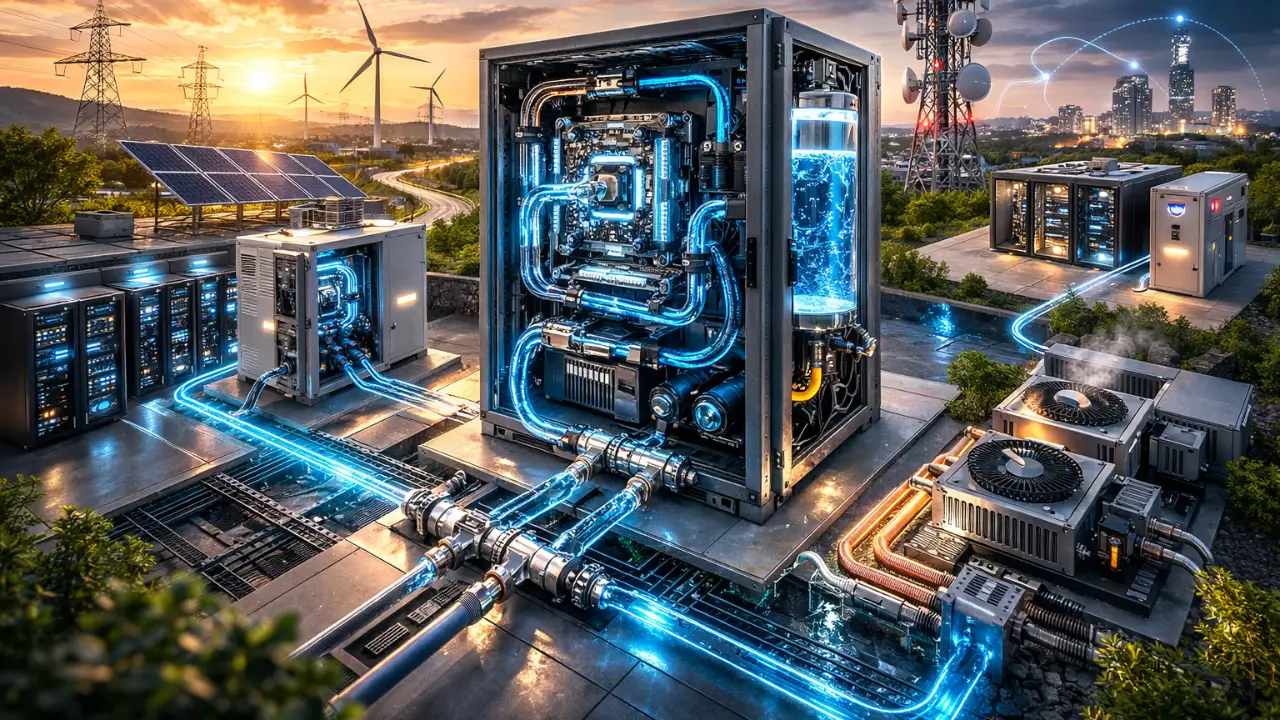
Edge deployments compress enterprise-grade performance into footprints that often resemble network closets more than data halls, forcing thermal design into unfamiliar territory. Compact enclosures, micro data centers, and sealed outdoor cabinets leave little margin for airflow optimization, particularly when designers must house GPUs, AI accelerators, and high-core-count processors within the same confined chassis. Liquid cooling in edge and distributed environments directly addresses this constraint because fluids transfer heat far more efficiently than air, enabling higher density compute in smaller form factors. Direct-to-chip cold plates, rear-door heat exchangers, and compact coolant distribution units allow engineers to shrink the thermal envelope without sacrificing reliability. As power density per rack increases across AI workloads, organizations increasingly recognize that miniaturization cannot succeed without parallel innovation in thermal architecture. This convergence of compact compute and fluid-based cooling reflects broader industry acknowledgment that heat transfer physics ultimately governs edge scalability.
Design teams must therefore treat thermal pathways as structural components rather than accessories. Instead of designing a cabinet first and retrofitting airflow later, engineers now integrate coolant loops into the mechanical skeleton of micro data centers from the earliest blueprint stage. They select materials that resist corrosion, accommodate vibration, and sustain long-term fluid compatibility because distributed environments rarely allow frequent maintenance. This proactive integration reduces the risk of hotspots, improves energy efficiency, and supports denser processor packaging without exceeding safe junction temperatures. Organizations such as ASHRAE have documented the thermal limits of air cooling at higher densities, reinforcing why liquid-assisted approaches gain traction as rack power surpasses conventional thresholds. When miniaturization aligns with liquid cooling strategy, edge nodes gain both computational strength and mechanical resilience.
Designing for Thermal Precision in Compact Nodes
Thermal precision becomes critical when a single overheating component can disrupt a remote industrial workflow or telecom service. Designers must map heat generation profiles at component level, ensuring coolant channels align with the most thermally intense silicon zones rather than distributing cooling uniformly. Computational fluid dynamics modeling increasingly guides the geometry of cold plates and microchannels, optimizing flow rates while minimizing pump energy consumption. These refinements allow compact edge systems to maintain stable performance even when ambient conditions fluctuate widely. Moreover, precision cooling reduces thermal stress cycles that often degrade hardware longevity in harsh environments. By prioritizing targeted heat extraction instead of generalized airflow, engineers unlock predictable performance from increasingly miniaturized edge clusters.
Remote Deployment — Designing for Inaccessibility
Remote compute clusters introduce a unique operational reality: technicians may not reach the site quickly when something fails. Oil rigs, mining operations, rural telecom towers, and border infrastructure demand systems that operate autonomously for extended periods without physical intervention. Liquid cooling in edge and distributed environments must therefore emphasize reliability, leak prevention, and simplified diagnostics. Closed-loop systems with redundant pumps and automated monitoring reduce failure risk while maintaining consistent thermal performance. Sensors embedded in coolant loops can report temperature, pressure, and flow anomalies to centralized management platforms in real time. Designing for inaccessibility transforms cooling from a mechanical subsystem into a digitally monitored asset.
Engineers also reduce moving parts wherever possible because mechanical simplicity increases uptime in isolated sites. Unlike high-velocity air systems that depend on multiple fans, liquid cooling can operate with fewer rotating components, lowering the probability of mechanical failure. Additionally, sealed enclosures shield coolant circuits from dust, salt air, and industrial pollutants that often compromise air-cooled systems. This containment aligns with best practices for remote infrastructure resilience, where environmental exposure can erode reliability. Monitoring platforms integrated with DCIM tools allow operators to anticipate service events before faults escalate into outages. Through this convergence of mechanical robustness and digital oversight, remote deployments gain a sustainable thermal backbone.
Power and Thermal Symbiosis
Edge environments frequently operate under constrained power budgets because many sites rely on limited grid connections, backup generators, or renewable microgrids. Cooling must therefore coexist intelligently with compute loads instead of competing for scarce electrical capacity. Liquid cooling systems consume less energy for heat removal compared with high-volume air circulation, particularly at higher densities, creating a more harmonious relationship between compute power and thermal overhead. This efficiency translates directly into improved power usage effectiveness at distributed sites, even if the scale differs from hyperscale campuses. Organizations such as the International Energy Agency have emphasized the growing energy footprint of digital infrastructure, underscoring the importance of efficient thermal management across all scales. By aligning thermal removal with limited power availability, edge operators maximize useful compute output per watt delivered.
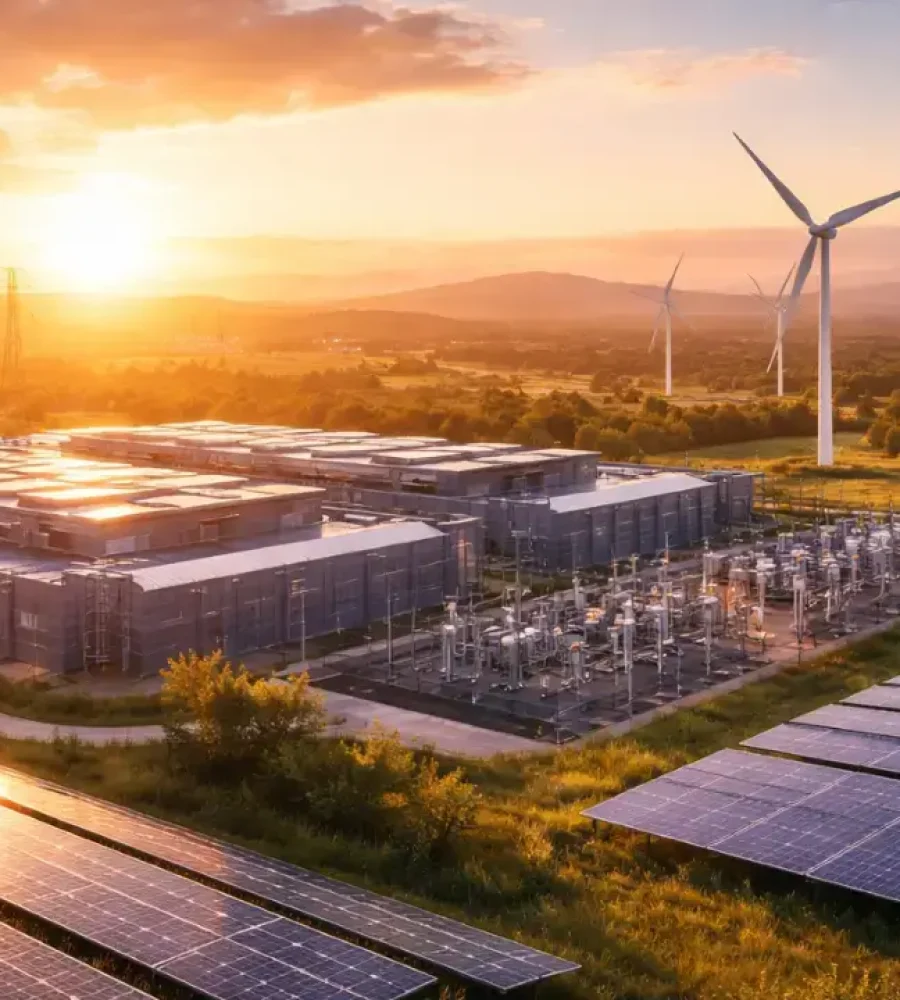
The symbiosis deepens when designers integrate liquid cooling with renewable energy strategies. Many remote deployments pair solar arrays or battery storage with compute nodes, and reducing cooling load extends operational windows during constrained generation periods. Warm-water cooling architectures allow higher coolant temperatures, which reduce chiller dependence and further cut energy draw. In certain deployments, operators can even repurpose low-grade waste heat for nearby facilities, improving overall site efficiency. This holistic view reframes cooling as a partner in energy optimization rather than a passive consumer. By harmonizing thermal extraction with power constraints, distributed environments achieve operational balance without compromising performance.
Serviceability in Confined Spaces
Technicians servicing edge infrastructure often work within tight cabinets, rooftop shelters, or roadside enclosures where maneuverability remains limited. Liquid cooling design must therefore simplify maintenance pathways rather than complicate them. Quick-disconnect couplings, drip-less connectors, and modular cold plate assemblies enable component replacement without draining entire coolant loops. These design choices reduce downtime and mitigate spill risk during on-site servicing. Industry standards bodies have increasingly emphasized maintainability as a design criterion for distributed IT infrastructure. Through modular interfaces and clear service segmentation, liquid cooling systems adapt to the physical realities of confined edge spaces.
Serviceability also extends to predictive maintenance strategies. Embedded telemetry can identify declining pump efficiency, minor pressure drops, or gradual temperature shifts before they disrupt workloads. Remote diagnostics allow central teams to guide field technicians with precision, reducing guesswork and shortening maintenance windows. By structuring coolant circuits into isolated segments, operators can service one module while the remainder continues functioning. This compartmentalized approach supports higher uptime expectations in sectors such as telecommunications and manufacturing. As edge infrastructure becomes mission-critical, maintainable liquid cooling architectures safeguard operational continuity.
Integration with Telco and Communication Infrastructure
Telecommunications infrastructure forms the backbone of many distributed deployments, and cooling systems must integrate seamlessly within standardized rack geometries and power distribution architectures. Telco environments often follow strict form factors defined by ETSI and NEBS requirements, leaving little room for experimental layouts or bulky thermal retrofits. Liquid cooling in edge and distributed environments therefore demands compact coolant distribution units that align with 19-inch and 21-inch rack standards while preserving front and rear equipment access. Network operators increasingly deploy multi-access edge computing (MEC) nodes at base stations to reduce latency for applications such as autonomous vehicles and industrial automation. As these nodes incorporate AI accelerators and high-performance processors, thermal loads exceed what legacy airflow models can handle within sealed telecom cabinets. Consequently, liquid-assisted systems that complement structured cabling and power shelves enable telecom providers to sustain performance without redesigning entire enclosures.
Designers must also consider electromagnetic compatibility and vibration standards that telecom equipment routinely satisfies. Cooling infrastructure cannot introduce interference that disrupts radio frequency components or sensitive communication hardware. Direct-to-chip liquid cooling solutions, which confine fluid flow within sealed cold plates, minimize external electromagnetic exposure while maintaining thermal efficiency. Furthermore, distributed telco sites often share real estate with power converters, battery backup systems, and fiber termination panels, so integration demands spatial discipline and mechanical precision. By embedding cooling manifolds alongside existing power rails, engineers preserve service clearances and cable management paths. Through this alignment, liquid cooling evolves into an invisible yet essential layer of modern communication infrastructure.
Aligning Thermal and Network Architecture
Network architects increasingly recognize that compute placement, latency objectives, and thermal management now intersect. As operators push content delivery and AI inference closer to users, they concentrate high-density workloads within previously modest telecom shelters. That shift requires early collaboration between network planners and thermal engineers to anticipate future rack power escalation. Computational fluid modeling and site surveys inform how coolant loops can scale alongside fiber and radio expansions. This multidisciplinary planning avoids disruptive retrofits and supports incremental capacity growth. When thermal architecture evolves in parallel with network design, distributed telecom infrastructure gains both performance headroom and operational confidence.
Modularity and Scalability at the Edge
Scalability at the edge rarely resembles hyperscale expansion, where operators add entire halls or buildings. Instead, growth unfolds incrementally, often driven by regional demand surges or new application rollouts. Liquid cooling solutions must therefore support modular expansion without forcing complete site redesigns. Prefabricated coolant modules, self-contained rear-door heat exchangers, and rack-level liquid distribution units allow operators to add capacity one rack at a time. This approach aligns with the broader industry shift toward modular micro data centers that arrive preassembled and factory-tested. By embedding scalable cooling within each module, organizations future-proof edge nodes against unpredictable workload growth.
Modularity also enhances logistical efficiency in distributed deployments. Transporting pre-integrated liquid-cooled racks reduces on-site construction complexity and shortens commissioning timelines. Field teams can connect standardized coolant couplings and power feeds without specialized plumbing modifications. This plug-and-play paradigm supports rapid rollout of compute clusters in response to regional events or enterprise expansions. Moreover, modular cooling segments isolate risk because a single unit can undergo maintenance without affecting adjacent racks. Through thoughtful modularization, liquid cooling empowers distributed environments to grow organically while maintaining thermal stability.
Noise, Vibration, and Environmental Sensitivity
Edge nodes frequently operate in acoustically sensitive environments such as retail floors, hospitals, transportation hubs, and office campuses. Traditional high-speed fans generate noise that can disrupt occupants and undermine compliance with workplace standards. Liquid cooling significantly reduces reliance on large fan arrays, lowering acoustic output while sustaining high-performance compute. This quieter operation supports deployment in mixed-use environments where sound levels matter as much as thermal metrics. Additionally, reduced airflow diminishes the ingress of dust and particulate matter that can degrade sensitive components. By decreasing both noise and airborne contamination, liquid cooling enhances operational stability in human-centric spaces.
Environmental sensitivity extends beyond acoustics to vibration and temperature extremes. Telecom towers and roadside cabinets experience mechanical stress from wind, traffic, and structural sway. Liquid systems designed with vibration-resistant fittings and flexible hoses maintain integrity under such conditions. Furthermore, warm-liquid cooling architectures tolerate broader ambient temperature ranges compared with air systems dependent on chilled supply air. This resilience allows edge nodes to function in climates that would otherwise demand extensive HVAC reinforcement. As distributed deployments proliferate across diverse geographies, environmentally robust cooling strategies ensure uninterrupted performance.
Sustainability Beyond Hyperscale
Sustainability conversations often focus on hyperscale data centers, yet distributed infrastructure collectively consumes substantial energy across thousands of sites. Liquid cooling in edge and distributed environments introduces efficiency gains that multiply across these dispersed footprints. Because liquids transfer heat more effectively than air, systems can operate at higher coolant temperatures and reduce mechanical refrigeration demand. This approach lowers overall energy consumption and improves site-level efficiency metrics. Organizations such as the International Energy Agency highlight the importance of reducing digital infrastructure emissions at every scale. Consequently, extending advanced cooling to edge nodes contributes meaningfully to broader decarbonization goals.
Beyond energy efficiency, liquid cooling creates opportunities for localized heat reuse. In urban micro data centers, recovered thermal energy can support building heating or water preheating applications. Although edge sites generate smaller absolute heat volumes than hyperscale campuses, cumulative impact across distributed networks becomes significant. Integrating heat recovery aligns with circular economy principles and enhances corporate sustainability narratives. Moreover, improved thermal management extends hardware lifespan, reducing electronic waste and replacement frequency. By reframing edge cooling as part of environmental stewardship, operators align distributed growth with responsible resource management.
Security of Thermal Systems
As liquid cooling extends into distributed infrastructure, thermal systems themselves become part of the operational risk landscape. Edge sites already face heightened exposure to physical intrusion, environmental tampering, and cyber vulnerabilities because many operate without continuous on-site supervision. Introducing coolant loops, monitoring sensors, and intelligent control units adds new components that require secure configuration and oversight. Engineers must therefore treat cooling telemetry with the same seriousness as compute telemetry, ensuring encrypted communication between remote sensors and centralized management platforms. Modern DCIM and infrastructure monitoring solutions increasingly incorporate secure authentication protocols to prevent unauthorized manipulation of environmental controls. When liquid cooling becomes digitally instrumented, cybersecurity considerations expand beyond servers and into the thermal backbone of distributed sites.
Physical security also demands attention in liquid-cooled edge deployments. Unlike hyperscale campuses with multi-layered security perimeters, many distributed nodes exist in publicly accessible or lightly guarded locations. Designers mitigate risk by using sealed, tamper-resistant coolant enclosures and reinforced fittings that prevent unauthorized access or accidental interference. Leak detection systems provide immediate alerts if coolant pressure drops unexpectedly, helping operators respond swiftly to both accidental damage and malicious tampering. Moreover, compartmentalized cooling loops ensure that localized issues do not cascade into broader infrastructure failures. By embedding physical safeguards into thermal architecture, operators strengthen resilience at sites that lack continuous oversight.
Operational Governance for Distributed Cooling
Governance frameworks must evolve alongside the expansion of liquid cooling into edge environments. Standard operating procedures now include coolant lifecycle management, secure firmware updates for pump controllers, and remote diagnostics auditing. These measures ensure compliance with enterprise risk management policies while maintaining high availability. Industry guidance from organizations such as ISO emphasizes integrated management systems that combine environmental, operational, and information security controls. By formalizing governance around cooling assets, enterprises reduce blind spots that might otherwise emerge in remote deployments. This disciplined approach positions liquid cooling not as a vulnerability but as a managed, secure component of distributed infrastructure.
Future-Proofing Edge Infrastructure
Edge workloads continue to evolve rapidly, driven by artificial intelligence inference, real-time analytics, and autonomous system coordination. Processor roadmaps indicate sustained increases in power density as manufacturers prioritize performance per square centimeter. Liquid cooling in edge and distributed environments provides the thermal headroom required to accommodate these trajectories without constant mechanical redesign. By deploying fluid-based heat removal early, operators avoid the cycle of incremental air-cooling retrofits that often struggle to keep pace with silicon innovation. This proactive adoption ensures that edge nodes remain viable as compute intensity grows. In effect, liquid cooling transforms from a reactive measure into a strategic investment in long-term infrastructure relevance.
Forward-looking design also anticipates heterogeneous workloads that blend CPUs, GPUs, FPGAs, and specialized accelerators within the same chassis. Each component exhibits distinct thermal characteristics, and unified air systems frequently struggle to address these variations effectively. Liquid cold plates tailored to individual processors enable differentiated thermal management within compact racks. This granularity enhances reliability while supporting diverse computational profiles at distributed sites. Additionally, warm-water architectures reduce dependence on traditional chillers, which simplifies adaptation to future energy frameworks. By planning for thermal diversity today, operators prepare edge ecosystems for unpredictable technological shifts tomorrow.
Lessons from Experimental Deployments
Experimental deployments across research institutions and industrial pilots offer valuable insights into how liquid cooling performs outside controlled hyperscale settings. Early prototypes in telecommunications shelters demonstrated that direct-to-chip systems could sustain higher rack densities without expanding enclosure footprints. Engineers observed improved thermal stability during peak demand cycles compared with comparable air-cooled installations. These findings reinforced the practical viability of fluid-based cooling even in compact and vibration-prone environments. Additionally, pilot programs highlighted the importance of clear labeling and standardized quick-connect fittings to simplify field servicing. Through iterative experimentation, designers refined liquid cooling architectures for the unique constraints of distributed sites.
Industrial pilots in manufacturing facilities further underscored adaptability benefits. Facilities that integrated liquid-cooled micro data centers near production lines reported consistent compute performance despite fluctuating ambient temperatures. Designers credited sealed coolant loops and minimized airflow dependency for reducing contamination risk in dusty industrial settings. Lessons learned emphasized rigorous pre-deployment simulation to anticipate thermal behavior under varied load scenarios. Moreover, cross-disciplinary collaboration between IT and facility teams emerged as a decisive factor in successful integration. These experimental deployments collectively demonstrate that innovation at the edge thrives when thermal engineering aligns closely with operational context.
Iterative Refinement and Design Feedback
Feedback loops from field deployments continue to inform evolving standards for distributed liquid cooling. Manufacturers refine pump reliability, gasket durability, and coolant chemistry based on real-world performance data. Operators contribute insights about maintenance accessibility, remote monitoring thresholds, and environmental stressors unique to specific regions. This continuous exchange accelerates maturation of liquid cooling technologies tailored for edge conditions. Industry forums and open hardware initiatives facilitate knowledge sharing that shortens development cycles. As a result, lessons from experimental deployments steadily transform into best practices for mainstream distributed infrastructure.
Field validation continues to shape the evolution of liquid cooling in edge and distributed environments, particularly as deployments move beyond pilot scale into broader commercial adoption. Engineers now incorporate advanced materials science into coolant loop design, selecting elastomers, sealants, and corrosion-resistant alloys that tolerate fluctuating humidity and temperature conditions common at remote sites. Coolant chemistry itself has advanced, with dielectric fluids and treated water-glycol mixtures engineered to balance thermal conductivity, freeze protection, and long-term stability under intermittent operation.
Operators increasingly rely on machine learning models embedded within monitoring platforms to analyze historical thermal data and predict anomalies before they escalate into failures. This data-driven refinement enables predictive adjustments in pump speed, flow distribution, and coolant temperature set points, aligning performance dynamically with workload demand. Through these incremental yet meaningful improvements, experimental insight matures into standardized design doctrine for distributed liquid-cooled environments.
Iterative Refinement and Design Feedback
Another lesson emerging from field experience centers on interoperability across vendors and infrastructure layers. Early experimental systems occasionally suffered from proprietary connectors and incompatible monitoring protocols that complicated multi-vendor integration. In response, industry stakeholders now prioritize open standards and interoperable telemetry frameworks that allow cooling infrastructure to integrate seamlessly with broader data center management systems. Open Compute Project initiatives, alongside evolving ASHRAE thermal guidelines, encourage transparency in design parameters and encourage harmonized performance metrics. This shift reduces friction during expansion phases and simplifies procurement for operators managing geographically dispersed portfolios. Standardization also strengthens supply chain resilience because components can be sourced and replaced without reliance on single vendors. Consequently, iterative refinement now extends beyond mechanical optimization into ecosystem-level coordination.
Field deployments have also underscored the importance of training and documentation. Technicians accustomed to air-cooled systems initially approached liquid loops with caution, particularly in confined or remote environments. Comprehensive training programs and detailed maintenance playbooks helped build operational confidence while reducing service errors. Clear labeling of flow direction, pressure zones, and emergency shutoff mechanisms became standard practice in refined designs. Over time, service teams reported shorter intervention windows and fewer diagnostic uncertainties compared with legacy air systems operating under high-density loads. These human-centered refinements demonstrate that successful thermal innovation depends as much on procedural clarity as on engineering sophistication.
Finally, experimental deployments revealed that resilience improves when liquid cooling design anticipates redundancy without unnecessary complexity. Dual-loop architectures, backup micro-pumps, and segmented manifolds now appear in distributed blueprints where uptime carries operational or regulatory significance. Designers balance redundancy with energy efficiency by activating backup components only under defined thresholds. Such thoughtful layering avoids overengineering while preserving service continuity in unpredictable environments. Lessons from the field therefore confirm that liquid cooling can thrive outside hyperscale contexts when iterative design remains grounded in operational realism.
Conclusion: Engineering the Thermal Frontier of the Edge
Edge computing has shifted the geography of digital infrastructure, but it has also shifted its thermodynamic responsibilities. Where hyperscale facilities once dominated conversations about advanced cooling, distributed environments now confront equally demanding performance profiles within dramatically tighter constraints. Liquid cooling in edge and distributed environments emerges not as a luxury innovation but as a rational response to physics, density, and reliability requirements. By transferring heat with higher efficiency and greater precision, fluid-based systems unlock computational capacity that air cooling alone struggles to sustain in compact enclosures. This transformation reflects a broader maturation of edge architecture, where thermal planning integrates with network topology, power provisioning, and security governance from the outset.
Throughout this evolution, design priorities converge around integration, modularity, serviceability, and resilience. Engineers embed coolant pathways directly into structural layouts, align thermal zones with heterogeneous silicon profiles, and implement telemetry-driven monitoring to ensure proactive oversight. Modular architectures enable incremental scaling, while standardized connectors and interoperable protocols reduce complexity across distributed portfolios. Sustainability benefits extend beyond efficiency gains, supporting heat reuse opportunities and improved hardware longevity across thousands of smaller sites. At the same time, governance frameworks ensure that thermal systems remain secure, monitored, and compliant with enterprise risk standards.
From Thermal Constraint to Strategic Advantage
Looking forward, the trajectory of processor development and AI acceleration suggests that power densities will continue to rise at both centralized and distributed scales. Edge deployments that embrace liquid cooling today secure the thermal headroom required for tomorrow’s workloads, avoiding reactive retrofits that compromise uptime or inflate operating costs. Experimental lessons already inform mainstream adoption, demonstrating that disciplined engineering and iterative refinement can translate hyperscale innovation into compact, resilient infrastructure at the network’s periphery.
Ultimately, the expansion of liquid cooling into distributed environments signifies more than a mechanical upgrade; it represents a systemic realignment of how organizations balance compute ambition with physical reality. As edge ecosystems mature, thermal intelligence will define not only efficiency but the very feasibility of sustained, high-performance distributed computing.