Skip to content
Scale Breaks Before It Sustains
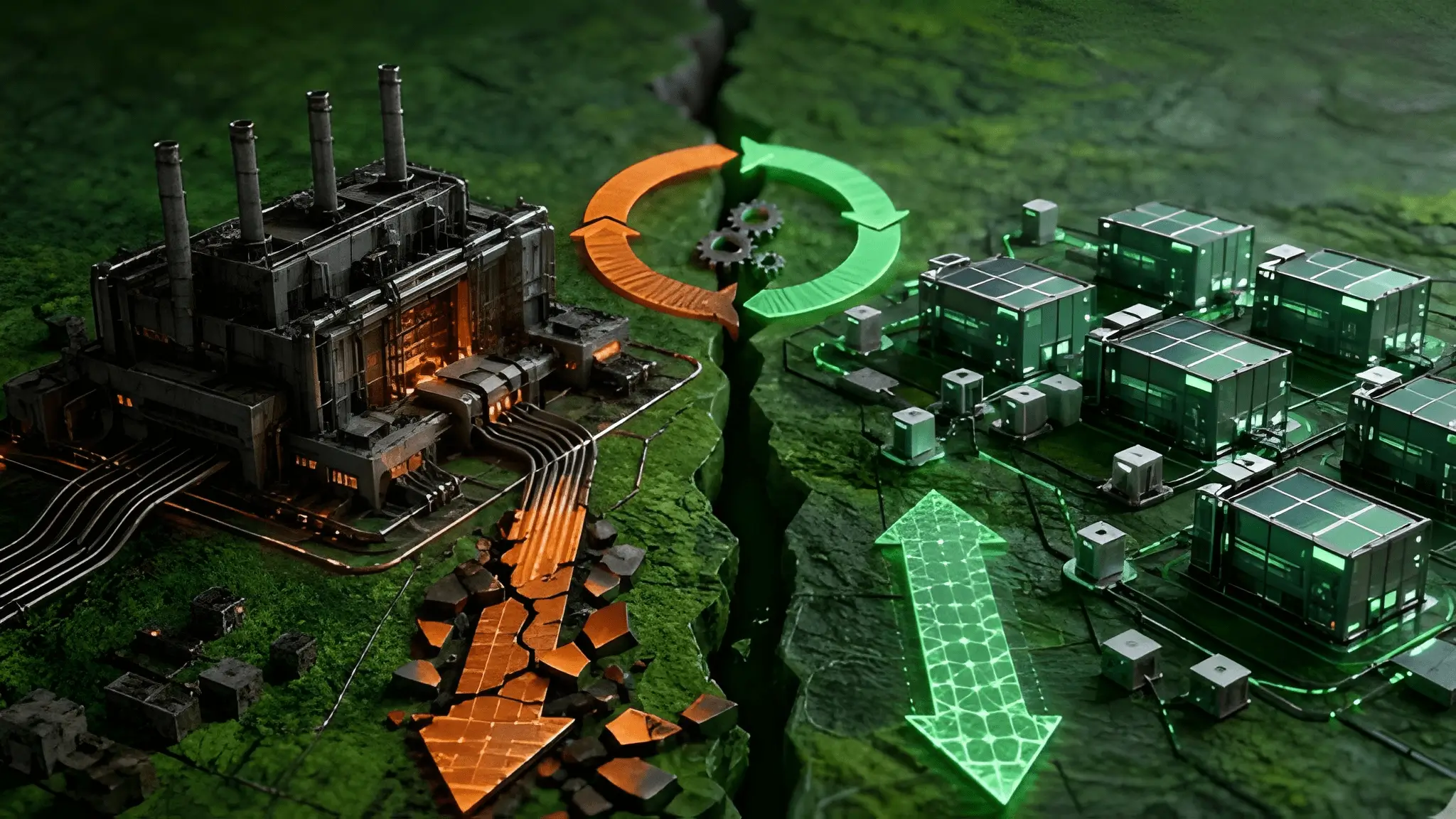
The promise of large-scale energy systems has always rested on efficiency through size, yet real-world conditions often introduce variability that leads to efficiency degradation rather than consistent optimal performance. Demand fluctuates unpredictably across time, geography, and compute intensity, forcing centralized systems into constant mismatch. Engineers design these systems around averaged expectations, but actual load behavior rarely resembles averages. Over time, that mismatch compounds into inefficiency, strain, and eventual instability across the system. Sustainability claims begin to erode not because the intent fails, but because rigidity prevents adaptation. Systems that cannot adjust in real time often operate below optimal efficiency before fully delivering their intended environmental benefits.

Large-scale infrastructure depends heavily on forecast models that assume relatively stable consumption patterns across long durations. Those assumptions break down quickly when workloads shift due to AI inference bursts, regional demand spikes, or unexpected outages. Static capacity planning cannot reconcile these dynamic patterns without either overshooting or falling short of demand. Engineers often compensate by building excess capacity, which introduces inefficiency rather than resilience. Over time, the system operates further from its optimal point, increasing waste rather than reducing it. Sustainability weakens when infrastructure reacts slower than the environment it serves.
Large systems rely on fixed physical infrastructure that resists rapid change once deployed. Transmission lines, substations, and centralized generation units cannot scale incrementally without significant disruption. Even minor upgrades require extensive planning, permitting, and construction cycles that span years. During that time, demand continues to evolve, leaving the system perpetually behind current needs. This lag creates structural inefficiency that no amount of optimization software can fully correct. Sustainability requires flexibility, and rigid systems rarely deliver that under real-world pressure.
Bigger Systems, Bigger Waste Loops
Delays in achieving optimal operation translate directly into lost environmental gains. Systems designed for future efficiency often spend years operating below intended performance levels. That gap between design and operation introduces unnecessary energy waste during the most critical transition periods. Rapid deployment matters more than theoretical peak efficiency in long-term sustainability outcomes. Large systems often fail to meet that requirement due to their inherent complexity. A system that arrives late to efficiency delivers less impact than one that adapts continuously from the start.

Centralized infrastructure tends to amplify inefficiencies rather than eliminate them. Energy must travel longer distances, pass through more conversion stages, and endure multiple layers of distribution before reaching its endpoint. Each step introduces losses that accumulate across the system. Engineers attempt to minimize these losses, but the scale itself creates unavoidable inefficiency loops. As systems grow larger, certain inefficiencies can expand into more pronounced waste patterns, although some efficiencies also improve through scale. Sustainability becomes harder to maintain as the system’s size increases beyond its ability to self-correct.
Transmission Losses Scale With Distance
Electricity loses efficiency as it travels across long transmission networks, regardless of improvements in infrastructure. High-voltage lines reduce loss but cannot eliminate it entirely. Centralized generation forces energy to travel farther, increasing cumulative inefficiency. Distributed systems shorten that path, reducing loss at the structural level rather than compensating for it. Large systems cannot avoid this trade-off because their design depends on distance. Sustainability weakens when energy must travel farther than necessary to reach demand centers.
Centralized systems often maintain excess capacity to handle peak demand scenarios. That capacity remains underutilized for most of its lifecycle, consuming resources without delivering proportional value. Infrastructure built for rare peaks creates continuous inefficiency during normal operation. Modular systems address this by scaling capacity in smaller increments aligned with real demand. Large systems lack that granularity, forcing operators into inefficient compromises. Sustainability declines when systems operate far below their designed utilization levels.
Planning for worst-case scenarios leads to systematic overprovisioning across centralized infrastructure. Engineers must ensure reliability, but the methods used often result in excess capacity that rarely activates. This approach increases material usage, energy consumption, and operational overhead without consistent benefit. Modular systems distribute this risk across smaller units, reducing the need for large safety margins. Centralized systems concentrate risk and inefficiency into single large deployments. Sustainability suffers when systems optimize for extremes rather than reality.
Upgrade Cycles Are a Hidden Carbon Trap
Infrastructure upgrades in large systems occur in discrete, infrequent cycles rather than continuous evolution. Each upgrade requires significant material input, logistical coordination, and system downtime. These cycles introduce bursts of carbon impact that remain hidden behind long planning horizons. While individual upgrades improve efficiency, the cumulative carbon cost of these cycles can partially offset the gains depending on lifecycle design and material reuse. Modular systems can reduce this effect by enabling incremental upgrades without full system disruption, depending on how components are designed and reused. Sustainability improves when evolution replaces replacement as the primary mode of progress.
Large systems often require full replacement of components rather than targeted retrofits. This approach increases material waste and embodied carbon across the system lifecycle. Modular designs allow selective upgrades, preserving functional components while improving efficiency where needed. Replacement-driven models create unnecessary environmental impact compared to incremental improvements. The inability to isolate upgrades within large systems creates structural inefficiency. Sustainability improves when systems evolve without requiring wholesale reconstruction.
System upgrades often require temporary shutdowns or reduced capacity operation. During these periods, backup systems or alternative energy sources compensate for the loss. These substitutes often operate at lower efficiency, increasing overall emissions. Modular systems reduce downtime by isolating upgrades to specific units without affecting the entire system. Continuous operation preserves efficiency while enabling improvement. Sustainability depends on maintaining performance during transition, not just after it.
Each upgrade cycle introduces new materials, manufacturing processes, and transportation requirements. These factors contribute to embodied carbon that often remains unaccounted for in operational metrics. Large systems concentrate these impacts into infrequent but significant events. Modular systems distribute them over time, reducing peak environmental impact. The difference lies in how systems absorb change, not just how they operate. Sustainability requires visibility into lifecycle impact, not just operational efficiency.
The Deployment Lag That Kills Climate Gains
Large-scale energy systems rarely align with the urgency required for climate-responsive deployment. Planning, approvals, financing, and construction extend timelines far beyond the pace at which demand evolves. During that delay, less efficient systems continue to operate, locking in avoidable emissions. Engineers often assume that future efficiency will compensate for present inefficiency, but that assumption rarely holds under real conditions. Time becomes a critical variable, not just a logistical constraint. Sustainability depends as much on when systems deploy as on how they perform.
Deployment speed determines how quickly cleaner systems displace inefficient ones in operational environments. Large infrastructure projects require extended coordination across regulatory, financial, and engineering domains. Each delay prolongs reliance on legacy systems that operate below modern efficiency standards. Modular systems reduce deployment time by breaking projects into smaller, manageable units. Faster integration allows incremental gains to begin immediately rather than waiting for full system completion. Sustainability strengthens when improvements start early and compound over time.
Centralized systems face extensive regulatory processes due to their scale, impact, and geographic footprint. Permitting, environmental assessments, and interconnection approvals introduce delays that extend project timelines. These processes ensure safety and compliance, yet they also slow the transition to more efficient infrastructure. Modular deployments navigate these constraints more effectively by reducing scope and complexity. Smaller systems often integrate within existing frameworks without triggering large-scale approvals. Sustainability benefits when deployment avoids prolonged regulatory bottlenecks.
Efficiency improvements that arrive late contribute less to overall emissions reduction than those implemented early. Large systems often achieve high efficiency only after full deployment and optimization. Until that point, partial operation introduces inefficiencies that dilute intended benefits. Modular systems reach operational efficiency faster due to phased deployment and localized optimization. Early gains accumulate over time, creating a stronger sustainability trajectory. Systems that deliver incremental progress outperform those that delay impact in pursuit of scale.
One Failure, System-Wide Consequences
Centralized architectures concentrate risk into a single operational domain, increasing the impact of failure events. A disruption in one part of the system often propagates across interconnected components. This cascading effect undermines both reliability and sustainability. Engineers design safeguards to mitigate these risks, yet complexity introduces new failure points. Modular systems distribute risk across independent units, limiting the scope of disruption. Resilience becomes a structural feature rather than a reactive measure.
Failures within centralized systems rarely remain isolated due to interdependencies across components. A fault in generation, transmission, or distribution can trigger chain reactions throughout the network. These cascading failures increase recovery time and operational disruption. Modular systems can contain failures within localized units, reducing the likelihood of widespread impact depending on system design and interconnection. Sustainability depends on maintaining stability even during failure scenarios.
Centralized systems rely on redundancy to ensure reliability, and while this redundancy introduces additional cost and complexity, it remains essential for maintaining system stability. Backup systems consume resources even when inactive, contributing to operational overhead. As systems scale, maintaining redundancy becomes increasingly complex and resource-intensive. Modular systems achieve resilience through distribution rather than duplication. Independent units provide natural redundancy without centralized overhead. Sustainability improves when resilience does not require excess resource allocation.
The duration required to restore normal operation after a failure directly impacts system efficiency. Extended recovery periods force reliance on backup systems that often operate at lower efficiency. Centralized systems typically require coordinated recovery efforts across multiple components. Modular systems enable faster restoration by isolating and addressing specific units. Reduced recovery time limits the environmental impact of disruptions. Sustainability strengthens when systems recover quickly and efficiently.
AI Workloads Don’t Wait for the Sun or Wind
Modern compute demand, particularly from artificial intelligence workloads, operates on continuous and unpredictable cycles. These workloads do not align with the intermittent nature of renewable energy sources. Energy systems must adapt to compute demand rather than expecting demand to follow energy availability. Centralized systems struggle to reconcile this mismatch due to their rigidity. Modular systems offer flexibility by aligning energy supply with localized compute demand. Sustainability depends on synchronizing energy systems with real-time workload behavior.
Renewable energy sources generate power based on environmental conditions rather than consumption needs. This variability creates gaps between energy availability and compute demand. Centralized systems attempt to bridge this gap through storage or backup generation. These solutions introduce inefficiencies and additional complexity. Modular systems integrate localized storage and generation to better match demand patterns. Sustainability improves when systems align supply with actual usage rather than compensating for mismatch.
High-density compute environments generate rapid fluctuations in energy demand. AI workloads can scale instantly, creating spikes that centralized systems struggle to accommodate. Static infrastructure cannot respond quickly enough to these changes. Modular systems adjust capacity in smaller increments, improving responsiveness. This flexibility reduces the need for overprovisioning and excess capacity. Sustainability benefits from systems that adapt to demand rather than resist it.
Energy storage systems play a critical role in balancing supply and demand, yet they introduce additional layers of complexity. Large-scale storage requires significant infrastructure, management, and maintenance. Centralized storage systems often operate at lower efficiency due to scale constraints. Modular storage integrates directly with localized energy units, improving efficiency and responsiveness. Distributed storage reduces dependency on large, centralized reserves. Sustainability strengthens when storage operates as part of a dynamic system rather than a static buffer.
Overbuilt for Peaks, Underused by Design
Infrastructure designed to handle peak demand often operates below capacity for most of its lifecycle. This mismatch creates inefficiency that undermines sustainability goals. Engineers prioritize reliability, yet the methods used introduce structural waste. Centralized systems amplify this issue due to their scale and rigidity. Modular systems align capacity more closely with actual demand patterns. Sustainability improves when systems operate near optimal utilization levels.
Designing systems for worst-case scenarios ensures reliability but introduces continuous inefficiency. Most of the time, demand remains below peak levels, leaving capacity underutilized. Centralized systems cannot scale down effectively, maintaining excess capacity regardless of need. Modular systems adjust capacity dynamically, reducing idle resources. This approach improves efficiency without compromising reliability. Sustainability depends on aligning infrastructure with real-world usage patterns.
Even when not actively used, infrastructure requires maintenance, monitoring, and energy input. These factors contribute to ongoing resource consumption without proportional output. Centralized systems magnify this issue due to their size and complexity. Modular systems reduce idle overhead by enabling selective activation of units. This targeted approach minimizes unnecessary resource use. Sustainability benefits from systems that consume resources only when needed.
The ability to scale capacity in real time improves efficiency across the system lifecycle. Modular systems enable incremental adjustments that align with current demand. Centralized systems lack this flexibility, forcing operators to maintain static capacity levels. Dynamic scaling reduces both operational and embodied waste. This capability transforms energy systems from static infrastructure into adaptive platforms. Sustainability improves when systems respond continuously to changing conditions.
The Carbon Cost of “All-or-Nothing” Infrastructure
Large-scale infrastructure projects demand full commitment before delivering any functional value. Construction, material sourcing, and system integration occur as a single, unified effort rather than in stages. This approach concentrates environmental impact into a single phase, increasing embodied carbon before operations even begin. Engineers often justify this with long-term efficiency gains, yet those gains take time to materialize. During that period, the system carries a significant carbon burden that remains unoffset. Sustainability weakens when systems require maximum investment before delivering incremental benefit.
Material extraction, manufacturing, and transportation contribute significantly to the initial carbon footprint of large systems. These processes occur before the system generates any operational value. Centralized infrastructure amplifies this effect due to its scale and complexity. Modular systems distribute material usage over time, reducing immediate environmental impact. This phased approach aligns carbon output with operational benefits. Sustainability improves when systems avoid front-loading their environmental cost.
Large projects concentrate both financial and environmental risk into a single execution window. Delays, design changes, or unforeseen challenges increase both cost and carbon impact. Modular systems reduce this risk by enabling incremental deployment and adjustment. Each phase delivers value while informing subsequent implementation. This iterative approach improves efficiency and reduces waste. Sustainability benefits from systems that evolve through continuous refinement.
Centralized systems often require near-full completion before full optimization can occur, although partial optimization may take place during staged deployment phases. Modular systems enable optimization at each stage of deployment. This continuous improvement reduces inefficiency throughout the system lifecycle. Incremental optimization compounds into significant long-term gains. Sustainability strengthens when systems improve continuously rather than waiting for completion.
Grid-Centric Thinking Is Holding Sustainability Back
Traditional energy systems revolve around centralized grids that distribute power from large generation sources. This model assumes a unidirectional flow of energy from producer to consumer. Modern demand patterns challenge this assumption with distributed generation and localized consumption. Centralized grids struggle to integrate these changes without significant modification. Modular systems operate within decentralized frameworks that align with current energy dynamics. Sustainability advances when systems shift from rigid grids to adaptive ecosystems.
Distributed energy resources introduce new patterns of generation and consumption across the grid. These resources operate closer to demand centers, reducing transmission requirements. Centralized systems must adapt to accommodate bidirectional energy flows. Modular systems inherently support this model by integrating generation, storage, and consumption locally. This alignment improves efficiency and reduces system strain. Sustainability benefits from systems that reflect actual energy usage patterns.
Centralized control systems attempt to manage complex networks with limited real-time visibility. This approach introduces latency and reduces responsiveness to local conditions. Modular systems enable localized optimization, allowing each unit to respond independently. This decentralization improves overall system efficiency and resilience. Local decision-making reduces the burden on centralized coordination. Sustainability improves when systems optimize at the point of use rather than from a distance. Modern energy systems require components that can integrate seamlessly across different environments. Centralized systems often rely on proprietary architectures that limit flexibility. Modular systems prioritize interoperability, enabling integration across diverse platforms. This capability supports continuous evolution and adaptation. Flexible systems respond more effectively to changing conditions. Sustainability depends on the ability to integrate new technologies without restructuring entire systems.
Modularity Turns Energy Into a Real-Time System
Energy systems must operate with the same responsiveness as the workloads they support. Static infrastructure cannot meet the demands of dynamic environments. Modular systems transform energy into a real-time resource that adjusts continuously. This shift changes how systems generate, distribute, and consume power. Real-time adaptability improves both efficiency and resilience. Sustainability depends on systems that evolve with demand rather than resist it. Modular systems distribute load across multiple units, balancing demand in real time. This approach reduces stress on individual components and improves overall efficiency. Centralized systems struggle to achieve this level of granularity. Load imbalances create inefficiencies that propagate across the system. Modular architectures isolate and correct these imbalances quickly. Sustainability improves when systems maintain equilibrium under varying conditions.
Advanced monitoring and analytics enable modular systems to anticipate demand changes. Predictive scaling adjusts capacity before inefficiencies emerge. Centralized systems often react after the fact, introducing lag and waste. Proactive adjustment improves system performance and reduces resource consumption. This capability aligns energy supply with future demand rather than past trends. Sustainability strengthens when systems operate ahead of demand curves. Traditional systems rely on fixed design parameters that rarely change after deployment. Modular systems operate within a continuous optimization framework. This approach allows systems to evolve in response to new conditions. Incremental improvements accumulate over time, enhancing efficiency. Static systems cannot achieve this level of adaptability. Sustainability improves when systems remain in a constant state of refinement.
Static Energy Systems Can’t Handle Dynamic Compute
Compute environments evolve rapidly, driven by software, workloads, and user demand. Energy systems must match this pace to maintain efficiency. Static infrastructure cannot adapt quickly enough to these changes. This mismatch creates inefficiencies that compound over time. Modular systems provide the flexibility required to align energy supply with compute demand. Sustainability depends on synchronization between these two domains. Centralized systems introduce delays in responding to changes in energy demand. These delays result in either surplus generation or insufficient supply. Both scenarios reduce overall efficiency. Modular systems minimize latency by operating closer to demand points. Faster response times improve system alignment and reduce waste. Sustainability benefits from systems that react in near real time.
Static systems operate within predefined capacity limits that restrict flexibility. Adjusting these limits requires significant effort and time. Modular systems expand or contract capacity with minimal disruption. This flexibility allows systems to match demand more accurately. Reduced mismatch improves efficiency across the system lifecycle. Sustainability strengthens when systems adjust without delay. Compute workloads evolve continuously, introducing new patterns of energy consumption. Energy systems must adapt to these changes to maintain efficiency. Modular architectures support this evolution through incremental adjustment. Centralized systems struggle to keep pace due to structural rigidity. Alignment between energy and compute improves overall system performance. Sustainability depends on systems that evolve together rather than independently.
The Density Problem: Why Compact Systems Win
Land use, infrastructure sprawl, and transmission complexity define the efficiency limits of large-scale systems. As systems expand, they require more physical space and supporting infrastructure that extends far beyond the core function. This expansion introduces inefficiencies that compound across logistics, maintenance, and energy delivery layers. Compact systems counter this by concentrating capability within tighter physical boundaries without compromising operational output. Modular architectures make this density achievable by distributing function across optimized units instead of spreading it across geography. Sustainability improves when systems deliver maximum utility from minimal physical and infrastructural footprint.
Large infrastructure projects consume land at a scale that reshapes ecosystems and disrupts existing land usage patterns. This impact extends beyond physical occupation into changes in water flow, soil composition, and biodiversity stability. Compact systems reduce this footprint by integrating high-capacity components within smaller areas. Modular deployments further enhance this by fitting into already developed or industrial zones instead of requiring new land conversion. This approach preserves surrounding environments while still meeting energy demands. Sustainability strengthens when infrastructure minimizes its interaction with natural systems.
Energy efficiency declines as the distance between generation and consumption increases due to inherent transmission losses. Centralized systems depend on extended transmission networks that introduce multiple points of inefficiency. Compact systems localize generation closer to demand, reducing the distance energy must travel. Modular units reinforce this by enabling distributed placement aligned with consumption clusters. This structural proximity improves overall system efficiency without requiring compensatory technologies. Sustainability improves when systems eliminate unnecessary energy movement rather than attempting to optimize it.
Expanding infrastructure introduces layers of operational complexity that increase the likelihood of inefficiencies and failure points. Each additional node, connection, or subsystem adds coordination overhead that scales non-linearly with system size. Large systems require extensive management frameworks to maintain stability across these components. Compact systems reduce this burden by limiting the number of interconnected elements. Modular designs can maintain relative simplicity while enabling scalability, although performance depends on thermal management and system density constraints. Sustainability improves when systems remain manageable as they expand rather than becoming increasingly complex.
From Infrastructure to Architecture: The Modularity Shift
Energy systems are moving beyond static infrastructure models toward dynamic architectures that evolve alongside demand. This shift reflects the growing need for adaptability in environments defined by rapid technological and consumption changes. Modular systems enable this transition by allowing continuous integration of new capabilities without disrupting existing operations. Architecture becomes the defining principle, focusing on how components interact rather than how large they are. This approach supports resilience, flexibility, and long-term efficiency. Sustainability depends on systems that can evolve without requiring foundational reconstruction.
Modular architectures support composability, allowing systems to expand through the addition of discrete, interoperable units. Each unit contributes to overall capability while maintaining independence in operation and upgrade cycles. This structure enables continuous evolution without requiring full system redesign. Centralized systems lack this flexibility due to tightly coupled components that resist incremental change. Composability allows systems to respond to emerging demands with precision rather than broad adjustments. Sustainability improves when systems evolve through targeted enhancements instead of disruptive overhauls.
Modern energy environments require seamless integration across diverse technologies, platforms, and operational contexts. Interoperability ensures that components communicate effectively and operate cohesively within a unified system. Modular systems prioritize open standards and compatibility to enable this integration. This approach allows new technologies to integrate without requiring structural changes to existing systems. Centralized architectures often limit this flexibility through proprietary or rigid design frameworks. Sustainability depends on the ability to integrate innovation continuously without introducing inefficiency.
System architecture determines how effectively energy systems respond to disruption, variability, and long-term change. Modular architectures distribute risk and can enable rapid adaptation depending on coordination, control systems, and interconnection design. This distribution enhances resilience by preventing single points of failure from affecting the entire system. Centralized systems concentrate risk, making them more vulnerable to large-scale disruptions. Adaptive architecture supports continuous operation even under stress conditions. Sustainability strengthens when resilience emerges from system design rather than reactive measures.
The Future Is Built in Pieces, Not Megastructures
Sustainability increasingly depends on how systems adapt alongside how efficiently they scale. Large-scale infrastructure struggles to keep pace with dynamic demand patterns, evolving compute workloads, and shifting environmental conditions. Modular systems introduce a different model by distributing capability across smaller, adaptive units that evolve continuously. This approach aligns energy systems with real-time requirements instead of static projections. Flexibility replaces rigidity as the defining characteristic of sustainable design. Long-term impact emerges from systems that adjust continuously rather than those that rely on fixed assumptions.
Incremental deployment allows systems to grow in alignment with actual demand rather than anticipated extremes. Each addition contributes immediate value without requiring full system completion. This contrasts with monolithic expansion, where benefits materialize only after extensive development cycles. Modular growth reduces both financial and environmental risk by distributing investment over time. Continuous deployment ensures that systems remain relevant throughout their lifecycle. Sustainability improves when growth follows demand rather than attempting to predict it.
Energy systems must adapt continuously to remain efficient in rapidly changing environments. Static designs cannot accommodate the pace of change driven by modern compute and consumption patterns. Modular architectures enable ongoing adjustment through incremental upgrades and reconfiguration. This adaptability ensures that systems maintain alignment with current conditions. Continuous evolution replaces periodic transformation as the dominant model. Sustainability strengthens when systems remain responsive rather than reactive.
Sustainability no longer depends on scaling systems to their maximum size, but on structuring them for continuous adaptation. Large, rigid infrastructures fail to align with the dynamic nature of modern energy demand and compute workloads. Modular systems introduce a fundamentally different approach by distributing capacity, risk, and evolution across smaller, interoperable units. This shift enables faster deployment, improved efficiency, and greater resilience under real-world conditions. The transition toward more adaptive and modular architectures, alongside centralized systems, marks a critical turning point in how energy systems operate. Long-term sustainability will emerge from systems that grow, adjust, and optimize in real time while balancing the advantages of both modular and large-scale infrastructure.