The global cloud infrastructure market is currently undergoing a structural inversion that challenges the fundamental assumptions of “Cloud 1.0” dominance. For two decades, the narrative of digital transformation focused on relentless centralization, as Amazon Web Services (AWS), Microsoft Azure, and Google Cloud Platform (GCP) leveraged massive economies of scale to commoditize compute and storage. However, the emergence of generative artificial intelligence (GenAI) and the subsequent demand for Large Language Model (LLM) training have revealed a critical rift between the architectural requirements of the “AI Era” and the legacy virtualization strategies of the hyperscalers. As a result, this rift has catalyzed the rise of “neoclouds,” specialized, GPU-centric providers like CoreWeave, Lambda Labs, and Nebius. These companies have transitioned from niche alternatives to becoming the primary infrastructure partners for the world’s largest technology firms.
This report examines the multi-layered rationale behind why the world’s largest cloud providers now rent from their startup competitors. This shift does not respond merely to temporary supply chain shortages. Instead, it reflects a strategic realignment driven by architectural necessity, financial engineering, geopolitical sovereignty, and a shift in the power dynamics of the semiconductor supply chain. The analysis demonstrates that the current period marks the transition to “Cloud 3.0,” where the general-purpose, virtualized “supermarket” model of the incumbents is increasingly augmented or, in some cases, replaced by the high-performance, bare-metal “delicatessen” model of the neocloud.
The Architectural Mismatch: Bare Metal vs. Legacy Bloat
The primary catalyst for the neocloud pivot lies in a fundamental incompatibility between the legacy cloud stack and the physics of Large Language Model training. Hyperscale clouds were architected for a world of asynchronous, CPU-heavy web services. Their design prioritized flexibility, multi-tenancy, and high-density virtualization. By contrast, training a frontier AI model requires a synchronous, high-bandwidth environment where thousands of GPUs function as a single, massive supercomputer.
The Virtualization Tax: Why Hypervisors Fail AI
Virtualization introduces a hypervisor layer that abstracts hardware, allowing multiple users to share a single physical server. While this setup optimizes utilization for general workloads, it imposes a “virtualization tax” that drastically reduces AI performance. In traditional cloud setups, the hypervisor sits between the hardware and the operating system. This arrangement creates overhead through privileged instruction traps, known as “VM exits,” and complex memory address translation processes.
When an AI model executes dense matrix multiplications on a GPU, any hypervisor interruption triggers context switches. These switches flush cache lines and stall the execution pipeline. Although controlled lab environments might show only a 4–5% overhead, real-world deployments often experience performance penalties between 15% and 25% compared to bare metal. For a $100 million training run, a 20% performance loss translates to a $20 million financial waste and delays in competitive time-to-market. Neoclouds eliminate this tax by providing Bare Metal-as-a-Service (BMaaS). By removing the hypervisor entirely, these providers give AI models direct silicon access to NVIDIA CUDA or AMD ROCm kernels. This ensures that 100% of the hardware’s FLOPs are directed toward the workload. Character.AI, for instance, reported a 13.5x cost-performance edge when moving from legacy virtualized clouds to bare-metal infrastructure to serve its 20,000 queries per second. This improvement largely stems from predictable memory bandwidth, which can reach up to 140 TB/s for a 70B model, a metric often throttled by virtualization.
The Fabric Factor: Synchronous Parallelism and the Jitter Paradox
Beyond the server level, the most significant bottleneck in AI training exists in the network fabric. LLM training is a “synchronously parallel” task, meaning GPUs must constantly exchange gradients and weights through “all-reduce” or “reduce-scatter” operations. If the network cannot handle this massive, all-to-all communication, the GPUs sit idle, waiting for packets to arrive. This situation lowers Model FLOPs Utilization (MFU). Hyperscalers traditionally rely on Ethernet-based networking, designed for the lossy, asynchronous nature of the internet. Even with optimizations like RDMA over Converged Ethernet (RoCE), standard cloud networking often struggles with “network jitter,” which results from unpredictable variations in latency caused by “noisy neighbor” traffic from other virtual machines.
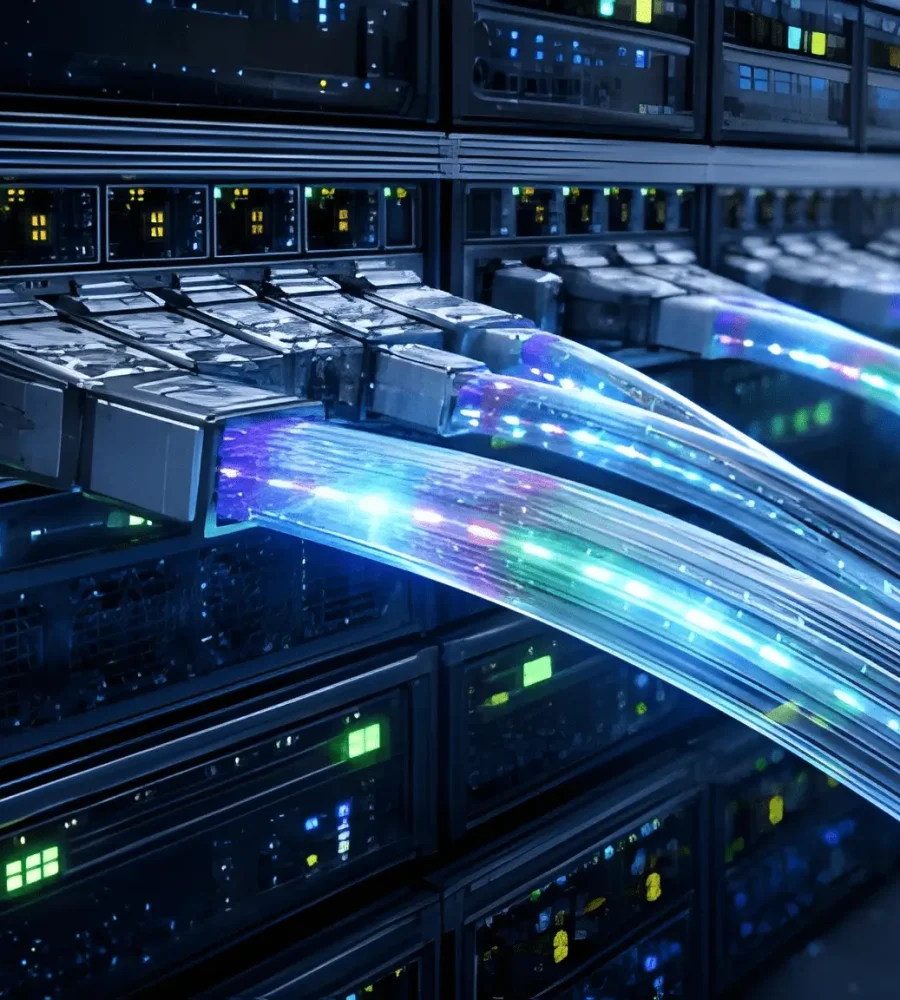
Neoclouds, by contrast, are built around NVIDIA Quantum-2 InfiniBand from the outset. InfiniBand is a specialized interconnect that delivers up to 800 Gb/s throughput with microsecond-level, deterministic latency. Unlike Ethernet, which uses a “best-effort” delivery model and retransmits lost packets, InfiniBand utilizes credit-based flow control to prevent packet loss by design. Benchmarks show that InfiniBand networking can provide up to 10 times faster training than standard 10 Gbit/s Ethernet configurations. This improvement reduces the average step time from 39.8 seconds to 4.4 seconds. In a distributed training job, all GPUs must finish their calculations before the next step begins. If even one GPU slows down by a few microseconds due to network jitter, the entire cluster of 20,000 GPUs stalls. Neoclouds provide a “lossless” fabric that ensures deterministic and consistent performance, which is critical for training frontier models where communication can account for more than 30% of total execution time.
Legacy Bloat and the Thermal Wall
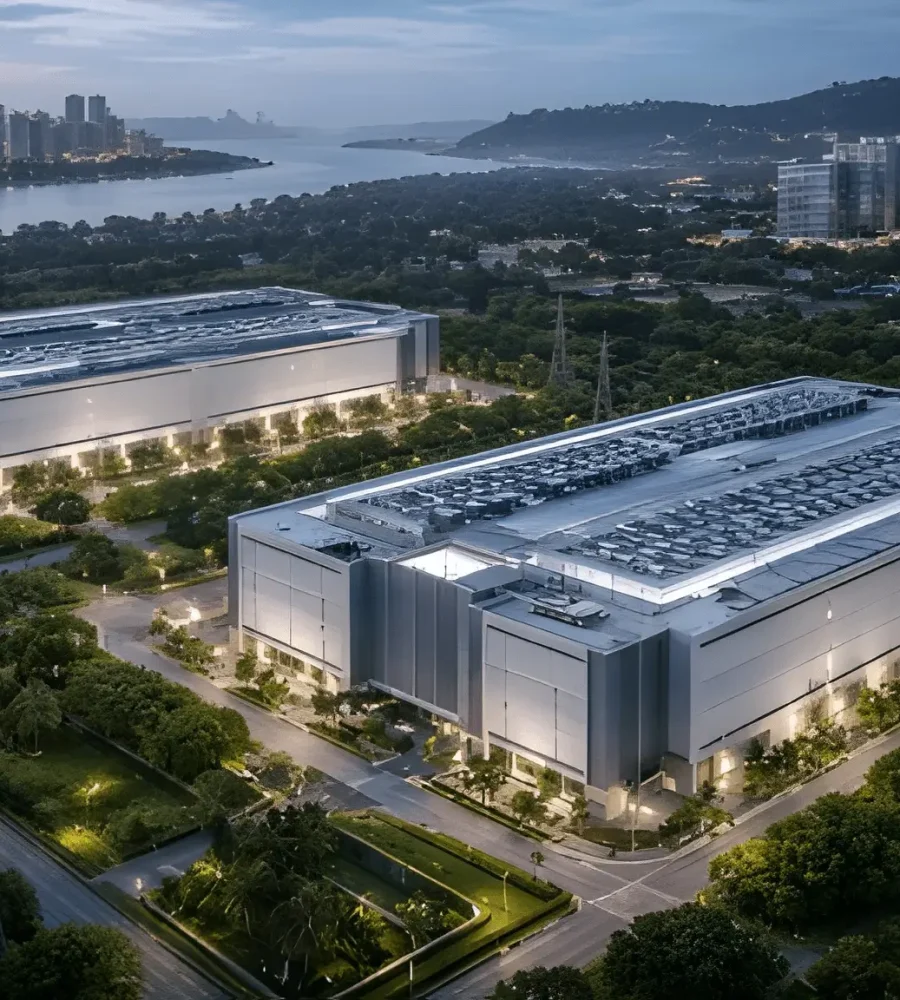
Hyperscale data centers were originally designed for rack densities of 5 kW to 10 kW, cooled by traditional air-handling units. Modern AI clusters, particularly those using NVIDIA Blackwell or Blackwell Ultra (GB300) architectures, require 50 kW to 100 kW per rack. This surge in thermal density has created a “thermal wall,” where conventional air cooling cannot keep pace with chips drawing 1,000 to 1,400 watts each.
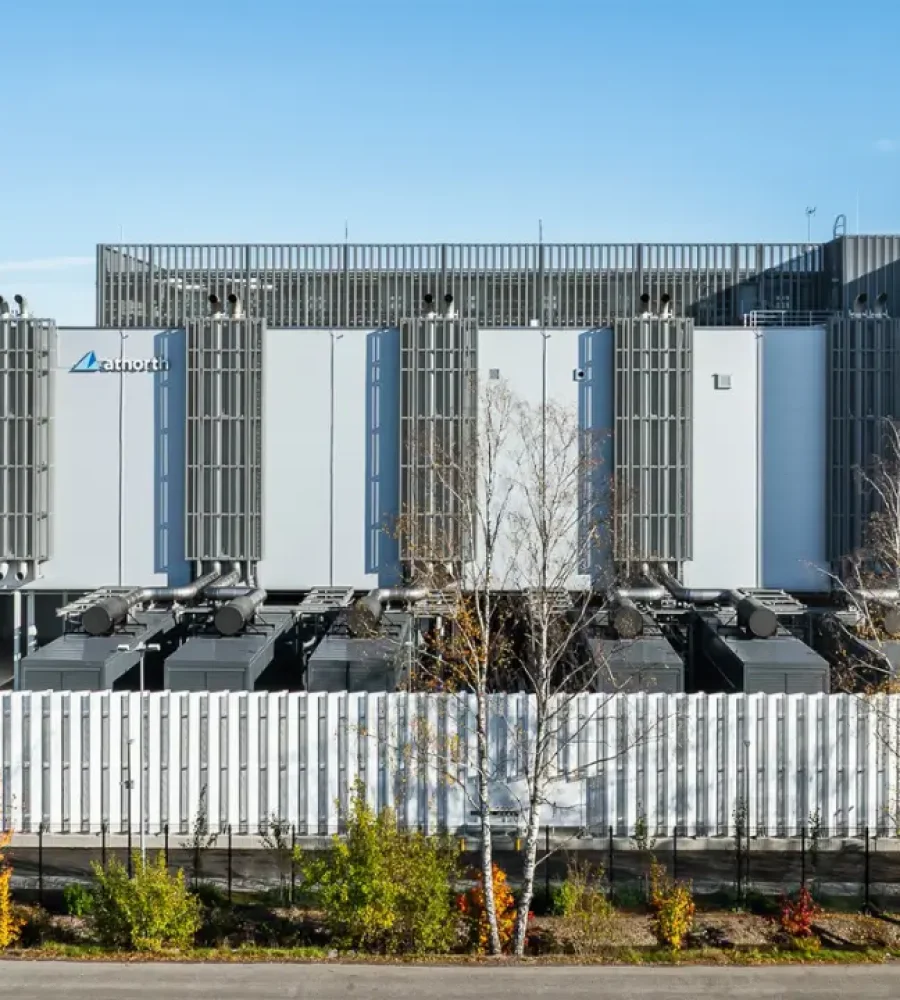
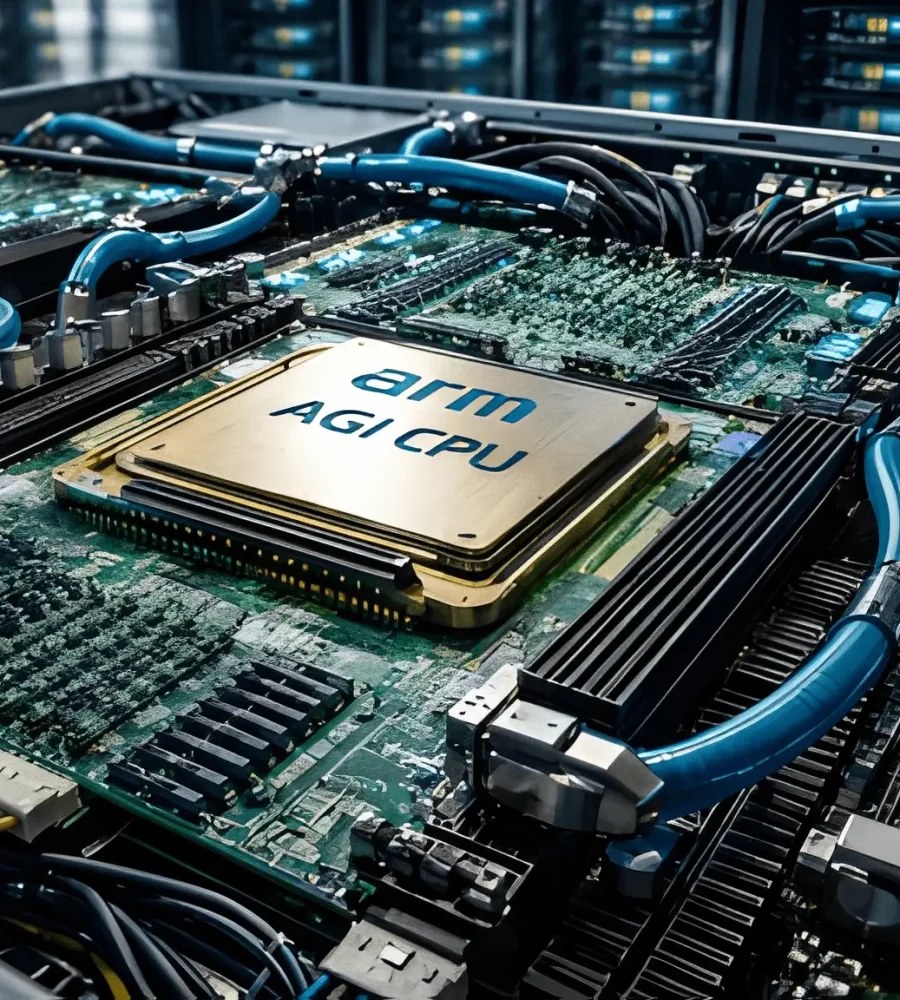
Neoclouds, often operating in greenfield environments or repurposing high-density infrastructure such as former crypto-mining sites, face no such legacy air-cooling constraints. Many have adopted liquid cooling as the default, which is nearly 25 times more efficient at heat transfer than air-based systems. By focusing almost exclusively on GPU-as-a-Service, neoclouds have removed the “bloat” of hundreds of managed services, including legacy databases and API gateways, that hyperscalers must support. This approach allows neoclouds to operate with significantly leaner management overhead and homogenous hardware fleets. The resulting cost difference is stark. An NVIDIA H100 instance that costs approximately $98 per hour on a hyperscale platform can often be rented from a specialized neocloud for just $34, representing a 66% savings for identical silicon.
Financial Arbitrage and CapEx Offloading
The relationship between hyperscalers and neoclouds is defined by a “frenemy” dynamic. The world’s largest technology companies have become the primary funding source and anchor tenants for the startups attempting to disrupt them. This relationship exists because of the staggering capital requirements of the AI era and the need for hyperscalers to manage their balance sheets while meeting explosive demand.
Asset-Light Scaling: The Compute Hedge
In 2025 and 2026, the primary constraint on AI development shifted from chip supply to power and data center capacity. Hyperscalers faced grid interconnection queues of five to seven years in traditional hubs like Northern Virginia’s “Data Center Alley.” Facing an internal shortage of AI-ready infrastructure, hyperscalers such as Microsoft signed massive multi-year contracts to rent capacity from neoclouds. These agreements helped them meet the immediate needs of partners like OpenAI.
Microsoft’s commitment to neoclouds expanded into a broader $33 billion strategy in late 2025. This included a landmark $19.4 billion multi-year agreement with Nebius to secure access to 100,000 NVIDIA GB300 (Blackwell Ultra) GPUs. For the hyperscaler, this arrangement functions as a “compute hedge.” It allows them to fulfill immediate demand from high-priority AI customers without waiting for their own multi-year, gigawatt-scale campuses to finish construction. By renting from neoclouds, Microsoft and Google can categorize these costs as Operating Expenditure (OpEx) rather than Capital Expenditure (CapEx). This offers significant benefits for cash flow management and tax reporting to Wall Street.
The GPU REIT Model: The Financialization of Silicon
Neoclouds have become specialized Real Estate Investment Trusts (REITs) for the AI era. Unlike hyperscalers, who fund infrastructure through corporate cash flows, neoclouds have pioneered the use of “GPU-collateralized debt.” This model treats high-end NVIDIA chips as a new, liquid asset class. CoreWeave exemplifies this aggressive leverage, carrying over $10 billion in private credit backed directly by its fleet of H100 and Blackwell GPUs.
These GPU-backed loans often carry interest rates around 14%, reflecting the triple threat of rapid hardware obsolescence, high asset concentration, and the unproven profitability of the neocloud model. However, because high-end GPUs currently retain value better than traditional server hardware due to the supply-demand imbalance, lenders are willing to treat them as durable collateral. Neoclouds take on the massive debt and construction risk, while hyperscalers pay a premium to rent that capacity back as “ready-to-go” infrastructure. This situation represents a “financial arbitrage,” allowing hyperscalers to offload hardware depreciation and grid delays onto the neocloud’s balance sheet while maintaining high Return on Invested Capital (ROIC) metrics. Innovative models are also emerging that leverage blockchain technology to tokenize physical hardware, enabling GPUs to be used as collateral in digital lending protocols.
Risk Arbitrage and the Utilization Threshold
The economics of neoclouds are also supported by utilization arbitrage. In the public cloud, owning dedicated infrastructure becomes cost-effective only if average utilization exceeds 22%. However, because neoclouds offer significantly lower unit costs—$34 per hour for an H100 versus $98 per hour—enterprises face a higher threshold to justify building their own data centers. The break-even utilization rises to 66%. Since few enterprises can maintain a consistent 66% or higher utilization across their GPU fleet, renting from a neocloud becomes the most rational economic choice for everyone except the largest AI research labs.
The Geopolitics of “Sovereign AI”
As artificial intelligence becomes a core component of national power, a new paradigm of “Sovereign AI” has emerged. Nations like Saudi Arabia, Germany, and India now require that their national AI models be trained and hosted on domestic soil by providers who understand local regulations. These providers are not subject to foreign extraterritorial laws such as the US CLOUD Act.
Regional Agility and the Neutral Broker
Neoclouds are often more willing to build smaller, regionally specific “compute islands” than the hyperscale giants, who prefer centralized hubs. In regions where there is distrust of US-based megacorporations, a local or specialized neocloud serves as a “neutral broker.” In this model, the neocloud provides the raw compute power while the hyperscaler delivers the software layer.
European neoclouds, such as Scaleway or the IONOS/Noxtua partnership in Germany, are positioned as local alternatives to US-headquartered providers. In 2025, IONOS and Noxtua launched Germany’s first “Legal AI Factory” in Munich. This facility is purpose-built for the sensitive data of law firms and government authorities. It meets strict professional data protection requirements under Section 203 of the German Criminal Code, which generic public clouds have struggled to certify. Similarly, the EU’s “Gaia-X” initiative aims to build an interoperable, secure data infrastructure based on open standards, preventing the concentration of power in the hands of a single non-European provider.
Case Study: India’s Shakti Cloud and Self-Reliant AI
India’s mission for “Self-Reliant AI” is being built on Shakti Cloud, a platform developed by Yotta Data Services in collaboration with NVIDIA. India has 1.4 billion people and over 300 languages but previously lacked AI models trained on local cultural contexts. Shakti Cloud delivers the bare-metal, GPU-dense infrastructure required for Indian startups, such as Sarvam AI, to train LLMs in 10 different Indian languages. By leveraging DDN EXAScaler storage and 8,000 NVIDIA B200 GPUs, Yotta has created a platform that is “Sovereign by Design.” All Indian data remains within defined borders and is governed under local policy.
The Middle East AI Corridor: Stargate UAE and Saudi Vision 2030
The Gulf nations are using their substantial national wealth to build some of the largest AI data centers in the world. In late 2025, G42, OpenAI, and Oracle announced “Stargate UAE,” a project to construct a 1-gigawatt AI infrastructure campus in Abu Dhabi. The first 200-megawatt cluster is expected to go live in 2026, using NVIDIA Blackwell GB300 systems.
These sovereign initiatives prioritize independence from US-based megacorporations due to sensitive national data pools. Specialized neoclouds such as Core42 enable these nations to utilize US-made silicon while retaining physical and legal control over the infrastructure. Similarly, Saudi Arabia’s Public Investment Fund announced plans to invest $40 billion directly into AI, semiconductors, and data infrastructure to establish national-scale AI capabilities for government services under Vision 2030.
The Chipmaker’s Kingmaker Strategy
The most significant factor in the rise of neoclouds is the strategic role of NVIDIA and AMD. The world’s leading chipmakers have moved up the stack to become the ultimate arbiters of market power.
Ecosystem Insurance: Preventing Vertical Monopsony
NVIDIA has a strategic interest in ensuring that AWS, Azure, and Google Cloud do not become too powerful. All major hyperscalers are currently developing their own custom AI ASICs, such as Google’s TPU, Microsoft’s Maia, and AWS’s Trainium. These chips aim to reduce hyperscalers’ reliance on NVIDIA and capture higher margins. To counter this vertical integration, NVIDIA has implemented a strategy of “preferential allocation” for neocloud startups.
By prioritizing chip allocations for startups such as CoreWeave and Lambda, NVIDIA ensures that a competitive secondary market for its chips exists. This strategy creates a fleet of neoclouds fully committed to NVIDIA’s CUDA software stack. The relationship represents a “verticalized cloud,” where the neocloud acts as a showcase for NVIDIA’s full-stack architecture—including networking, storage, and compute, without the constraints of legacy software from the big three. NVIDIA strengthens this position through direct equity stakes, owning roughly 7% of CoreWeave and approximately 1.2 million shares of Lambda Labs.
The Feedback Loop: Forced Renting
A powerful feedback loop has emerged in the cloud market. When a hyperscaler’s customer demands the latest chips that the provider has not yet deployed internally, the provider must rent that capacity from a neocloud to retain the customer within their software ecosystem.
CoreWeave was among the first cloud providers to deploy Blackwell Ultra GPUs (GB300 NVL72) commercially. When enterprises require the 15 petaflops of dense FP4 compute offered by the GB300, and the hyperscaler’s internal supply is committed to its own first-party AI models, such as Google’s Gemini or Microsoft’s Copilot, the hyperscaler must rent capacity from a neocloud. This outsourcing tactic allows hyperscalers to monetize their software layer while keeping enterprise customers within their identity management and security ecosystems, leaving the raw compute to the agile neocloud upstart.
The Infrastructure Shift: From Shared Services to AI Factories
The shift of hyperscalers renting from neoclouds signals a broader transformation in compute delivery. We are moving from a world of shared services to a world of dedicated AI factories.
The Noisy Neighbor and the $100 Million Failure
In traditional clouds, users share physical hardware, networking, and storage. This arrangement creates the “noisy neighbor” effect, where sudden spikes in one user’s traffic cause latency issues for others. While negligible for a web server, jitter is fatal for LLM training. In distributed training, even a few microseconds of jitter compounds across millions of steps, wasting tokens, time, and power.
Neoclouds solve this problem through physical and logical isolation. They provide dedicated bare-metal clusters with InfiniBand fabrics. This reliability explains why Character.AI reported a 13.5x cost-performance advantage when moving to bare-metal AI clusters. For a $100 million training run, a 1% drop in network efficiency equals a $1 million loss. Neoclouds provide the “architectural purity” required to prevent these losses. Top-tier providers, such as CoreWeave, also use specialized orchestration tools like “Slurm on Kubernetes” (SUNK) to manage distributed workloads with unmatched flexibility.
Power as the Ultimate Moat
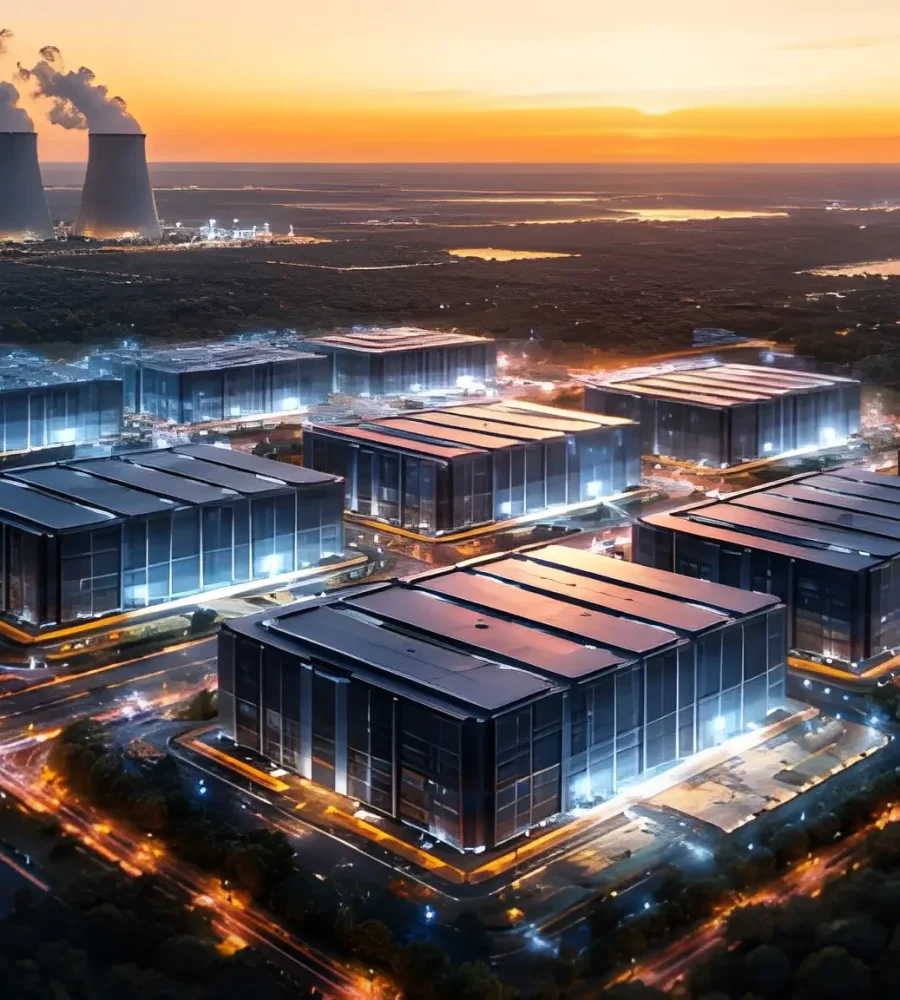
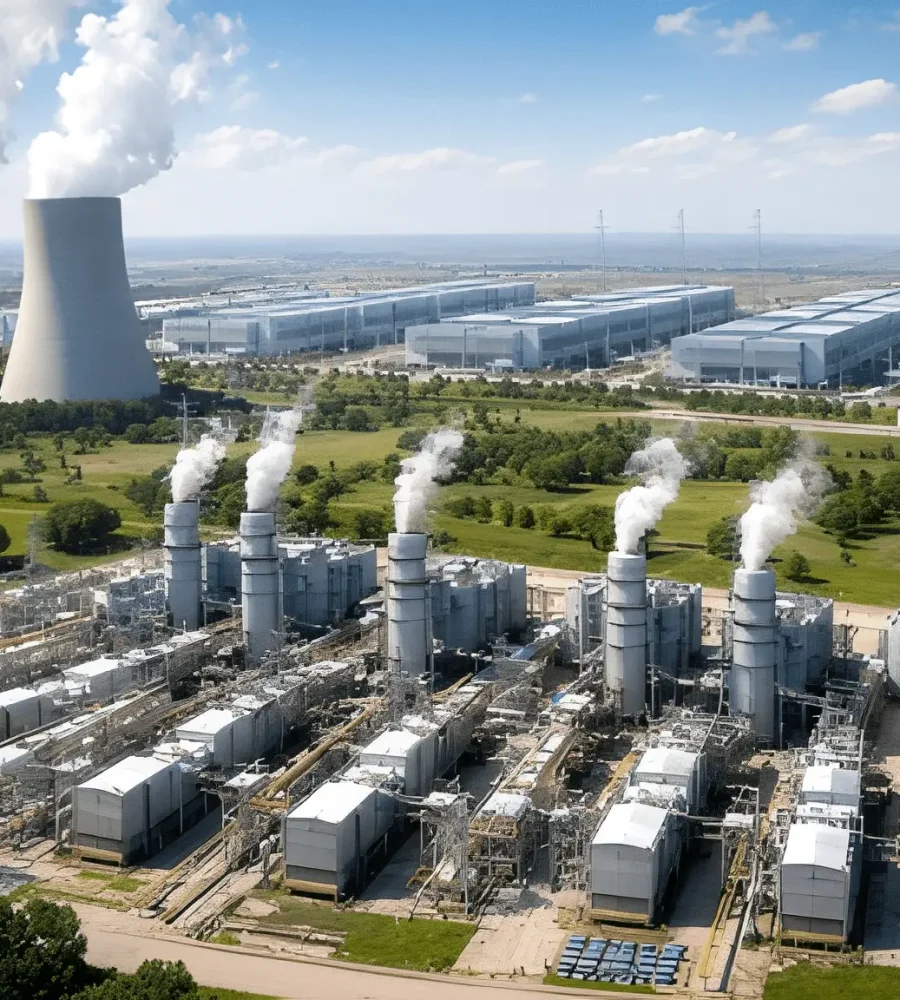
Looking toward 2030, the defining constraint of the cloud will not be silicon but energy. AI data centers are projected to consume up to 160% more power than traditional facilities. This surge has exposed a looming crisis in the power supply chain, including multi-year shortages of large transformers, generator engines, and gas turbines.
Neoclouds are often more agile in securing power than hyperscalers. While a hyperscaler might need 500 MW for a single campus, a neocloud can operate micro-clusters of 20 MW to 50 MW at the edge or near renewable energy sources. Crusoe Cloud, for example, has built its moat on “vertically integrated energy,” using stranded gas that would otherwise be flared and renewable power that hyperscalers cannot easily access. This decentralization allows neoclouds to bypass the 5–7 year grid queues in major hubs such as Northern Virginia.
The Inference Revolution: The Next Battleground
While training currently dominates revenue, the “inference revolution” is approaching. By 2030, 80% of neocloud revenue is forecast to come from serving models in real-time enterprise workflows. This will require a shift from massive centralized AI factories to distributed edge clouds. Neoclouds that offer region-specific GPU enclaves will capture business from regulated industries and autonomous systems, including vehicles and industrial robots, which cannot tolerate the latency of central cloud regions.
Regulatory Reset: The One Big Beautiful Bill Act Impact
The regulatory landscape for AI infrastructure changed fundamentally with the enactment of the “One Big Beautiful Bill Act” (OBBBA) on July 4, 2025. While the act provided immediate tax benefits for software development and IT infrastructure, it also introduced significant complexities for data center operators.
Tax Credit Rollbacks and Grid Pressures
The OBBBA phased out critical production (Section 45Y) and investment (Section 48E) clean energy tax credits for wind and solar facilities not in service by late 2027. This rollback has disrupted the data center supply chain, forcing operators to bear higher costs for renewable energy required to power AI clusters. Wholesale electricity prices are projected to rise 25% by 2030, making the efficient, megawatt-focused operations of neoclouds even more essential for margin protection.
Sourcing Restrictions and Supply Integrity
Starting in 2026, the OBBBA added complex Prohibited Foreign Entity (PFE) restrictions. Operators must prove that critical components, such as solar panels, battery cells, and high-performance server parts, have not been sourced from or processed by entities with ties to Foreign Entities of Concern (FEOCs). This introduces expensive supply chain auditing and integrity requirements, favoring neoclouds with sovereign-native architectures over hyperscalers with global, deeply entangled supply chains. Furthermore, a proposed federal moratorium on state and local regulation of AI data centers was removed from the final bill. Operators must still navigate a fragmented landscape of local zoning and environmental permits.
The Emergence of Cloud 3.0
The migration of the world’s largest cloud providers toward neocloud leasing signifies more than a tactical bridge during a supply crunch. It represents the structural bifurcation of the digital utility market into “Cloud 3.0.” This new era marks the definitive end of the virtualization hegemony that defined the last two decades of compute consumption.
Key Analytical Conclusions
The analysis of architectural mismatches, financial engineering, and geopolitical pressures leads to several high-level insights:
The Infrastructure Bifurcation
The cloud is splitting into two distinct layers: an “Identity and Governance Layer,” represented by the hyperscalers, and a “Pure Compute Layer,” handled by neoclouds. Hyperscalers are increasingly functioning as the software-as-a-service (SaaS) and security interface for enterprises. Meanwhile, agile, bare-metal factories manage the heavy, low-margin, high-performance compute workloads.
Silicon as the New Real Estate
GPUs have evolved from depreciating hardware components into a liquid, collateralizable asset class. The GPU REIT model allows neoclouds to operate with debt-to-equity ratios exceeding 7x. This transformation has turned the silicon supply chain into a massive financial derivative market, creating unprecedented leverage opportunities for startups and investors alike.
The Sovereignty Premium
As data protectionism rises, the one-size-fits-all global region model is becoming obsolete. The future belongs to “Compute Islands”: regionally specific, air-gapped, and regulatory-aware clusters that provide digital independence from foreign extraterritorial laws. Enterprises and governments that adopt these architectures gain a sovereignty premium, ensuring compliance while retaining high-performance compute capacity.
The Chipmaker’s Defensive Wall
NVIDIA’s role as a “kingmaker” prevents any single cloud provider from dominating the market. By supporting an independent neocloud ecosystem, NVIDIA has insulated itself against the threat of internal hyperscaler ASICs. This strategy ensures that the CUDA stack remains the industry’s default operating system, reinforcing NVIDIA’s dominance across AI infrastructure.
Cloud 3.0: Decoupling Compute from General-Purpose Cloud
While late 2026 may see a wave of consolidation as first-generation GPU deployments reach end-of-life and smaller providers encounter depreciation limits, the neocloud has already achieved its primary mission. It has effectively decoupled compute from the general-purpose cloud. In the Cloud 3.0 era, infrastructure is being re-engineered around the GPU as the primary unit of value. The winners of the next decade will be those who understand that AI infrastructure represents a fundamentally different class of global utility. In this new era, uncompromised performance and geopolitical resilience are the ultimate metrics of success. Enterprises and investors that recognize this shift will shape the competitive landscape of Cloud 3.0 for years to come.