
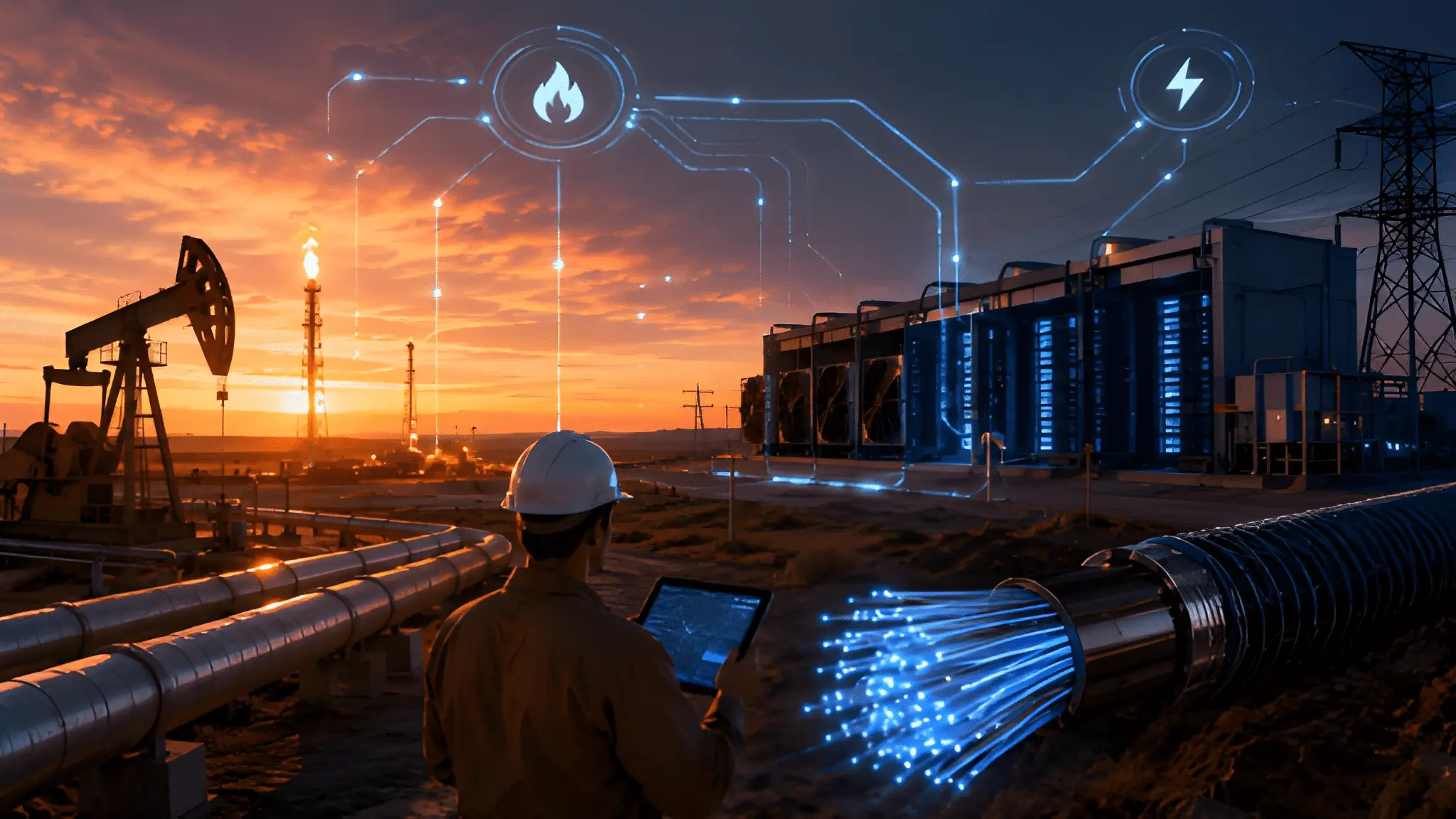
The next chapter of artificial intelligence may not begin inside a dense technology corridor or beside a coastal innovation district. It is taking shape across landscapes where drilling rigs, gathering systems, compressor stations, and transmission corridors have defined industrial activity for generations. That change reflects more than the arrival of another infrastructure cycle because it represents a shift in how physical assets create long-term value. Energy producers increasingly recognize that the same characteristics supporting hydrocarbon production also support continuous digital computation. Land that once existed only as a production asset now enters strategic discussions about computing capacity, infrastructure resilience, and industrial permanence.

Artificial intelligence places unusual demands on infrastructure because computing systems require reliable electricity, secure land positions, dependable water resources, and robust communications operating together without interruption. Pipelines, rights-of-way, substations, industrial roads, water systems, and operational expertise already exist across large portions of the region, reducing many barriers that typically delay major industrial projects. Investors therefore examine the basin through a different lens that values infrastructure integration instead of resource extraction alone. This evolution reflects practical economics rather than technological symbolism because existing industrial ecosystems often lower deployment risk for long-duration capital investments. The result is not the replacement of oil and gas with artificial intelligence, but the emergence of a regional economy where both industries reinforce one another through shared infrastructure and complementary investment horizons.
When Oil Majors Became AI Landlords
Oil companies have traditionally evaluated acreage according to production potential, drilling inventory, and long-term reserve development, yet those assumptions now coexist with a different valuation framework centered on infrastructure readiness. Several energy companies have begun evaluating whether selected land positions provide access to natural gas, electric transmission, transportation corridors, and communications infrastructure that could support future compute developments alongside existing energy operations. This assessment does not diminish the importance of hydrocarbon production because production remains the economic foundation that created these infrastructure networks in the first place. Instead, companies recognize that certain properties may generate durable value through multiple industrial activities operating alongside one another over extended periods. Capital allocation discussions therefore incorporate infrastructure optionality as an increasingly relevant consideration when evaluating long-term regional investments. Such thinking reflects broader industrial diversification rather than movement away from energy production because both activities depend upon stable physical assets and disciplined operational planning.
From Lease Blocks to Compute Districts
Land ownership has consequently become more significant than simple surface access because operators control locations capable of supporting future industrial ecosystems beyond conventional field operations. Existing gathering systems, processing plants, transmission infrastructure, and transportation networks create advantages that cannot easily be replicated elsewhere within comparable timeframes. Those advantages become increasingly valuable as artificial intelligence infrastructure seeks locations offering predictable construction schedules instead of speculative infrastructure development. Investors therefore analyze integrated asset portfolios rather than isolated production metrics when considering future regional opportunities. Investors increasingly evaluate how companies position existing infrastructure to support multiple long-term industrial applications alongside traditional energy operations when assessing long-term business strategy. That perspective encourages companies to preserve optionality while continuing to optimize hydrocarbon development across producing acreage.
The cultural adjustment inside energy organizations extends beyond finance because engineering, land management, commercial development, and infrastructure planning increasingly intersect during project evaluation. Teams that once focused almost exclusively on drilling programs now participate in conversations involving electrical supply, digital infrastructure requirements, and long-duration industrial partnerships. Those discussions require different technical expertise while still relying upon operational disciplines refined through decades of complex field development. Infrastructure planning therefore becomes broader without abandoning the engineering culture that has historically defined large energy organizations. Management increasingly evaluates whether infrastructure investments can serve multiple future purposes while preserving operational flexibility for traditional production activities. Such decisions gradually reshape how companies define strategic land ownership across the Permian Basin.
Capital That Waits Longer Than Wells
Hydrocarbon projects often follow investment cycles measured through production performance, reserve development, and commodity market conditions, whereas artificial intelligence infrastructure introduces planning horizons extending across several technology generations. That difference encourages energy companies to examine whether portions of their asset base can support businesses emphasizing infrastructure stability instead of production growth alone. Long-term compute campuses generally seek operational continuity lasting decades because relocation creates substantial technical and financial complexity. Stable industrial land therefore acquires additional importance where energy availability, transportation access, and connectivity remain dependable over extended periods. This investment logic resembles earlier infrastructure decisions involving pipelines and processing assets that also required patience before generating sustained returns. Experience managing large industrial developments therefore provides relevant institutional knowledge for organizations evaluating digital infrastructure opportunities.

Viewed from this perspective, the phrase “AI landlord” describes stewardship of industrial ecosystems rather than ownership of digital technology itself. Energy companies provide locations where power generation, natural gas supply, transportation access, water management, and communications infrastructure already operate within coordinated regional networks. Artificial intelligence developers contribute sustained demand that complements those physical capabilities without fundamentally altering the basin’s industrial identity. The resulting relationship depends less upon technological excitement than infrastructure compatibility built through decades of engineering investment. West Texas therefore illustrates how historical industrial strengths can support entirely new economic activities without abandoning the capabilities that established regional prosperity. That gradual transition forms the foundation for understanding why the Permian Basin increasingly attracts attention as a long-term compute destination rather than simply another energy province.
When Waste Gas Finds a New Job
For decades, operators viewed associated natural gas primarily through the lens of production economics because crude oil remained the principal commercial objective across much of the Permian Basin. As oil production accelerated, natural gas volumes frequently expanded faster than downstream transportation infrastructure, creating periods when producers faced limited options for marketing incremental gas. Pipeline expansions gradually reduced many of those constraints, yet regional imbalances continue to influence commercial planning whenever production growth outpaces available takeaway capacity or local demand. Instead of treating those conditions solely as temporary operational challenges, some producers have begun evaluating whether portions of locally available natural gas can support energy-intensive computing infrastructure located near existing production assets where commercial and technical conditions align. That shift reflects an infrastructure strategy rather than a commodity strategy because the objective centers on creating durable local demand supported by long-term industrial investment.
Waste Gas Is Becoming an Infrastructure Resource Rather Than an Operational Constraint
The emergence of continuous computing workloads changes how energy producers evaluate the commercial role of natural gas because data centers require dependable electricity throughout every hour of operation. Natural gas generation already serves an important role in maintaining grid reliability, and colocated power solutions can reduce transmission constraints for certain industrial developments when designed within applicable regulatory frameworks. Developers therefore study locations where gas supply, generation capability, and land availability align instead of pursuing isolated infrastructure components across different regions. Existing field infrastructure further strengthens those evaluations because gathering systems, compression assets, maintenance capabilities, and transportation networks already support industrial activity throughout much of West Texas. Engineering teams consequently spend more effort examining integrated energy systems that combine production, power generation, and digital infrastructure into coordinated development plans. Such planning emphasizes operational resilience because every infrastructure element contributes directly to long-term project performance instead of functioning independently.
Viewing natural gas through an infrastructure perspective also encourages different conversations between producers, power developers, and technology investors because each participant depends upon long-term operational certainty rather than short-term market fluctuations. Long-duration compute campuses seek predictable energy availability over many years, making stable fuel supply an important consideration during site selection and project financing. Producers therefore recognize that dependable industrial customers can complement existing commercial relationships without changing the fundamental economics of hydrocarbon development. This evolution does not eliminate the importance of interstate pipelines or broader gas markets because those systems remain essential components of the regional energy economy. Instead, localized computing demand introduces another layer of infrastructure optionality capable of strengthening asset utilization under appropriate commercial conditions. The result is a broader industrial ecosystem where natural gas supports both traditional energy markets and emerging digital industries through carefully coordinated infrastructure planning.
Stable Compute Demand Changes the Economics of Energy Planning
Artificial intelligence infrastructure differs from many conventional industrial loads because computing equipment operates continuously while maintaining strict requirements for power quality and operational reliability. Those characteristics encourage developers to prioritize locations where energy availability can remain predictable throughout the entire lifecycle of a campus rather than only during periods of favorable market conditions. Energy companies understand similar planning horizons because pipelines, processing plants, and production systems have historically required disciplined investment strategies extending across decades. Shared expectations regarding infrastructure longevity create a common commercial language between industries that otherwise evolved independently. That compatibility increasingly influences negotiations surrounding land use, utility interconnections, and future infrastructure expansion across the Permian Basin. Long-term operational alignment therefore becomes just as important as immediate construction economics during project evaluation.
Infrastructure investors also recognize that colocated development can reduce certain logistical complexities because fuel supply, industrial land, transportation access, and maintenance expertise already exist within established operating regions. That existing industrial base lowers development uncertainty compared with locations requiring entirely new supporting infrastructure before construction can begin. Engineering organizations consequently devote greater attention to system integration, electrical architecture, and operational redundancy instead of overcoming foundational infrastructure gaps. Such priorities reflect mature industrial planning rather than speculative technology deployment because the underlying assets already support complex energy operations every day. Existing workforce experience further contributes to project execution because personnel accustomed to managing critical infrastructure understand the operational discipline required for continuous industrial systems. Those advantages explain why infrastructure compatibility increasingly influences site selection discussions alongside conventional financial considerations.
Water From the Ground, Work for the Future
Water has always shaped development across the Permian Basin because every phase of hydrocarbon production depends upon careful sourcing, transportation, storage, treatment, and reuse under increasingly disciplined operational practices. Over time, operators invested heavily in pipelines, storage networks, recycling systems, and treatment technologies that improved water management while reducing dependence on continuous freshwater withdrawals. Artificial intelligence infrastructure now enters that landscape with its own cooling requirements, encouraging developers to evaluate whether existing water management expertise can support another category of industrial activity. This opportunity does not imply that oilfield water can simply become cooling water because treatment standards, regulatory requirements, and engineering specifications differ significantly across applications. Instead, it encourages engineers to evaluate whether appropriately treated recycled water, alternative water sources, and advanced treatment technologies can support future compute campuses where technical performance, environmental requirements, and regulatory standards can be satisfied without increasing reliance on freshwater resources.
Water Infrastructure Is Finding a Broader Industrial Purpose
Modern data centers require carefully controlled cooling systems because temperature stability directly influences equipment performance, operational reliability, and long-term asset life. Designers increasingly evaluate multiple cooling approaches, including closed-loop systems, air-assisted technologies, and liquid cooling architectures that improve thermal efficiency while adapting to local environmental conditions. The appropriate solution depends upon climate, water availability, electrical design, and operational objectives rather than a universal engineering template. West Texas presents unique environmental conditions that require developers to optimize cooling strategies around regional resource availability instead of replicating designs used in other markets. Water management therefore becomes part of an integrated engineering exercise involving energy supply, cooling technology, environmental stewardship, and lifecycle operating costs. This multidisciplinary approach reflects the same engineering philosophy that has guided complex energy infrastructure throughout the Permian Basin for decades.
Oil and gas operators bring valuable operational experience to these discussions because they have spent years developing systems capable of transporting, monitoring, recycling, and managing large water volumes across geographically dispersed assets. That expertise extends beyond physical infrastructure because it also includes regulatory compliance, environmental monitoring, logistics coordination, and long-term operational planning under demanding field conditions. Compute developers evaluating established industrial regions consider existing operational experience in water management alongside physical infrastructure when assessing long-term project feasibility and infrastructure readiness. Collaboration therefore expands beyond land transactions into broader conversations about resource stewardship and infrastructure integration throughout project development. Such partnerships encourage both industries to approach water as a strategic operational resource rather than a standalone utility service. The resulting perspective supports infrastructure planning that aligns industrial growth with practical resource management across the basin.
Responsible Water Management Strengthens Long-Term Compute Development
Long-duration computing infrastructure requires confidence that critical resources can remain available throughout decades of continuous operation without creating unnecessary competition with surrounding communities or existing industries. Water planning therefore begins during site selection instead of becoming a construction-stage consideration because cooling strategies influence facility layout, electrical systems, and long-term operating models. Engineers evaluate resource availability alongside treatment requirements, seasonal conditions, infrastructure redundancy, and future expansion potential before finalizing project designs. Those assessments increasingly encourage developers to incorporate recycled water opportunities wherever technically and environmentally appropriate. Such decisions reduce operational uncertainty while supporting broader regional objectives related to sustainable resource management. Long-term infrastructure planning consequently integrates engineering performance with responsible environmental stewardship from the earliest stages of project development.
Looking ahead, water will remain one of the defining considerations shaping where artificial intelligence infrastructure develops across North America because cooling cannot be separated from reliable long-term operations. The Permian Basin enters that discussion with decades of engineering experience dedicated to solving complex resource management challenges under demanding environmental conditions. Artificial intelligence does not diminish the importance of those capabilities because advanced computing depends upon disciplined infrastructure management just as energy production always has. Regional competitiveness therefore rests on integrating water stewardship, power availability, land planning, and operational expertise into coherent infrastructure strategies rather than treating each element independently. Communities, developers, and energy producers all benefit when water planning supports both industrial resilience and responsible environmental management. That balanced approach positions the Permian Basin to extend its industrial legacy into the next generation of infrastructure-intensive economic development.
The Long Game: Why AI Is Putting Down Roots in Oil Country
The Permian Basin has never been shaped by projects designed to deliver immediate returns because regional development has historically depended on infrastructure built to operate across multiple decades. Pipelines, gathering systems, processing plants, electrical substations, and transportation corridors represent investments that continue creating value long after their original construction periods have ended. Artificial intelligence infrastructure follows a similar philosophy because developers expect compute campuses to support successive generations of hardware while preserving the underlying physical assets. That shared investment outlook creates an uncommon alignment between industries that traditionally pursued different commercial objectives. Energy companies understand how to manage assets with operational lives measured in decades, while compute developers increasingly seek locations capable of supporting equally durable infrastructure. This convergence reflects practical capital planning rather than a temporary technology cycle because both sectors depend upon infrastructure that performs consistently through changing market conditions.
Long Investment Horizons Create a Natural Alignment
Unlike many industrial developments that can relocate with relatively modest disruption, large-scale artificial intelligence campuses become deeply connected to the physical systems supporting their operation. Reliable electricity, transmission infrastructure, natural gas supply, water management, transportation access, and high-capacity communications all require coordinated planning that extends far beyond the construction schedule. Developers therefore evaluate whether a region can continue supporting expansion decades into the future instead of simply meeting immediate operational requirements. The Permian Basin presents an attractive environment because much of its industrial foundation has already demonstrated long-term operational reliability under demanding conditions. Existing infrastructure reduces uncertainty while allowing future investments to build upon proven engineering systems instead of creating entirely new industrial ecosystems. That continuity strengthens confidence among investors seeking predictable environments for sustained capital deployment.
The relationship between artificial intelligence and energy infrastructure therefore extends beyond electricity consumption because both industries depend upon disciplined asset management across extended planning horizons. Engineering decisions made during early project development often influence operational performance for decades, making long-term thinking an essential component of infrastructure design. Energy producers have accumulated extensive experience balancing operational flexibility with durable infrastructure investment through repeated commodity cycles and changing regulatory environments. Compute developers increasingly value that institutional experience because continuous digital operations require the same emphasis on reliability, maintenance, and system resilience. Shared engineering principles consequently provide a stronger foundation for collaboration than short-term market conditions alone. The basin’s history of patient infrastructure development therefore becomes one of its strongest competitive advantages in attracting advanced computing investment.
Regional Growth Follows Infrastructure Rather Than Headlines
Public attention often focuses on technology announcements, yet enduring industrial growth usually follows infrastructure that quietly expands over many years before attracting widespread recognition. Roads, substations, transmission lines, fiber routes, and utility networks rarely receive significant attention during construction, although they ultimately determine whether future investment can proceed efficiently. The Permian Basin has repeatedly demonstrated that sustained infrastructure development creates opportunities extending beyond the industry that originally financed those assets. Artificial intelligence now represents another example of that broader pattern because compute campuses rely upon infrastructure established through decades of energy investment. Existing industrial systems therefore reduce barriers that might otherwise delay complex projects requiring coordinated development across multiple sectors. Infrastructure maturity becomes a competitive advantage because it shortens the path between strategic planning and operational deployment.
Artificial intelligence is therefore putting down roots in oil country because the region already understands how to support industries that depend upon operational continuity, disciplined engineering, and patient capital allocation. The physical landscape may gradually incorporate new categories of infrastructure, yet the underlying principles guiding investment remain remarkably consistent with those that shaped the basin over previous generations. Long-term value continues to emerge from reliable systems, experienced operators, and infrastructure capable of adapting to evolving industrial requirements without sacrificing operational integrity. That continuity distinguishes the Permian Basin from regions pursuing technology development without an equally mature industrial foundation. Future compute capacity will depend upon engineering excellence as much as digital innovation, making the basin’s accumulated expertise increasingly relevant to the next phase of artificial intelligence infrastructure.
The New Trailblazers: Laying Digital Paths Across the Basin
Every large industrial economy depends upon networks that move essential resources efficiently, and the Permian Basin has spent decades refining systems that transport hydrocarbons, electricity, water, and equipment across vast distances. Artificial intelligence introduces another critical resource in the form of digital connectivity, making high-capacity fiber infrastructure as strategically important to compute campuses as pipelines have long been to energy production. Data cannot support large-scale machine learning workloads without reliable, low-latency communications that connect regional facilities with broader national and international networks. Developers therefore evaluate connectivity alongside power availability because both systems determine whether a location can sustain continuous computing operations. Existing utility corridors often provide practical pathways for fiber deployment since established rights-of-way simplify engineering, environmental review, and long-term maintenance compared with entirely new routes. This relationship demonstrates that digital infrastructure frequently grows alongside established industrial networks instead of replacing them with entirely separate systems.
Fiber Corridors Are Following the Logic of Energy Corridors
Energy companies have long managed geographically dispersed assets that require dependable communications for operational monitoring, equipment control, safety systems, and field coordination. That operational experience has encouraged investment in communications infrastructure capable of supporting industrial activity across remote environments where conventional commercial networks may be less extensive. Artificial intelligence infrastructure benefits from many of those same engineering principles because compute operations require continuous monitoring, secure communications, and dependable network performance throughout every stage of operation. Existing communications assets therefore become another component of the broader infrastructure ecosystem attracting long-term digital investment to the basin. Infrastructure planners increasingly recognize that fiber networks complement power systems, transportation corridors, and utility infrastructure by creating additional capacity for future industrial development. Such integration reflects disciplined engineering rather than technological novelty because every critical infrastructure system depends upon reliable communication.
The expansion of fiber connectivity also changes how investors evaluate remote locations because physical distance becomes less significant when communications infrastructure delivers reliable access to broader computing ecosystems. Geographic isolation once limited the range of industries capable of operating efficiently across portions of West Texas, yet advanced communications networks reduce many of those historical constraints. Industrial development therefore becomes increasingly dependent upon infrastructure quality rather than simple proximity to traditional technology centers. Companies evaluating artificial intelligence projects now consider whether communications, energy, and transportation systems operate together as an integrated platform supporting long-term growth. This perspective reinforces the importance of coordinated infrastructure planning across multiple sectors instead of isolated investment decisions. The basin’s existing industrial footprint provides a practical foundation upon which modern digital connectivity can continue expanding with greater efficiency than many emerging markets.
Mapping Tomorrow’s Compute Landscape
Digital infrastructure planning increasingly resembles traditional infrastructure planning because successful projects depend upon route selection, system redundancy, operational resilience, and long-term maintenance rather than simply installing new technology. Engineers evaluate fiber pathways with many of the same considerations applied to pipelines or transmission lines, including environmental conditions, access requirements, maintenance logistics, and opportunities for future expansion. These shared planning principles reduce development risk while supporting infrastructure capable of adapting to evolving technological demands. Artificial intelligence campuses therefore benefit from locations where multiple infrastructure systems already intersect within coordinated industrial corridors. Such environments allow developers to concentrate resources on computing architecture instead of creating foundational infrastructure from the beginning. That operational efficiency strengthens the commercial case for continued investment across the Permian Basin.
The modern trailblazers of West Texas therefore build pathways measured in bandwidth as well as pipelines because digital infrastructure now represents another essential element of industrial competitiveness. Their work extends the basin’s long tradition of connecting resources with markets, although today’s resource increasingly includes computational capacity alongside energy production. Artificial intelligence infrastructure depends upon communications networks that remain as dependable as the power systems supporting the computing equipment itself. That requirement elevates fiber deployment from a supporting utility into a strategic infrastructure asset influencing regional economic development. West Texas continues adapting to new industrial demands by expanding the infrastructure that has always defined its economic strength rather than abandoning its established engineering foundation. The next generation of growth will therefore emerge from the careful integration of digital connectivity with the physical systems that have supported the basin for generations.
Turning Policy Winds Into Local Tailwinds
Energy security, domestic manufacturing, and artificial intelligence have often been discussed as separate policy themes, yet they increasingly intersect through the infrastructure required to support each objective. Reliable electricity, resilient supply chains, secure communications, and modern industrial capacity all depend upon long-term investment in physical systems that can operate consistently under changing economic conditions. Federal initiatives supporting grid modernization, transmission expansion, domestic semiconductor production, and critical infrastructure resilience collectively reinforce the importance of regions already possessing mature industrial foundations. The Permian Basin is well positioned to benefit from this broader policy environment because decades of energy investment have established infrastructure that aligns with many of the operational requirements associated with expanding energy and digital infrastructure. Rather than responding to a single legislative action, the region reflects the cumulative effect of policies encouraging dependable energy production, infrastructure reliability, and industrial competitiveness.
National Priorities Are Increasingly Aligning Around Infrastructure
Artificial intelligence infrastructure also benefits from policy efforts focused on strengthening domestic computing capability because advanced digital workloads increasingly represent strategic economic assets. Developers therefore evaluate locations that can support long-term operational resilience while aligning with evolving regulatory expectations surrounding critical infrastructure. West Texas offers practical advantages because its energy systems, industrial workforce, transportation corridors, and communications networks have supported nationally significant economic activity for decades. That experience contributes to an operating environment where infrastructure reliability already occupies a central role in regional planning. Public policy alone does not determine where compute campuses develop, yet supportive infrastructure substantially improves the commercial feasibility of long-duration projects. The interaction between policy direction and physical capability therefore becomes more influential than either factor operating independently.
This alignment does not guarantee identical outcomes across every community because infrastructure readiness, land availability, utility planning, and local coordination continue shaping individual project decisions. Some locations possess stronger electrical capacity, while others offer better transportation access or more developed industrial services. Investors consequently examine each opportunity according to practical engineering considerations instead of assuming every area within the basin presents the same development potential. Communities that understand those distinctions can prioritize infrastructure improvements supporting long-term competitiveness without pursuing unnecessary expansion. Such planning encourages measured growth built upon existing strengths rather than speculative development disconnected from regional capabilities. The result is a policy environment that rewards preparation, coordination, and infrastructure quality instead of short-term enthusiasm alone.
Local Communities Shape the Success of National Ambitions
National infrastructure priorities ultimately depend upon local execution because every transmission line, industrial campus, utility expansion, and transportation improvement becomes part of a specific community before contributing to broader economic objectives. Local governments, utility providers, engineering firms, and regional planners therefore influence whether infrastructure investments proceed efficiently while maintaining operational resilience over time. Their decisions regarding zoning, utility coordination, transportation planning, and public infrastructure establish the practical framework within which private capital operates. Artificial intelligence projects require sustained cooperation across these stakeholders because computing campuses depend upon multiple infrastructure systems functioning together without interruption. Effective coordination reduces project uncertainty while improving the long-term value of public and private investment throughout the region. Communities that cultivate predictable planning processes therefore strengthen their ability to attract complex industrial developments requiring extended construction and operational timelines.
The Permian Basin’s long history of supporting large-scale energy development has already established many of the institutional relationships necessary for coordinating complex infrastructure projects. Utility operators, engineering consultants, construction contractors, land specialists, and industrial service providers routinely collaborate across projects involving significant technical and logistical complexity. Artificial intelligence infrastructure introduces different operational requirements, yet the underlying project management disciplines remain familiar to organizations accustomed to delivering major industrial assets. Existing professional networks therefore reduce learning curves while encouraging efficient collaboration between established energy companies and emerging digital infrastructure developers. This continuity supports practical decision-making grounded in operational experience instead of theoretical planning. Regional capability consequently becomes one of the basin’s most valuable competitive advantages as infrastructure demands continue evolving.
Main Street Meets the Machine Hall
Artificial intelligence campuses introduce a new category of industrial neighbor to communities that have long supported energy development, creating opportunities that extend beyond construction activity alone. Unlike temporary projects, large compute campuses typically require continuous operations supported by maintenance services, utility coordination, logistics, engineering expertise, and specialized technical support throughout their operating lives. That operational continuity encourages sustained engagement with local businesses capable of providing essential products and professional services over many years. Restaurants, equipment suppliers, transportation companies, construction contractors, accommodation providers, and industrial service firms all become part of a broader support ecosystem surrounding long-term infrastructure investment. Economic activity therefore develops through recurring operational demand rather than depending exclusively upon the initial construction phase. This pattern closely resembles earlier periods of regional industrial expansion where supporting businesses grew alongside major infrastructure projects instead of independently from them.
Communities Are Adapting Alongside Infrastructure
Educational institutions also become important participants because evolving infrastructure requires a workforce with capabilities spanning electrical systems, industrial automation, information technology, mechanical maintenance, network operations, and project management. Existing technical education programs already supporting the energy sector can often expand their curricula to include competencies relevant to digital infrastructure without abandoning their traditional strengths. Students therefore encounter opportunities that connect established engineering disciplines with emerging computational industries operating within the same regional economy. Employers benefit from workforce development aligned with practical operational requirements instead of narrowly focused training disconnected from industrial demand. Collaboration between educators and industry strengthens regional resilience because workforce capability evolves alongside infrastructure investment rather than reacting after projects become operational. This approach reinforces long-term economic stability while preserving the technical culture that has historically supported the Permian Basin’s industrial success.
Community adaptation extends beyond employment because reliable infrastructure improves the operating environment for many existing businesses regardless of whether they work directly with artificial intelligence developers. Investments in utilities, transportation networks, communications systems, and industrial services frequently strengthen regional capacity supporting multiple sectors simultaneously. Local companies therefore benefit from broader infrastructure improvements that increase operational efficiency across manufacturing, logistics, professional services, and energy operations. Such developments encourage diversified economic activity while maintaining the industrial identity that has defined West Texas for generations. Growth becomes cumulative because each infrastructure improvement enhances the value of previous investments rather than replacing them with entirely new systems. The relationship between compute infrastructure and local communities therefore reflects gradual industrial evolution instead of abrupt economic transformation.
A Shared Industrial Future Emerges
The arrival of advanced computing infrastructure does not erase the region’s historical identity because energy production continues providing the economic and engineering foundation supporting future development. Oilfields, processing facilities, transmission systems, pipelines, and industrial service companies remain integral components of the regional economy while new categories of infrastructure gradually expand alongside them. Artificial intelligence simply introduces another industrial customer whose operational priorities closely align with the basin’s long-standing emphasis on reliability, resilience, and disciplined engineering. This coexistence strengthens regional competitiveness by broadening infrastructure utilization without reducing the importance of existing industries. Businesses operating across multiple sectors consequently discover additional opportunities to apply established expertise within an expanding industrial landscape. The future therefore reflects continuity supported by thoughtful diversification instead of replacement driven by technological change.
Main Street ultimately meets the machine hall through shared dependence on dependable infrastructure, skilled people, and practical engineering rather than through dramatic shifts in regional identity. Communities continue supporting industries that value operational excellence, while artificial intelligence developers increasingly recognize the advantages offered by regions built upon decades of complex infrastructure management. Local businesses remain essential because every compute campus relies upon transportation, maintenance, construction, utilities, logistics, and professional services delivered consistently throughout its operating life. Educational institutions continue preparing future generations whose technical capabilities serve both established energy companies and emerging digital industries within the same regional economy. This integrated model allows economic growth to remain grounded in the strengths that have historically defined West Texas while accommodating new forms of industrial investment. The machine hall therefore becomes another chapter in the basin’s infrastructure story rather than a departure from the community that built it.
Building the Future Where the Past Runs Deep
The Permian Basin has never depended on a single industrial cycle because its enduring strength has always come from the ability to build infrastructure capable of supporting changing economic demands across generations. Oil and natural gas established the engineering foundation that transformed remote landscapes into one of the world’s most sophisticated energy-producing regions through disciplined investment and operational expertise. Artificial intelligence now arrives not as a replacement for that legacy but as another industry requiring many of the same physical capabilities that already define the basin. Reliable energy, resilient infrastructure, dependable water management, transportation networks, and high-capacity communications collectively create an environment where digital computation can operate with the same emphasis on continuity that has long characterized energy production. This convergence demonstrates that industrial evolution often occurs by extending existing strengths rather than abandoning them in pursuit of entirely new economic identities.
The phrase “compute basin” ultimately describes an infrastructure reality more than a technological ambition because sustained computing depends upon the same disciplined engineering that has supported complex energy operations for generations. Artificial intelligence will continue demanding resilient electricity, dependable fuel, responsible water stewardship, secure communications, and industrial land capable of supporting continuous operations across long planning horizons. The Permian Basin possesses many of those characteristics because decades of investment created systems designed to perform reliably under demanding operational conditions rather than only during favorable market environments. West Texas enters this transition with practical experience managing interconnected infrastructure at scale, providing a foundation that few emerging compute regions can readily replicate. The basin’s next chapter therefore extends a legacy of industrial excellence by demonstrating that the future of artificial intelligence may be built where the foundations of modern energy have already been engineered with exceptional depth and resilience.











