Skip to content


A property can sit beside a major transmission line and still struggle to support a power-intensive development, while another site near a natural gas trunkline may offer a different route to securing electricity. The difference lies in what each location can actually deliver, rather than what a map appears to promise. Industrial land assessments commonly consider transportation access, available utilities, permitted uses, and surrounding commercial activity, although the relative importance of these factors varies by property and intended use. The growing interest in power-intensive computing introduces another consideration: whether a site can support generation close to the load when grid capacity, interconnection schedules, or transmission constraints complicate conventional development. Natural gas infrastructure therefore enters the land-selection process as a potential source of energy flexibility, not as an automatic substitute for electrical infrastructure.

The emerging valuation question is consequently more specific than whether gas infrastructure runs near a property. It asks whether the location can support a credible sequence from fuel access to generation, from generation to electrical distribution, and from electrical distribution to a functioning industrial or computing development. That sequence affects site assembly, infrastructure spending, development schedules, permitting exposure, and the terms on which buyers negotiate with landowners. It also changes the information that a seller needs before claiming that a site offers an advantage over competing industrial locations. A defensible valuation must account for both the opportunity that fuel access creates and the work required to convert that opportunity into usable power. This approach provides a framework for assessing industrial land through documented infrastructure access, development constraints, and the feasibility of the proposed use, without assuming that these factors have already produced a measurable market premium.
From Substation Proximity to Fuel Corridor Optionality
The traditional industrial site search begins with the ability to connect a proposed development to electricity, alongside the availability of suitable land, roads, water, telecommunications, and appropriate land-use permissions. For power-intensive computing, the electrical connection remains important, but its value depends on the capacity, timing, and terms of the connection rather than physical distance alone. A transmission line can pass close to a site without providing a practical route to the required load, and an existing substation does not automatically have spare capacity for a new development. Behind-the-meter generation introduces another possible route by allowing a developer to produce electricity at or near the point of consumption, subject to fuel supply, engineering, permitting, and operating requirements. Natural gas corridor access consequently becomes a potential source of development flexibility when conventional grid access cannot satisfy a project’s requirements on acceptable terms.
For site valuation, comparing alternative routes to power can reveal whether a location offers a feasible development option beyond its existing electrical connections, although the extent to which buyers reflect that option in their offers requires transaction-specific evidence. A site with limited grid capacity may still merit technical evaluation if a credible gas supply route could support an appropriately designed generation installation, while a property with a nearby pipeline may offer little advantage if the operator cannot accommodate additional demand. The relevant question is whether the site can connect fuel delivery, generation equipment, electrical systems, and the intended computing load within a commercially acceptable development plan. Buyers must also assess whether a future grid connection could complement on-site generation, provide backup, or support a transition between operating configurations.

Fuel corridor optionality as a land valuation factor
In this article, fuel corridor optionality refers to the potential for a site to pursue gas-based generation, subject to verified fuel access, transportation arrangements, engineering feasibility, and the necessary approvals. This potential can influence a buyer’s willingness to investigate a location, preserve an acquisition option, or negotiate terms that depend on further engineering and commercial validation. The value rests on the possibility of achieving a workable fuel-to-power pathway, not on the mere existence of a pipeline easement nearby. A credible assessment therefore examines the pipeline’s function, the availability of transportation service, the feasibility of a connection, and the route between the delivery point and the proposed generation area. It also considers whether the site’s physical configuration leaves enough usable space for the equipment, access roads, electrical systems, and supporting infrastructure that the project would require.
The value of this option changes with the quality of the evidence available to the buyer. A desktop map may identify a promising corridor, but it cannot establish contractual access to gas, pressure conditions at a proposed connection, or the pipeline operator’s willingness to accommodate a new load. Engineering discussions, preliminary utility assessments, documented land rights, and a credible generation concept can reduce uncertainty, although none independently guarantees final approval or project delivery. Buyers can reflect these differences in their acquisition structures by separating the price of the land from payments tied to milestones such as verified fuel access or development approvals. Sellers who supply reliable information can make a stronger case for their asking price because the buyer can assess the opportunity without treating every unresolved condition as an unknown. The resulting valuation approach rewards demonstrated feasibility more directly than speculative proximity.
Why electrical adjacency no longer answers the entire site question
Electrical infrastructure remains central to site selection because on-site generation does not eliminate the need for a dependable electrical architecture. A development must still account for power quality, protection systems, synchronization where applicable, distribution equipment, redundancy, and the operating relationship between generation and computing loads. Some projects may pursue an islanded configuration, while others may combine on-site generation with grid service or plan to connect to the grid later. Each arrangement carries different engineering, commercial, and regulatory requirements, so buyers cannot assume that a gas-based design will suit every site or workload. The land assessment must therefore establish whether the proposed electrical configuration fits the intended development and whether the physical site can accommodate its associated equipment and operating constraints.
The relationship between fuel and electricity also changes how buyers interpret a site’s future flexibility. A property that can accommodate a feasible generation layout and a separately verified route to grid interconnection may support more operating configurations, subject to the technical, commercial, and regulatory requirements of each arrangement. That flexibility can matter during phased construction, changes in computing demand, equipment replacement, or adjustments to the operating strategy. However, each option requires evidence, and a proposed future connection should not receive the same valuation treatment as an available, documented service arrangement. Buyers must also test whether generation equipment, gas infrastructure, cooling systems, and electrical distribution can coexist without creating conflicts over land use or construction sequencing. Industrial land valuation becomes more precise when it reflects the number and quality of feasible development routes rather than a single measurement of distance to a transmission asset.
Why Pipeline Adjacency Alone Does Not Create Premium
A natural gas pipeline near an industrial site establishes a geographic relationship, not a commercial right to obtain fuel. The line may transport gas between distant markets, serve existing contractual commitments, or operate under conditions that limit the practicality of an additional connection. A site selector must identify the pipeline’s role within the wider transportation network before assigning value to its location. The investigation should establish whether the relevant segment can support the proposed delivery arrangement and whether the operator would consider a new connection under its applicable technical and commercial requirements. Buyers also need to examine the ownership and use restrictions affecting the land between the pipeline and the proposed generation area. Without that evidence, a mapped pipeline corridor remains a screening indicator rather than a demonstrated development advantage.
Pipeline crossings, lateral connections, and deliverable capacity
A pipeline crossing, a nearby transmission main, and an engineered lateral connection represent different levels of development readiness. A crossing may place gas infrastructure on the site or close to its boundary, but the crossing does not establish that the owner can install a connection or receive the required supply. A lateral may provide a physical route from the main pipeline to the generation installation, yet its construction can involve routing studies, easement negotiations, engineering work, approvals, and coordination with the pipeline operator. Buyers must also establish the commercial arrangement for transportation and delivery, since physical infrastructure alone does not reserve the gas required by a proposed project. The cost and feasibility of the lateral depend on site-specific conditions, including route length, terrain, construction constraints, and the technical requirements of the receiving installation.
Deliverable capacity requires a separate investigation because a pipeline’s overall transportation capability does not establish the amount of gas available to a particular customer at a particular delivery point. Buyers must evaluate the relevant pipeline segment, pressure and flow conditions, transportation rights, existing commitments, and any necessary compression or network improvements. Firm transportation service can provide stronger delivery assurance than interruptible arrangements, although the precise protections depend on the contract and applicable service terms. Seasonal demand, maintenance requirements, upstream supply conditions, and contractual restrictions may also affect the commercial reliability of a proposed arrangement. A site therefore earns a stronger technical assessment when its fuel strategy rests on documented transportation options and an informed understanding of the pipeline operator’s requirements..
The developable generation footprint behind the asking price
Fuel availability matters only when the site can accommodate the equipment required to convert that fuel into usable electricity. A generation concept may require turbine or engine installations, gas conditioning, pressure regulation, electrical switchgear, transformers, cooling equipment, control systems, service access, and appropriate separation between operating areas and neighboring uses. The site plan must account for construction staging, maintenance access, equipment replacement, internal roads, and the route connecting generation equipment to the computing load. Pipeline easements can restrict building placement or excavation, while drainage patterns, ground conditions, and existing structures can reduce the area available for development. These constraints can leave a seemingly large industrial site with less usable space than its headline acreage suggests.
A credible land assessment should therefore distinguish gross site area from the area that can support the proposed generation and computing configuration. The buyer should test the generation layout against the gas delivery route, electrical distribution plan, cooling arrangement, access requirements, and relevant environmental constraints before treating the site as development-ready. Acoustic impacts, exhaust dispersion, equipment clearances, fire protection, and emergency access can influence how the development fits within the site’s boundaries. The precise requirements depend on the equipment, jurisdiction, surrounding land uses, and permitting pathway, so a generic layout cannot establish feasibility for every location. Where the proposed installation requires substantial site preparation or external infrastructure, the buyer should include those obligations in the acquisition analysis rather than assuming that the asking price captures the full cost of development.
Seller’s Site, Buyer’s Power Campus
Industrial landowners often evaluate a sale through familiar property characteristics, including location, access, existing improvements, permitted uses, and the availability of conventional utilities. An infrastructure buyer approaches the same site through a broader development model that connects land acquisition with fuel supply, generation equipment, cooling systems, electrical distribution, and construction sequencing. The buyer may see value in a location that has limited appeal to a conventional industrial occupier because its gas access or physical configuration could support a different use. The reverse can also occur when a property looks attractive on a real estate map but cannot accommodate the proposed generation arrangement. These different approaches can create a valuation gap even when both parties agree on the site’s physical characteristics.
A seller can improve the quality of price negotiations by organizing the information that establishes the site’s actual development potential. Relevant materials include a current boundary survey, title information, recorded easements, zoning documentation, environmental assessments, topographic information, and records of existing utility connections. Where gas access appears promising, the seller can provide available pipeline mapping, documented discussions with the operator, and any existing agreements that affect access or development rights. The seller should clearly separate confirmed rights from preliminary inquiries, proposed arrangements, and assumptions that still require external approval. This approach gives buyers a clearer basis for estimating development costs and reduces the risk that unsupported claims about fuel access undermine the entire transaction.
How buyers can price unresolved development risk
Buyers should separate the market value of the existing industrial site from the additional value that a feasible power development could create. That analysis requires an assessment of the work needed to establish fuel delivery, obtain relevant approvals, prepare the ground, install generation equipment, and build the electrical systems that serve the intended load. Unresolved issues can affect both the expected cost of development and the time required to reach an operating state, making them relevant to acquisition terms. A buyer may negotiate an option, staged closing, conditional payment, or another structure that links some consideration to verifiable milestones, subject to legal and commercial review. Such arrangements can align the parties’ interests without requiring the buyer to pay the full value of a proposed power campus before its essential dependencies have been established.
The negotiation becomes more productive when both sides describe the site’s value using evidence that relates directly to the intended use. A seller who can demonstrate legal access, a workable development envelope, and a credible path toward fuel delivery offers a stronger basis for due diligence than one who relies on corridor proximity alone. A buyer, meanwhile, should identify which unresolved conditions genuinely threaten the project and which can be addressed through ordinary design development or contractual arrangements. This approach prevents speculative engineering assumptions from becoming embedded in the land price without sufficient support. It also allows both parties to negotiate around identifiable risks rather than opposing estimates of an undefined future opportunity.
How Site Selection Models Are Being Rewritten Along Gas Trunks
Site selection for power-intensive computing increasingly requires a coordinated assessment of land, fuel, electricity, cooling, permitting, and construction logistics. A conventional industrial screening model may identify zoning compatibility, road access, telecommunications, and utility availability before ranking candidate locations. A gas-backed development requires additional questions about pipeline service, the feasibility of a lateral connection, generation placement, and the relationship between the fuel delivery system and the proposed electrical architecture. These questions influence the search area because the most attractive location may not sit immediately beside an existing transmission substation. Instead, the buyer must compare the cost and feasibility of alternative routes to power while considering the requirements of the intended development.
A site selector begins by tracing a plausible fuel path from the relevant pipeline system to the proposed generation installation. That exercise considers the connection point, the required lateral route, easement conditions, pressure management, metering, and any additional infrastructure needed to support the intended operation. The proposed generation area must then fit within the site’s developable footprint without obstructing pipeline maintenance access or creating conflicts with other site uses. Buyers should also consider whether construction equipment can reach the installation area and whether contractors can build the lateral without disrupting the wider development sequence. These factors make a technically credible site plan more useful than a simple measurement of distance between a property boundary and a pipeline.
Acoustic setbacks, emissions, and phased scalability
Generation equipment introduces operating conditions that influence the location of buildings, access routes, and neighboring land uses. Engine and turbine installations produce noise and exhaust, while their supporting systems require space for maintenance, fuel handling, electrical equipment, and safe operation. Site selectors must examine applicable air permitting requirements, local land-use rules, acoustic constraints, and environmental conditions before determining whether the proposed configuration can proceed. The applicable obligations depend on the equipment and jurisdiction, and a preliminary land assessment cannot replace the necessary engineering studies or permit reviews. These requirements can reduce the usable development area or require a different arrangement of generation and computing components, affecting the economics of a proposed site.
Phased scalability requires the initial site plan to account for future equipment, additional fuel demand, electrical expansion, and construction access without assuming that later stages will receive automatic approval. Buyers should examine whether the land can accommodate additional generation units and supporting infrastructure while maintaining suitable operating separation and access to existing equipment. They must also consider whether pipeline transportation arrangements, gas supply contracts, permits, and electrical systems can support expansion as the project develops. A site that supports an initial installation but leaves no workable route for additional equipment may offer less long-term flexibility than its total acreage suggests. Site selection models therefore need to assess the sequence of feasible development stages, not merely whether a proposed campus can fit within the boundary today.
Off-Market Aggregation Signals Along Major Gas Corridors
Industrial land assembly can begin before a developer publicly identifies a preferred site or announces a proposed power campus. An interested buyer may first approach individual landowners, evaluate neighboring properties, review access rights, or seek options that preserve the ability to assemble a larger development area. These activities can reflect a range of objectives, including conventional industrial expansion, energy infrastructure, manufacturing, or power-intensive computing, so they do not independently establish the purpose of an acquisition. Along major gas corridors, however, the potential to combine fuel access with a sufficiently large and workable development footprint gives site assembly a specific role in the evaluation of power-oriented projects. The central question is whether the combined sites offer a development configuration that the individual holdings could not provide on their own.
The Permian, Haynesville, and Appalachian regions offer different natural gas supply contexts, and buyers should avoid treating them as interchangeable land markets. The Permian combines natural gas production with oil-directed activity, which means gas availability and regional development conditions can reflect decisions made in the oil market as well as demand for gas itself. The Haynesville region connects gas production in northwest Louisiana and East Texas with broader pipeline and industrial infrastructure, while Appalachian production depends on transportation networks that move gas from producing areas toward consuming markets. These regional characteristics can guide an initial search, but they do not establish the deliverability or commercial suitability of any individual site. A buyer must still evaluate the relevant pipeline, proposed connection, supply arrangements, and local development constraints before attributing a premium to a property.
Reading aggregation activity without overstating its meaning
Repeated inquiries, neighboring acquisitions, changes in ownership, and options over adjacent land can indicate that a buyer wants to preserve future development flexibility. Yet these signals require careful interpretation because landowners may receive approaches from several types of industrial buyers, and transactions can remain confidential for legitimate commercial reasons. A seller should not assume that every acquisition near a pipeline reflects a planned computing campus or that confidential interest automatically raises the market value of nearby properties. Buyers should examine the actual land requirements, infrastructure routes, title conditions, and potential site configuration before deciding whether neighboring holdings offer a material advantage. Public records, recorded deeds, planning documents, and available development filings can help establish what has occurred, although they may not reveal the buyer’s full intentions or the status of private negotiations.
The commercial significance of aggregation lies in how it changes the available development geometry. Separate holdings may leave generation equipment too close to neighboring uses, divide the proposed campus between incompatible zoning areas, or prevent a practical route for internal electrical distribution. Combining sites can create room for generation, computing buildings, substations, cooling equipment, construction staging, and access roads within a coordinated plan. The combined property must still satisfy the applicable title, land-use, environmental, and infrastructure requirements, and the additional acreage may introduce new costs or complications. A larger assembled site therefore warrants a fresh feasibility assessment rather than an automatic assumption that its value equals the sum of the individual holdings plus a premium.
Stranded Acreage vs. Bankable Campus Footprint
A large industrial site can appear suitable for a power-intensive development while containing physical constraints that prevent the intended layout from working. The boundary may include wetlands, drainage corridors, steep ground, existing easements, restricted access, or areas that require substantial preparation before construction can begin. A pipeline route may cross the property but limit building placement, while neighboring uses may constrain where generation equipment can operate. Buyers must also establish whether the proposed site can accommodate the intended relationship between fuel delivery, power generation, electrical distribution, cooling, and computing infrastructure. The relevant measure is therefore not acreage alone, but the amount of land that can support a technically credible and legally permissible development configuration.
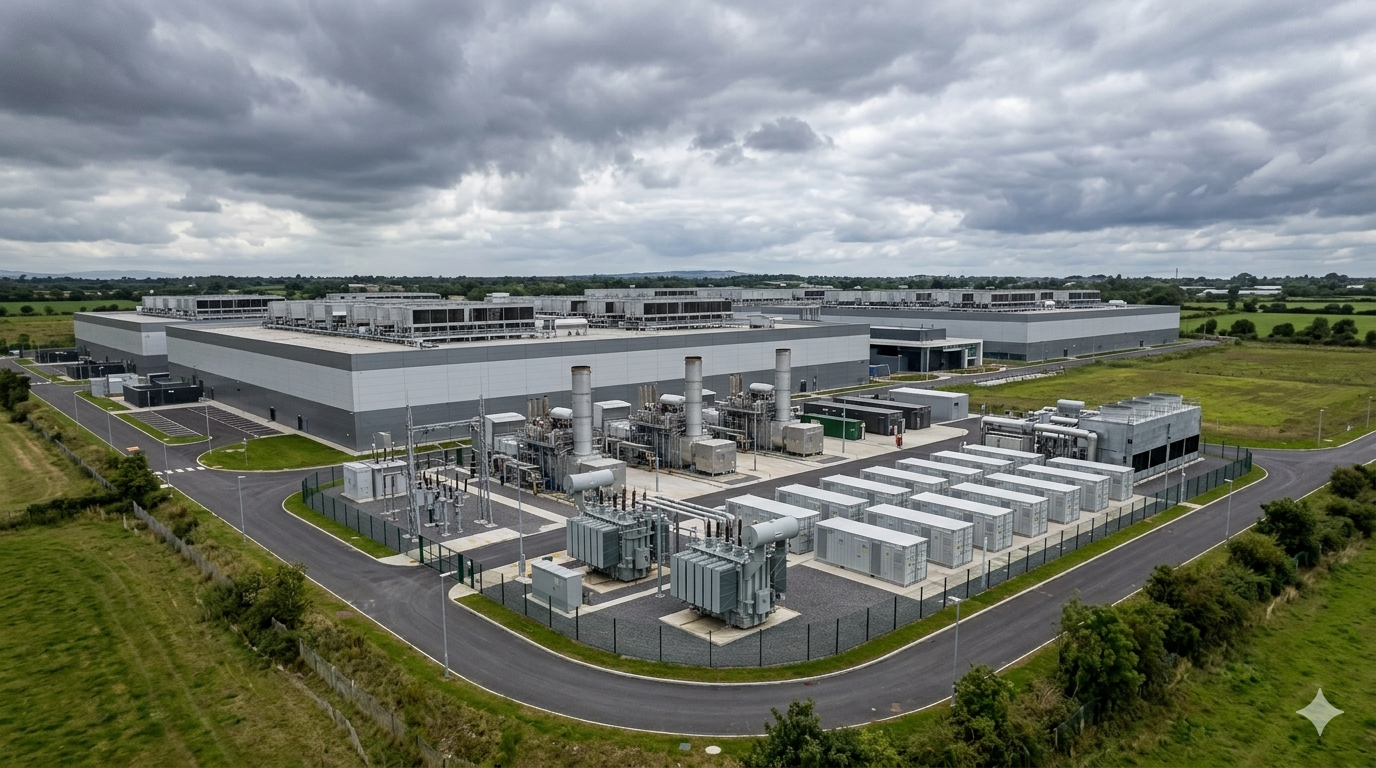
A site intended to support a large behind-the-meter development needs a coherent plan for the generation installation and the load it will serve. The layout must accommodate generation equipment, fuel conditioning, electrical conversion and distribution, cooling systems, service access, and the supporting infrastructure required for safe operation. Buyers should test whether the proposed arrangement leaves room for construction staging and future equipment replacement without disrupting the operating site. They must also assess the route between the gas delivery point and generation equipment, alongside the electrical connection between the generation area and the computing load. These considerations determine whether the physical site supports the intended design, rather than merely providing enough total land to draw a preliminary campus boundary.
Why a 200MW-plus concept requires evidence, not acreage claims
A proposed development of 200MW or more illustrates why buyers cannot use site size as a substitute for engineering evidence. Such a project requires a generation concept that addresses the intended electrical output, fuel delivery, equipment arrangement, cooling, protection systems, and the relationship between generation and computing demand. The buyer must establish whether the pipeline system can support the required fuel service and whether the proposed generation installation can satisfy applicable environmental and operating requirements. The development must also accommodate the physical separation, access, and supporting systems that the selected technology requires. A site may support the proposed concept, but only a project-specific technical assessment can establish that conclusion; the stated capacity target does not prove feasibility.
Land assembly, title review, environmental due diligence, and infrastructure studies help buyers identify sites that can progress beyond preliminary screening. A bankable development case requires a credible route from land control to fuel access, equipment installation, regulatory approvals, and reliable operation. Buyers should identify the unresolved dependencies and determine whether they can resolve them through engineering, contractual commitments, additional land, or a revised development layout. Sellers can support that process by supplying accurate property records and clearly documenting known restrictions rather than relying on generalized claims about industrial development potential. This evidence-based approach helps separate sites that warrant further investment from those whose apparent scale conceals constraints that may undermine the proposed project.
The Valuation Work Behind a Gas-Linked Industrial Site
Repricing industrial land along gas corridors requires buyers to separate the value of existing property attributes from the potential value of a future power development. The first assessment establishes the site’s current industrial utility, including its location, access, zoning, ground conditions, and existing services. The second examines whether a gas-based generation arrangement could provide a credible alternative or complement to conventional grid supply. The third evaluates the costs, approvals, contractual arrangements, and construction work required to realize that possibility. Keeping these assessments separate prevents speculative development potential from inflating the baseline land valuation before the buyer has established what the site can support.
Separating existing land value from power-development potential
The existing land value provides a reference point for comparing the site with properties that serve similar industrial uses. Its assessment can account for location, permitted uses, access, ground conditions, established infrastructure, and restrictions that affect the property’s current utility. Potential power-development value requires a different analysis because it depends on the feasibility of a future use rather than the site’s existing characteristics alone. Buyers should identify the assumptions behind that future use, including fuel access, generation design, environmental approvals, construction requirements, and the intended relationship with the electrical grid. A transparent valuation makes these assumptions visible, allowing the parties to discuss the evidence and risks behind any proposed premium.
A site with an established industrial use and documented utility access may have a stronger baseline value than an undeveloped property with unresolved title or access issues. Yet the second property could still attract interest if its configuration offers a credible route to a generation installation that competing sites cannot accommodate. That possibility should influence the level of investigation rather than automatically establish a higher price. Buyers need to assess whether the development opportunity remains viable after accounting for infrastructure costs, approval requirements, construction constraints, and the time needed to resolve outstanding dependencies. Sellers who distinguish existing attributes from proposed future uses can present a more defensible case without overstating the site’s readiness.
Translating technical uncertainty into commercial terms
A buyer’s due diligence process can identify several different forms of uncertainty, and each may require a different commercial response. Uncertainty about title or easement rights may require legal clarification, while questions about fuel delivery may require technical discussions and a formal commercial arrangement with the relevant provider. Unresolved generation layouts may require engineering work, and environmental questions may require studies or consultation with the authorities responsible for the proposed development. Buyers should avoid combining every open item into a single generalized risk allowance because that approach can obscure the actual source of the uncertainty. A more useful assessment identifies the responsible party, the evidence needed, the likely cost implications, and the point at which the issue must be resolved to preserve the development plan.
Commercial terms can then reflect the status of the relevant evidence. An option may provide time to investigate a site before a full acquisition, while a conditional closing may link completion to specific legal or technical requirements. A staged payment structure may also allocate consideration between the land itself and additional value that becomes supportable after agreed development milestones. Each arrangement requires careful drafting because a preliminary engineering result does not necessarily create a contractual right to gas, a permit, or an electrical connection. Buyers and sellers should define the evidence that satisfies each condition, the consequences if it remains unresolved, and the rights that survive if the transaction does not proceed. These mechanisms help align the purchase price with demonstrated progress rather than an assumed outcome.
The Infrastructure Dependencies That Can Reverse a Land Premium
A promising gas corridor does not remove the commercial dependencies that govern a large industrial development. Fuel supply, transportation rights, generation equipment, air permitting, electrical systems, cooling requirements, and construction logistics must align before a buyer can treat the proposed power arrangement as credible. A problem in one area can force changes elsewhere, such as relocating generation equipment, revising the lateral route, or changing the relationship between the site and the grid. These changes may affect the amount of usable land, the cost of infrastructure, and the time required to reach operation. Site valuation therefore needs to account for how the different systems interact, rather than assigning separate values to favorable attributes without testing whether they can work together.
Fuel security, operating conditions, and generation reliability
A proposed gas connection should be evaluated against the operating profile of the intended generation installation, including its demand characteristics and requirements during periods of constrained supply. Buyers must determine which transportation services are available, whether the relevant contractual arrangements match the proposed load, and how the project would respond to interruptions or changes in fuel conditions. Firm transportation can offer greater contractual protection than interruptible service, but the specific rights and limitations depend on the governing agreements. The site assessment should also consider the physical infrastructure needed to regulate, measure, and deliver gas to the selected equipment. Without an informed assessment of these factors, a location near a major pipeline may appear more secure than the actual supply arrangement would justify.
Generation reliability also depends on the equipment configuration and its relationship with the electrical load. A developer must consider maintenance requirements, equipment availability, electrical protection, cooling, and the consequences of losing an individual generating unit or supporting system. The intended operating strategy may require reserve capacity, additional generation equipment, grid support, or another arrangement that changes the physical layout and commercial case. These requirements affect the amount of land needed and the infrastructure investment associated with the proposed development. Buyers should therefore assess the full operating concept before deciding whether the available site can support the required level of service.
Permitting, neighboring uses, and the cost of delay
The regulatory pathway can influence a site’s development value even when the engineering concept appears workable. Gas pipelines, lateral connections, and generation installations may involve different approvals, with requirements that depend on the project’s location, configuration, and jurisdiction. Interstate pipeline construction and operation fall within a different regulatory framework from many intrastate pipeline activities, while generation equipment can trigger separate air permitting and other environmental reviews. Buyers must identify the authorities responsible for each component instead of assuming that approval of one element resolves the others. A site’s development potential should reflect the actual approval pathway and the work needed to establish compliance.
Neighboring land uses can further influence the design and approval process. Existing industrial operations may offer compatible surroundings, while nearby residential or noise-sensitive uses can constrain the placement and operation of generation equipment. Pipeline easements can affect construction access and restrict activities within their boundaries, while environmental features may require changes to drainage, site preparation, or equipment placement. These conditions do not automatically disqualify a property, but they can alter the development footprint and increase the work required to make the site suitable. Buyers who examine these issues early can compare locations on the basis of realistic development conditions instead of discovering major constraints after committing to an acquisition.
Fuel Access Is Becoming the New Land Basis
The changing relationship between industrial land and power infrastructure places fuel access among the factors that buyers must examine when evaluating locations for power-intensive computing. A site’s proximity to a gas corridor can create an additional development pathway, particularly where conventional grid access presents capacity or scheduling challenges. That opportunity remains conditional on the availability of suitable transportation service, a feasible connection, a workable generation design, appropriate approvals, and a site layout that supports the intended use. Buyers must establish how these elements fit together before treating gas access as a source of additional land value. Sellers, in turn, can strengthen their position by documenting what the property can support and identifying the conditions that remain unresolved.
What sellers and site selectors should establish before pricing a site
For sellers, the opportunity lies in presenting an industrial site through evidence that relates directly to its potential development use. Accurate land records, clear information about easements, an understanding of zoning restrictions, and a credible description of available infrastructure can help buyers evaluate the property without relying on broad assumptions. Where the owner has investigated gas access, the supporting documentation should identify the relevant pipeline, the status of discussions, and any known constraints on a proposed connection. Sellers should not present preliminary interest or a conceptual generation layout as proof of deliverable fuel or approved development rights. A well-documented site gives both parties a stronger basis for determining which elements support the asking price and which require further work.
Site selectors must approach the opportunity from the opposite direction by testing whether the proposed development can proceed within the site’s physical, commercial, and regulatory constraints. The assessment should connect fuel delivery with generation design, electrical distribution, cooling, construction access, and the intended operating arrangement. It should also consider how the development could expand, whether the necessary supporting infrastructure can fit within the available footprint, and how outstanding approvals affect the acquisition strategy. A site with attractive corridor access may still require substantial investment before it can support a functioning power campus. Another location with less obvious geographic appeal may offer a more credible development route once all the relevant dependencies have been evaluated.
From corridor proximity to demonstrable development value
The underlying change in industrial land assessment concerns the relationship between location and execution. Transmission proximity remains relevant, but it cannot independently establish that a proposed development can obtain the electricity it needs. Gas corridor proximity introduces another potential route to power, yet that route must withstand the same scrutiny over technical feasibility, contractual rights, permitting, and construction requirements. Any proposed premium should be assessed against the evidence supporting the intended use, the remaining development requirements, and comparable market information where available. This approach avoids treating every property near a major pipeline as an infrastructure opportunity while recognizing that a suitably configured site can offer options unavailable elsewhere.
For industrial landowners, site preparation and reliable documentation can help buyers assess development feasibility, although their effect on negotiations depends on the property’s attributes and the evidence supporting the proposed use. For buyers, the priority is to establish a credible path from acquisition through fuel access, generation deployment, and operation before assigning substantial value to a future power campus. Neither party can determine that value from acreage, pipeline maps, or nearby electrical infrastructure alone. The strongest assessment connects the site’s existing attributes with a documented development pathway, identifies the dependencies that could prevent execution, and reflects those conditions in the transaction structure. As power-intensive computing reshapes industrial site selection, gas corridor viability can become an important component of land valuation, but the premium ultimately depends on what the specific site can demonstrably support.