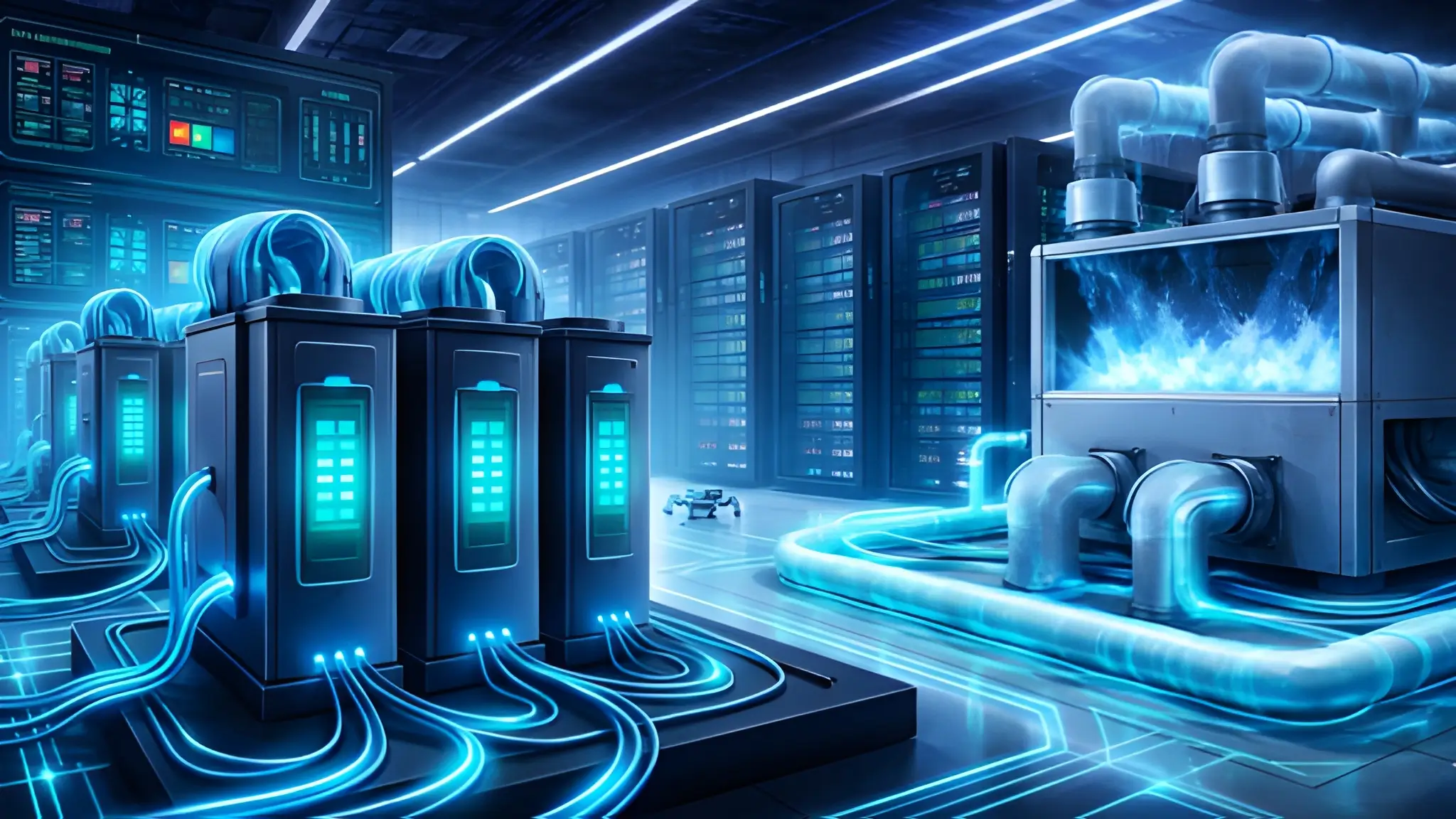
AI infrastructure no longer scales along a single axis of compute or power, as the constraint landscape has shifted toward a tightly coupled interaction between heat generation and energy delivery. Thermal limits now emerge earlier in deployment cycles than electrical capacity, forcing operators to rethink how infrastructure absorbs and dissipates energy under volatile workloads. Cooling systems, once engineered for predictable enterprise loads, now confront rapid oscillations driven by accelerator-heavy compute patterns that do not follow steady-state assumptions.
Energy storage has entered this equation not as a backup mechanism but as an active control layer that stabilizes the interaction between power supply and thermal response. This convergence creates a new operational model where the timing of energy delivery directly influences temperature stability across racks and clusters. Facilities that fail to integrate these dynamics face increasing inefficiencies and operational risk under AI-scale density. The thermal power nexus therefore defines the next stage of infrastructure evolution where energy and heat must be orchestrated as a unified system rather than managed independently.
When Cooling, Not Power, Limits AI Scale
The expansion of AI clusters now encounters limits that increasingly involve both grid access and the ability to reject heat at sustained intensity, with thermal constraints becoming more prominent in high-density deployments. Compute density continues to increase through accelerator integration, yet every unit of consumed power converts into thermal output that must be removed with precision. Cooling infrastructure, particularly at the facility boundary, depends on environmental conditions and physical systems that cannot scale at the same rate as silicon performance.
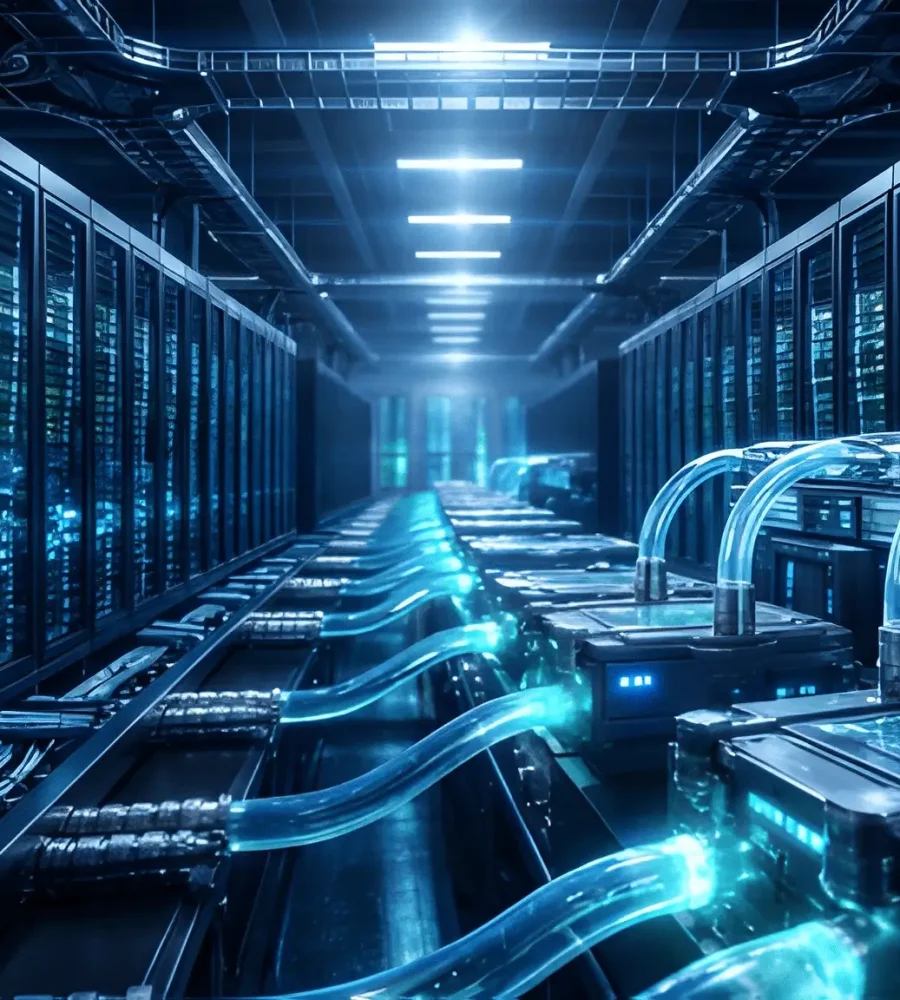
Liquid cooling solutions improve heat transfer within racks, but they still rely on external rejection systems that introduce bottlenecks at scale. Engineers must evaluate ambient conditions, water availability, and heat exchange capacity before determining deployment feasibility. This requirement adds thermodynamic feasibility as a critical planning factor alongside electrical provisioning in determining deployment viability.The constraint therefore manifests as a limit on how much heat a site can continuously dissipate rather than how much power it can draw.
Cooling constraints reshape deployment logic
Deployment strategies now reflect a deeper understanding that cooling systems define the sustainable operating envelope of AI facilities. High-density clusters generate heat profiles that fluctuate rapidly, making static cooling assumptions ineffective under real workloads. Operators must design systems that absorb transient spikes without compromising stability across adjacent infrastructure. This leads to the introduction of thermal buffering concepts that allow short-term deviations without immediate reliance on peak cooling capacity. Rack placement, airflow management, and liquid loop design now depend on localized thermal behavior rather than uniform distribution models. Engineers also consider how workload placement influences heat concentration across zones within the facility. These factors collectively position thermal continuity as a key constraint alongside peak electrical capacity in determining scalable deployment.
Energy storage systems can serve as intermediaries that regulate how power reaches compute clusters, indirectly influencing thermal behavior in certain advanced deployments. GPU-driven workloads often initiate rapid increases in power draw, which translate into immediate heat generation across high-density racks. Cooling systems require finite time to adjust flow rates, pressure, and heat exchange processes, creating a mismatch between generation and removal. Batteries can absorb part of this mismatch by delivering power in a controlled manner that may reduce the rate of thermal escalation in systems designed for such operation. This smoothing effect prevents abrupt spikes that would otherwise strain cooling infrastructure. Engineers design storage dispatch curves that align with thermal response characteristics rather than purely electrical demand. The result is a system where energy delivery becomes a tool for managing temperature stability in real time.
Thermal stability through electrical buffering
Electrical buffering introduces a layer of predictability into environments where compute behavior remains inherently volatile. Energy storage systems intercept fluctuations before they propagate through the broader power and cooling architecture. This controlled delivery ensures that cooling systems experience gradual transitions rather than sudden surges. In some advanced designs, engineers integrate storage controls with thermal monitoring systems to better align energy release with temperature thresholds.This coordination minimizes oscillations that reduce efficiency and increase wear on mechanical components. Facilities achieve a more stable operating environment by aligning electrical input with thermal capacity. The relationship between buffering and cooling performance therefore becomes central to infrastructure design.
Compute systems operate at electronic speeds, while cooling infrastructure responds through physical processes that require measurable time to adjust. This difference creates a synchronization challenge where rapid compute bursts overwhelm slower thermal systems. Energy storage can introduce a buffer that allows these systems to operate more asynchronously without compromising stability in certain configurations. Batteries supply immediate power during workload surges, giving cooling systems time to ramp up gradually. This decoupling prevents overcompensation, where cooling systems react aggressively to short-lived spikes. Engineers design control systems that maintain balance between these asynchronous processes. The outcome is a more controlled and efficient interaction between compute intensity and thermal management.
Managing latency in thermal response
Thermal response latency arises from fluid dynamics, heat exchange processes, and mechanical system inertia that cannot be eliminated. Energy storage can help mitigate the impact of this latency by absorbing part of the initial effect of compute-driven power fluctuations. This prevents temperature overshoot conditions that could disrupt system stability. Engineers implement predictive controls that coordinate storage discharge with expected thermal changes. These systems rely on real-time data and historical patterns to optimize response timing. The integration reduces reliance on reactive cooling strategies that often lead to inefficiencies. Facilities maintain tighter temperature control by addressing latency at the power delivery level.
Power distribution within some advanced AI facilities increasingly incorporates real-time thermal conditions alongside static electrical pathways.Energy storage can enable more flexible power allocation strategies that consider areas experiencing higher thermal stress. Control systems continuously evaluate temperature data across racks and adjust power delivery accordingly. This approach ensures that cooling resources are not overwhelmed by localized spikes. Engineers design architectures where energy flows adapt dynamically to thermal gradients within the facility. Storage systems act as central nodes that facilitate this adaptive routing. The result is a more balanced and efficient distribution of both power and heat.
Dynamic coordination between systems
Coordination between power and cooling systems now requires continuous interaction rather than isolated operation. Energy storage can provide flexibility that supports closer alignment between these systems in near real time. Control platforms analyze multiple inputs, including workload intensity and thermal conditions, to optimize system behavior. Engineers develop algorithms that manage this complexity without introducing instability. The integration ensures that energy delivery supports cooling performance at all times. Facilities benefit from improved resilience under dynamic operating conditions. This coordination represents a shift toward unified infrastructure management.
High-density racks introduce thermal challenges that do not follow linear scaling assumptions. As power density increases, localized heat output rises disproportionately due to concentrated workloads and limited surface area for heat dissipation. This creates hotspots that require targeted cooling strategies beyond traditional airflow methods. Engineers must account for these non-linear effects when designing both rack-level and facility-level systems. Energy storage helps mitigate these challenges by controlling how quickly power reaches these dense loads. This reduces the intensity of heat spikes and allows cooling systems to respond more effectively. The interaction between density and heat output therefore demands integrated design approaches.
Integration of buffering and cooling
The complexity of high-density environments requires a coordinated approach that combines power buffering with advanced cooling techniques. Energy storage provides a mechanism to regulate power delivery in a way that supports thermal stability. Engineers design systems where storage and cooling operate as interconnected components rather than separate layers. This integration improves the efficiency of both systems under dynamic conditions. Facilities can maintain stable temperatures even as workloads fluctuate rapidly. The combined approach reduces operational risk and enhances performance. High-density deployments therefore depend on tightly coupled power and cooling strategies.
Cooling as a Variable Load in Power Architecture Design
Cooling systems now operate as dynamic participants in infrastructure rather than fixed consumers of electrical power, as AI workloads introduce variability that continuously alters thermal demand. Traditional facilities assumed relatively stable heat output, allowing cooling systems to run on predictable schedules with minimal deviation. AI environments disrupt this assumption by producing rapid fluctuations in heat generation that require immediate and proportional response. Engineers must now treat cooling demand as a variable load that changes in real time alongside compute intensity. This shift requires integrating cooling systems directly into power management frameworks that can respond dynamically. Energy storage supports this transition by enabling flexible allocation of power based on instantaneous thermal needs. Facilities that adopt this model gain improved control over both energy efficiency and temperature stability under volatile workloads.
Modern infrastructure design incorporates cooling demand as a core parameter within energy system modeling, reflecting its direct impact on operational stability. Engineers simulate interactions between compute workloads, thermal output, and cooling system behavior to understand how these elements influence each other. These models reveal that cooling demand can shift rapidly and unpredictably, requiring power systems to adapt without delay. Energy storage enables this adaptability by acting as a buffer that absorbs fluctuations and redistributes energy where needed. Control systems use real-time data to adjust both compute and cooling operations, maintaining balance across the facility. This integration ensures that cooling systems receive sufficient power without causing instability elsewhere in the network. Facilities benefit from a more resilient architecture that aligns power delivery with thermal requirements.
Using Storage to Offset Cooling Ramp Constraints
Cooling infrastructure operates under physical constraints that prevent instantaneous response to changes in thermal load, creating a temporal gap between compute activity and heat removal. AI workloads often increase sharply, generating heat faster than cooling systems can dissipate it. Energy storage bridges this gap by providing immediate power support that smooths the transition. This allows cooling systems to ramp up gradually while maintaining stable temperatures across racks. Engineers design storage systems with response characteristics that align with the ramp profiles of cooling equipment. This coordination prevents thermal instability during periods of rapid change. Facilities achieve smoother transitions between workload states by aligning energy delivery with cooling response capabilities.
Reducing mechanical strain and improving longevity
Cooling systems experience significant mechanical stress when forced to respond to abrupt changes in demand, particularly in high-density AI environments. Sudden increases in cooling load can strain pumps, valves, and compressors, reducing their operational lifespan. Energy storage mitigates this issue by controlling the rate at which power reaches cooling systems. This gradual ramp reduces stress on mechanical components and improves overall system reliability. Engineers integrate storage dispatch strategies that respect the operational limits of cooling equipment. This approach minimizes maintenance requirements and reduces the likelihood of unexpected failures. Facilities benefit from more stable operations and longer equipment lifecycles.
AI workloads introduce variability that can disrupt cooling performance if power delivery does not remain consistent during transitions. Energy storage can help support stable power delivery to cooling systems during power fluctuations, complementing primary and redundant power infrastructure. This continuity prevents temperature deviations that could impact system performance or reliability. Engineers design battery systems to provide seamless support during periods of rapid workload change. The integration of storage with cooling infrastructure can contribute to maintaining more consistent thermal conditions in certain facility designs. This capability becomes critical in environments where even minor temperature fluctuations can have significant consequences. Facilities achieve higher reliability by ensuring uninterrupted cooling performance.
Sustaining thermal stability during extended demand
Prolonged periods of high compute activity place continuous demands on cooling systems, requiring sustained power delivery to maintain stable temperatures. Energy storage provides a reliable source of support that complements grid supply during these periods. This reduces dependence on external energy sources and enhances operational stability. Engineers design storage systems to operate efficiently under continuous load conditions. The integration ensures that cooling systems maintain consistent performance even during extended demand cycles. Facilities benefit from improved resilience and reduced risk of thermal degradation. This sustained stability supports the reliable operation of high-density AI workloads.
Conventional metrics such as power usage effectiveness fail to capture the complexity of thermal dynamics in modern AI data centers. These metrics focus on aggregate efficiency without accounting for real-time interactions between power delivery and cooling demand. Engineers are increasingly exploring thermal load orchestration as an approach to managing dynamic interactions between power delivery and cooling demand. Energy storage enables this approach by providing flexible power distribution that responds to thermal signals. Control systems continuously adjust operations based on real-time data, ensuring optimal performance across infrastructure layers. This shift reflects a broader move toward dynamic management strategies. Facilities achieve better outcomes when they focus on coordination rather than static efficiency measures.
Real-time orchestration across infrastructure layers
Thermal load orchestration approaches involve continuous coordination between compute, cooling, and energy systems to maintain balance under changing conditions. Control platforms collect data from sensors distributed across the facility and use this information to guide system behavior. Energy storage provides the flexibility needed to implement these adjustments without disrupting operations. Engineers design algorithms that optimize interactions between systems, ensuring that energy delivery aligns with thermal requirements. This coordination reduces inefficiencies and improves overall system performance. Facilities operate more effectively when infrastructure components work together as an integrated system. Real-time orchestration becomes a defining characteristic of advanced AI data centers.
As AI infrastructure scales, the interdependencies between power and cooling systems become more complex and difficult to manage. Each component influences others in ways that can amplify instability if not properly controlled. Energy storage provides a means to manage these interdependencies by introducing flexibility into the system. Engineers develop strategies that coordinate power delivery with cooling response across multiple layers. This coordination ensures that changes in one system do not negatively impact others. Facilities benefit from improved stability and scalability. Managing these interdependencies becomes essential for supporting large-scale AI deployments.
Thermal Buffering as a Design Principle
Thermal buffering has emerged as a key design principle for managing the variability of AI workloads. This concept involves creating systems that can absorb short-term fluctuations in heat generation without immediate reliance on peak cooling capacity. Energy storage contributes to this approach by controlling the rate of power delivery, which directly influences heat production. Engineers design infrastructure that incorporates both electrical and thermal buffering mechanisms. This integration allows facilities to handle transient spikes more effectively. The result is a more stable operating environment that reduces the risk of thermal instability. Thermal buffering becomes a foundational element of modern data center design.
Combining electrical and thermal buffering
The combination of electrical and thermal buffering creates a more robust system capable of handling dynamic workloads. Energy storage manages power fluctuations, while thermal storage systems absorb excess heat during peak periods. Engineers integrate these systems to provide complementary support for cooling infrastructure. This approach improves the overall resilience of the facility. Facilities can maintain stable temperatures even under highly variable conditions. The integration of buffering mechanisms enhances both performance and reliability. This combined strategy represents a significant advancement in infrastructure design.
Energy storage within AI data centers no longer remains confined to electrochemical systems, as thermal storage technologies now play an equally important role in stabilizing infrastructure. Cooling demand fluctuates with compute intensity, which creates opportunities to store cooling capacity during periods of lower thermal stress. Systems such as chilled water reservoirs and phase-change materials absorb excess cooling energy and release it when demand increases. Engineers integrate these systems into broader energy architectures to create a dual-layer buffering mechanism. This approach allows facilities to manage both heat and power with greater flexibility. The expansion of storage into thermal domains strengthens the ability to maintain consistent operating conditions under dynamic workloads.
Chilled water systems as thermal reservoirs
Chilled water storage systems act as reservoirs that store cooling capacity in advance of demand spikes. These systems allow cooling infrastructure to operate at steady conditions while preparing for future load increases. When compute activity rises, stored cooling energy can be deployed immediately without requiring rapid ramp-up of mechanical systems. Engineers design these reservoirs to integrate seamlessly with liquid cooling loops and heat exchangers. This integration improves response times and reduces stress on active cooling components. Facilities achieve greater thermal stability by leveraging stored cooling capacity during peak periods. The use of chilled water storage represents a practical method for aligning cooling supply with unpredictable demand.
Phase-change materials are being explored as an additional layer of thermal buffering, particularly in experimental or specialized deployments. These materials can be deployed near high-density racks to manage localized heat spikes effectively. Engineers design systems where phase-change materials complement liquid cooling by providing immediate heat absorption at the source. This reduces the burden on centralized cooling systems during transient events. The integration of such materials enhances the overall responsiveness of thermal management strategies. Facilities benefit from improved control over localized temperature variations. This approach supports stable operation in environments with highly concentrated heat generation.
Aligning Cooling Demand with Energy Availability Windows
AI data centers increasingly operate within energy environments that include variable supply conditions, particularly when integrating renewable sources. Cooling systems must align their operation with periods when energy is available or most efficiently utilized. Energy storage enables this synchronization by storing power during favorable conditions and releasing it when cooling demand rises. Engineers design control systems that coordinate cooling operations with energy availability windows. This approach reduces strain on the grid while maintaining consistent thermal performance. Facilities achieve better operational efficiency by aligning cooling demand with energy supply cycles. The synchronization of these elements represents a shift toward more adaptive infrastructure design.
Energy supply variability introduces challenges that require careful coordination to maintain stable cooling performance. Renewable energy sources can fluctuate based on environmental conditions, affecting the availability of power for cooling systems. Energy storage provides a buffer that smooths these fluctuations, ensuring consistent operation. Engineers integrate storage systems with both power and cooling infrastructure to manage this variability effectively. This integration supports reliable performance without requiring constant reliance on external energy sources. Facilities benefit from increased resilience and flexibility. Managing variability becomes essential for maintaining stability in modern AI environments.
AI Workload Forecasting Meets Thermal-Energy Coordination
Predictive modeling has become a critical tool for managing the interaction between compute workloads and thermal systems in AI data centers. These models analyze historical patterns and real-time data to anticipate changes in workload intensity and associated heat generation. Engineers use this information to prepare both energy storage and cooling systems for upcoming demand. Ultimately, this proactive approach reduces the likelihood of thermal instability during workload transitions. Facilities gain the ability to optimize resource allocation before changes occur. Predictive modeling enhances the overall efficiency of system operations. The integration of forecasting into infrastructure management represents a significant advancement in data center design.
Energy storage systems can operate more effectively when guided by predictive insights in advanced implementations that integrate forecasting capabilities. Engineers design control strategies that align storage dispatch with expected changes in compute and cooling requirements. This coordination ensures that energy is available when needed without unnecessary fluctuations. The integration of forecasting with storage management improves the balance between power delivery and thermal stability. Facilities achieve smoother transitions between different workload states. This approach reduces inefficiencies and enhances overall system performance. Predictive coordination becomes essential for managing the complexity of AI workloads.
The combination of predictive modeling and real-time control creates a closed-loop system that continuously optimizes data center operations. Forecasts inform decisions about energy storage and cooling system behavior, while real-time data validates and refines these predictions. Engineers design feedback mechanisms that ensure continuous improvement in system performance. This closed-loop approach reduces the gap between expected and actual conditions. Facilities benefit from more accurate and responsive operations. The integration of prediction and execution enhances both efficiency and reliability. This approach represents a mature stage in the evolution of AI infrastructure management.
Emerging Intersections Between Thermal and Energy Systems
The boundaries between power systems and cooling infrastructure continue to blur as both become interdependent components of a unified architecture. Engineers design facilities where these systems operate as a cohesive unit rather than independent layers. Energy storage acts as a bridge that connects electrical and thermal domains. This convergence enables more precise control over system behavior under dynamic conditions. Facilities achieve improved performance by integrating these elements into a single operational framework. The approach reflects a shift toward holistic infrastructure design. The convergence of systems becomes essential for managing the complexity of AI workloads.
Interdependent performance requires careful coordination between systems that influence each other in real time. Changes in compute activity affect both power demand and thermal output, which in turn impact cooling requirements. Engineers must design systems that account for these interactions at every level. Energy storage provides the flexibility needed to manage these relationships effectively. Control systems use data from multiple sources to optimize performance across the facility. Facilities benefit from improved stability and efficiency. Designing for interdependence becomes a key principle in modern data center architecture.
Preparing Infrastructure for Continuous Thermal Variability
AI workloads introduce continuous variability that challenges traditional infrastructure models designed for predictable demand. Cooling systems must adapt to these fluctuations without compromising stability or efficiency. Energy storage supports this adaptation by providing flexible power delivery that aligns with changing conditions. Engineers design systems that respond dynamically to workload shifts. This approach ensures consistent performance even under unpredictable scenarios. Facilities achieve greater resilience by accommodating continuous variability. The ability to adapt becomes a defining characteristic of advanced data centers.
Resilience in AI data centers depends on the ability to maintain stable operation under a wide range of conditions. Integrated systems that combine power, cooling, and storage provide the foundation for this resilience. Engineers design architectures that support coordinated responses to changes in workload and environmental conditions. Energy storage plays a central role in enabling these responses. Facilities benefit from improved reliability and reduced risk of disruption. This integrated approach enhances overall system performance. Building resilience becomes a primary objective in modern infrastructure design.
From Redundancy to Continuous Thermal Assurance
Traditional data center design relied heavily on redundancy models that activated backup systems only during failure scenarios. This approach assumes that primary systems operate within predictable limits and that disruptions occur infrequently. AI workloads challenge this assumption by introducing variability that places continuous stress on both power and cooling infrastructure. Cooling systems must maintain stability under rapidly changing thermal conditions rather than respond only during outages. Energy storage enables this shift by providing continuous support that smooths fluctuations before they escalate into failures. Engineers increasingly complement traditional redundancy with designs that emphasize steady-state resilience under dynamic conditions. Facilities benefit from a more consistent and reliable operating environment that reduces dependency on failover mechanisms.
Continuous thermal assurance represents a new operational model where cooling performance remains stable regardless of workload volatility. Energy storage plays a central role by ensuring that cooling systems receive uninterrupted and controlled power at all times. This approach eliminates the need for abrupt transitions between primary and backup systems. Engineers integrate storage directly into the operational fabric of the facility rather than treating it as an auxiliary component. Control systems monitor thermal conditions continuously and adjust energy delivery to maintain equilibrium. Facilities achieve higher levels of reliability by preventing instability rather than reacting to it. This model aligns with the demands of AI workloads that require constant and precise environmental control.
Redefining Reliability Through Thermal Stability
Reliability in AI data centers increasingly depends on maintaining stable thermal conditions rather than simply ensuring uninterrupted power supply. Compute systems operate within narrow temperature ranges that require precise control to avoid performance degradation. Cooling systems must therefore deliver consistent performance even under fluctuating workloads. Energy storage contributes to this stability by moderating power delivery and preventing sudden thermal shifts. Engineers design systems where temperature stability becomes a primary reliability metric. This shift changes how infrastructure performance is evaluated and optimized. Facilities achieve improved outcomes by focusing on thermal consistency as a core objective.
System design now incorporates thermal metrics alongside traditional electrical parameters to ensure balanced performance. Engineers use temperature data to guide decisions about power distribution and storage deployment. This integration allows for more precise control over system behavior. Energy storage systems respond to thermal signals as well as electrical demand, creating a more adaptive infrastructure. Facilities benefit from improved alignment between power and cooling systems. This approach enhances both efficiency and reliability. Integrating thermal metrics becomes essential for managing modern AI workloads.
Continuous Interaction Between Storage and Cooling Systems
Energy storage systems no longer function solely as passive buffers but actively participate in maintaining thermal stability. Their operation directly influences how quickly and smoothly power reaches compute and cooling systems. This influence extends to temperature control, as moderated power delivery reduces the intensity of heat generation spikes. Engineers design storage systems with control strategies that align with thermal response requirements. This integration ensures that storage contributes to overall system stability. Facilities benefit from a more cohesive interaction between infrastructure components. Storage becomes a critical element in managing thermal dynamics.
Effective operation requires coordinated control across power, cooling, and storage systems to maintain balance under dynamic conditions. Control platforms collect data from multiple sources and use it to guide system behavior. Energy storage provides the flexibility needed to implement these adjustments without disruption. Engineers design algorithms that optimize performance across all infrastructure layers. This coordination reduces inefficiencies and improves overall stability. Facilities achieve better performance through integrated management. Coordinated control becomes essential for modern AI data centers.
Infrastructure Design for Thermal Continuity
Infrastructure design now prioritizes uninterrupted thermal performance as a key objective in AI data centers. Cooling systems must maintain consistent operation regardless of changes in workload intensity. Energy storage supports this goal by ensuring continuous power delivery to cooling infrastructure. Engineers design systems that integrate storage at critical points to prevent interruptions. This approach enhances overall system resilience. Facilities benefit from improved reliability and stability. Designing for thermal continuity becomes a central principle in modern data center architecture.
Thermal discontinuities occur when cooling systems fail to respond effectively to changes in heat generation. These disruptions can lead to localized overheating and reduced system performance. Energy storage mitigates this risk by smoothing power delivery and supporting gradual transitions. Engineers integrate storage with cooling systems to ensure continuous operation. This integration reduces the likelihood of abrupt temperature changes. Facilities maintain stable conditions even under dynamic workloads. Eliminating discontinuities improves both efficiency and reliability.
The Strategic Role of Storage in AI Infrastructure
Energy storage now functions as a control layer that influences both power delivery and thermal management in AI data centers. This role extends beyond traditional applications such as backup power or grid support. Engineers design storage systems to interact with multiple infrastructure components in real time. This interaction enables more precise control over system behavior. Facilities benefit from improved coordination between power and cooling systems. Storage becomes an integral part of infrastructure design. Its strategic role continues to expand as AI workloads evolve.
Adaptive infrastructure requires systems that can respond dynamically to changing conditions without compromising performance. Energy storage provides the flexibility needed to achieve this adaptability. Engineers design systems that adjust power delivery based on real-time data. This approach supports stable operation under varying workloads. Facilities achieve greater resilience and efficiency. Adaptive infrastructure becomes essential for managing the complexity of AI environments. Storage plays a central role in enabling this capability.
The Rise of Thermal-Integrated Power Architectures
The evolution of AI data centers now reflects a convergence between power delivery and thermal management that reshapes infrastructure design. Energy storage stands at the center of this transformation, acting as a bridge that connects electrical and thermal systems. Engineers no longer treat these domains as separate layers but as interdependent components of a unified architecture. This convergence improves system performance by aligning energy flow with thermal requirements. Facilities operate more efficiently when these systems function together. The shift represents a fundamental change in how infrastructure is conceptualized and implemented. Thermal-integrated power architectures define the next phase of data center evolution.
Energy storage is evolving from a supporting role toward a more integral component in certain advanced AI data center architectures. Its ability to stabilize both power delivery and thermal conditions makes it indispensable for modern operations. Engineers continue to refine storage technologies and control strategies to meet evolving demands. This ongoing development enhances the capabilities of integrated systems. Facilities benefit from improved reliability, efficiency, and scalability. The role of storage will continue to expand as AI workloads grow more complex. The thermal power nexus becomes a foundational principle guiding future infrastructure design.