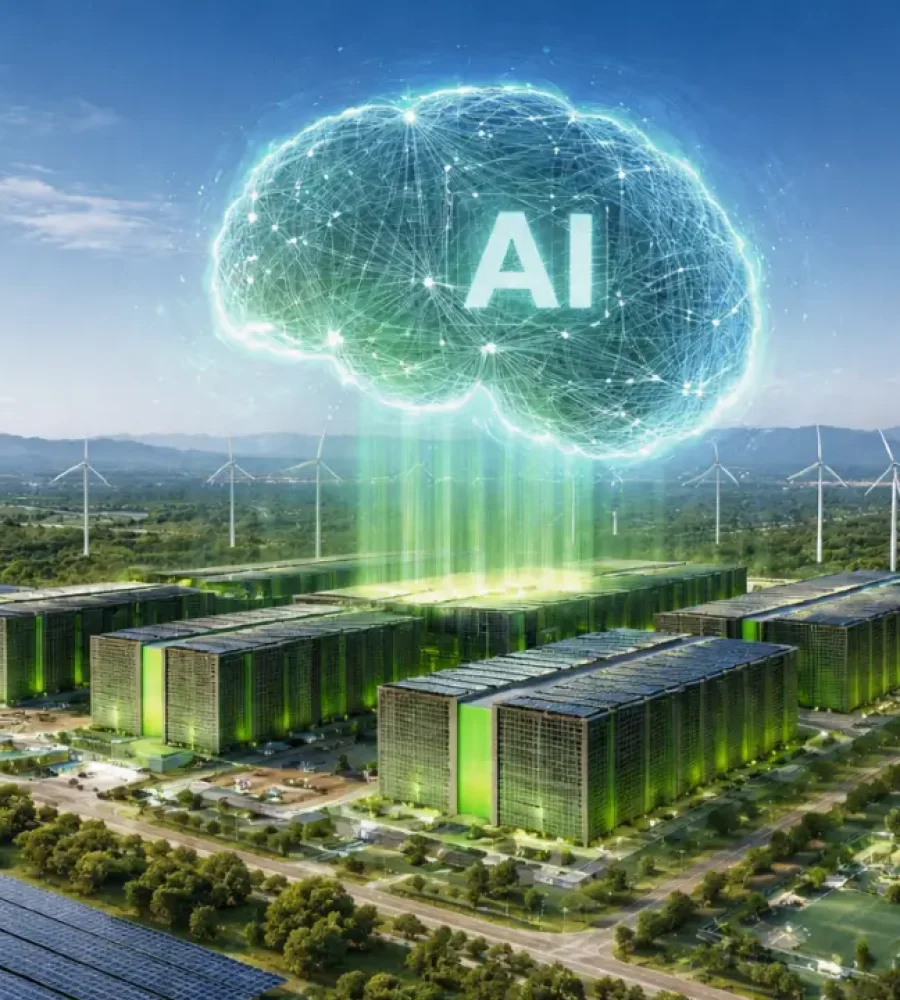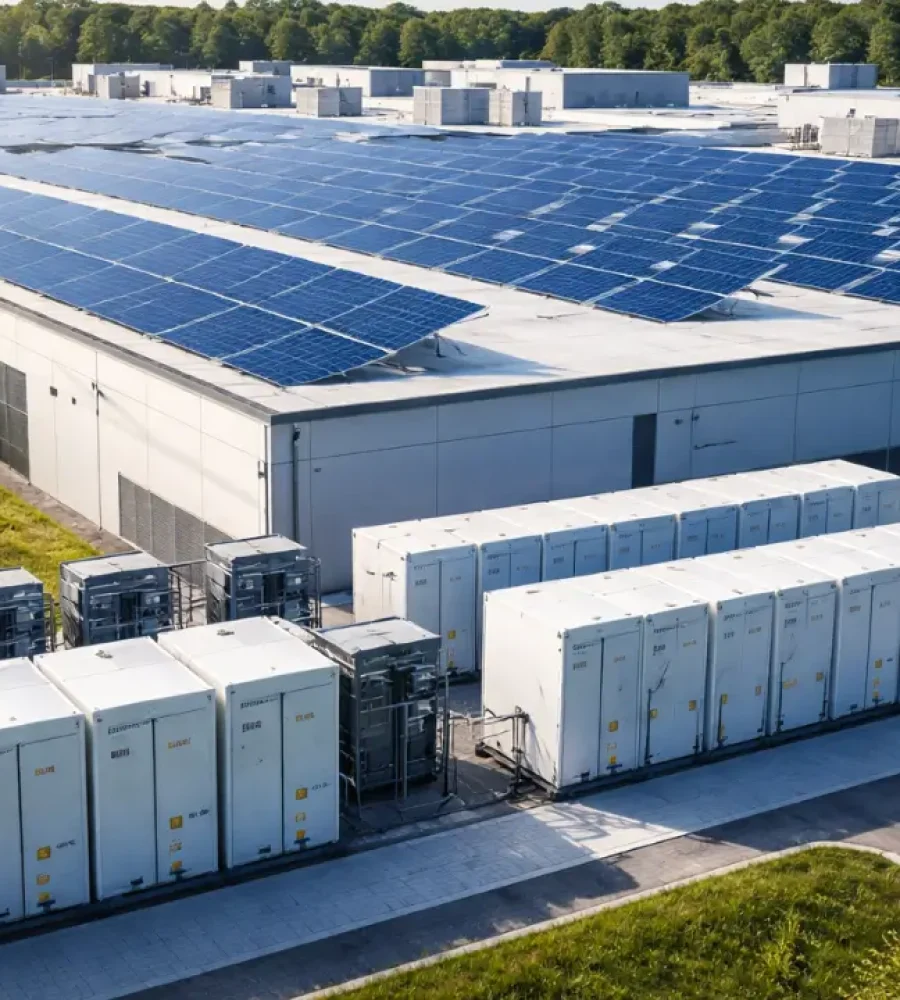

AI is exploding economies worldwide, but its hidden hunger: for energy, water, and raw compute power, is devouring the planet. Electricity demand doubling from 415 TWh in 2024 to 945 TWh by 2030, hitting 3% of worldwide use, with carbon spikes and a water footprint in the hundreds of billions of liters annually, set to surge. Worse, it widens the “Digital Carbon Divide”: wealthy nations lock in green AI dominance; the rest foot bills for dirty grids and miss out on compute, data rights, and clout. UN Secretary-General Guterres gets it- his $3 billion Global AI Fund from the 2026 India Summit targets this head-on, arming the Global South with affordable power, talent pipelines, and rules to make AI sustainable, not stratified.
Though dwarfed by corporate pledges, this fund is a pivot point. This report charts the divide, sizes up the fund, and pinpoints levers, like clean energy ties, for low-carbon AI that unites us, grounded in policy, tech, and green ambition.
The Genesis of the $3 Billion Fund
From 16 to 21 February 2026, global leaders gathered in New Delhi for the India AI Impact Summit. They discussed artificial intelligence in relation to economic systems, governance frameworks, and environmental sustainability.
This summit continued a broader international series. The sequence began with the AI Safety Summit in Bletchley Park in 2023. It later moved to Seoul in 2024 and Paris in 2025. For the first time, a Global South country hosted the discussions at the center of international AI policy.
During the summit, participants emphasized several priorities. They highlighted the need to democratize AI resources. They also stressed resilient infrastructure development. In addition, they discussed environmental considerations in technological deployment.
India used the summit to position itself as both a model and a facilitator. It promoted inclusive AI pathways. It emphasized equitable access to compute resources. It also supported multilingual AI systems and public-interest digital infrastructure. Moreover, India aims to use its domestic platforms, skilled workforce, and development momentum to connect Global South needs with global innovation.
Economic and Energy Pressures
Major technology firms have announced large investments in AI infrastructure. Some commitments reach tens of billions of dollars. These investments are expanding data centers and cloud capacity.
However, many global energy systems are still transitioning to low-carbon generation. Therefore, rapid infrastructure growth may increase reliance on fossil fuels if clean energy planning does not accompany expansion.
Recognizing this risk, UN Secretary-General António Guterres proposed a $3 billion Global Fund on AI. The fund focuses on helping nations build inclusive and sustainable AI capacity.
He emphasized that AI development should not remain concentrated in a small group of wealthy nations or corporations. Instead, countries need access to data infrastructure, affordable computing, and governance capacity. Without such support, many nations may fall behind in the AI transition.
Guterres framed the fund as a development tool. It aims to align AI growth with sustainability. It also seeks to protect rights and reduce environmental stress.
Furthermore, he called on data centers and supply chains to adopt clean energy. He stressed that AI governance should reflect inclusivity and dignity. In this way, infrastructure expansion can support both innovation and environmental responsibility.
The fund’s core objective is capacity building. It intends to help nations participate in innovation. It also enables them to design regulatory systems. At the same time, it reduces disproportionate environmental burdens.
Defining the Digital Carbon Divide
The disparities in compute access, energy systems, and environmental impact are already shaping unequal conditions for sustainable AI development.
A. Infrastructure Inequality: The Compute Gap
Global AI compute capacity is unevenly distributed. Only about 16 percent of countries host major AI data centers. Consequently, most nations lack local high-performance infrastructure.
Compute clusters concentrate in North America, China, and parts of Europe. These regions benefit from strong electricity grids, advanced connectivity, and large-scale investments.
In contrast, Sub-Saharan Africa, South Asia, and parts of Latin America have limited build-outs. Several factors contribute to this situation. These include unreliable power supply, high land and cooling costs, and limited cloud deployment.
Structural Dimensions of the Gap
Data center concentration:
The United States and China host most large clusters. For example, the United States alone maintains tens of gigawatts of capacity, particularly in regions such as Northern Virginia.
Access to advanced hardware:
High-performance GPUs and TPUs support large-scale model training. However, these chips are expensive. Major cloud providers and wealthy nations often secure priority access. Smaller markets rely on external cloud services, which increases latency and costs.
Network limitations:
Inadequate broadband infrastructure creates bottlenecks. As a result, data transfers slow down. Operational efficiency also declines.
Together, these factors shape global AI dependency patterns. Some countries innovate locally. Others primarily consume external AI services.
B. Energy Access and Carbon Intensity
Rising Electricity Demand
AI data centers operate continuously. They require large numbers of servers and cooling systems. According to the International Energy Agency, global data center electricity use reached about 415 TWh in 2024. This equals roughly 1.5 percent of global electricity consumption.
Projections suggest this demand could nearly double to 945 TWh by 2030. AI workloads, especially training and inference, drive much of this growth. Furthermore, AI-specific tasks may grow faster than average data center demand.
As a result, national grids may experience strain. Developing economies face particular pressure.
Differences in Grid Composition
Energy mix strongly influences emissions.
In fossil-fuel-dominant regions, data centers produce higher carbon emissions. Coal and natural gas still supply large portions of electricity in several parts of Asia, the Middle East, and many developing economies.
In contrast, parts of Europe generate significant shares of wind, solar, and nuclear power. Consequently, emissions per kilowatt-hour remain lower. For example, European grids average approximately 174 gCO₂ per kWh in some studies.
Meanwhile, many Global South regions operate hybrid grids. They combine renewables with fossil fuels. However, intermittent supply often forces facilities to rely on diesel backups. This increases carbon intensity further.
Therefore, nations without strong renewable infrastructure face higher decarbonization costs.
Reliability Challenges
Electricity access remains uneven globally. Hundreds of millions of people still lack reliable power. This limitation restricts data center development.
In addition, unreliable grids discourage large-scale investment. Investors prefer regions with stable energy supply. Consequently, infrastructure clusters reinforce existing advantages.
C. The Colonialism of AI
Researchers describe certain AI dynamics as digital colonialism. This concept highlights unequal extraction and benefit distribution.
Data Extraction Patterns
AI systems often collect data globally. However, model development and monetization occur mainly in wealthy countries. Therefore, economic returns concentrate outside data source regions.
Environmental Cost Distribution
Data centers often operate in advanced economies. As a result, these countries bear emissions from compute infrastructure. Meanwhile, applications may serve users across borders. This creates an uneven distribution of environmental burdens.
Dependency on External Providers
Many countries rely on foreign cloud services for AI access. This dependence shapes pricing, governance, and availability. Consequently, domestic policy autonomy may weaken.
Furthermore, reliance on external systems can limit local innovation. It may also constrain regulatory flexibility in data protection and AI standards.
Deep Dive: The UN’s $3 Billion Mechanism
A. Allocation Strategy
Guterres designed the fund to build foundational AI capacity in developing countries. He emphasized four pillars: computing power, data infrastructure, human capital, and inclusive ecosystems.
He described the $3 billion target as symbolic and strategic. It represents less than 1 percent of annual revenue from a major technology company. Therefore, the fund aims to catalyze broader investment rather than fully finance global AI needs.
Although the UN has not released a formal allocation plan, summit statements suggest several priority areas.
Affordable Compute and Cloud Access
The fund may support access to affordable computing power. It could provide subsidized cloud credits or pooled purchasing systems. As a result, countries without domestic high-performance infrastructure could lower entry barriers.
Data Infrastructure and Governance
The fund may invest in data systems and interoperable frameworks. These tools would help countries collect and manage data responsibly. In addition, they would strengthen rights protection and maximize local value creation.
Human Capital Development
Education and training form another core pillar. The fund may support scholarships, workforce programs, and educator networks. Guterres consistently emphasized that AI should augment workers. Therefore, skills development remains central to the strategy.
Institutional Strengthening
The proposal also points toward regulatory and research support. Countries may receive technical assistance to design governance frameworks. Furthermore, the fund could help safeguard civil liberties and human rights as AI adoption expands.
Together, these allocations would address hardware, software, governance, and education. Consequently, the fund aims to reduce structural barriers across the AI ecosystem.
B. Sovereign Green Compute Infrastructure
Although not presented as a separate line item, green infrastructure plays a key role in the proposal. Guterres directly connected AI growth with clean energy transitions. He warned that data centers should adopt clean power instead of shifting costs to vulnerable communities.
Renewable Energy Integration
One possible mechanism involves power purchase agreements for solar and wind energy. These agreements could reduce risk for upfront investments. In turn, they would encourage renewable deployment for AI infrastructure.
Microgrids and Modular Systems
The fund may also support localized energy solutions. Microgrids can stabilize intermittent renewable supply. Additionally, they reduce dependence on fossil-fuel backups.
Public-Private Partnerships
Shared financing models could combine public funds with private capital. This approach may support community-oriented clean energy systems. As a result, infrastructure could serve both AI facilities and local populations.
Without clean energy alignment, new compute capacity could increase emissions. Therefore, green financing functions as a bridge. It enables decarbonization in regions where initial costs remain high.
C. Technology Transfer and Frugal AI
Although Guterres did not explicitly use the term frugal AI, his emphasis on affordability and inclusion aligns with efficiency-focused systems. Therefore, technology transfer becomes essential.
Lightweight Models
The fund could support models that operate on lower-cost hardware. These systems reduce compute demands. Consequently, they allow deployment in constrained environments.
Edge Computing
Edge solutions process data closer to users. This reduces dependence on distant hyperscale data centers. Moreover, it lowers latency and transmission costs.
Open-Source Collaboration
Collaborative platforms may reduce reliance on proprietary tools. Open systems expand shared innovation. In addition, they promote public-good applications.
These pathways align with broader sustainability goals. They also reduce dependence on centralized cloud monopolies.
D. Capacity Building
Guterres repeatedly warned that nations risk being excluded from the AI era without investment in skills. Therefore, capacity building remains a strategic priority.
Educational Ecosystems
The fund may support training programs for engineers, policymakers, and ethics experts. These programs would strengthen domestic expertise. As a result, countries could manage AI systems independently.
Curriculum Development
Partnerships with universities and research institutions could expand technical education. International cooperation may support standardized learning resources.
Fellowship Programs
Cross-border exchanges could promote knowledge sharing. These initiatives would build long-term expertise networks.
Governance Units
Governments may receive support for privacy and ethics bodies. Such units can design regulatory frameworks. In addition, they can oversee responsible deployment.
Effective capacity building requires coordination with local institutions. Therefore, implementation must reflect regional labor markets and governance contexts.
E. Governance and Partnerships
The governance structure of the fund remains under development. However, summit discussions indicate a multi-stakeholder approach.
Role of UN Agencies
Organizations such as UNESCO, UNDP, and ITU may contribute oversight and technical guidance. Their involvement could enhance transparency. Furthermore, they may support monitoring systems.
Private Sector Participation
The fund may encourage co-financing arrangements. Public investment could unlock larger private commitments. Consequently, collaboration could amplify impact.
Civil Society and Academia
Non-governmental organizations and universities may participate in planning and evaluation. This inclusion can reduce top-down bias. It also strengthens local relevance.
Transparency Mechanisms
Independent monitoring bodies will likely prove essential. Clear outcome metrics could track compute access, renewable deployment, and training progress. Without accountability, large funds may face inefficiency risks.
Balancing flexibility and oversight will remain a central challenge. Past global initiatives show that scale requires governance clarity.
Limitations in the Current Proposal
Although the proposal outlines strong ambitions, several gaps remain.
First, the UN has not published a detailed budget breakdown. Therefore, allocation proportions across infrastructure categories remain unclear.
Second, leverage mechanisms for private co-funding are undefined. It is not yet clear whether contributions will rely on voluntary participation or structured incentives.
Third, the proposal lacks specific timelines. Disbursement schedules and evaluation frameworks have not been fully articulated.
As a result, the fund currently represents a strategic framework rather than a finalized program. Its ultimate effectiveness will depend on detailed design, political commitment, and sustained collaboration.
The Technical Frontier: Frugal AI and Localized Models
Policymakers and technologists are increasingly exploring resource-efficient AI systems. Frugal AI addresses energy, compute, and infrastructure constraints. It focuses on achieving strong performance with lower resource use.
This approach is especially relevant for regions with limited power systems.
A. What Is Frugal AI?
Frugal AI represents a design philosophy. It prioritizes lightweight models, lower energy use, and reduced infrastructure dependence. Instead of scaling compute first, it integrates sustainability from the beginning.
Its core principles include:
- Resource efficiency
- Data minimization
- Low-cost hardware compatibility
- Environmental awareness in design
Importantly, frugal AI does not aim to reduce capability alone. Instead, it balances performance with sustainability.
B. Technical Mechanisms for Efficiency
Several techniques reduce energy and compute requirements.
1. Model Compression
Quantization reduces precision in model parameters. Pruning removes redundant components. Together, these methods lower memory and compute needs.
Some architectures, such as low-bit large language models, reduce memory demands further. Consequently, they enable deployment on less specialized hardware.
2. Edge AI Systems
Edge models operate on local devices. These include sensors, mobile devices, and community servers. As a result, they reduce dependence on centralized clouds.
3. Resource-Aware Learning
Frugal machine learning optimizes the full pipeline. It includes feature selection, data sampling, and hardware co-design. Therefore, systems adapt to available energy budgets.
4. Distributed Compute Networks
Peer-to-peer systems can pool idle hardware capacity. This approach democratizes access to compute resources. In addition, it reduces the need for new centralized facilities.
Together, these mechanisms allow localized AI deployment with lower environmental impact.
C. Localized Models and Carbon Reduction
Localized systems provide multiple advantages.
Reduced Network Loads
Edge processing limits data transfer to remote centers. Consequently, it lowers transmission energy use.
Lower Cooling Requirements
Smaller infrastructure requires less cooling. Therefore, it reduces grid strain.
Adaptive Energy Use
Models can adjust performance based on available power. This flexibility improves resilience in regions with intermittent renewable energy.
D. Emerging Applications
Several research initiatives demonstrate feasibility.
Collaborations in Cambridge focus on reducing energy and compute across the AI lifecycle. Studies from UNESCO and UCL show that small design adjustments can reduce energy consumption by up to 90 percent in certain tasks.
In addition, tiny machine learning projects have produced models under 100 KB that run on minimal hardware. These systems achieve strong accuracy in specific applications.
Therefore, high-impact AI does not always require megawatt-scale data centers.
E. Relevance to the Digital Carbon Divide
Frugal AI addresses multiple structural inequalities.
First, lower energy requirements make AI feasible in regions with expensive or carbon-intensive grids.
Second, lightweight models reduce infrastructure barriers. Nations with limited data centers can still develop local capacity.
Third, efficient systems reduce environmental burdens. This supports climate equity.
Finally, localized models strengthen digital sovereignty. Countries can govern systems independently and reduce dependence on external providers.
F. Limitations and Challenges
Despite strong potential, frugal AI faces constraints.
Performance tradeoffs may occur in general-purpose tasks. Therefore, careful model selection remains necessary.
Some efficiency techniques require specialized hardware. However, such chips remain costly or unavailable in certain markets.
In addition, skill gaps limit adoption. Designing and deploying resource-aware systems demands advanced technical expertise.
Addressing these gaps will require coordinated investment in education, infrastructure, and research.
Environmental Toll: Water, Waste, and Watts
The environmental impact of AI extends beyond carbon emissions. As data center expansion accelerates, rising water use, growing waste streams, and expanding energy demand are reshaping ecosystems and communities. These pressures vary by region. However, together they reveal a broader sustainability challenge linked to the Digital Carbon Divide.
A. Water Footprint: Cooling, Power, and Manufacturing
1. Data Center Water Use
Large facilities require significant water for cooling. To maintain safe operating temperatures, cooling systems rely on constant water circulation. In some cases, a single site can consume millions of gallons per day. That volume can equal the daily water use of tens of thousands of households.
In addition to onsite cooling, water consumption occurs through indirect pathways. For instance, electricity generation increases total demand. Thermal power plants depend on steam production and cooling operations. As a result, overall water use often exceeds onsite consumption.
Recent projections estimate that global AI infrastructure could withdraw between 4.2 billion and 6.6 billion cubic meters of water by 2027. This figure surpasses the annual water usage of some advanced economies. Moreover, demand is expected to rise as infrastructure capacity and workloads expand.
2. Regional Stress and Local Competition
Meanwhile, new facilities are increasingly appearing in water-stressed regions. These include parts of India, the U.S. Southwest, and sections of the Middle East. In Texas, AI-linked operations could consume up to 161 billion gallons annually by 2030. That amount would represent nearly 3 percent of the state’s total water use.
Consequently, such pressure intensifies existing drought cycles. Infrastructure sites may therefore compete with agriculture, households, and ecosystems. Because water access decisions often involve political and economic tensions, site selection carries significant social implications.
3. Water in Hardware Manufacturing
Beyond operational use, semiconductor production also consumes large volumes of water. Chip fabrication requires ultra-pure water for cleaning and processing. Each production cycle can use multiple gallons.
In turn, this upstream demand expands AI’s environmental footprint. Manufacturing pressures therefore extend across global supply chains rather than remaining confined to local facilities.
B. Energy Consumption and Carbon Emissions
1. Rising Electricity Use
Electricity demand from data centers continues to grow rapidly. Global consumption could approach 945 TWh annually by 2030. This increase reflects expanding AI workloads.
Although operators improve efficiency, total demand keeps climbing. For context, data centers already accounted for about 1.5 percent of global electricity use in 2024. With continued AI expansion, that share is projected to rise further.
Since many grids still rely on fossil fuels, higher electricity consumption can translate directly into increased emissions.
2. Carbon Footprint of AI Systems
Research suggests that AI systems may generate tens of millions of tons of CO₂ annually. This level of emissions compares with those of major metropolitan areas.
These emissions stem from two primary sources. First, direct electricity use contributes significantly. Second, grid carbon intensity amplifies impact in fossil-dependent regions.
Therefore, without structural energy transitions, the sector’s contribution to global emissions could increase. As a result, power decarbonization remains critical.
3. Grid Stress and Fossil Fuel Lock-In
In many regions, heavy AI energy demand can strain local grids. In some cases, operators may delay fossil fuel retirements to ensure reliability. Consequently, coal or gas dependence may persist.
This dynamic reinforces carbon lock-in. At the same time, it widens disparities between nations with renewable grids and those still reliant on fossil electricity.
C. Waste: Hardware Turnover and E-Waste Streams
AI infrastructure evolves quickly. As a result, new processors and cooling systems replace older equipment at faster intervals. This cycle generates electronic waste.
E-waste contains hazardous materials that require careful handling. Therefore, responsible recycling systems are essential. However, many regions lack adequate infrastructure.
In parallel, semiconductor manufacturing contributes to waste streams. Because competitive performance upgrades accelerate production cycles, discarded hardware accumulates globally.
Without structured recycling frameworks, waste volumes will likely grow alongside AI deployment.
D. Compound Environmental Dimensions Beyond Carbon
1. Heat Emissions and Urban Microclimates
Additionally, data center clusters release significant waste heat. In warm climates, this heat can influence local temperatures. As cooling demand rises, energy consumption may increase further.
This interaction creates feedback loops between heat output and electricity use. Consequently, infrastructure planning must consider localized climate effects.
2. Public Health Implications
Furthermore, environmental pressures can affect public health. Increased emissions may degrade air quality. At the same time, water scarcity can strain surrounding communities.
Often, economically vulnerable populations experience these impacts more acutely. Therefore, infrastructure planning must address equity concerns alongside technical efficiency.
E. Regional Inequities in Environmental Burdens
Environmental consequences differ across regions.
Where renewable energy systems and strong regulations exist, facilities can operate with lower emissions. Clean power commitments reduce carbon intensity and improve sustainability outcomes.
By contrast, regions with limited renewable capacity face greater trade-offs. New developments may compete with residential and agricultural water needs. They may also depend heavily on fossil-based electricity.
For this reason, sustainable AI infrastructure requires governance mechanisms that align economic growth with environmental protection. These priorities align closely with the United Nations proposal.
F. Connections to the UN Funding Proposal
AI’s environmental toll intersects directly with sustainable development goals. Water consumption, energy demand, emissions, and waste all connect to infrastructure inequality.
Accordingly, the proposed $3 billion Global Fund on AI acknowledges this reality. It aims to support renewable integration and efficient system design. It also promotes governance standards that internalize environmental costs.
Without proactive measures, AI expansion could lock developing regions into carbon-intensive systems. Therefore, clean energy investment and resource-efficient technologies remain essential to prevent widening environmental divides.
Challenges, Risks, and Critiques
Global initiatives must address structural constraints. In this context, the proposed fund raises questions about scale, governance design, incentives, and geopolitics.
A. Scale Versus Private Capital
Although the $3 billion fund signals ambition, it remains small relative to private AI investments. Major technology companies have announced far larger commitments.
For example, Microsoft pledged approximately $17.5 billion. Similarly, Google announced about $15 billion. In addition, Amazon committed $35 billion toward AI and cloud expansion. Meanwhile, India anticipates up to $200 billion in data center development.
Given these figures, the UN fund represents a modest share of global spending. Without co-financing mechanisms, its influence may remain limited. In many cases, it may function more as a signal than as a structural driver.
Because private capital often flows toward large markets and stable regulatory systems, investment patterns may continue to favor advanced economies.
B. Governance Risks and Implementation Complexities
Multilateral funds can experience bureaucratic delays. Therefore, clear governance structures are essential. Transparent allocation criteria and measurable outcomes will be necessary to ensure accountability.
At present, the proposal does not include a detailed allocation framework. It also does not specify disbursement timelines.
Since AI evolves rapidly, slow systems may struggle to keep pace. For that reason, governance must remain both agile and accountable.
Furthermore, without structured private leverage, public funding alone may fall short. Historically, co-financing strategies have improved outcomes in global initiatives.
C. Jevons Paradox and Rebound Effects
Even when systems improve in efficiency, total consumption can increase. This phenomenon is known as Jevons Paradox.
When AI systems become more energy efficient, costs decline. As a result, usage often expands. Consequently, total energy demand may still rise.
Although server efficiency continues to improve, projections indicate electricity use could nearly double by 2030. Therefore, efficiency gains must be paired with complementary policy measures.
Demand management frameworks can help align technological growth with sustainability goals.
D. Environmental Disclosure Gaps
At present, environmental reporting remains inconsistent across the sector. Many operators do not separate AI workloads from other compute tasks.
Because of this lack of distinction, precise measurement becomes difficult. Water data also lacks standardized reporting frameworks.
Without clear metrics, investment targeting becomes more challenging. Therefore, transparency standards will play a central role in accountability and evaluation.
E. Geopolitical Tensions and Divergent Priorities
AI governance operates within a competitive global landscape. Different regions emphasize different priorities.
For example, some focus on regulation and rights protection. Others prioritize innovation speed. Meanwhile, additional regions emphasize large-scale deployment and cost efficiency.
These differences complicate unified frameworks. Therefore, multilateral cooperation requires alignment across strategic interests.
At the same time, geopolitical competition may influence technology transfer and standards. As a result, global equity goals could encounter resistance.
F. Public Resistance and Local Opposition
In several regions, communities have raised concerns about data center expansion. Key issues include energy consumption, water stress, and rising electricity costs.
For instance, Q2 2025 marked a turning point in data center development risk. In just three months, 20 projects were blocked or delayed amid local opposition, affecting $98 billion in potential investment, more than all disruptions tracked since 2023. This trend demonstrates that local sentiment can significantly influence infrastructure deployment.
Therefore, expansion strategies must include community engagement. Ultimately, sustainable deployment depends on public trust.
G. Political Economy of Technology Transfer
Semiconductor manufacturing remains concentrated in a limited number of regions. In addition, supply chains are complex and deeply integrated.
For this reason, technology transfer requires more than financial resources. It demands industrial coordination, workforce development, and intellectual property negotiation.
These processes require time and international cooperation. Accordingly, the $3 billion fund alone cannot transform global hardware ecosystems. Instead, broader structural collaboration will be necessary.
A Roadmap for 2030
After reviewing AI’s environmental footprint and global compute inequality, a 2030 roadmap must combine vision with practical governance. The proposed $3 billion UN fund has catalytic potential. However, its impact depends on alignment with private capital, institutional reforms, and measurable sustainability goals.
1. Scale With Leverage
The fund should function as a leverage mechanism. It should not operate as a standalone subsidy program. Instead, it can co-finance projects with private investors, development banks, and national governments.
Blended finance models can multiply impact. Matching schemes can increase total capital flows. Risk-sharing arrangements can also attract additional investment. As a result, modest public funding can unlock much larger sustainable infrastructure pools.
This approach aligns market incentives with equity goals. It reduces reliance on purely profit-driven infrastructure decisions. Consequently, sustainability becomes embedded in investment structures.
2. Embed Environmental Standards and Transparent Metrics
Effective implementation requires standardized metrics. These metrics should track energy use, water consumption, carbon intensity, and community health indicators.
Fund-supported projects must follow clear reporting frameworks. These frameworks should resemble climate finance standards. In addition, they should allow independent evaluation of outcomes.
Transparent data enables accountability. It also guides targeted investment in low-impact technologies. Examples include frugal AI models, immersion cooling systems, and regional renewable energy projects.
Furthermore, mandatory environmental disclosure by data center operators can strengthen ecosystem transparency. Communities can then participate more effectively in decision-making processes.
3. Prioritize Renewable Integration and Grid Decarbonization
AI infrastructure expansion must align with clean energy deployment. Therefore, funding should prioritize renewable integration.
Regions with expanding clean energy capacity may still face capital constraints. In such cases, targeted financing can accelerate grid transformation. Consequently, new data centers can avoid locking in fossil fuel dependence.
Power purchase agreements with renewable providers can reduce emissions. Energy storage systems can stabilize intermittent supply. Additionally, microgrids can support distributed renewable adoption.
Together, these measures lower carbon intensity. They also support broader energy transition goals.
4. Catalyze Local Innovation and Sovereign Data Governance
Equity requires more than hardware access. Countries must develop skills, regulatory systems, and innovation ecosystems.
The fund should support curriculum development and research partnerships. It should also strengthen local policy institutions. As a result, nations can design their own governance frameworks.
This approach reinforces digital sovereignty. It reduces dependence on external vendors. Moreover, it encourages locally relevant AI applications.
Capacity building ensures long-term sustainability. It enables countries to participate in global innovation networks on equal terms.
5. Integrate Community and Environmental Justice
AI infrastructure must align with community engagement principles. Local populations often face environmental burdens. These include water stress, noise, heat, and land use pressures.
Therefore, consultation processes should guide infrastructure planning. Environmental impact assessments should precede deployment. In addition, benefit-sharing mechanisms can distribute economic gains more fairly.
When communities participate early, resistance decreases. Trust increases. Consequently, projects achieve more stable outcomes.
Environmental justice frameworks help balance economic development with local protection.
6. Foster Geopolitical Collaboration Around Shared Standards
AI development operates within a competitive global environment. Nevertheless, cooperation remains essential.
Shared sustainability standards can reduce fragmentation. Data portability agreements can improve interoperability. Ethical guardrails can promote responsible scaling.
Multilateral processes should include Global South participation. Broader representation improves legitimacy. It also strengthens policy alignment across regions.
When diverse stakeholders contribute, governance frameworks become more resilient. Trust increases across geopolitical boundaries.
7. Mechanisms for Dynamic Adaptation and Learning
AI evolves rapidly. Therefore, the fund must remain flexible.
Periodic strategy reviews can update priorities. Independent impact audits can measure performance. Multi-stakeholder advisory boards can provide ongoing guidance.
These mechanisms improve responsiveness. They also allow adaptation to new environmental data and technological shifts.
Without adaptive governance, policies may lag behind innovation cycles.
Final Assessment
The proposed $3 billion Global Fund on AI can play an important role. However, its success depends on design quality rather than size alone.
With transparent governance, leverage structures, environmental standards, and co-investment models, the fund can influence global norms. It can redirect capital flows. It can also strengthen capacity in underrepresented nations.
Its real value lies in system influence. It can shape infrastructure decisions. It can encourage sustainability alignment. It can empower countries to pursue technological growth without disproportionate environmental costs.
Bridging the Digital Carbon Divide by 2030 requires integrated action. Economic incentives must align with environmental safeguards. Governance frameworks must remain inclusive. Infrastructure expansion must stay within planetary boundaries.
If artificial intelligence scales responsibly, it can become an equitable engine of progress. It should not evolve into a fossil fuel dependent system concentrated in a few nations. Instead, it can support global development while protecting natural systems.