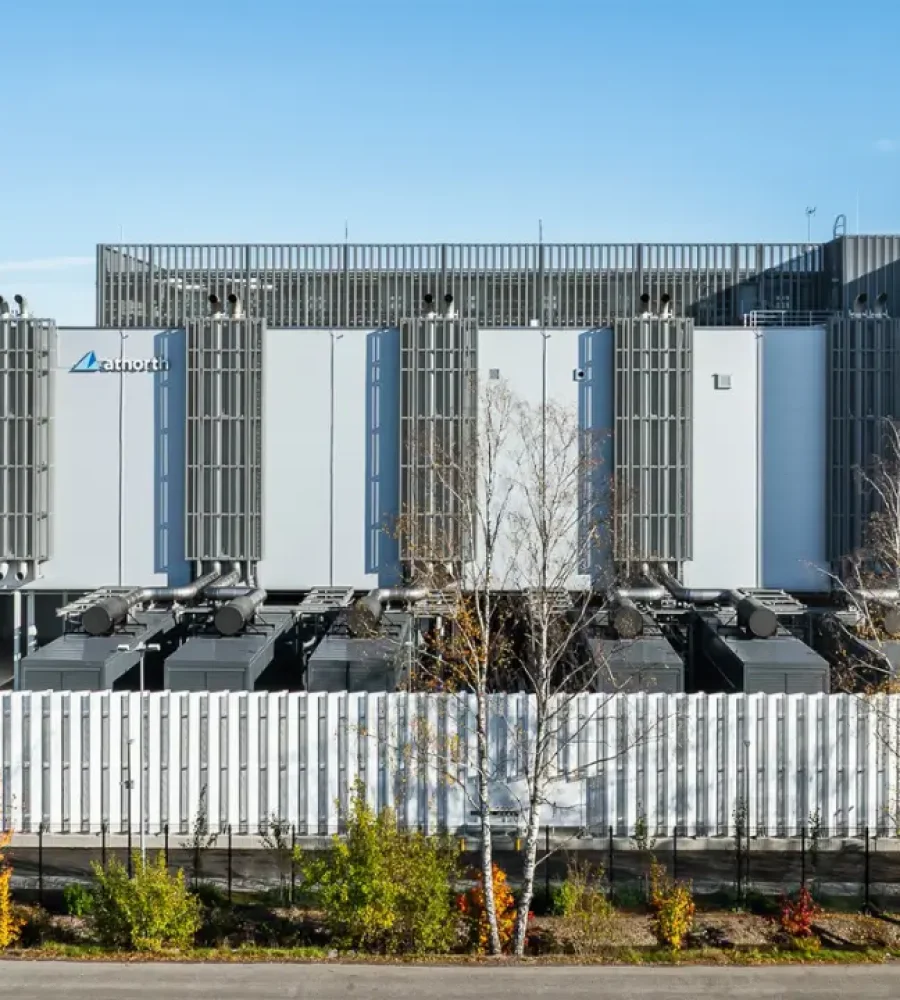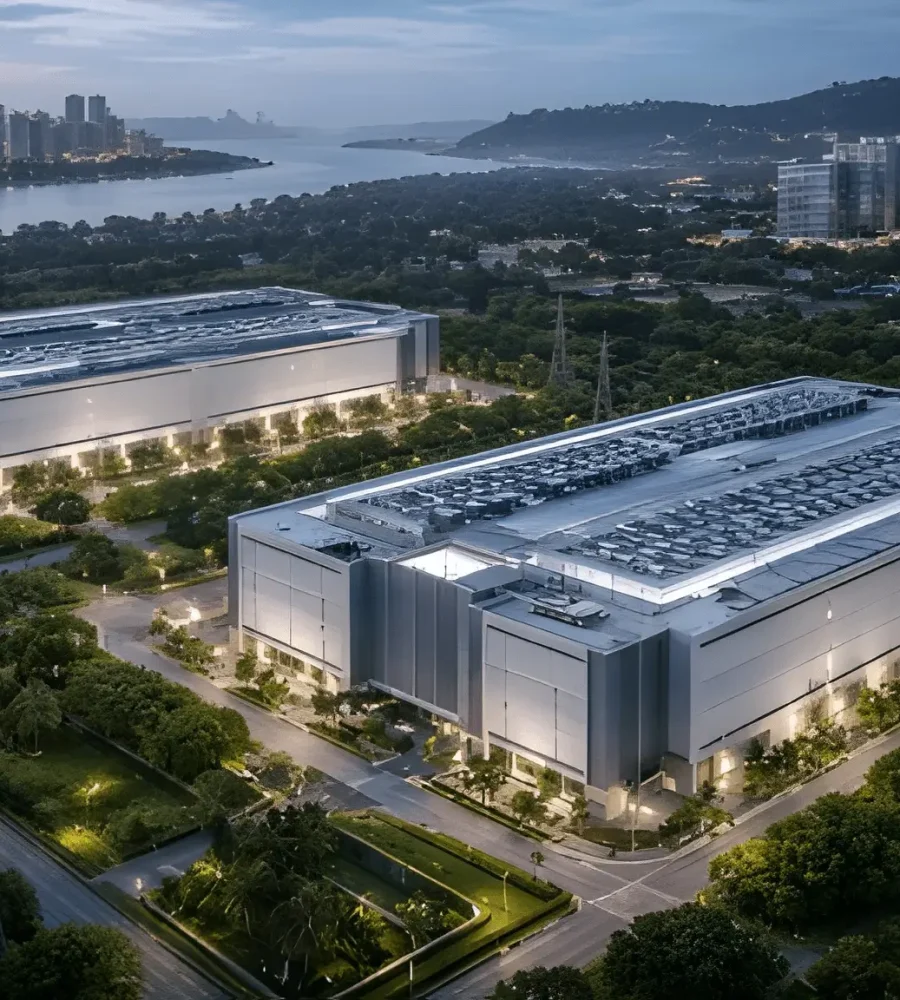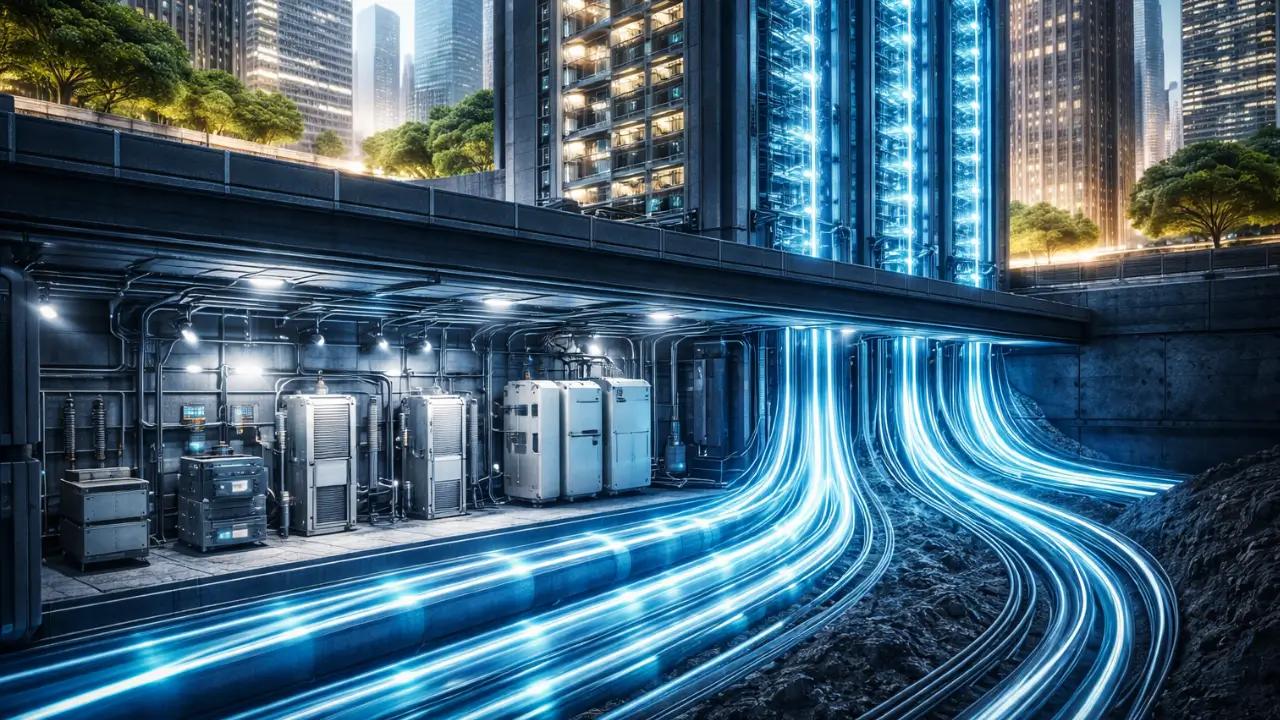
The steady pulse of data centres now blends into urban life like passing trains and illuminated skylines, yet their hidden spatial and thermal pressures continue to challenge city planners and infrastructure engineers. With digital services growing exponentially, the classical model of sprawling data campuses at city peripheries challenges the aspirations of cities that want compute power closer to the edge, closer to the user, and closer to the pulse of economic activity. The promise of superconducting cables that nearly eliminate resistance and heat loss suggests a paradigm shift where power distribution itself shrinks in bulk and heat contribution, enabling densely located data facilities within the built environment.
As engineers and planners contemplate integrating data centre power systems into metro grids and vertical campuses, a fundamental rethinking of space, cooling, and grid integration has begun to unfold. However, realizing such an urban power future hinges on understanding how these technologies alter every layer of design, from basement substations to shafts that carry energy up skyscrapers. The journey into such compressed, integrated infrastructure begins with confronting the current urban power constraints that shape data centre deployment.
The Urban Power Constraint
In most cities, data centres confront a trifecta of spatial pressures where land scarcity, congested electrical grids, and heat rejection collectively limit how densely these facilities can be placed without compromising performance. Urban land parcels command premiums that make oversized electrical rooms and wide distribution corridors financially untenable, forcing designs that spread horizontally or defer to peripheral zones. Furthermore, conventional copper buswork and resistive cables dissipate significant energy as heat, which compounds the cooling burden within a limited urban electrical footprint, driving designers to allocate more space just to manage thermal byproducts.
Grid congestion adds another layer of complexity because high-capacity power feeds require broader easements and infrastructure reinforcements that are difficult to retrofit in developed districts, effectively gating urban deployments. As a result, current high-density compute clusters are either pushed to fringe industrial districts or built with compromises in redundancy and service proximity that limit responsiveness. Unless the power infrastructure itself becomes slim and thermally benign, these urban impediments will continue to suppress the densest forms of compute hubs in prime metropolitan zones.
When Resistance Shrinks, Footprints Follow
The physics that creates heat and bulk in resistive cables also dictates how electrical rooms, risers, and distribution corridors grow in size to accommodate safe operation margins and cooling infrastructure. With superconductors operating near zero electrical resistance, the fundamental need for expansive cable trenches and oversized distribution panels diminishes, meaning that the power layer stops dictating spatial minimums in data facilities. Spatial savings cascade upward, allowing electrical rooms to be condensed, mechanical rooms to shrink, and vertical risers that once had to be oversized for airflow and serviceability to become leaner and more efficient.
Moreover, architects can rethink corridor and shaft capacity if bulky transformers and switchgear no longer dominate the spatial program, enabling core infrastructure to reside in previously unusable niches of buildings. Importantly, these compressions do not occur in isolation; they unlock further design freedoms, freeing floor area for compute racks and support spaces that deliver higher usable density per square meter. As a result, reduced resistance in electrical infrastructure directly translates into compressed footprints that redefine what a data centre’s internal structure looks like in an urban context.
Thermal Decoupling and Spatial Reallocation
The traditional disposition of power corridors within buildings often prioritizes clearances and ventilation to dissipate heat, a requirement born from resistive losses that occur when current flows through copper and aluminum conductors. In contrast, when superconducting elements largely eliminate those losses, the governing design narrative shifts from heat evacuation to compact distribution, freeing up leasable or usable real estate within structures. In turn, this spatial liberation has implications not only for new builds but also for retrofits, where the replacement of bulky cable buses with slender superconducting pathways can unlock floors previously deemed too tight for heavy infrastructure. Furthermore, the psychological impact on building occupants and developers cannot be overstated, as foundational constraints driven by electrical heat and bulk have been accepted as immutable for decades. Finally, this compression effect sets the stage for vertical data centre deployment paradigms that move beyond sprawling footprints to skyward compute stacks.
Vertical Power: Reimagining Multi-Storey Compute
When power distribution becomes slender and thermally benign, the design logic of data centres can pivot from horizontal sprawl toward truly vertical architectures where compute stacks rise through buildings much like office floors. Vertical data centre design demands that electrical power be delivered efficiently across many floors without the spatial penalties imposed by traditional distribution systems, making superconducting links especially compelling in high-rise environments. In this model, power no longer imposes a rigid floorplan; instead, it flows through compact superconducting risers that can thread through slender shafts alongside networking and cooling infrastructure.
Vertical compute stacks can leverage stacked redundant power paths without consuming the expanded shaft spaces that would be required for equivalent copper-based distribution, enabling more floors to host high-density racks without sacrificing structural or service spaces. Moreover, because superconductors operate with minimal heat loss, the integration of power and cooling systems becomes more synergistic, allowing floors to maintain tighter thermal control without oversized chill plants. As a consequence, vertical campuses of computation leap from theory into practical design, transforming buildings into true multi-storey compute hubs rather than maskable data floors hidden within mixed-use structures.
Rethinking Shafts, Cores, and Structural Hierarchies
The integration of vertical compute spaces requires thoughtful coordination with building services, particularly where electrical distribution overlaps with HVAC, fire safety, and structural support systems across multiple storeys. Traditional vertical distribution designs must allocate generous clearance for bus duct, cable trays, and ventilation, often forcing mechanical shafts to be wider than the sum of functional necessities to meet safety codes. With superconducting distribution, these clearances can be dramatically reduced because heat dissipation becomes negligible and the physical dimensions of cables shrink, allowing shafts to carry more functional infrastructure within the same envelope.
Designers can then optimize floor plates, placing compute capacity deeper into building cores rather than confining it to perimeter spaces that historically accommodate power ingress and egress. The ability to deliver high-capacity, low-loss power vertically through cities opens the door to densely populated compute layers woven into office, residential, and civic buildings alike. In doing so, cities may transition from seeing data centres as isolated campuses to recognizing compute as another vertical utility embedded in the built environment.
The Reinvention of the Basement Substation
Superconducting power systems do not eliminate the need for substations, because voltage transformation, protection coordination, switching, and fault isolation remain essential functions in any electrical distribution network. Even when resistance approaches zero within transmission lines, electricity must still pass through transformers, protection relays, breakers, and control systems before it can safely serve high-density compute loads. What superconducting infrastructure changes is not the necessity of substations, but their spatial configuration and internal efficiency. By reducing feeder bulk and resistive heating upstream, superconducting links can allow substations to be designed more compactly, with fewer parallel conductors and potentially optimized layouts. Instead of occupying expansive ground-level compounds or detached annexes, substations could integrate more tightly within building basements or structural cores when upstream infrastructure shrinks. Therefore, the shift lies in architectural compression and design flexibility rather than in functional elimination.
Furthermore, superconducting systems introduce their own engineering requirements, particularly cryogenic cooling, insulation integrity, and monitoring systems that must coexist with traditional substation equipment. Designers must still accommodate switchgear clearance, fault current management, grounding systems, and emergency isolation mechanisms, because these safety principles remain unchanged regardless of conductor material. However, higher current density per cable may reduce the number of parallel feeders required, which in turn can decrease spatial congestion within intake rooms. Compact superconducting feeders may also reduce magnetic dispersion and thermal management demands around incoming power pathways. Consequently, the substation evolves into a more space-efficient and thermally optimized node, yet it continues to perform its indispensable electrical functions. In this reframed narrative, superconductivity enhances substation integration within urban buildings without rendering the substation obsolete.
Heat Liberation: Reducing the Urban Thermal Burden
Data centres in cities do not only consume power; they also contribute to localized thermal loads that intensify urban heat islands and strain district cooling infrastructure. Resistive losses in conventional power distribution add to internal heat density, forcing cooling systems to manage both compute-generated heat and electrical byproducts within confined building envelopes. Superconducting cables remove most of this resistive heat contribution, which means the power layer ceases to amplify the internal thermal burden of densely packed urban facilities. Consequently, cooling strategies can focus predominantly on server heat rather than compensating for electrical inefficiencies, reducing airflow velocities and mechanical plant sizing within tight footprints. Lower internal heat density also simplifies façade and ventilation design, allowing architects to avoid oversized exhaust systems that disrupt urban aesthetics. Therefore, heat liberation at the power layer reshapes how urban data centres interact thermally with their surrounding neighborhoods.
When the power infrastructure stops radiating excess heat, building-wide thermal modeling shifts toward precision rather than mitigation, enabling tighter environmental control across stacked compute floors. Designers can reduce the need for large buffer zones between electrical and compute rooms, since temperature gradients diminish without resistive dissipation. Furthermore, reduced ambient heat within risers and corridors improves equipment longevity and lowers mechanical stress on adjacent structural components. Urban planners may also view such facilities more favorably because the reduction in heat rejection lessens the visual and acoustic impact of rooftop chillers and cooling towers. Importantly, this thermal decoupling between power delivery and heat management fosters new synergies between superconducting power lines and advanced liquid cooling within racks. In aggregate, minimizing electrical heat transforms the energy profile of urban data centres from reactive cooling to optimized thermal equilibrium.
Metro Grid Symbiosis
Urban grids operate under intricate load balancing regimes that must accommodate residential peaks, commercial surges, and transportation electrification within finite transmission corridors. Conventional high-capacity feeds into data centres require thick copper cables and reinforced substations, which often strain already congested metro grids. Superconducting links, by contrast, can transmit higher current densities through slimmer conduits, enabling more efficient interconnection between city grids and dense compute hubs. This characteristic encourages a symbiotic relationship where data centres become flexible grid participants rather than inflexible load blocks isolated behind heavy infrastructure. Additionally, superconducting feeders can reduce transmission losses within urban distribution loops, contributing to overall grid efficiency without demanding expanded rights-of-way. As a result, metro grid symbiosis becomes plausible, with data centres integrated directly into the urban electrical fabric instead of standing apart from it.
Closer integration between superconducting-powered facilities and city grids also opens opportunities for responsive load management within high-density districts. Data centres equipped with advanced control systems can coordinate with grid operators to modulate consumption during peak demand periods, leveraging the efficiency of superconducting lines to maintain stability without excessive thermal stress. Furthermore, compact interconnection points allow grid upgrades to occur within existing utility corridors rather than requiring disruptive excavation across central business districts. This integration model strengthens urban resilience because power delivery pathways multiply within constrained spatial frameworks. By embedding compute hubs directly into metro grid topology, cities gain distributed digital capacity that responds dynamically to energy flows. Hence, superconducting infrastructure supports not only spatial compression but also operational harmony between compute and urban energy systems.
From Industrial Parks to Central Business Districts
Historically, developers placed large-scale data centres in peripheral industrial estates where land prices remained manageable and zoning restrictions accommodated heavy electrical infrastructure. Such peripheral siting separated compute resources from urban cores, introducing latency penalties and diminishing proximity to enterprise clients concentrated in central business districts. Superconducting distribution challenges this geography by compressing the physical and thermal footprint of power infrastructure, making dense compute feasible within premium urban zones.
With slimmer cable architectures and reduced cooling requirements, developers can negotiate tighter urban parcels that would previously have proven unsuitable for conventional data halls. Moreover, proximity to financial institutions, media firms, and municipal services in central districts enhances performance while reducing dependency on long-haul connectivity. Consequently, superconductors may catalyze a migration of data facilities from distant industrial parks into the economic heart of cities.
Embedding compute hubs in central business districts also alters real estate dynamics and infrastructure planning strategies. Developers can integrate data floors into mixed-use skyscrapers, distributing digital infrastructure across vertical campuses that coexist with offices and residential units. Additionally, reduced noise and heat emissions improve compliance with urban zoning regulations that restrict industrial activity within dense commercial corridors. City authorities may view such facilities as strategic assets that support digital economies without imposing the externalities associated with legacy industrial data campuses. This repositioning reframes data centres from heavy industrial installations to precision-engineered urban utilities embedded within commercial real estate portfolios. Ultimately, superconducting compression supports a more intimate coexistence between digital infrastructure and premium urban land.
Cable Architecture in the Age of Compression
Cable architecture has long dictated the structural grammar of data centre buildings, shaping shaft dimensions, tray layouts, and even column spacing in facilities that prioritize electrical redundancy. Conventional copper and aluminum conductors demand generous bending radii, spacing clearances, and thermal ventilation channels, all of which expand the physical envelope of power distribution across floors. Superconducting cables, by contrast, promise dramatically higher current density within slimmer cross-sections, enabling architects to reimagine routing strategies that minimize spatial intrusion.
As a result, vertical shafts can narrow, horizontal trays can compress, and structural cores can reclaim area previously dedicated to heavy bus duct systems. This spatial refinement supports higher rack density per floor because the building’s internal infrastructure consumes less structural volume. Therefore, cable architecture in the age of compression becomes a decisive factor in unlocking truly high-density urban compute.
The implications of slimmer transmission pathways extend beyond space savings and into structural planning and construction methodology. Builders can coordinate superconducting conduits with reinforcement layouts in concrete cores, embedding power channels within structural cavities rather than allocating separate service corridors. Furthermore, reduced cable mass alleviates load-bearing requirements on floors and risers, which simplifies retrofitting in older buildings that cannot accommodate heavy electrical upgrades. Engineers can also standardize modular power segments that slot into pre-engineered shafts, accelerating construction timelines within tight urban schedules. Importantly, such modularity aligns with the rapid deployment cycles demanded by edge computing and urban cloud expansion. In this compressed paradigm, cable architecture transforms from a bulky afterthought into a precision-designed structural ally.
Retrofitting the Concrete Jungle
Many global cities rely on aging concrete and steel structures that were never designed to host dense computational infrastructure, yet demand for urban compute continues to intensify. Traditional retrofits require substantial structural reinforcement to accommodate heavy electrical gear and expanded cooling systems, often rendering projects economically unviable. Superconducting power systems reduce both physical bulk and heat contribution, which lowers the threshold for integrating compute capacity into legacy buildings.
Developers can repurpose underutilized basements, parking levels, or service cores without massive structural overhauls because slimmer distribution systems exert less spatial and mechanical stress. Moreover, reduced thermal output simplifies ventilation retrofits in buildings that lack modern HVAC duct capacity. Consequently, superconducting infrastructure may unlock a second life for older urban buildings as compact compute nodes woven into the concrete jungle.
Retrofitting also involves navigating complex regulatory frameworks that govern electrical safety, fire containment, and urban zoning in established districts. Compact superconducting systems can integrate advanced containment and monitoring mechanisms within smaller envelopes, easing compliance with stringent urban codes. Additionally, the reduction in heat and noise simplifies approvals in mixed-use neighborhoods where residents and businesses demand minimal disruption. Architects can preserve façade integrity and historical aesthetics while embedding modern power systems within interior cores. This compatibility encourages municipalities to view data centre retrofits as adaptive reuse rather than intrusive industrial conversion. Therefore, the retrofitting narrative shifts from structural compromise to strategic modernization enabled by compressed power delivery.
Zoning, Silence, and Invisible Infrastructure
Urban zoning often treats data centres with caution because conventional facilities generate noise from cooling systems and impose visible mechanical bulk on rooftops and façades. When superconducting cables reduce resistive heat, cooling infrastructure shrinks accordingly, lowering acoustic output and minimizing rooftop mechanical clusters. This quieter operational profile enables facilities to blend into residential and mixed-use districts without signaling industrial presence. Furthermore, slimmer electrical infrastructure allows designers to conceal power systems within interior cores, rendering them virtually invisible from the urban streetscape. The ability to integrate compute discreetly aligns with modern city planning that prioritizes aesthetic cohesion and pedestrian-friendly environments. Thus, superconducting compression supports zoning frameworks that demand subtle, low-impact infrastructure.
Silence and invisibility also influence public perception, which often shapes the feasibility of urban infrastructure projects. Residents frequently resist developments perceived as noisy or industrial, yet a compact, low-heat compute facility integrated into a commercial building may elicit less opposition. Moreover, quieter operations reduce vibration transmission to adjacent structures, which improves compatibility with sensitive environments such as hospitals, financial institutions, and research labs. Developers can market such facilities as digital utilities rather than industrial plants, reframing the narrative around urban innovation. This perceptual shift matters because social acceptance accelerates permitting and deployment timelines. In this context, superconducting infrastructure not only compresses space but also softens the civic footprint of data centres.
Resilience in Dense Environments
High-density urban settings impose strict spatial constraints on redundancy, making it challenging to duplicate power systems without sacrificing valuable floor area. Conventional redundancy strategies often require physically separate rooms or mirrored electrical corridors, which inflate building footprints. Superconducting systems enable compact parallel pathways that occupy less space while still providing independent power routes for mission-critical loads. Engineers can design layered redundancy vertically, stacking backup systems across floors without encroaching on primary compute space. Additionally, reduced thermal stress enhances equipment longevity and lowers the probability of heat-induced failure within confined environments. Therefore, resilience in dense urban environments becomes more achievable when power infrastructure compresses without sacrificing reliability.
Urban resilience also depends on how quickly systems recover from disruptions and adapt to fluctuating grid conditions. Superconducting links support rapid load redistribution across interconnected urban nodes because their low-loss characteristics enable efficient rerouting without excessive heat buildup. Furthermore, compact infrastructure simplifies maintenance access within constrained basements and cores, reducing downtime during service interventions. Distributed vertical campuses can interconnect through superconducting corridors, forming micro-networks that share load dynamically across city blocks. Such architectures strengthen continuity in cities where space limits traditional backup expansion. As a result, superconducting compression fosters both physical and operational resilience in tightly packed metropolitan landscapes.
The City as a Compute Engine
As superconducting power systems shrink the spatial and thermal barriers to dense deployment, cities themselves begin to resemble distributed compute engines embedded within their own architecture. Instead of relegating digital infrastructure to distant campuses, urban planners can weave high-density compute into commercial towers, transit hubs, and civic complexes. This integration shortens digital pathways between users and processing nodes, strengthening service responsiveness and supporting latency-sensitive applications.
Furthermore, compact power distribution enables neighborhoods to host localized compute clusters that support smart infrastructure, autonomous mobility, and real-time analytics. The city evolves from a passive consumer of digital services into an active participant in computation, hosting nodes that process and respond within its own boundaries. Consequently, superconducting compression does not merely reshape buildings; it reshapes the computational identity of urban centers.
Looking forward, the convergence of superconducting cables, vertical data architecture, and metro grid symbiosis suggests a future where urban infrastructure and digital systems operate as an integrated continuum. Architects, engineers, and policymakers must collaborate to harmonize zoning, structural planning, and grid modernization with the possibilities of compact power delivery. Moreover, investment strategies will need to account for long-term efficiency gains that arise from reduced heat, slimmer shafts, and closer proximity to end users. Cities that embrace this compressed paradigm may attract digital enterprises seeking proximity, resilience, and spatial efficiency within competitive urban cores. The transition will require deliberate experimentation and regulatory adaptation, yet the trajectory points toward deeper integration rather than peripheral expansion. In this unfolding narrative, superconducting power becomes the silent enabler that transforms dense cities into vertically layered engines of computation.