 Skip to content

Carrier Expands U.S. Manufacturing to Meet AI Cooling Demand
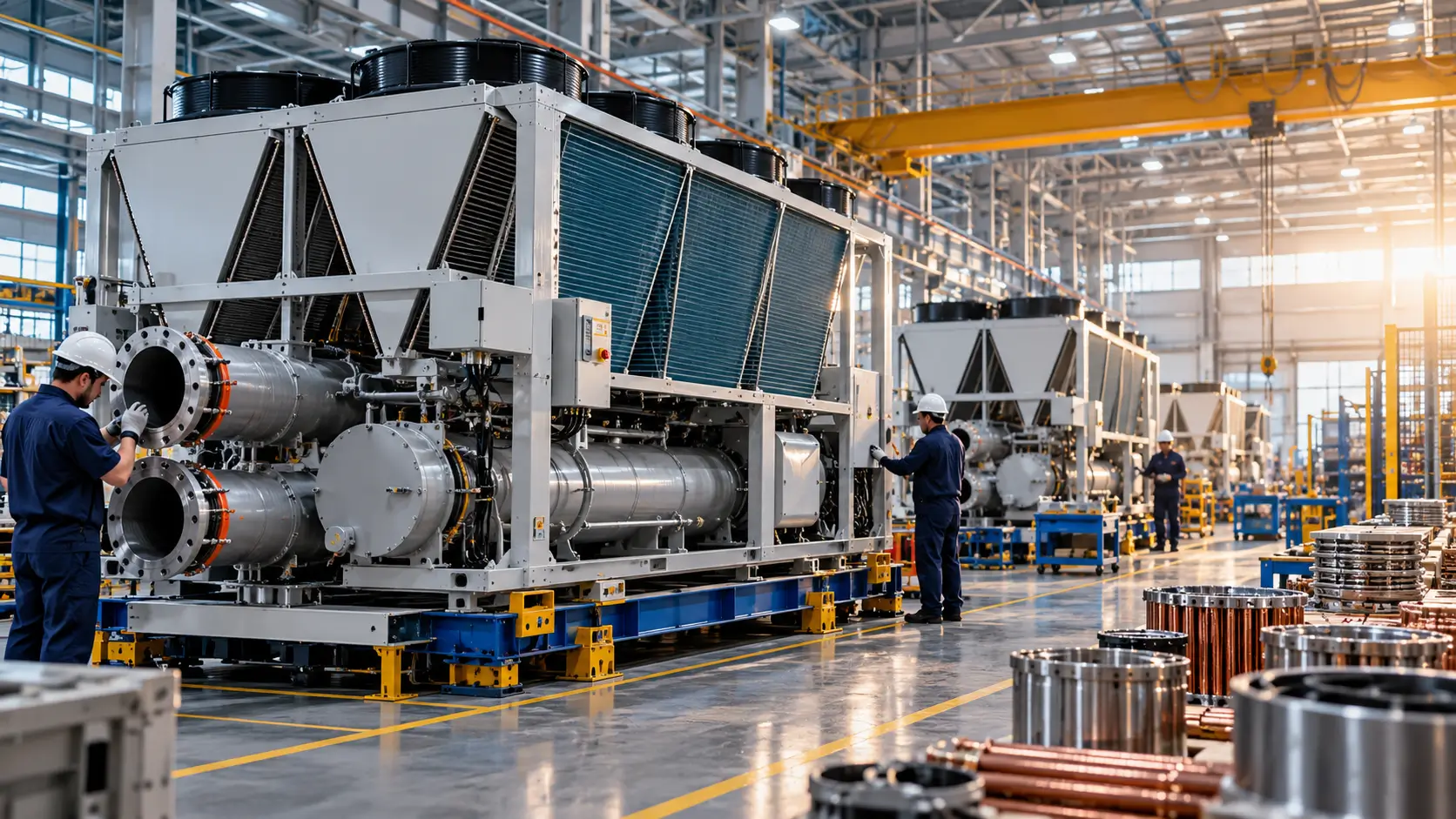
Carrier Global plans to invest more than $600 million in a new manufacturing plant in Fort Worth, Texas, as demand for cooling equipment rises alongside the expansion of artificial intelligence infrastructure. The facility will expand production capacity for cooling systems, including chillers that help data centers manage the heat generated by high-density computing equipment. Carrier expects the project to create about 1,500 jobs, with initial production targeted for late summer 2027. The investment signals that manufacturers of essential thermal infrastructure are preparing for a market in which cooling equipment increasingly shapes the pace of AI deployment.

The project comes as data center developers race to secure the infrastructure required to operate increasingly powerful computing clusters. GPU availability and electricity access remain central concerns, but neither guarantees that a facility can support its planned computing capacity without sufficient heat-removal systems. Chillers, heat exchangers, pumps and related equipment must work together to maintain operating conditions as rack power densities rise. Carrier’s planned expansion puts manufacturing capacity into the broader discussion about how quickly the industry can translate investment in AI computing into operational capacity.
A More Than 1-Million-Square-Foot Facility Targets Commercial Chiller Production
Carrier plans to invest more than $600 million over three years in the Fort Worth manufacturing and engineering center, according to its Oct. 22 announcement. The facility will cover more than 1 million square feet and expand U.S. production of air-cooled and water-cooled commercial chillers. Carrier expects the plant to begin operations in 2027, with initial production targeted for late summer of that year. The project will also include engineering laboratories and workforce development initiatives designed to strengthen the company’s manufacturing and technical capabilities.
The scale of the investment reflects Carrier’s effort to address a growing commercial backlog while expanding its domestic production footprint. The company said strong demand across data centers, health care, education and industrial markets has contributed to record backlog levels and a growing business pipeline. Its new facility will serve these markets rather than dedicate all output to AI infrastructure, making the investment part of a wider expansion in commercial thermal management. For data center developers, the additional production capacity could become relevant as they compete for equipment needed to bring new facilities online.

Carrier CEO Links Investment to Demand and Supply Chain Resilience
Carrier Chairman and CEO David Gitlin connected the investment to customer demand, manufacturing capacity and long-term competitiveness. In the company’s announcement, Gitlin said: “This investment reflects the strong demand we are securing for high-performance, energy-efficient solutions and underscores our confidence in the future of American manufacturing,” said Carrier Chairman & CEO David Gitlin. “By expanding our U.S. manufacturing and engineering footprint, we are increasing capacity for critical technologies, strengthening supply chain resilience and creating high-quality jobs. We are proud to partner with the Fort Worth community and the State of Texas as we invest in the workforce, innovation and manufacturing capabilities needed to support our customers’ growth for decades to come.”
The statement places supply chain resilience alongside production growth as a central objective of the project. A larger domestic manufacturing footprint can give Carrier more capacity to serve U.S. customers, although the investment alone does not establish how much delivery times will improve or how quickly new production will reach the market. Those outcomes will depend on factory execution, component availability, workforce recruitment and the pace at which production lines qualify and scale. Buyers will need measurable evidence of additional output and delivery performance before treating the planned facility as a solution to their own equipment constraints.
Why Chiller Manufacturing Matters to AI Infrastructure
AI data centers create demanding thermal-management requirements because high-performance accelerators and supporting server components convert substantial amounts of electrical power into heat. Cooling systems must remove that heat while maintaining operating conditions suitable for computing equipment, network hardware and supporting electrical infrastructure. Commercial chillers can form an important part of the facility’s heat-rejection system, depending on its cooling architecture, climate and overall design. Their availability can therefore affect construction sequencing, commissioning readiness and the timing of usable computing capacity.
The relationship between cooling equipment and compute deployment becomes more important as operators design facilities for higher rack power densities. A developer may secure GPUs, arrange financing and obtain a power connection, yet still face delays if the required cooling equipment cannot arrive in time for installation and testing. Chiller delivery also represents only one part of the process, since pumps, heat exchangers, coolant distribution equipment, electrical systems and control infrastructure must operate together. Carrier’s expansion addresses one part of this supply chain, but the industry will need capacity across the wider thermal-management ecosystem to avoid shifting bottlenecks from one component to another.
Manufacturing Capacity Could Influence Project Costs and Delivery Schedules
For data center developers, cooling-equipment procurement can affect both capital expenditure and the sequence of project milestones. When delivery schedules extend beyond planned installation windows, developers may need to adjust construction activities, reschedule commissioning teams or carry costs on facilities that cannot yet generate revenue. Equipment shortages can also complicate procurement strategies when several projects compete for similar products within the same delivery window. Additional manufacturing capacity could ease some of these pressures if it translates into higher output and more predictable deliveries.
However, Carrier has not established in its announcement how much the Fort Worth plant will reduce customer lead times, lower equipment prices or increase the cooling capacity available to individual projects. The company’s broader commercial markets will also draw on the facility’s production, so AI data centers will compete with other customers for the equipment it supplies. Buyers should therefore distinguish between a manufacturer announcing investment and a manufacturer delivering additional qualified products at scale. Production volumes, order fulfilment rates and actual shipment schedules will offer stronger evidence of market improvement than the investment figure alone.
Fort Worth Adds Manufacturing Jobs and Technical Capabilities
Carrier expects the new facility to create approximately 1,500 advanced manufacturing, engineering and other jobs, extending the project’s impact beyond equipment production. The company plans to work with local schools and colleges to develop the skills required for future manufacturing and engineering roles. Dedicated engineering laboratories and workforce development initiatives will support that effort, linking industrial expansion with technical training. These capabilities will matter as manufacturers seek workers who can operate advanced production systems, maintain equipment quality and support increasingly sophisticated thermal-management products.
Fort Worth’s workforce, manufacturing base and strategic location helped the city secure the investment, according to Carrier. The company also expects the facility to pursue LEED certification in line with its sustainability goals. The site forms part of AllianceTexas, a major business and logistics development that offers access to transportation networks and an established industrial base. The location gives Carrier a platform to expand manufacturing while serving customers across several commercial sectors.
What AI Infrastructure Buyers Should Watch Next
Carrier’s investment provides a tangible signal that cooling manufacturers are responding to growing demand for thermal-management equipment. The more important question for AI infrastructure buyers is whether the additional capacity will become available early enough to support projects scheduled for commissioning in 2027 and beyond. Developers should track construction progress, production-line qualification, hiring milestones and any disclosures about output as the Fort Worth facility approaches its planned opening. They should also assess supplier commitments against project schedules rather than assume that a new factory will immediately resolve existing supply constraints.
The project highlights a broader change in AI infrastructure planning: equipment manufacturing increasingly belongs in the same capacity discussion as GPUs, electricity and data center construction. Cooling systems determine how effectively operators can manage heat, maintain equipment reliability and use the power capacity they secure. Carrier’s planned investment could strengthen the supply base, but its impact will depend on execution and the volume of equipment that ultimately reaches customers. For the industry, the decisive measure will be whether added manufacturing capacity translates into shorter procurement cycles, more reliable commissioning schedules and AI computing capacity that becomes operational when customers need it.










