 Skip to content

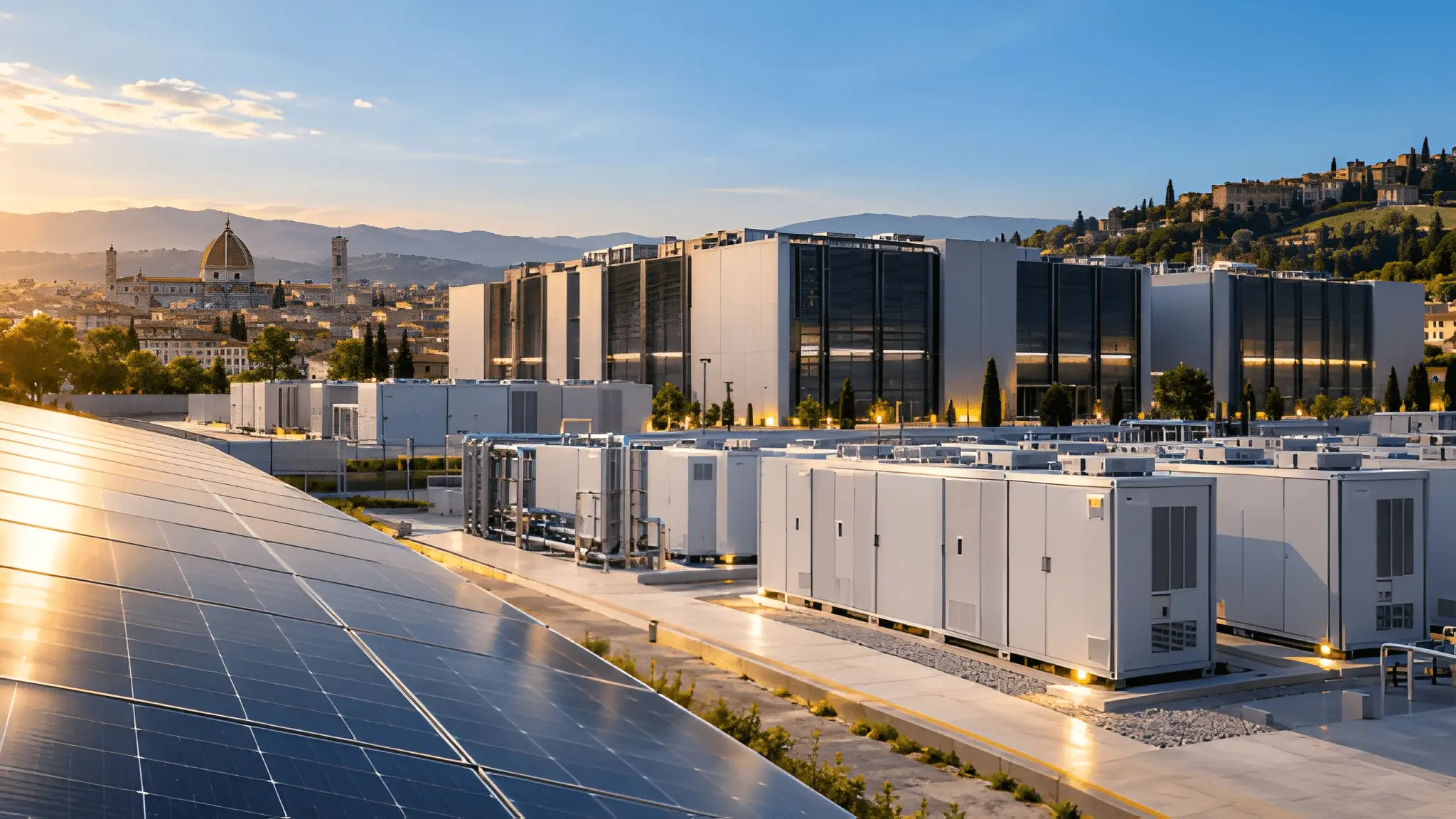
Italy is positioning itself for a larger role in Europe’s digital infrastructure market, with Core Stack and Green Arrow Capital advancing plans for a nationwide network of 13 medium-sized data centers backed by more than €1 billion ($1.16 billion) in investment. The joint venture brings together the digital infrastructure business of Lazzari Group and the private equity firm’s investment capabilities to develop facilities across industrial areas throughout the country. According to Italian news agency ANSA, the partners will begin with locations in northern and northeastern Italy before extending development into the center-south. The strategy signals an investment model built around distributed capacity, renewable energy generation and the potential to serve growing digital demand without relying exclusively on a small number of large campuses.

The scale of the proposal matters, but the development model could prove equally significant as Italy competes to attract cloud infrastructure, enterprise workloads and expanding artificial intelligence requirements. Rather than concentrating the entire investment in one location, Core Stack and Green Arrow Capital intend to establish a network of medium-sized facilities that can serve multiple regional markets. This approach could give the partners greater flexibility when evaluating industrial sites, securing electricity and aligning construction schedules with local infrastructure conditions. However, the network’s commercial success will ultimately depend on how effectively the partners translate their investment ambition into permitted projects, deliverable power capacity and facilities that customers are prepared to use.
Two Italian Data Center Projects Move Toward Permitting
The joint venture has already identified two brownfield locations near Cremona and Verona, where permitting processes have reached advanced stages, ANSA reported. These sites provide the first concrete indication of how the partners intend to move from a national development strategy toward individual projects. Brownfield development can offer opportunities to reuse previously developed industrial land, although the condition of each site, its utility connections and its planning requirements will determine how quickly construction can proceed. For Core Stack, the immediate priority will be converting these early-stage advantages into projects that meet the technical, regulatory and commercial requirements of modern data center operations.
The partners expect construction to begin toward the end of 2027, with a first-quarter 2028 go-live target for the initial facilities. That schedule leaves a substantial development period for permitting, engineering, power arrangements, procurement and construction readiness. It also places the projects within a market where developers must coordinate increasingly complex electrical and cooling systems before they can bring new computing capacity online. Meeting the proposed timetable will therefore require more than completing buildings on schedule; the partners must also ensure that the associated energy infrastructure can support the facilities when operations begin.

Green Arrow Capital’s Investment Strategy Extends Into Digital Infrastructure
The Italian network follows an earlier announcement by Green Arrow Capital and Gruppo Lazzari’s Core Stack outlining plans to invest in renewable-powered data centers across the country. At that stage, the joint venture described its project pipeline as “substantial” and said a “significant share” was expected to achieve construction approval in 2026. The latest development adds further detail to the programme by identifying the intended network size, the initial regions and the advanced permitting status of the Cremona and Verona projects. These milestones provide a clearer picture of how the partners intend to advance the investment, although they do not mean that every planned facility has secured approval or reached construction readiness.
The initiative forms part of Green Arrow Capital’s second fund dedicated to energy and digital infrastructure, GAIF II, which remains in the fundraising phase. The fund’s focus connects two capital-intensive sectors that increasingly intersect as digital services require more computing capacity and data center operators seek dependable sources of electricity. For investors, this intersection creates opportunities to finance infrastructure that supports digital growth while addressing the energy requirements associated with that growth. It also creates execution risks, since project returns depend on development costs, financing conditions, energy arrangements, customer demand and the timing of operational revenue.
Execution Will Determine Whether the €1 Billion Vision Delivers
Core Stack and Green Arrow Capital have outlined a development model that links regional data center capacity with on-site renewable generation and the potential addition of battery storage. The 13-facility plan gives the partners a national framework, while the two brownfield projects near Cremona and Verona provide the earliest visible indicators of execution. Their proposed construction start toward the end of 2027 and first-quarter 2028 go-live target will offer important milestones for assessing whether the venture can coordinate permitting, engineering, energy infrastructure and delivery. Progress on those initial facilities will also help clarify how readily the model can extend to the other locations envisioned across Italy.
Italy’s planned network now has a clearer development framework, but its ultimate significance will depend on what the partners deliver on the ground. The next major tests are the progress of the two initial permits, the readiness of their energy systems and the ability to keep the proposed timetable as engineering and procurement decisions advance. If the venture can translate its distributed, renewable-powered model into operational facilities, it could offer a useful example of how regional infrastructure development can respond to rising digital demand. Until those milestones materialize, the €1 billion programme remains a significant ambition with a potentially important role in Italy’s evolving digital infrastructure landscape.










