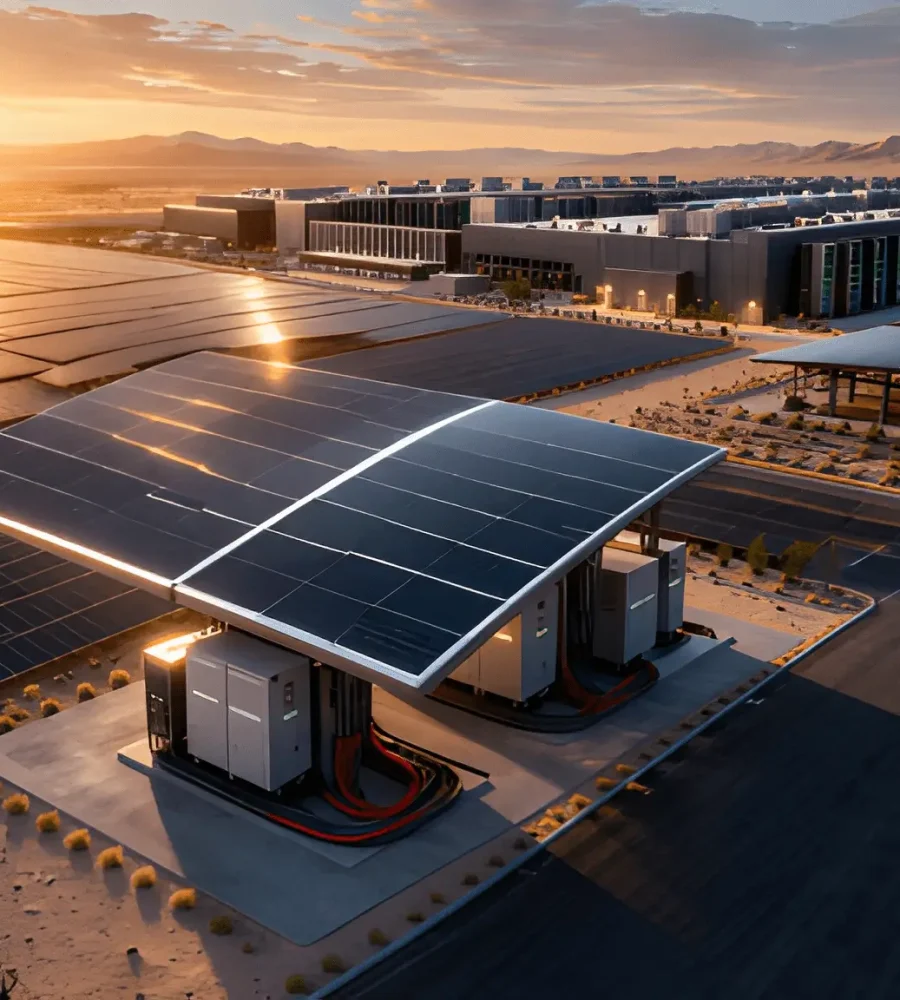
The DCFlex program is expanding its footprint as the Electric Power Research Institute adds six new demonstration sites across the United States and Europe. As a result, the program now spans nine active locations focused on using data center flexibility to support grid reliability and faster interconnection.
The announcement was made at DTECH, where EPRI said the expanded portfolio is designed to test how operating data centers can respond dynamically to grid conditions. Meanwhile, each site is being used to examine how flexible energy use could ease pressure from AI-driven demand growth.
Launched in October 2024, DCFlex has been built around real-world field demonstrations rather than simulations alone. Since then, work has been carried out at live facilities, where operational constraints are encountered directly. Consequently, the findings are expected to inform practical frameworks for grid-connected data centers.
“DCFlex brings together a coalition of energy and technology leaders to support AI growth while maintaining grid reliability and affordability,” said David Porter, EPRI’s vice president of Electrification and Sustainable Energy Strategy. He added that real-world testing is being used to evaluate flexible load strategies that could reduce interconnection delays.
New Sites Test Multiple Flexibility Models
The newly announced sites are spread across major data center markets. In Chicago, compute load flexibility is being tested with a focus on AI workloads and real-time power controls. The environment has been configured to mirror production conditions.
In Dallas, backup power systems are under review. There, hydrotreated vegetable oil is being evaluated as a renewable diesel alternative. Emissions, engine performance, and runtime are being compared against conventional diesel systems.
Meanwhile, sites in Ashburn, Virginia, and Chicago are being linked through geospatial load shifting. During periods of grid congestion, compute loads are shifted from Virginia to Illinois. Throughout the process, compliance with grid rules and customer requirements is being maintained.
In Manassas, Virginia, a data center still under construction is being designed with flexibility built in from the start. At that location, AI computational loads will be adjusted at commercial scale to test responsiveness under live conditions.
Across the Atlantic, a London facility is being used to test direct utility interaction. There, AI compute loads respond to day-ahead, hour-ahead, and real-time curtailment signals. As a result, coordination between utilities and operators is being closely examined.
In Texas, another project pairs an AI platform with compute and HVAC systems. Together, these systems are being controlled to deliver grid flexibility while maintaining performance targets.
Broad Industry Participation
The demonstrations are being supported by a wide group of partners. Participants include Compass Datacenters, Constellation, Emerald AI, Google, National Grid, Nebius, NVIDIA, Oracle, and PADO AI. PADO AI is backed by LG NOVA, the innovation arm of LG Electronics North America.
In addition, three earlier DCFlex sites remain active in Arizona, North Carolina, and France. When combined, the nine locations provide a diverse testing ground across climates, grid structures, and regulatory environments.
Rising Stakes for the Power Grid
The expansion comes at a critical moment. According to EPRI’s 2024 analysis, data centers could account for as much as 9% of total U.S. electricity consumption by 2030. As AI workloads scale, that share is expected to climb further.
Therefore, flexibility is being viewed as a necessary tool rather than an optional feature. By adjusting loads in response to grid conditions, data centers could help stabilize power systems while continuing to grow.
Through DCFlex, EPRI aims to translate these concepts into repeatable operational models. If successful, the initiative could reshape how large data centers connect to and interact with the grid, both in the U.S. and abroad.