
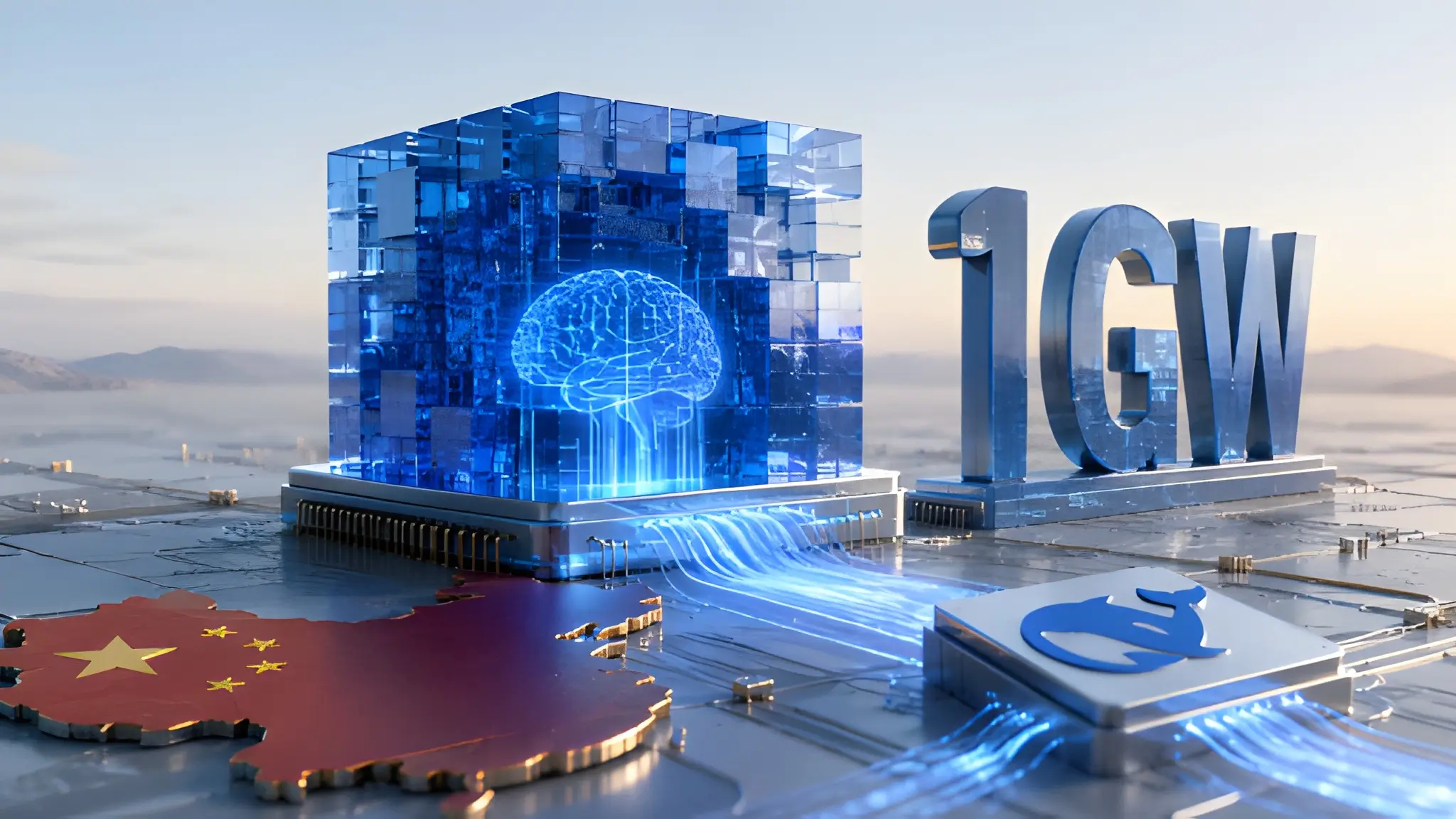
China’s AI infrastructure race is entering another phase of hyperscale expansion as DeepSeek reportedly prepares to develop a 1GW AI data center in Inner Mongolia. The project would rank among the country’s largest planned AI-focused computing facilities and reflects the growing demand for dedicated infrastructure behind foundation models. Rather than expanding only model capabilities, Chinese AI companies are increasingly investing in the physical assets required to sustain long-term AI growth. The development also signals how computing capacity is becoming a strategic national resource alongside semiconductor manufacturing. According to a Bloomberg report, DeepSeek intends to build the facility in Ulanqab, located in the south-central part of Inner Mongolia Autonomous Region. Sources familiar with the project said the company is targeting a phased deployment, with portions of the campus expected to become operational by late 2027 or early 2028.

DeepSeek Scales Infrastructure Beyond AI Models
The proposed development highlights the enormous infrastructure footprint that advanced AI training and inference workloads now demand. A one-gigawatt computing facility would place DeepSeek among a growing group of AI companies that invest directly in hyperscale infrastructure instead of relying entirely on third-party cloud providers. As AI models grow more complex, compute capacity, power availability, and deployment speed have become key competitive advantages. Consequently, companies now view digital infrastructure ownership as an equally important differentiator alongside algorithm development.
People familiar with the project told Bloomberg that DeepSeek plans to bring the facility online through multiple deployment phases instead of waiting to complete the entire campus first. This staged rollout will allow the company to support AI workloads sooner while construction teams continue expanding the remaining infrastructure. The reported investment comes as AI developers worldwide face mounting pressure to secure reliable power, high-density computing environments, and sufficient GPU capacity for next-generation models. Organizations increasingly treat large-scale computing facilities as core elements of their AI strategies because they help reduce infrastructure constraints and improve deployment flexibility.
AI Success Pushes DeepSeek Toward Vertical Integration
DeepSeek rapidly became one of China’s most closely watched AI companies after introducing its open-source large language model in early 2025. The model attracted global attention because it reportedly delivered performance comparable to leading US AI systems while requiring fewer computing resources. That achievement positioned the company as one of the strongest challengers within China’s expanding generative AI ecosystem. The company is also reportedly developing its own AI processor to support future generations of its AI models.

Building proprietary chips alongside dedicated computing infrastructure reflects a broader trend across China’s AI industry, where companies are pursuing tighter integration between hardware and software. By combining custom silicon with hyperscale computing capacity, developers aim to reduce dependence on foreign technology while improving long-term performance and cost efficiency. The reported chip initiative also aligns with China’s wider efforts to strengthen domestic AI infrastructure across every layer of the technology stack. From semiconductor development to hyperscale facilities, Chinese firms continue investing in assets that support national technology resilience.
Inner Mongolia Strengthens Its Position in China’s Compute Strategy
DeepSeek’s reported project also reinforces Inner Mongolia’s growing importance within China’s national computing strategy. The autonomous region has become one of the country’s preferred destinations for hyperscale digital infrastructure because of its abundant land availability and access to large-scale power resources. Those advantages make it particularly attractive for AI workloads that require continuous, energy-intensive operations. The region plays a central role in China’s “Eastern Data, Western Compute” initiative, a national program designed to redistribute computing infrastructure from densely populated eastern provinces toward western regions with greater energy and land capacity. The strategy seeks to improve the balance of computing resources across the country while supporting continued growth in AI, cloud computing, and digital services.
DeepSeek is not the only Chinese AI company advancing large-scale computing deployments. Reports also indicate that Chinese AI company Z.ai is operating part of a 1GW data center using domestically manufactured AI chips. However, details surrounding the facility, including its location, total operational capacity, and chip supplier, have not been publicly disclosed. Together, these projects illustrate how China’s AI sector is moving beyond model development into large-scale infrastructure ownership. Gigawatt-class campuses are increasingly becoming long-term strategic assets as AI developers seek greater control over computing resources, power availability, and hardware ecosystems.
For the broader AI industry, the reported DeepSeek project reflects an important shift. Competition is no longer defined solely by model performance but also by the ability to build, operate, and secure the infrastructure capable of sustaining increasingly compute-intensive AI systems. As nations compete for leadership in artificial intelligence, hyperscale data centers are becoming foundational infrastructure that underpins future innovation rather than simply housing it.











