 Skip to content
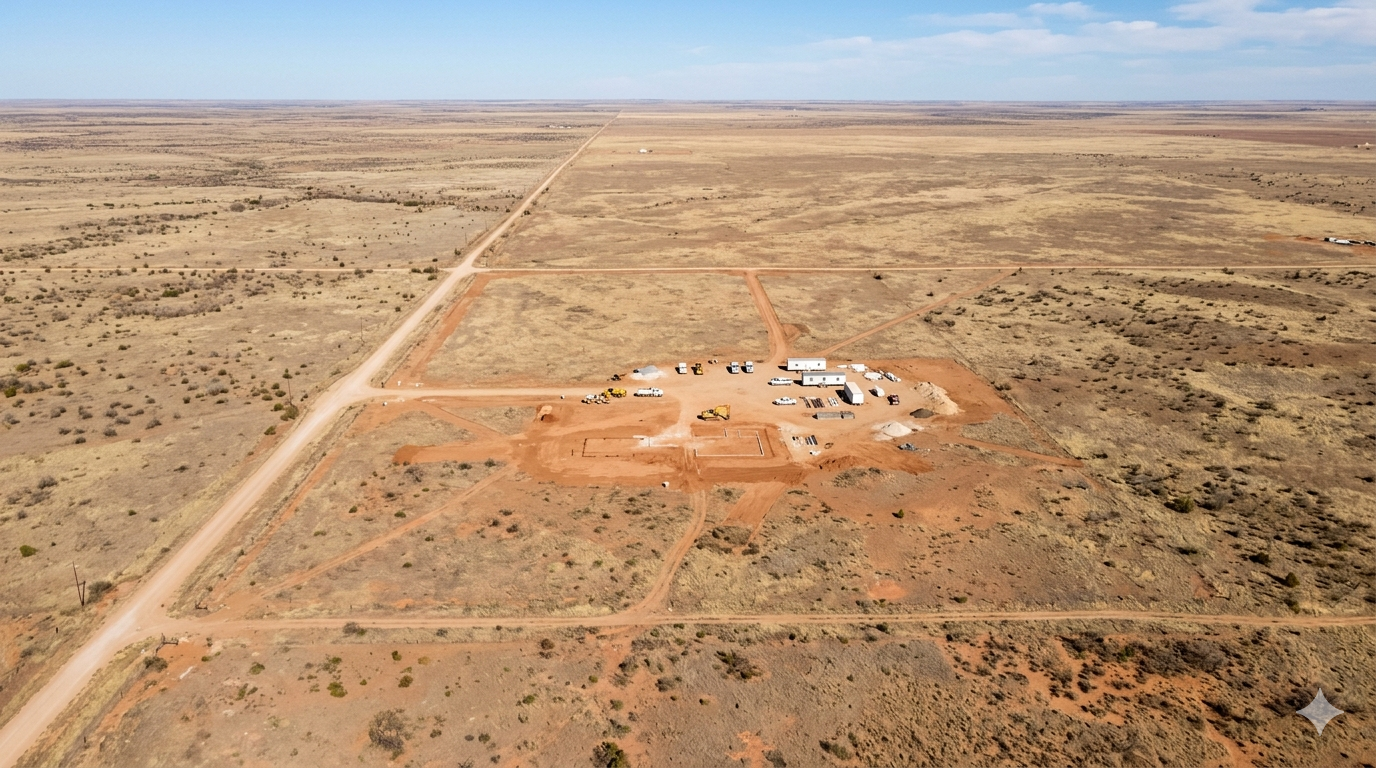
Fermi America is in crisis. Co-founder and CEO Toby Neugebauer stepped down on April 17, and CFO Miles Everson resigned two days later. Both men have moved to board seats as the company scrambles to find replacement leadership. The stock fell 22% on the news and now sits more than 80% below its October 2025 IPO high.

The departures arrive at the worst possible moment. Project Matador, the company’s 5,800-acre AI campus in the Texas Panhandle, has no confirmed anchor tenant. Indeed, construction has largely stalled. Furthermore, the company disclosed in its most recent SEC filing that it no longer expects to meet its original timeline of bringing 1 gigawatt online by end of 2026.
Why the Anchor Tenant Problem Became a Crisis
The core issue is one the broader industry understands well. Without a confirmed tenant, you cannot finalise data center design, secure project financing, or commit to construction at scale. For a project targeting 11 to 17 gigawatts, that dependency is existential. Fermi’s first tenant pulled out in December 2025, triggering a class-action lawsuit from investors who felt misled. On the March 30 earnings call, Neugebauer told analysts the company was signing letters of intent but could not share details publicly. The market, however, ran out of patience before anything was finalised.
The cooling supply chain is a second failure point. Neugebauer acknowledged in his final Axios interview that he may have misunderstood where the supply chain was for the cooling equipment the project needed. That admission is notable. Cooling complexity at gigawatt scale is genuinely different from anything data center developers have managed before. Without a hyperscaler partner, moreover, Project Matador had nobody to lean on for that expertise. As a result, both the tenant gap and the engineering gap hit simultaneously.

What Fermi 2.0 Actually Means
The company has rebranded the leadership transition as Fermi 2.0. Co-presidents Jacobo Ortiz Blanes and Anna Bofa now lead an interim office of the CEO. New board chairman Marius Haas told investors the company is seeing an acceleration in customer conversations following Neugebauer’s departure. Stifel analyst Stephen Gengaro noted, moreover, that the exit suggests friction existed between Neugebauer and potential customers, and that negotiations could consequently be smoother going forward.
Whether that optimism translates into a signed lease is, however, the only question that matters. The Texas Tech University System, which owns most of the land and is a key partner, confirmed it remains committed to the project and is in discussions to extend certain lease milestones. Cleanview estimates that even if Fermi secured a tenant immediately and matched other large-scale construction timelines, the first buildings would not come online before May 2027. That is a full year behind the original target. As we have covered previously, the time-to-power crisis is already AI infrastructure’s most acute constraint. Fermi’s situation illustrates, therefore, what happens when execution fails to keep pace with ambition at the outermost edge of that constraint.












