 Skip to content
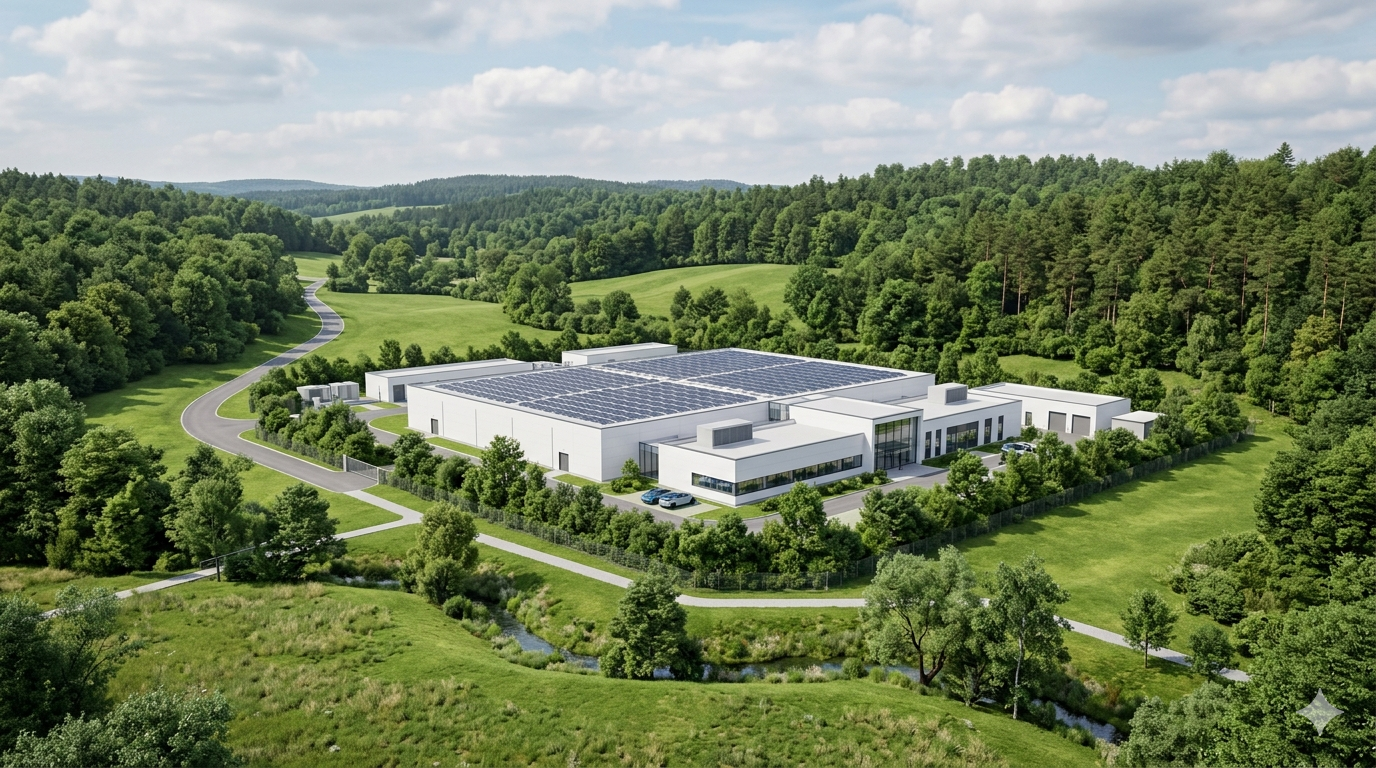
Google has broken ground on its first self-built and wholly owned data center in Austria. The move marks a significant expansion of its European AI infrastructure footprint. The facility sits on a 70-hectare site in Kronstorf, Upper Austria. Google has owned the land since 2008. That makes this an 18-year journey from acquisition to construction start, one of the longest land-to-build timelines of any recent hyperscaler project in Europe.

The project spans 42,000 square metres in total. Of that, 29,000 square metres will be dedicated to data center operations. Google has not disclosed IT load capacity but confirmed the site will support growing AI demand across Europe, including Search, YouTube, Maps, and Workspace.
Why Kronstorf and Why Now
The groundbreaking follows planning permission granted earlier this year, after a process stretching nearly two decades. Microsoft launched its own Austrian cloud region in July 2025. The broader European market is, moreover, seeing a wave of hyperscaler investment driven by AI demand and data sovereignty requirements. Austria’s central European position, established grid infrastructure, and political stability make it, in particular, attractive for facilities serving the DACH and Central European market.
Christine Antlanger-Winter, Google’s Country Director for Switzerland and Regional Senior Director, Alpine, said the investment would give businesses and public institutions throughout Austria better access to Google’s technology. Thomas Stelzer, Governor of Upper Austria, described the decision as a signal that the region is internationally competitive and forward-looking. Google already operates cloud regions in Frankfurt, Berlin, Zurich, and Milan. The Austrian facility, consequently, extends that network further into Central Europe.

What the Facility Is Built to Do
The data center is being built heat recovery-ready from the outset. Once an offtaker is identified, Google will supply waste heat free of charge to eligible partners supporting local decarbonisation. The building will also feature a green roof with solar panels. As part of its water stewardship commitment, Google has established a fund with the Upper Austrian Fisheries Association to improve the local Enns River ecosystem. The company has committed to replenishing more freshwater than it consumes globally by 2030.
The facility is expected to create 100 direct jobs once operational. Thousands more are projected through construction, suppliers, and local businesses. Google has also announced a multi-year AI skilling partnership with the University of Applied Sciences Upper Austria. The company has trained more than 140,000 individuals in the country since 2014. Porr, the Austrian construction group, is leading the build. Construction timelines have not been disclosed. As we have covered in our analysis of the gigawatt campus problem, Europe’s more predictable permitting processes are increasingly attractive to hyperscalers seeking alternatives to constrained US markets.












