Huawei expanded its artificial intelligence infrastructure strategy at the Huawei Cloud Summit, unveiling a new Industry AI Foundry, a next-generation hybrid cloud platform, and an AI coding agent designed to accelerate enterprise adoption of artificial intelligence.
The summit, held on March 1 in Barcelona, carried the theme “Huawei Cloud: Solving Industry Challenges with AI.” The event gathered technology leaders, enterprise customers, and ecosystem partners to examine how cloud infrastructure and industry-specific AI models will reshape digital transformation strategies across sectors.
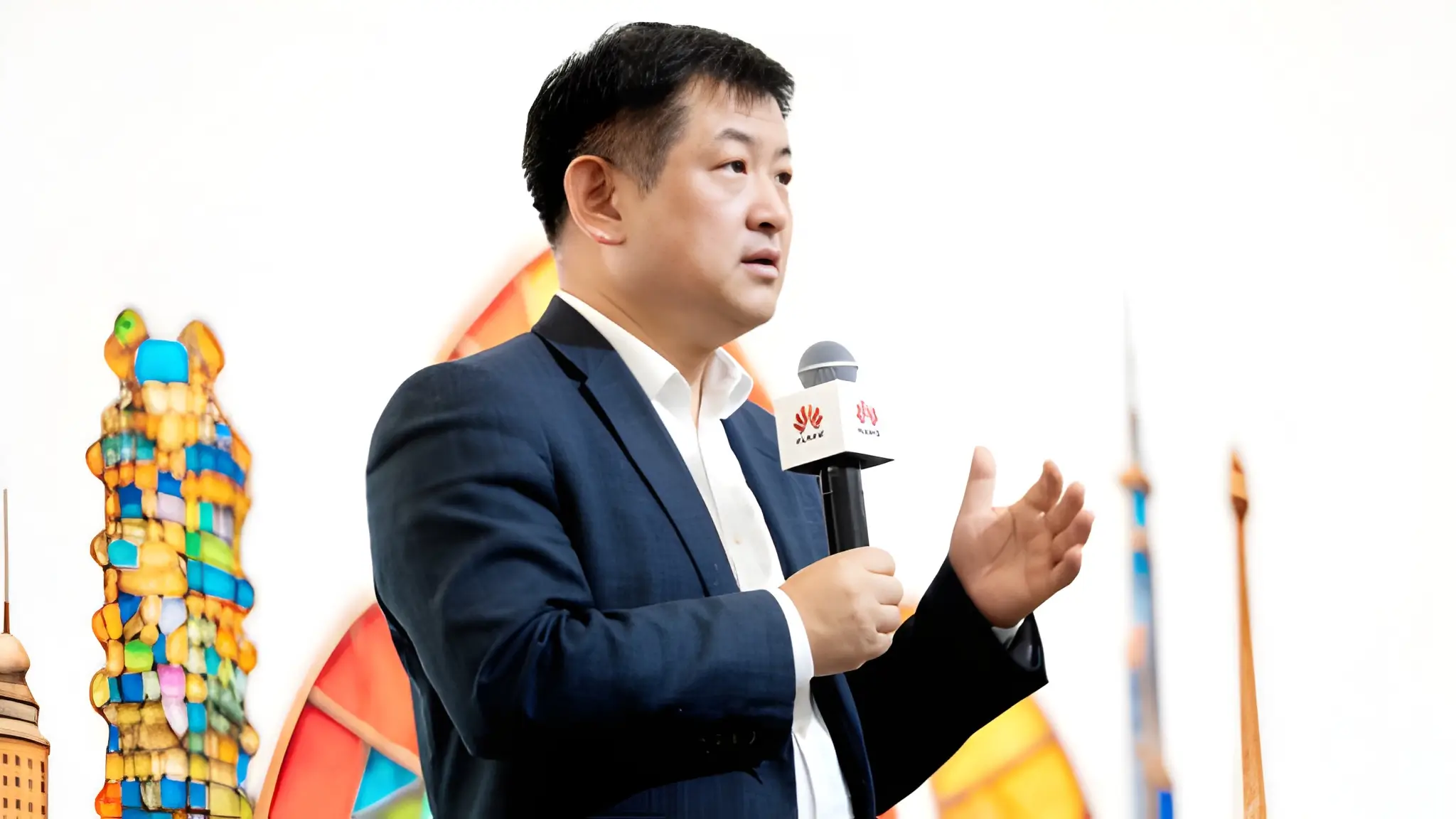
During the event, Peter Zhou outlined the company’s long-term strategy, positioning cloud infrastructure and artificial intelligence as the twin pillars driving Huawei’s global technology roadmap.
“Cloud and AI stand at the core of Huawei’s strategy, driving steady investment in R&D and innovation,” Zhou said. “Over the past year, Huawei Cloud has achieved remarkable global progress, a momentum set to accelerate in the years ahead. In 2026, Huawei Cloud remains committed to delivering secure, reliable, and quality cloud services, unlocking more value for customers and partners alike. Harnessing its advanced systemic synergy of software and hardware, Huawei Cloud aims to pioneer transformative AI services worldwide. Furthermore, it will collaborate closely with stakeholders to cultivate an open, extensive cloud ecosystem.”
The announcements highlight how hyperscale cloud providers increasingly focus on industry-specific AI infrastructure rather than general compute capacity alone.
Industry AI Foundry Targets Real-World Enterprise Challenges
Huawei Cloud introduced Industry AI Foundry as a platform designed to help enterprises build sector-specific AI capabilities. The initiative integrates AI infrastructure, domain-trained models, agent frameworks, and enterprise applications into a single architecture intended to support real operational workloads.
According to Tim Tao, President of Huawei Cloud, the AI landscape has begun shifting away from raw computing power toward operational productivity and business outcomes.
In his keynote, Tao described cloud computing as evolving into a “public power grid” for the AI era, providing on-demand computational capacity that businesses can access to drive innovation and automate complex processes.
“Huawei Cloud: Solving Industry Challenges with AI,” Tao said, represents the company’s strategic vision for helping organizations move from experimental AI deployments toward production-scale transformation. As part of that initiative, Huawei also launched China’s first smart medical zone, designed to accelerate healthcare AI applications.
Industry AI Foundry combines infrastructure, AI models, agent platforms, and verticalized applications into a unified environment that helps companies deploy AI solutions tailored to sector-specific challenges.
Hybrid Cloud Foundation Expands Enterprise Infrastructure Options
Huawei also introduced Huawei Cloud Foundation (HCF), a new hybrid cloud architecture designed for organizations managing complex IT environments across public cloud, private infrastructure, and edge deployments.
The platform focuses on openness, simplified management, and operational resilience. Huawei designed HCF to help governments and enterprises modernize legacy systems while introducing AI capabilities without compromising security or compliance requirements.
By combining hybrid cloud orchestration with AI-ready infrastructure, Huawei aims to accelerate enterprise digital transformation programs and enable organizations to scale intelligent services more efficiently.Huawei plans to release HCF globally in the second half of 2026.
Alongside its infrastructure announcements, Huawei Cloud also showcased CodeArts, an AI-powered development agent built to automate and enhance software engineering workflows. The platform integrates code models, development environments, and autonomous coding capabilities into a single system designed to support modern development teams.
CodeArts includes features such as AI-generated code, automated unit test creation, R&D knowledge chat, expert-skill guidance, codebase indexing, and spec-driven development (SDD) frameworks. The system integrates open-source AI models including GLM-5 and DeepSeek-V3.2 alongside Huawei’s proprietary models to provide a full lifecycle development experience. Huawei plans to make CodeArts available globally later this year.
Expanding Global Cloud Footprint
Huawei Cloud continues to expand its global infrastructure presence as demand for AI computing grows. The company now operates 101 availability zones across 34 regions, delivering cloud services to customers in more than 170 countries and territories.
The platform has operated continuously for 941 days without major disruption, supporting digital transformation initiatives for governments, financial institutions, internet companies, and automotive manufacturers.Huawei also highlighted the scale of its developer ecosystem, which now includes tens of millions of developers and more than 50,000 partners worldwide.
Looking ahead, Huawei Cloud plans to deepen investments in AI infrastructure and industry-specific models through the Industry AI Foundry, positioning the platform as a foundation for enterprise AI adoption across sectors.